
I want to take a moment to welcome my most recent supporters. Thank you so much for being here.
As I continue to move forward, it occurs to me that I've had the same question since I was a child: How can we take better care of each other? When I was a kid, my mother took me and my brother Miles to visit my great grandmother Anna.
Anna was someone who suffered a lot in life. Some of her suffering, I think, came from her own fears. She believed her illness was a punishment from God.
We visited her in a nursing home. She sat staring out a window, unaware of our presence. Did she think this stage of her life was also a punishment? How did she reconcile these feelings?
This is why it's so important to talk about end-of-life care. Because end-of-life care isn't just about death, it's about how we live our lives.
If we're asking, "How can we take better care of each other?" then it's also important to ask, "How can we face our fears so we can be of the most help to our loved ones?"
Fear can have the unintended consequence of making all of these transitions more difficult.
We are all going to die one day. I've heard many people throughout my life say, "I don't want to end up in a nursing home." But if that's the case, we don't talk enough about preventing that outcome. Why?
I think it's fear. Part of my role as a death doula is to encourage healthy conversations around death.
"How can we take better care of each other?" is a question that dovetails into, "How do I want to be cared for? How do I want things to look for me?"
We know where we don't want to be. So, how do we avoid that outcome?
By talking about it, and by pre-planning. The first step is facing our fears. I'd like to invite you to meditate on this. If it's something you're afraid to discuss, how can I help? Drop a comment or email me at [email protected]
Thank you for being.
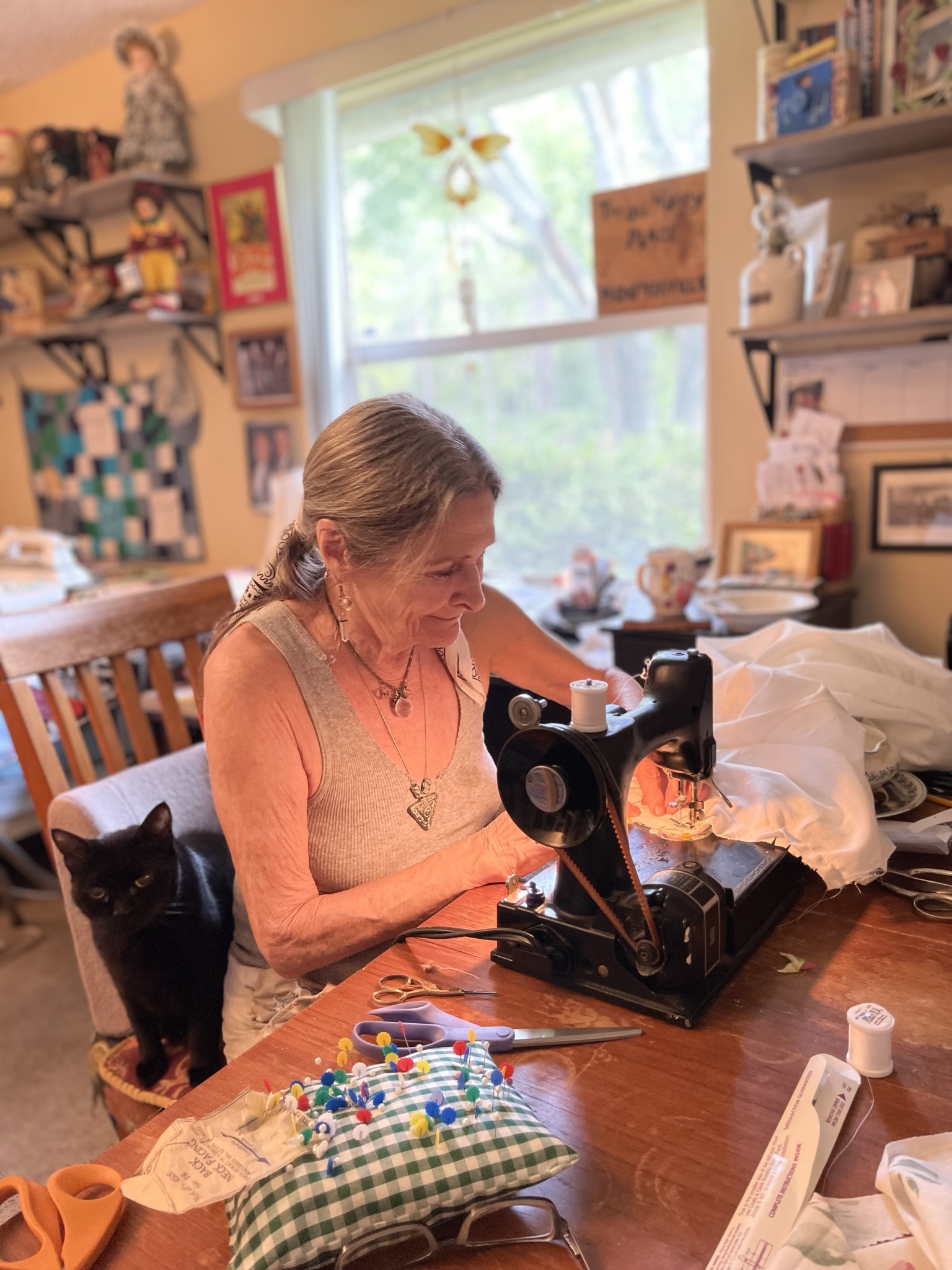
Below: My mother, sewing.