

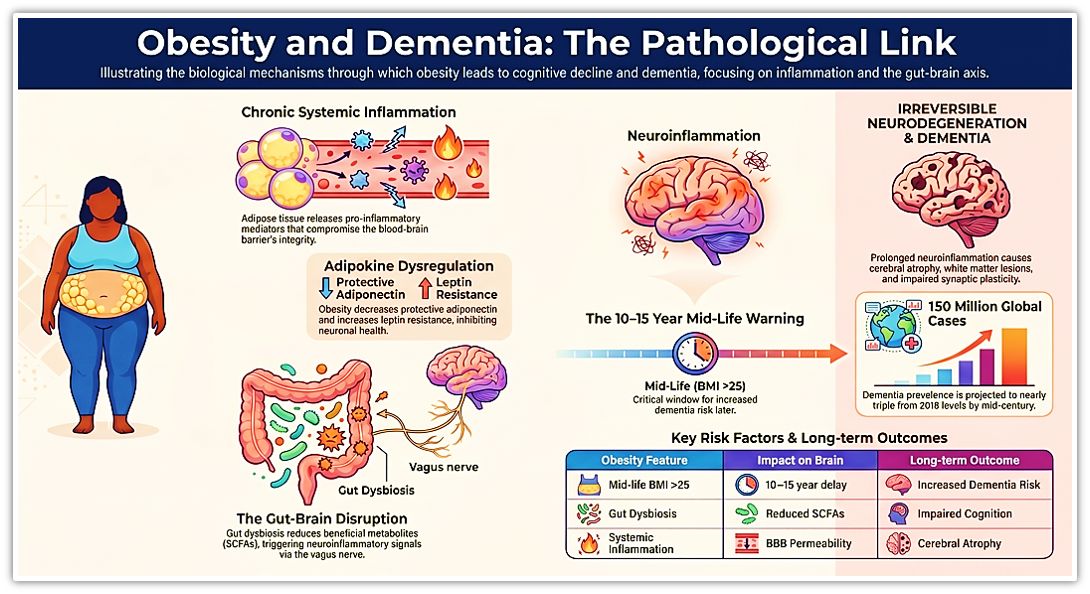
 ⭕🧠 OBESITY & DEMENTIA: THE LINK 🧠⭕
A brief review highlights the link between Obesity and the development of Dementia, emphasizing that obesity in Middle Adulthood is a major risk factor for subsequent Cognitive Decline.
- OBESITY is a significant global public health problem, linked to rising rates of Cognitive Decline and Dementia.
- DEMENTIA involves chronic deficits in areas such as memory, language, and executive functions. As the population ages, cases are projected to reach 150 million by 2050, yet effective treatments remain scarce.
- A comprehensive review indicates that the link between excess body fat and cognitive decline depends largely on TWO primary pathways: Systemic Inflammation and the Gut-Brain Axis.
- Adipose tissue is an active Endocrine Organ that releases specialized signaling proteins—known as Adipokines—as well as pro-inflammatory molecules capable of crossing the Blood-Brain Barrier (BBB).
- These mediators trigger neuroinflammation and oxidative stress, thereby disrupting the transport of nutrients and Neuro-metabolites (such as SCFAs) to neurons.
- The gut-brain axis also plays a significant role in cognitive decline. Obesity-associated gut dysbiosis leads to a reduction in short-chain fatty acids (SCFAs), which, under normal conditions, provide anti-inflammatory protection.
✅ Below is an image showing that the link between excess body fat and cognitive decline depends largely on TWO primary pathways: Systemic Inflammation (Red arrow) and the Gut-Brain Axis (Green arrow).
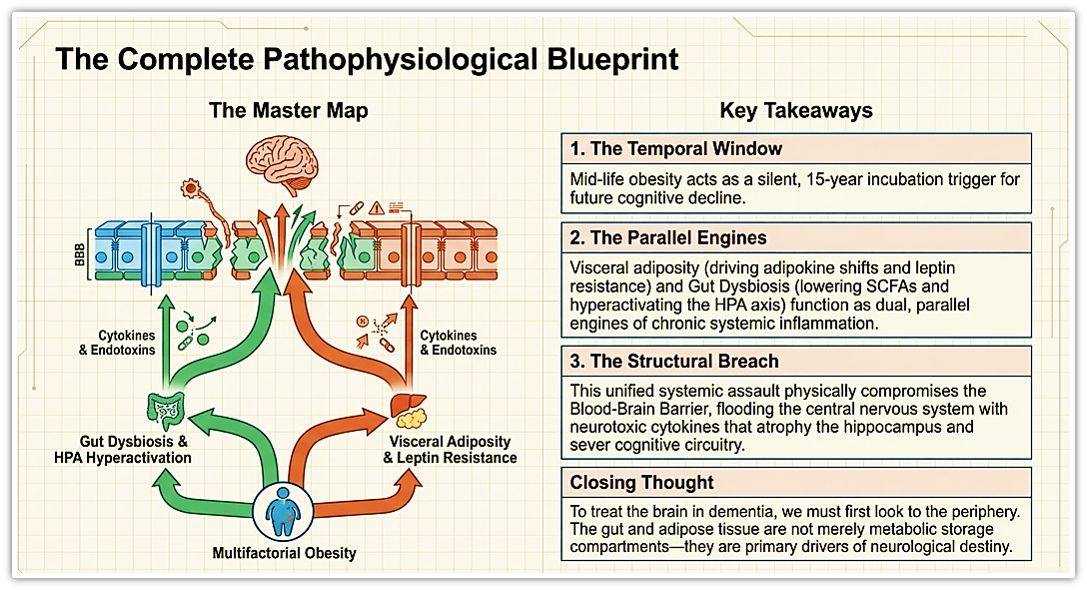 - This imbalance allows harmful signals to reach the brain via the vagus nerve, potentially leading to hippocampal atrophy and cognitive impairment.
- Metabolic changes also disrupt hormonal balance. Leptin and adiponectin—which typically protect neurons—become dysregulated or develop resistance in states of obesity.
- Furthermore, elevated levels of circulating fats can directly impair insulin receptors in the brain, further accelerating the progression toward cognitive dysfunction.
- Evidence indicates that obesity in midlife (BMI > 25) constitutes a critical risk window for the future development of dementia. Longitudinal studies demonstrate that being overweight during midlife increases this risk 10 to 15 years later.
- The authors mention this complex relationship between peripheral metabolism (Obesity) and the central nervous system (Brain) warrants further investigation.
✅ 🌐 See Full Article at 👀 👉
https://link.springer.com/article/10.1007/s12017-023-08746-1?fromPaywallRec=true
🔽 Please Read the Note Below 👇
🎯 SUBSCRIBE FOR FREE in our Trusted Open Version >
JUST CLICK HERE 👇
💥 Join us in contributing to the dissemination of knowledge and Research with Precarmed Summaries...!!
🙏 Your DONATION can make it possible to continue sending you these Summaries directly to your INBOX....📬 for FREE....!! 📬