
The Unforgiving Thread
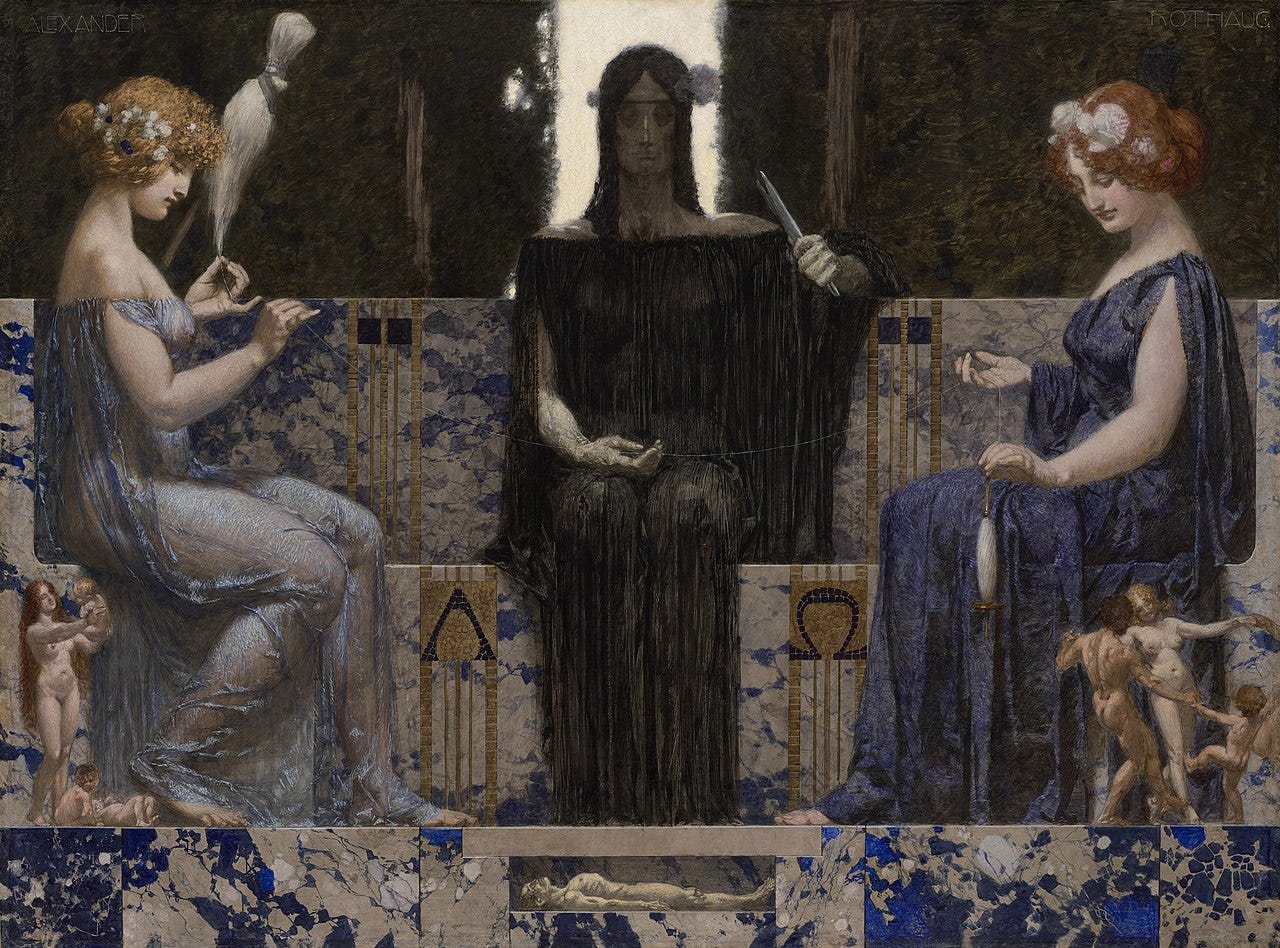 Alexander Rothaug - The Three Fates, circa 1910
Forget the all-powerful Zeus for a moment. Look past the thunderbolt. In the grand, chaotic drama of Greek mythology, the most terrifying and important figures weren’t the flashy gods on Mount Olympus. They were three sisters, often depicted as stern, elderly women: the Moirai, or the Fates. Their names were Clotho, Lachesis, and Atropos, and they held the one thing every mortal and god feared: the final say.
Their system was brutally simple, a divine assembly line that decided every life.
Clotho, “The Spinner,” is where it all begins. She is the one who spins the thread of your life from her distaff. With a simple twist of her fingers, your existence begins. She is the moment of birth, the potential, the raw material of a life about to be lived.
Next comes Lachesis, “The Allotter.” She takes the thread spun by her sister and measures it. She decides its length, its texture, and the twists and turns it will take. She is the embodiment of destiny itself: the good fortune, the bad luck, the love, the loss all the events that shape your journey. She measures out your portion of life without a hint of bias.
Finally, there is Atropos, “The Inflexible” or “She Who Cannot Be Turned.” She is the most feared. With her dreaded shears, she chooses the moment and the manner of the end, and she cuts the thread. There is no appeal, no bargaining, and no escape. Her cut is final, absolute, and inevitable.
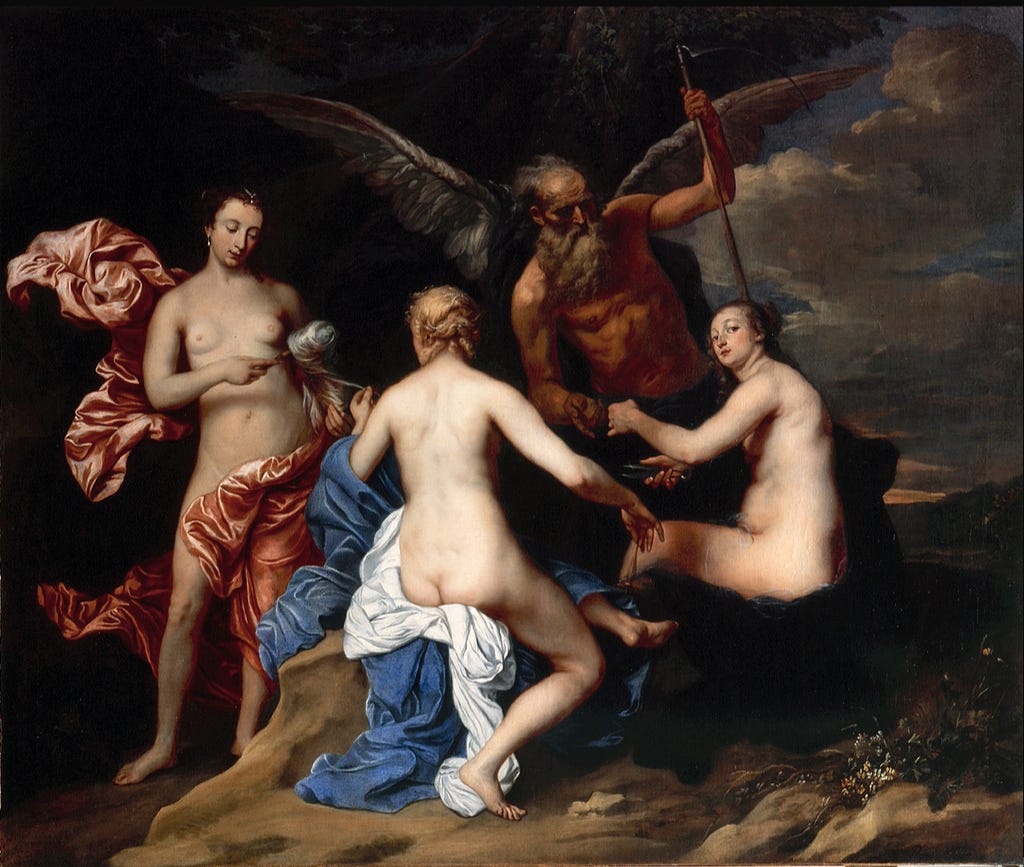 Pieter Thijs - Time and the Three Fates
This wasn’t just a poetic idea; it was the core of the Greek understanding of the world. Even Zeus, the king of the gods, was subject to the decrees of the Fates. He might throw tantrums or try to scheme around them, but he could not outright overrule them. This was the ultimate check on divine power, a reminder that there was an order to the universe that not even the most powerful could disrupt.
The Ancient Roots of the Fates
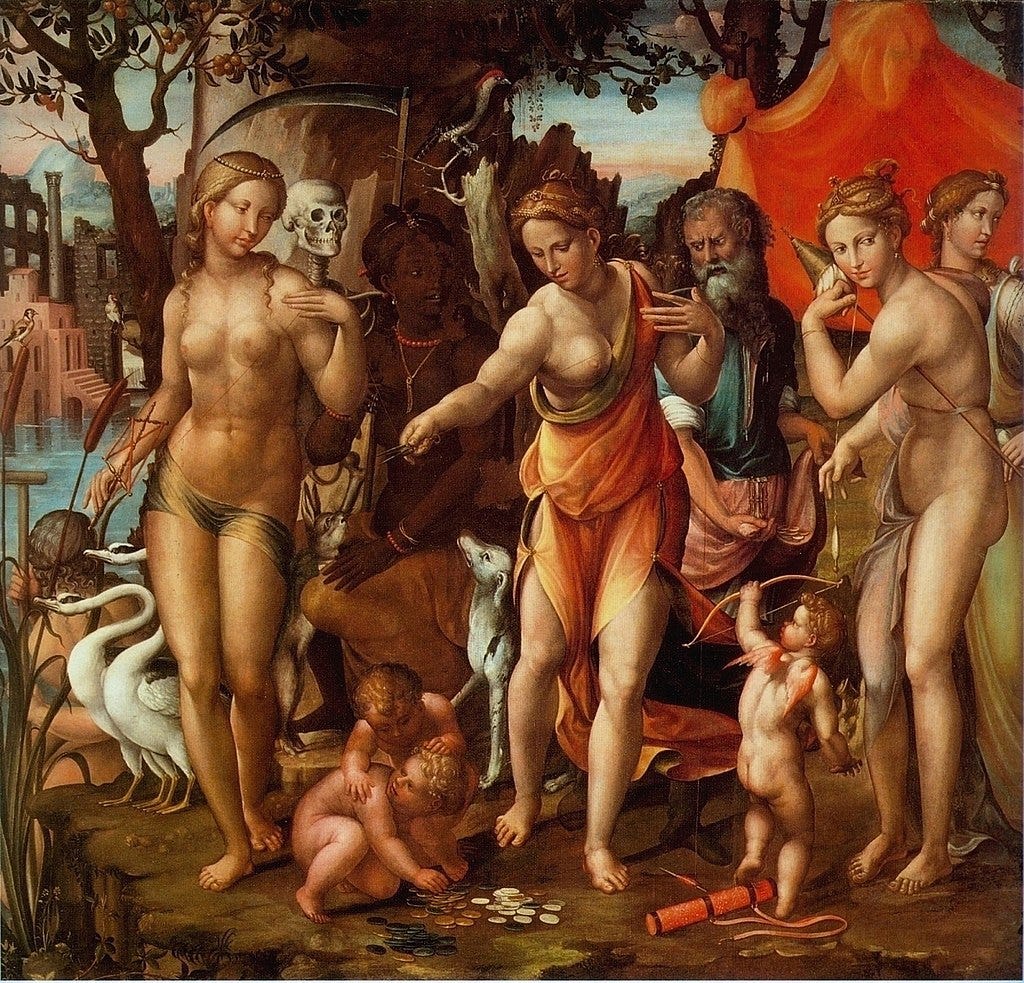 Il Sodoma: The Three Fates, c.1525
We throw around words like “fate” and “destiny” all the time, often meaning little more than “what’s meant to be.” But for the ancient Greeks, the concept wasn’t a vague mystery. It was a precise, unchangeable law of the universe, and its enforcers were the Moirai (the Fates). To understand them, you have to start with their name.
Moirai (MOY-rye) literally means “Shares” or “Lots.” Think of it like your portion, your allotment. Imagine life itself as a finite resource, like land or water, and every person gets their designated share. Not equal, not fair, just yours. That’s your Moira. The Three Fates were the distributors and executors of this share. They decided the size of your portion and made sure you got exactly, and only, what you were given.
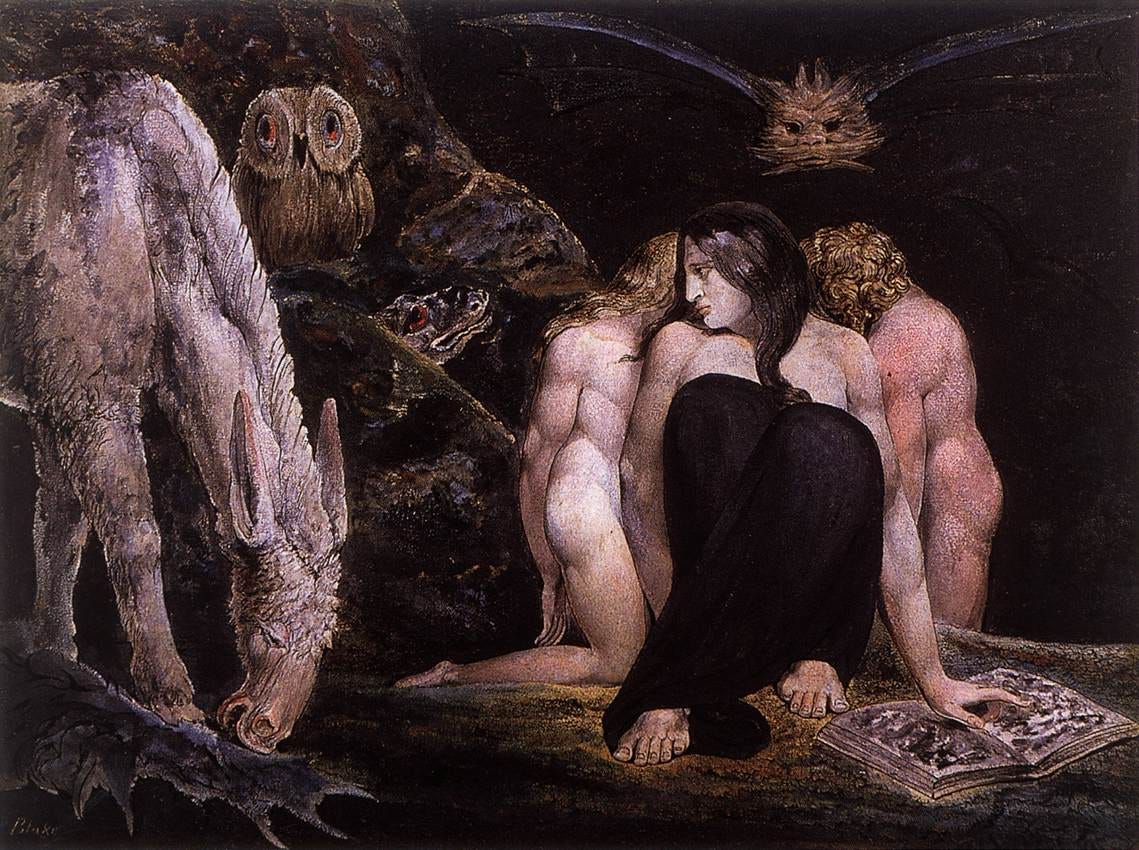 William Blake - Hecate or the Three Fates, c.1795
This idea wasn’t some obscure myth. It was bedrock. Homer, in his epic poems, speaks of Moira as a singular, powerful force that even heroes cannot escape. He’s setting the stage. But it’s Hesiod, in his Theogony, who explicitly names our three sisters: Clotho, Lachesis, and Atropos and places them among the most fundamental powers of creation. He describes them as daughters of Night (Nyx) herself, born before even Zeus and the Olympians. This family tree is crucial.
It tells us that Destiny is older than the Gods. It’s a primal force, as ancient and inevitable as the darkness that comes each night. Zeus might rule the sky, but he doesn’t rule your lot in life. He too must respect the distribution made by the Fates.
The Unchangeable Thread
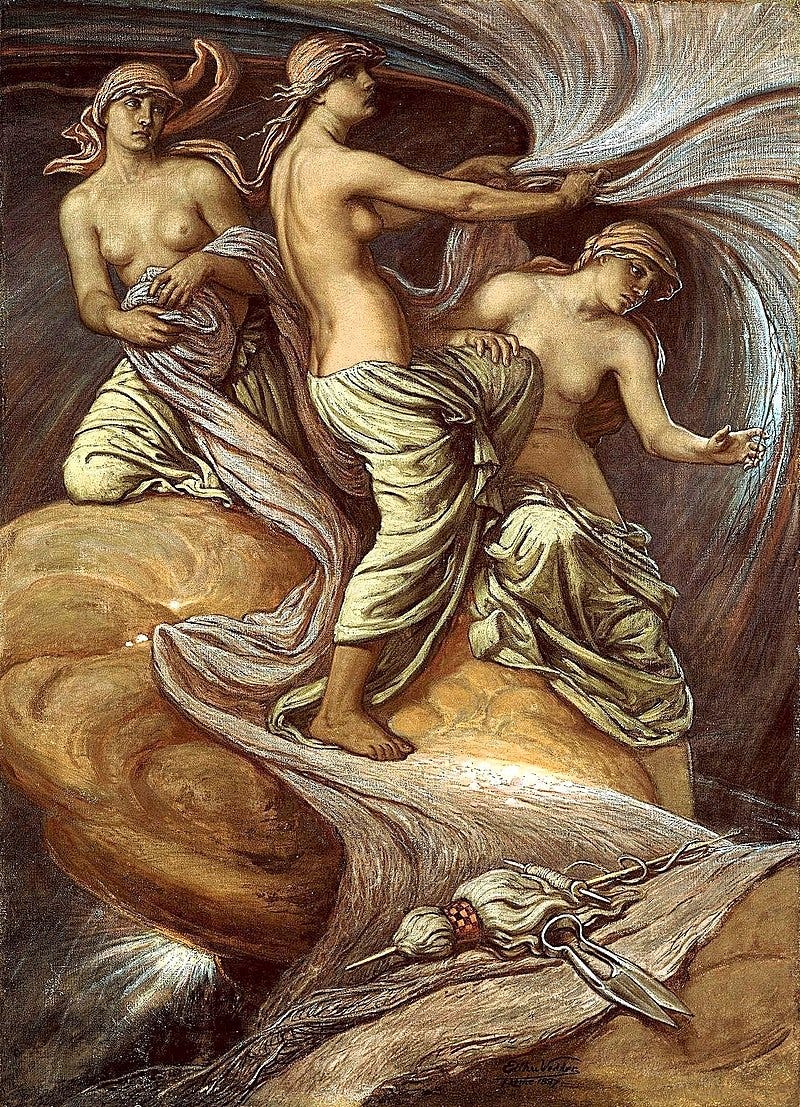 Elihu Vedder - The Fates Gathering in the Stars, 1887
We live in a world obsessed with control. We curate our lives, chase self-improvement, and believe we can shape our destiny. The ancient Greeks would have found this baffling. To them, the most profound wisdom lay in understanding what you cannot change. This is where the Three Fates move from myth to philosophy, offering brutal but necessary lessons for a human life.
Philosophers wrestled with their concept. Plato saw the Fates as agents of a logical cosmic order; the thread of your life was part of a grand, rational pattern. For Aristotle, the idea of Moira was wrapped up in cause and effect; your nature and your actions contributed to your destined end. But it was the Stoics who perhaps embraced the idea most fully. They argued that freedom doesn’t come from controlling every event, but from controlling your reaction to events. The Fates control the external thread of your life; you control your inner response. This is the ultimate empowerment within acceptance.
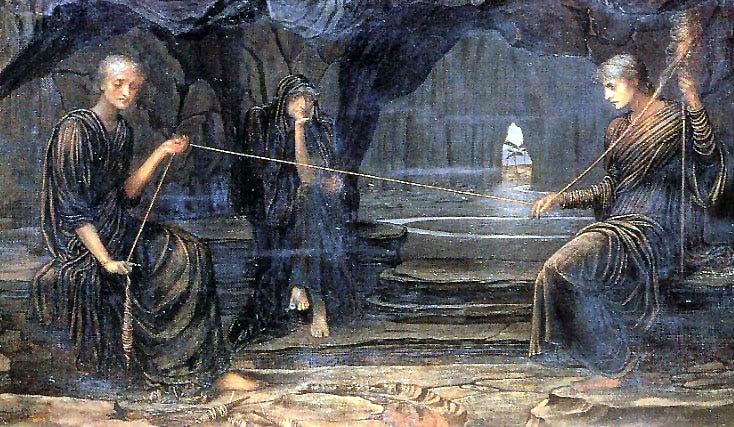 John Melhuish Strudwick: A Golden Thread, 1885
This brings us to the core moral lessons, which are startlingly relevant:
Accept Your Mortality. Atropos’s shears are the final word. The Fates force us to look directly at the one truth we spend our lives avoiding: it will end. By accepting this, rather than fearing it, we are freed to live more fully. Your time is measured. What will you do with it?
Know Your Limits. The hubris of thinking you are beyond the rules: that you can have more than your "share" was the greatest sin in Greek tragedy. Heroes fell because they defied the Fates. The lesson is human and humble: there are forces larger than yourself. Recognizing your limits isn’t weakness; it’s wisdom.
This is the power of Moira: your “lot in life.” It’s not about a pre-written script where you have no agency. It’s about the hand you’re dealt: your birth, your inherent talents, your unavoidable circumstances. The Fates deal that hand. Your freedom lies in how you choose to play it.
The Sisters of Fate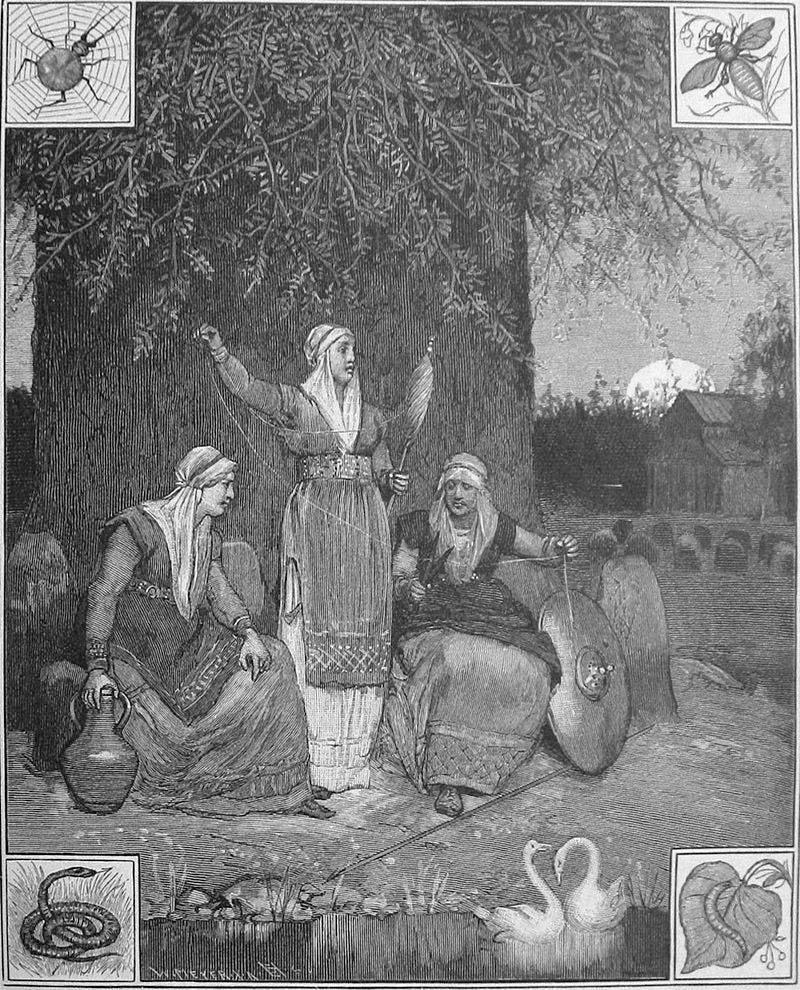 The trio of norns at the well Urðarbrunnr as depicted in Fredrik Sander's 1893 translation of the Poetic Edda. Wood engraving by L. B. Hansen.
The closest cousins to the Moirai are the Norse Norns. These three figures, Urðr (Wyrd), Verðandi, and Skuld, sit at the base of the world tree, shaping destiny. Their names mean “What Once Was,” “What Is Coming into Being,” and “What Shall Be.” Sound familiar? Like the Fates, they represent past, present, and future. But the Norse view is often darker and more communal; they don’t just shape individual threads, they carve the laws of the cosmos and the fate of the gods themselves into the tree. They are the relentless flow of time that everything, even deities, is subject to.
Then there are the Roman Parcae. This is the most straightforward comparison—they are literally the Moirai with Roman names (Nona, Decima, and Morta). The Romans adopted the Greek trio wholesale, a testament to how powerfully this idea resonated across cultures. Their role was identical: to spin, measure, and cut the thread of life.
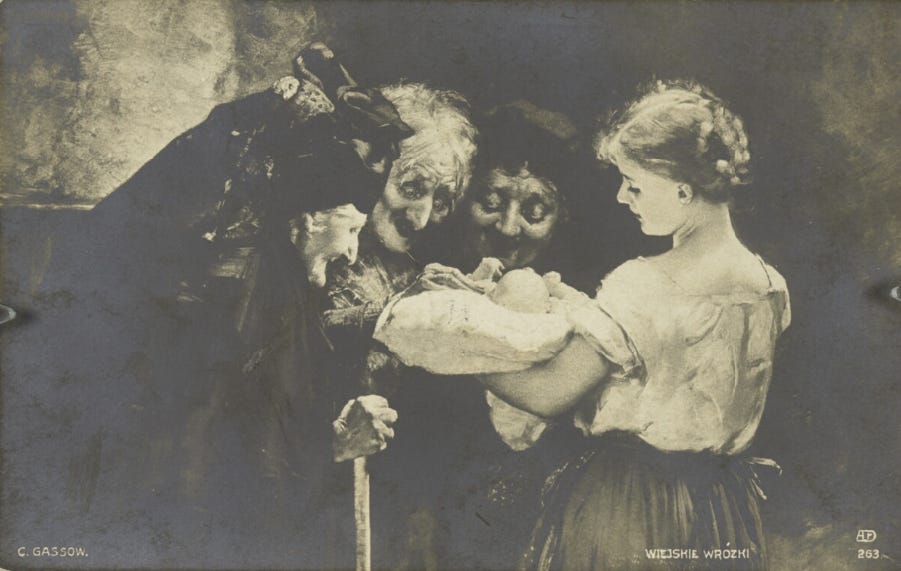 depiction of Rodzanice: "Country Fairies," 1910, public domain. Author and source unknown
Look further, and the pattern continues. In Slavic mythology, there are the Rozhanitsy or Sudice, three goddesses who appear at a child’s birth to determine the course of its life. In Hindu tradition, the concept of Karma is a different but related system of cosmic accounting, where one's actions in this life determine their "share" or lot in the next.
This isn’t a coincidence. It’s a fundamental human response to the terrifying randomness of existence.
The Thread in Your Pocket: Why the Fates Still Matter
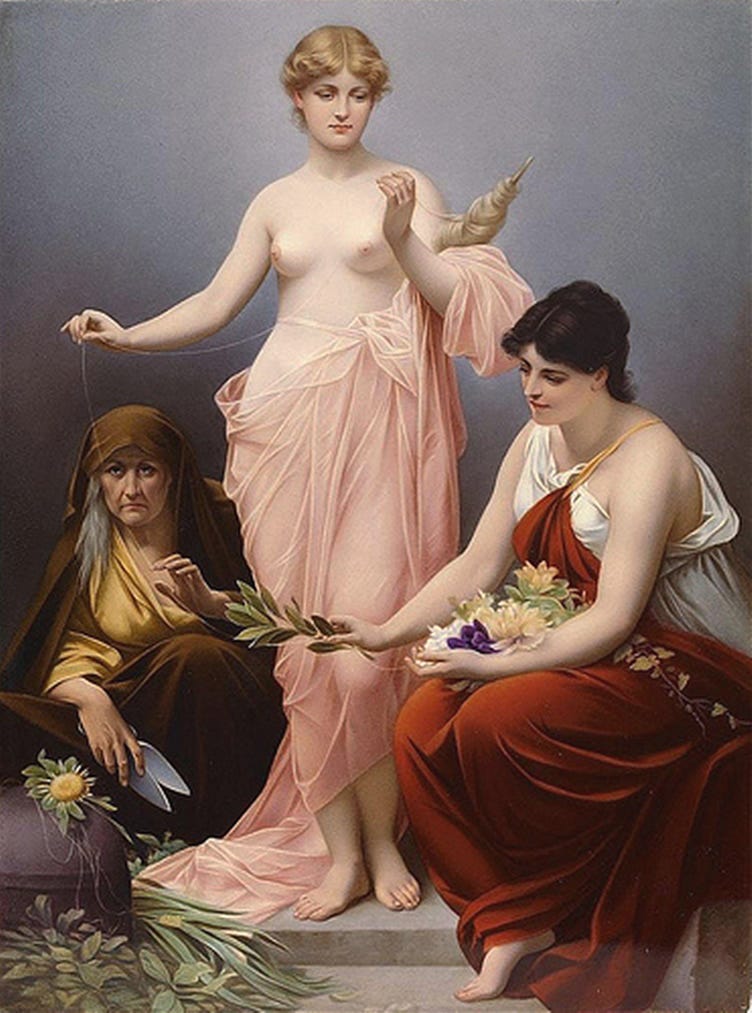 Paul Thumann: English: "The Three Fates
We like to think we’ve outgrown ancient myths. We have science, technology, and the belief that we are the authors of our own lives. Yet, the idea of the Three Fates hasn’t disappeared. It’s folded into the very way we see the world. They persist because they speak to the deepest parts of the human experience: our anxiety about control and our search for meaning.
The core question they represent is more alive than ever: Fate vs. Free Will. This isn’t just philosophy; it’s the backbone of our favorite stories. Every time you watch a movie where a character tries to cheat a prophecy (The Matrix, Harry Potter, Black Mirror), you’re watching a modern battle with the Moirai. We’re obsessed with asking: Is my path already set, or do my choices matter? The Fates are the original symbol for the forces beyond our control: the genetic lottery, the unforeseen accident, the lucky break that shape our lives as much as our own decisions do.
In psychology, we don’t call them Fates; we call them limiting beliefs, generational trauma, or innate temperament. These are the modern threads spun by Clotho and measured by Lachesis; the invisible constraints and gifts we’re born with. Therapy itself is often the process of examining that thread, understanding its length and texture, and learning to weave within it, even if we can’t change its ultimate cut.
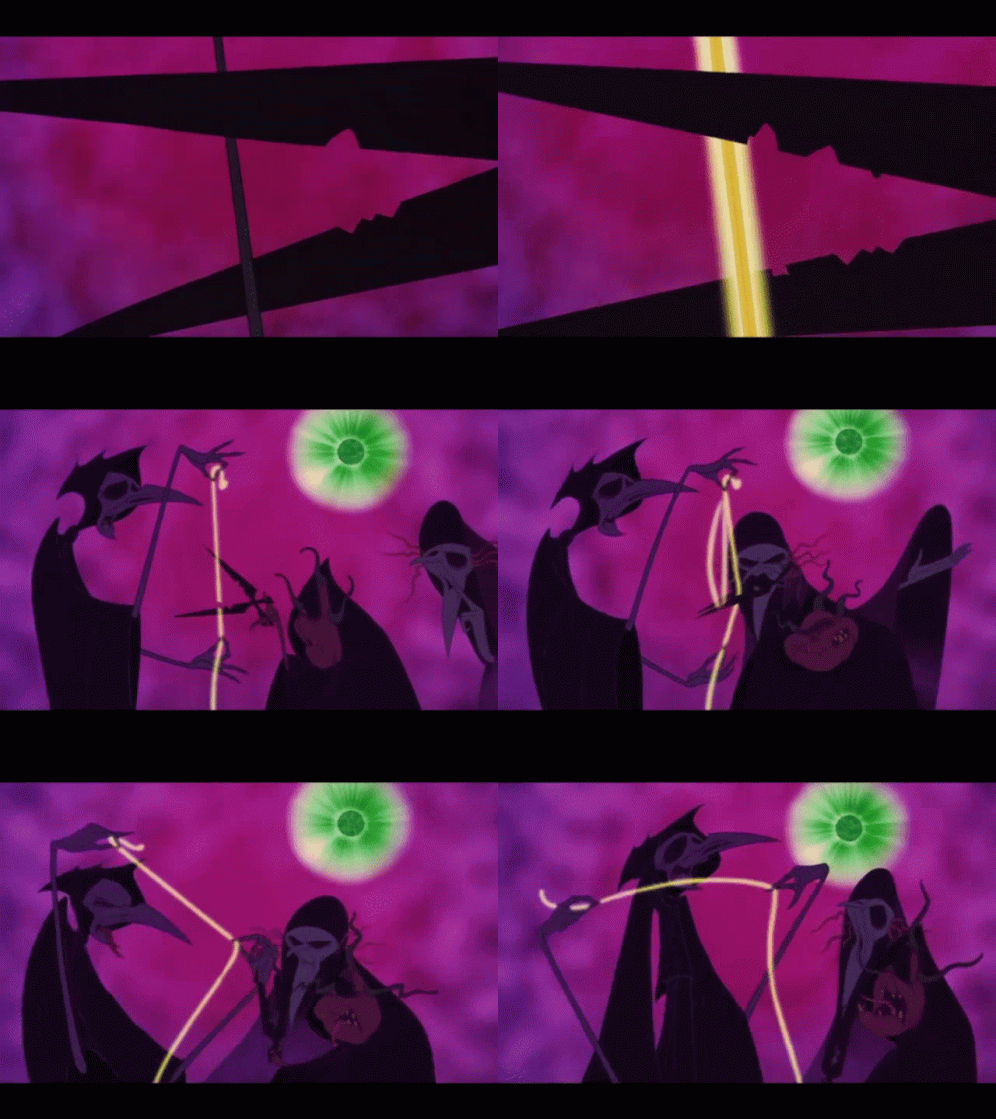 So why does the image of life as a thread endure? Because it’s perfect. It’s fragile. It can snap without warning. It can be tangled, knotted, or woven into something beautiful. It has a beginning, a middle, and an end. It’s a linear story, just like a human life. The Fates remind us to value the thread we have, to make our pattern beautiful, and to meet its end with grace. They are the ancient voice that whispers: what will you do with your share?