

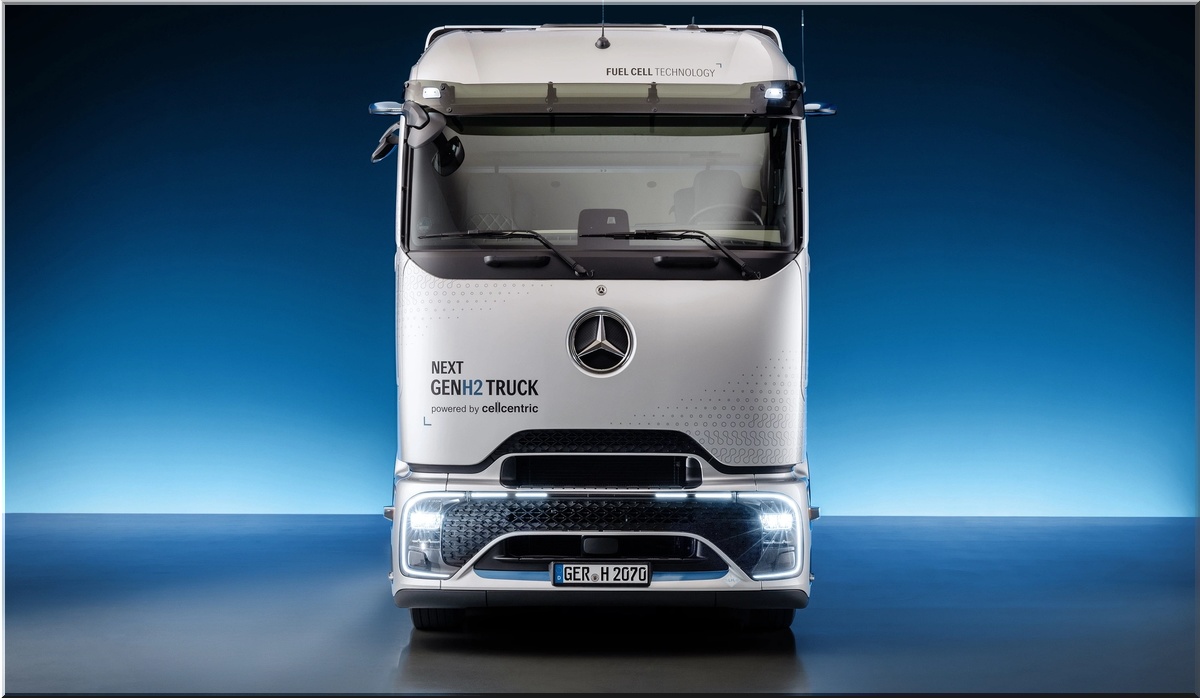
The trucking industry faces a brutal math problem. Battery-electric rigs work for short-haul drayage, but their energy density fails on long-distance routes. Daimler Truck engineers have calculated that the battery mass required for a 600-mile journey subtracts roughly five tons from the allowable payload. To solve this, the manufacturer has officially presented the Mercedes-Benz NextGenH2 Truck. This successor to the initial GenH2 prototype utilizes liquid hydrogen to propel 40-ton loads. Small-series production of 100 units is scheduled for the end of 2026 at the Wörth plant in Germany.
The Liquid Hydrogen Bet
Most manufacturers choose gaseous fuel stored at 350 or 700 bar. Mercedes-Benz ignores this path. They prefer cryogenic liquid hydrogen (sLH2). Liquid fuel offers a much higher volumetric energy density—roughly 71 grams per liter—compared to its gaseous state. The Mercedes-Benz NextGenH2 Truck features an upgraded storage system with a combined capacity of 85 kilograms of liquid hydrogen, an increase over the first-generation prototype. This engineering choice preserves the 25-ton payload capacity, which remains the primary driver of logistics profitability.
The NextGenH2 builds on the success of the "Record Run," where a predecessor covered 1,047 kilometers (650 miles) on a single fill-up. It maintained a gross vehicle weight (GVW) of 40 tons throughout the trial, demonstrating parity with diesel engine range. For a fleet manager, range is a defensive metric against loss aversion. If a driver must stop every 200 miles for a multi-hour megawatt charging session, the operational uptime disappears.
Technical Specifications and Performance
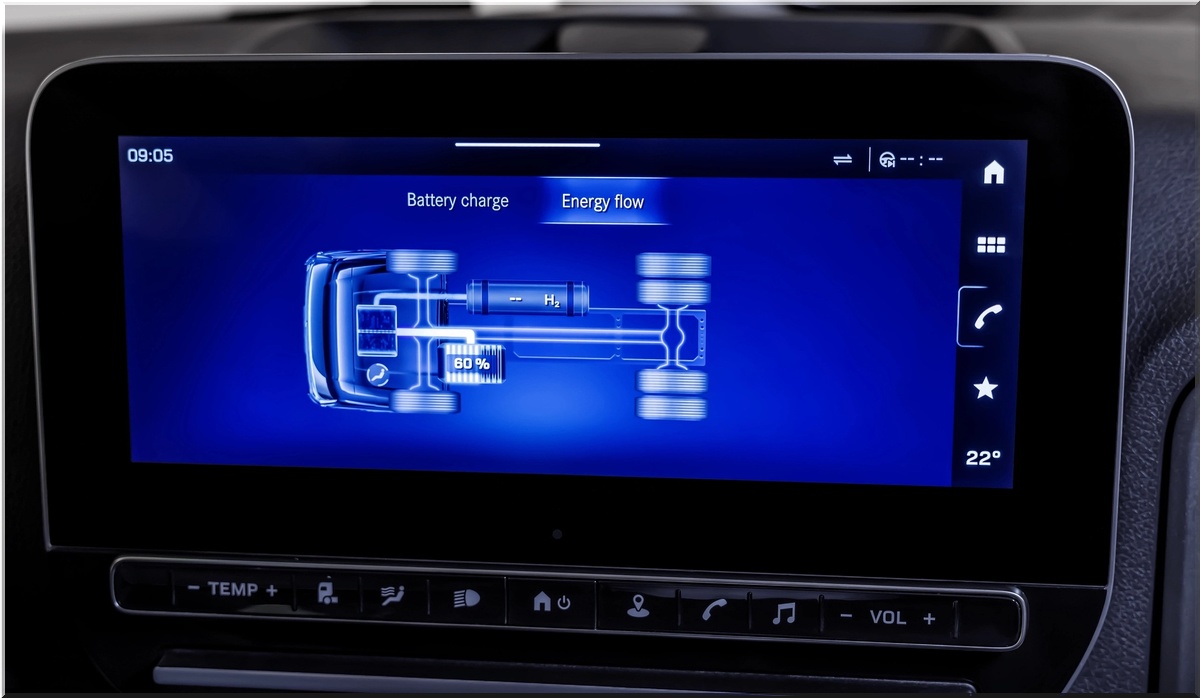
The NextGenH2 powertrain features a sophisticated dual-motor setup and a 300-kW fuel cell system composed of two 150-kW units. These components are integrated into the engine compartment beneath the ProCabin, a design shared with the eActros 600. A 70-kWh lithium-ion battery pack acts as a buffer. The fuel cell provides steady-state power for cruising, while the battery offers a transient "boost" during high-load events like highway merging.
Gross Vehicle Weight: 40 tons (88,000 lbs).
Payload Capacity: 25 tons, matching the utility of a diesel Mercedes-Benz Actros.
Fuel Storage: Two vacuum-insulated tanks with a total of 85 kg of LH2.
Operating Temperature: Liquid hydrogen must stay at -253 degrees Celsius (-423 degrees Fahrenheit).
The thermodynamics are unforgiving. If the fuel warms, it expands and must be vented through a "boil-off" valve to prevent over-pressurization. This makes liquid hydrogen a "use it or lose it" commodity, requiring precise just-in-time logistics planning to avoid fuel waste during mandatory driver rest periods.
Thermal Management in Extreme Climates
A fuel cell is a chemical factory on wheels. It generates significant heat that must be rejected to maintain stack efficiency. During high-altitude testing at the Simplon Pass in the Swiss Alps, Daimler engineers pushed the NextGenH2 through sub-zero winter trials and 35°C (95°F) summer heat. The thermal management system must balance the cooling of the fuel cell stack, the electric motors, and the battery simultaneously. Unlike diesel engines that thrive on heat, fuel cells lose efficiency if they exceed narrow temperature bands.
Subcooled Liquid Hydrogen Refueling Efficiency
Daimler and Linde Engineering have developed a new process called sLH2 (subcooled liquid hydrogen). This technology increases the pressure of the liquid fuel slightly, making the refueling process more robust and faster. A driver can fill the dual-tank system in approximately 10 to 15 minutes from a single side. Crucially, sLH2 eliminates the need for "return gas" lines, simplifying the pump interface. This reduces the infrastructure investment for station operators by nearly 50% compared to high-pressure gaseous hydrogen setups.
Fuel Cell Durability and Lifecycle Data
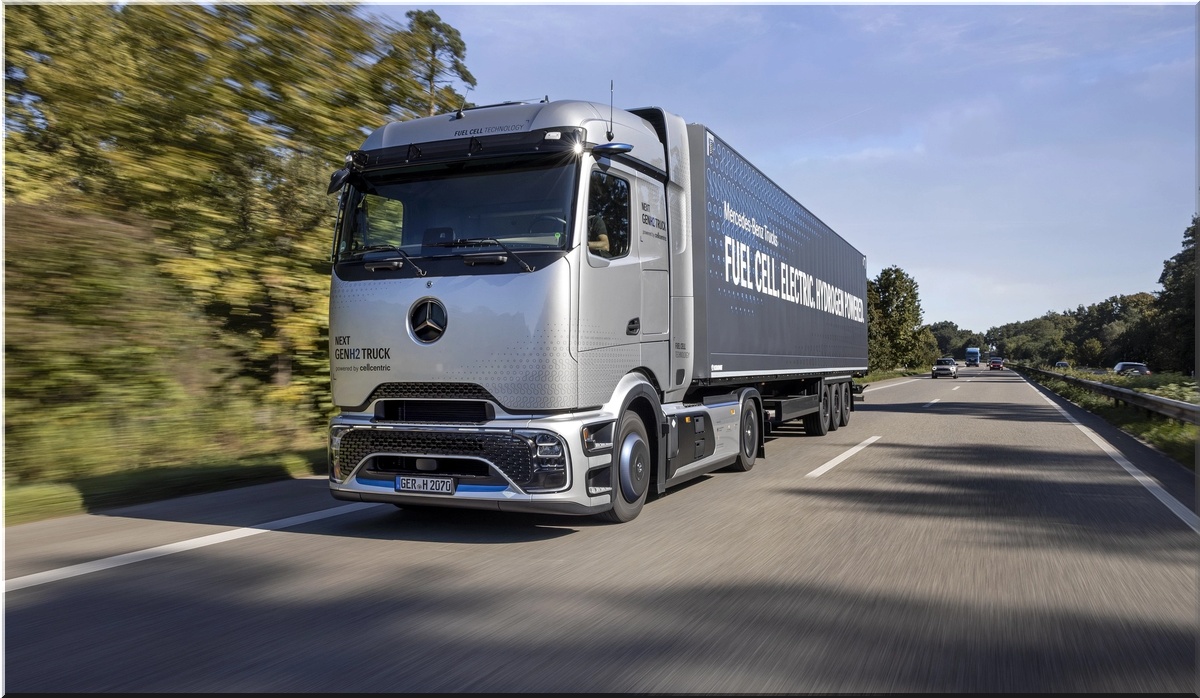
Longevity is the "silent killer" of new automotive technology. Daimler claims the NextGenH2 fuel cell is designed for a service life of 1.2 million kilometers (750,000 miles), mirroring the durability of a heavy-duty diesel engine. Recent customer trials with Amazon, Air Products, and DHL Supply Chain saw prototypes cover over 225,000 kilometers in real-world conditions. Data suggests an average fuel consumption of 5.6 to 8.0 kilograms of hydrogen per 100 kilometers, depending on the terrain and the weight of the load.
Safety Protocols and Cryogenic Handling
Handling fuel at -253 degrees Celsius requires more than a standard pair of gloves. The NextGenH2 uses double-walled, vacuum-insulated tanks to prevent heat ingress. In the event of a collision, the system includes automatic emergency shut-off valves and sensors that detect hydrogen concentrations as low as 1%. Because hydrogen is lighter than air, leaks dissipate rapidly upward, reducing the risk of ground-level pooling common with diesel spills or the "thermal runaway" risks associated with lithium-ion battery fires.
Resale Value and the Used Truck Market
The secondary market for hydrogen trucks is a total mystery. Traditionally, a five-year-old diesel truck retains 40-50% of its value. With fuel cell vehicles, the "stack" is a wear item with a finite chemical lifespan. If a replacement fuel cell stack costs $100,000 USD, the residual value of the vehicle could plummet. Fleet managers must account for this depreciation risk when calculating the long-term ROI of the Mercedes-Benz NextGenH2, potentially favoring leasing models over outright ownership.
The Logistics of Boil-Off Losses
Liquid hydrogen is inherently unstable over long periods of inactivity. If a NextGenH2 truck sits idle for several days, the ambient heat eventually penetrates the insulation. This causes the hydrogen to expand, triggering a safety vent to release gas. For long-haul logistics, this means trucks must remain in constant motion to stay profitable. A fleet that experiences frequent "dwell time" at warehouses will find liquid hydrogen more expensive than gaseous alternatives due to these evaporative losses.
Actionable Insights for Fleet Managers
If you manage a logistics operation, do not liquidate your diesel assets. The Mercedes-Benz NextGenH2 is a long-term hedge against carbon taxes, not an immediate replacement.
Analyze Your Duty Cycles: Hydrogen is only viable for routes exceeding 400 miles where payload weight is the primary constraint.
Evaluate Port-to-Hub Routes: Initial infrastructure will appear at ports and major industrial clusters first.
Review Tax Credits: Investigate the €226 million ($246 million USD) in German federal and state funding that supports these deployments, or similar regional incentives.
Facility Upgrades: Liquid hydrogen leaks pose different risks than diesel. Your maintenance bays will require upgraded ventilation, explosion-proof lighting, and hydrogen sensors.
The NextGenH2 demonstrates that decarbonizing heavy transport is technically feasible. Whether it becomes a commercial success depends on the rapid scaling of green hydrogen production and the reduction of the "green premium" in fuel costs.