

The premium automotive segment demands an uncompromising synthesis of structural scale and technical refinement. With the introduction of the 2027 Audi Q9, the German automaker enters the true full-size luxury transport sector in the United States. This vehicle serves a distinct strategic purpose. It addresses a specific volume gap in the North American portfolio where consumers consistently demand functional three-row utility without sacrificing advanced chassis dynamics. By analyzing the engineering infrastructure and the electrical architecture of this new flagship, we can map exactly how this vehicle establishes its technical position.
Architectural Foundation and Space Optimization
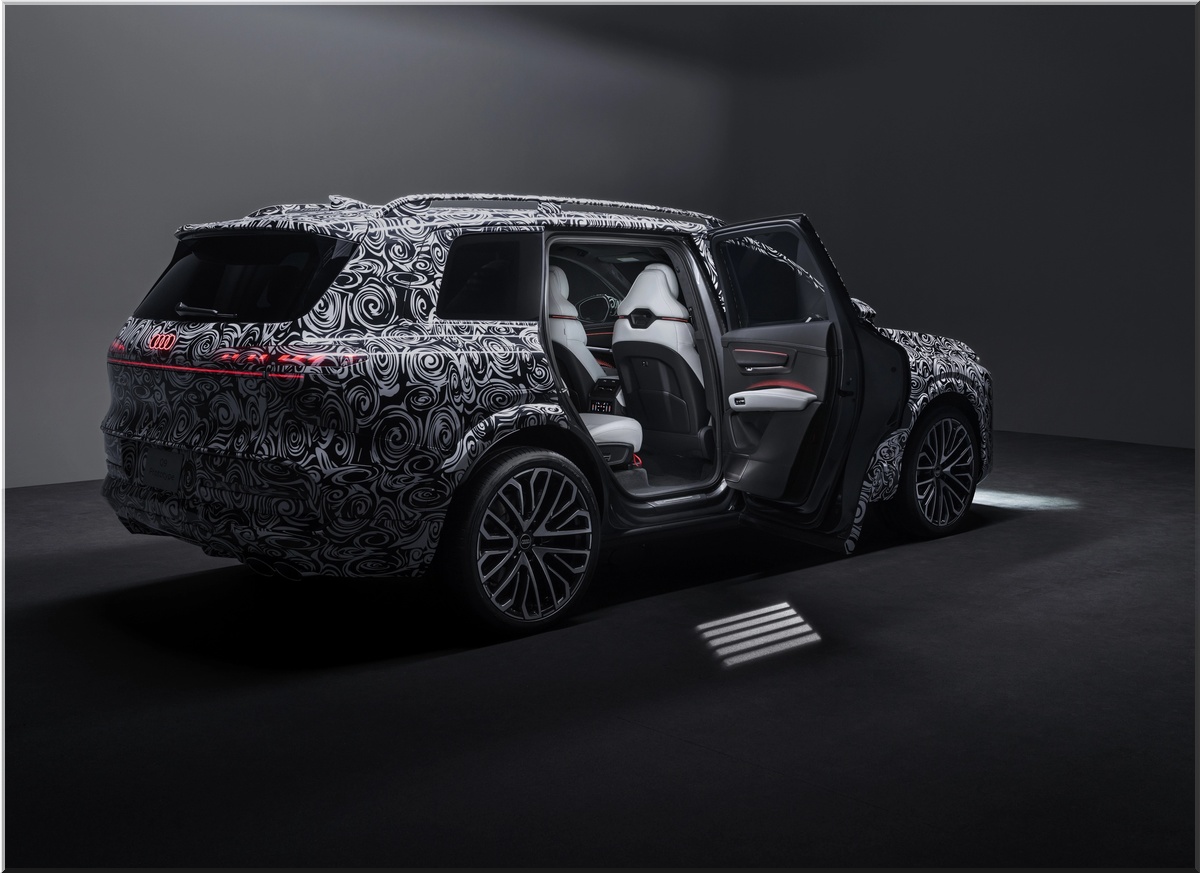
The development of a genuine full-size architecture requires structural choices that prioritize cabin volume and third-row ingress. Audi engineers utilized a high-tensile steel and aluminum intensive configuration optimized for maximum geometric efficiency. Looking at the data, the long wheelbase provides the foundational stability necessary to maintain balanced weight distribution while maximizing interior floor space.
Dimensional Profile Specifications
Overall Vehicle Length: 205.1 inches (5,210 mm)
Wheelbase: 122.2 inches (3,104 mm)
Overall Width (Mirrors Folded): 79.9 inches (2,030 mm)
Overall Height: 70.3 inches (1,786 mm)
High-Volume Cabin Packaging
Maximizing interior space requires moving structural pillars outward and minimizing the mechanical intrusion of the drivetrain tunnel. In the past, mid-size platforms forced a compromise between second-row travel and third-row legroom. The 2027 Audi Q9 interior space eliminates this trade-off through a flat floor design achieved by integrating low-profile rear suspension components.
Specifically, the multi-link rear suspension mounts lower on the subframe. This engineering choice drops the rear cargo floor by 1.8 inches compared to standard premium layouts. Consequently, passengers in the third row gain adult-accessible legroom measuring 32.5 inches, while the second row maintains up to 40.2 inches of total legroom.
Cargo Capacity Dynamics
From an expert perspective, utility metrics must account for real-world packing efficiency rather than just theoretical volume. The flat floor architecture yields substantial structural advantages.
Behind Third Row: 18.2 cubic feet of cargo volume handles standard luggage loads without altering seat positioning.
Third Row Folded: 48.5 cubic feet becomes accessible via standard electronic folding actuators that drop the seats flush into the floor structure.
Maximum Volumetric Capacity: 91.3 cubic feet opens up when both the second and third rows are completely recessed.
Digital Matrix LED Lighting: Technical Architecture
The North American debut of the Adaptive Lighting with Digital Matrix LED headlights on the 2027 Audi Q9 represents a massive leap in active illumination technology. This system shifts from traditional static projection to an active, pixelated projection network. The core technology relies on a Digital Micromirror Device (DMD) chip that contains approximately 1.3 million micromirrors.
Functional System Parameters
Micromirror Count: 1.3 Million Pixels per Headlight
Electrostatic Adjustment Rate: Up to 5,000 times per second
High-Beam Projection Distance: Up to 1,968 feet (600 meters)
Light Source: Multi-core Laser-Activated LED
The Mechanics of Pixelated Illumination
To understand why this system operates with such precision, we must examine the electrostatic control loop. An integrated graphics processor monitors input data from the front-facing camera, radar sensors, and navigation system. The processor changes the angle of individual micromirrors via electrostatic fields thousands of times per second.
When the high beams activate, the system does not simply switch off individual light-emitting diodes to prevent blinding oncoming traffic. Instead, it actively masks out the exact physical location of oncoming vehicles down to the millimetric pixel level. The surrounding roadway remains fully illuminated with maximum high-beam intensity, while the oncoming driver sits in a continuously adjusting pocket of shadow.
Advanced Safety Projection Features
In addition, the Digital Matrix LED headlights provide active lane-guidance features that project high-resolution visual indicators directly onto the asphalt.
The Orientation Light: On dark highways, the system projects a carpet of light that matches the exact width of the full-size flagship SUV. This visual aid displays the vehicle's position within the lane markings in real-time.
The Marking Light: When the night-vision camera detects a pedestrian near the edge of the roadway, a targeted beam flashes directly at the individual. This alert warns the driver and lets the pedestrian know the vehicle is approaching.
Dynamic Turn-Signal Lane Projection: Activating the turn signal projects a shifting pattern of light onto the adjacent lane, signaling intent to nearby drivers before the physical lane change begins.
Drivetrain Integration and Powertrain Dynamics
A large chassis requires a highly efficient, high-torque powertrain to manage inertial mass during acceleration and deceleration cycles. The standard powertrain features a thoroughly revised 3.0-liter turbocharged V6 engine paired with a 48-volt mild-hybrid system (MHEV).
Internal Combustion Refinement
The V6 engine produces 375 horsepower and 369 lb-ft of torque. Engineers integrated the twin-scroll turbocharger inside the V-bank to shorten the exhaust gas path. This design minimizes turbo lag and optimizes throttle response at low engine speeds. The variable valve-lift system controls intake and exhaust timing across two distinct load profiles, which helps improve overall efficiency.
48V Mild-Hybrid Infrastructure
The belt-driven starter-generator (BAS) connects directly to the crankshaft via a heavy-duty serpentine belt. During deceleration, the BAS recovers up to 12 kW of power and stores it in a compact 10-Ah lithium-ion battery located under the cargo floor.
When accelerating from a complete stop, this stored energy powers the BAS to spin the crankshaft instantly. This setup allows the start-stop system to operate smoothly and enables the vehicle to coast with the internal combustion engine completely off at speeds between 34 and 99 mph.
Core Propulsion Metrics
Engine Displacement: 2,995 cc (3.0L V6 Turbocharged)
Peak Power Output: 375 hp @ 5,200 - 6,400 RPM
Peak Torque Output: 369 lb-ft @ 1,370 - 4,500 RPM
Transmission Type: 8-Speed Tiptronic Automatic
Eight-Speed Tiptronic and Quattro Logic
Power flows through an eight-speed Tiptronic automatic transmission configured with a dual-chamber torque converter. This design suppresses torsional vibrations across the low-RPM powerband.
The permanent quattro all-wheel drive system features a mechanical asymmetric self-locking center differential. Under normal operating conditions, the torque split is biased 40:60 between the front and rear axles. If a wheel slips, the mechanical differential automatically shifts up to 70 percent of torque to the front axle or up to 85 percent to the rear axle to maintain forward momentum without any brake-intervention delays.
Chassis Technology and Ride Engineering
Managing a 122.2-inch wheelbase requires advanced suspension kinematics to keep the ride comfortable and stable. The 2027 Audi Q9 comes standard with an adaptive air suspension system featuring electronically controlled continuously adaptive dampers.
Five-Link Suspension Kinematics
The front axle utilizes a five-link arrangement that separates the steering and track forces, preventing high torque levels from causing torque steer. The rear axle features an aluminum-intensive five-link geometry that isolates lateral and longitudinal forces. Consequently, the chassis maintains high lateral stiffness during cornering while remaining compliant over sharp bumps.
Adaptive Ride Height Scaling
The air suspension system automatically changes the vehicle height by up to 3.5 inches depending on the road speed and the selected driving profile.
Off-Road Mode: Raises the chassis by 2.0 inches at speeds under 20 mph to maximize ground clearance.
Dynamic Mode: Lowers the ride height by 0.6 inches below standard baseline levels to reduce aerodynamic drag and lower the center of gravity.
Loading Profile: Lowers the rear axle by 2.2 inches via a button in the cargo compartment to make lifting heavy objects into the back much easier.
All-Wheel Steering Architecture
To make maneuvering this all-new Q9 flagship SUV easier in tight spots, engineers added an optional all-wheel steering system. At low speeds (up to 37 mph), an electric actuator turns the rear wheels up to 5.0 degrees in the opposite direction of the front wheels.
This counter-steering adjustment effectively shortens the turning circle by up to 3.9 feet, reducing it to a highly manageable 38.4 feet. At higher highway speeds, the rear wheels turn up to 2.0 degrees in the same direction as the front wheels, which increases stability during fast lane changes.
Ergonomics and Luxury Packaging
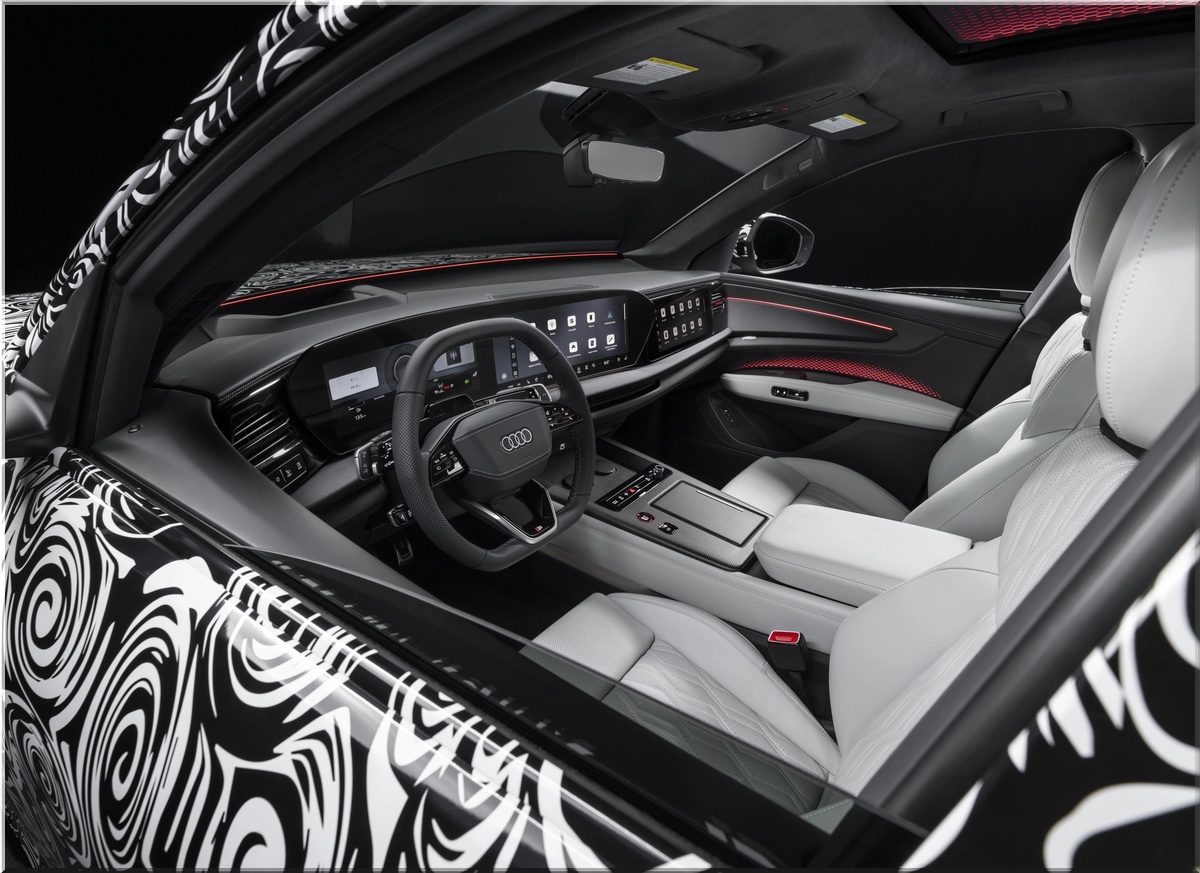
The interior of the vehicle focuses on structural simplicity and acoustic isolation. Engineers used a layered dash design that integrates screens into a single continuous glass housing, avoiding complex panel gaps.
Architectural Cabin Metrics
Instrument Cluster Display: 12.3-inch OLED Virtual Cockpit
Central Infotainment Screen: 14.5-inch Touchscreen Display
Passenger Side Interaction Screen: 10.9-inch Privacy-Filtered Display
Acoustic Glass Insulation: 4.8 mm Dual-Pane Laminate
Acoustic Engineering and Insulation
Creating a quiet cabin requires addressing multiple sources of noise, vibration, and harshness (NVH). The vehicle features dual-pane laminated acoustic glass across the windshield and all side windows.
Engineers injected expanding acoustic foam into the hollow sections of the A, B, and C-pillars before assembly. This treatment drastically cuts high-frequency wind noise. In addition, sound absorption panels underneath the engine bay and within the wheel wells isolate tire slap and road rumble from the interior cabin structure.
Seating Architecture and Climate Control
The front seats use a new contour design with pneumatic bladders that adjust across 18 configuration parameters. The seat base and backrest feature independent heating and ventilation elements paired with an active massage function driven by a dedicated compressor.
The standard four-zone automatic climate control system uses intelligent air vents. These vents rely on small stepper motors to adjust airflow based on where passengers are sitting and the position of the sun, keeping the cabin temperature uniform without blowing air directly onto passengers' faces.
Braking Infrastructure and Deceleration Dynamics
Managing the kinetic energy of a full-size flagship platform requires a high-thermal-capacity braking system configured to eliminate pedal fade during sustained descent cycles. Engineers specified a fixed-caliper front arrangement paired with a floating-caliper rear architecture, optimized for immediate pressure generation.
Braking Mechanical Breakdown
Front Rotor Diameter: 15.7 inches (400 mm) ventilated
Front Caliper Configuration: Six-piston aluminum monobloc
Rear Rotor Diameter: 13.8 inches (350 mm) ventilated
Rear Caliper Configuration: Single-piston with integrated Electronic Parking Brake (EPB)
Thermal Management Logic
The front ventilated rotors feature an asymmetric internal fin design that actively pulls air through the center of the rotor assembly during wheel rotation. This directional ducting drops operating temperatures by up to 15 percent under heavy thermal loads compared to traditional straight-vane rotors.
In addition, dedicated cooling channels integrated into the front bumper facies direct high-velocity airflow directly across the caliper faces. This targeted cooling prevents the brake fluid from boiling during heavy towing cycles, ensuring a firm, predictable pedal feel even when operating at maximum gross vehicle weight ratings.
Electronic Brake-Force Distribution (EBD) and ESC Integration
The electronic brake booster uses an electro-hydraulic actuator to establish brake pressure up to three times faster than standard vacuum-assisted configurations. Looking at the data, this system reduces the automated emergency braking response time by up to 150 milliseconds.
The Electronic Stability Control (ESC) module works directly with the permanent quattro all-wheel drive system to apply precise, independent braking forces to individual wheels during high-speed cornering. This active torque-vectoring strategy minimizes understeer by tucking the nose inward before the driver can even sense the chassis drifting wide.
Passive Safety Architecture and Structural Telemetry
The structural safety cell of the platform relies on an ultra-high-strength steel cage designed to maintain geometric integrity during high-energy impact scenarios. Hot-formed steel components make up 28 percent of the body-in-white structure, reinforcing the A-pillars, B-pillars, roof frame, and side sills.
Material Architecture Profile
B-Pillar Reinforcements: Hot-formed steel exceeding 1,500 MPa tensile strength
Front Crumple Zone Members: Extruded aluminum multi-cell configurations
Cross-Car Beam Support: Magnesium cast alloy framework
Underbody Shielding Panels: Glass-fiber reinforced polymer composition
Kinematics of Energy Absorption
During a frontal offset collision, the extruded aluminum multi-cell crash beams deform in a controlled, progressive sequence. This deliberate crumpling absorbs the initial kinetic energy and diverts the remaining forces around the cabin passenger cell via lower and upper load paths.
Specifically, the lower paths route impact energy through the engine subframe assembly, forcing the powertrain to slide downward under the passenger floorboards rather than intruding directly into the front footwell.
Advanced Airbag Network Deployment
Inside the cabin, an array of eleven standard airbags provides comprehensive protection across all three seating rows.
Adaptive Front Airbags: Utilize dual-stage gas generators that alter inflation pressure based on seat position sensors and the calculated severity of the impact.
Side Curtain Airbags: Extend fully from the A-pillar to the C-pillar, protecting outboard occupants in all three rows during rollover events.
Front Center Airbag: Deploys from the inner side of the driver's backrest to prevent head-to-head contact between the front occupants during severe lateral impacts.
Operational Mechanics: Frequently Asked Questions
What exact functional benefits does the US-market Digital Matrix LED headlight system offer compared to standard LED matrix arrays?
The standard LED matrix array uses distinct zones of light-emitting diodes that switch off in clusters. In contrast, the Digital Matrix LED system on this vehicle utilizes 1.3 million micromirrors per headlight. This high pixel count enables incredibly precise masking of oncoming vehicles down to the pixel level, keeping the rest of the road fully illuminated. It also projects active lane-guidance graphics and safety alerts directly onto the road surface ahead.
How does the structural layout of the suspension improve third-row passenger room?
The rear multi-link suspension mounts lower on the subframe assembly. This design change lowers the interior cargo floor by 1.8 inches compared to previous generations of large platform designs. By lowering the floor line, engineers created an adult-accessible 32.5 inches of third-row legroom while keeping a flat floor design when the seats are folded flat.
What are the mechanical towing limits and chassis configurations for trailering?
The vehicle comes equipped with an integrated Class IV trailer hitch receiver. Thanks to its high-tensile steel subframe and the high low-end torque from the mild-hybrid turbocharged V6 engine, the vehicle has a maximum towing capacity of 7,700 pounds. The adaptive air suspension includes an automatic trailer leveling mode that constantly updates the rear damper pressures to prevent sagging when hauling a heavy tongue weight.