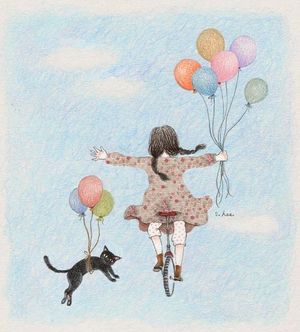

A confession about love, grief, and the woman I quietly left behind
Some losses cannot be mourned straight away. First, you have to understand that something has been lost.
It took me years to understand mine.
For a long time, I thought what I was missing was sleep. Then I decided it must be silence. A few uninterrupted hours. An unplanned Sunday morning. A cup of coffee I could finish while it was still warm, without anyone calling my name from another room.
I missed all those things, of course. But whenever I managed to get a little sleep or steal an hour for myself, the emptiness was still there, waiting in exactly the same place.
So it had to be something else.
 From the moment I became pregnant, people told me what to expect. They talked about labour, breastfeeding, sleepless nights, colic, nappies, teething and the strange mathematics of newborn sleep. They shared their experiences with the best of intentions. Nobody wanted to frighten me. They were trying to prepare me for the life ahead.
Looking back now, however, I realise that what nobody told me mattered just as much as everything they did.
Nobody told me that when a child is born, it is not only a baby who enters the world. A new woman is born too, one who carries the face and memories of the woman she used to be, but can no longer return completely to her old life.
Nobody told me that motherhood would place an invisible distance between me and the person I had always known myself to be.
After the birth, everyone wanted to see the baby. Everywhere I went, I heard the same questions. Was she sleeping through the night? Was she feeding well? Did she have colic? Whom did she resemble? Was she gaining enough weight?
People asked how I was too, of course. But the question often felt ceremonial, something polite to say before the conversation returned to the baby. Perhaps that is unfair. Perhaps some of them genuinely wanted to know. The truth is, I was not ready to answer them anyway.
“I’m fine,” I would say. “Tired, but grateful.”
What else was there to say?
In the early months of motherhood, you can become so intensely focused on keeping another human being alive that the landscape inside you begins to blur. Hunger, exhaustion, irritation, loneliness and love all melt into one indistinguishable feeling. You stop examining yourself because there is always something more urgent to examine: a temperature, a rash, a bottle, a breathing pattern, the number of wet nappies since morning.
So I explained everything away.
The heaviness that settled over me at the end of each day was sleep deprivation. Neglecting myself was simply part of being a mother. The feeling would disappear when she grew a little older. Everyone went through this. Every mother must feel this way.
Then the years passed.
The nappies disappeared. The night feeds ended. The toys changed. The bedtime stories changed. The afternoon naps vanished.
But the nameless absence inside me remained.
One evening, I was standing in the kitchen preparing dinner. The dishwasher was running. Her lunch box still needed to be packed for school the next day. My daughter was calling to me from the living room while emails continued to arrive on my phone.
Nothing terrible was happening. Nobody was ill. There had been no argument, no crisis, no dramatic collapse. From the outside, it was an entirely ordinary evening. Life was moving along exactly as it was supposed to.
Perhaps that is why I remember the moment so clearly. The truths that change us do not always arrive during disasters. Sometimes they come quietly, over the mechanical hum of a dishwasher, while your hands are busy cutting vegetables.
A sentence appeared in my mind with such clarity that it frightened me.
I miss my old life.
The guilt reached me almost before the thought had finished forming.
How can you think that?
Don’t you love your daughter?
Do you know what some people go through to have a child?
Be grateful.
Nobody was standing in the kitchen saying these things to me. They came from somewhere deeper: years of overheard remarks, advertisements, television mothers, social media captions, family stories and all the ideas about womanhood I had absorbed without noticing.
It was as though an invisible jury had been living inside me, waiting for the smallest sign of disobedience. I had barely admitted the feeling before it delivered its verdict.
That night, I could not sleep.
Eventually I got out of bed and went into my daughter’s room. She was deeply asleep, her hair spread across the pillow. There is something about the face of a sleeping child that briefly slows down the world. Their features soften. Every worry seems to leave their body. For a moment, they look untouched by time.
I reached out and moved the hair away from her forehead.
The first thought that came to me was simple.
I love you more than anyone in this world.
The second was far more difficult.
Then why am I sometimes so unhappy?
For a long time, I did not believe those two sentences were allowed to exist in the same heart.
Motherhood had always been presented to me as a single, pure emotion. Joy. Gratitude. Sacrifice. A love so complete that it erased every former desire. As though becoming a mother involved installing a new piece of software that deleted all previous versions of the woman you had been.
But real life does not work that way.
A woman can be grateful and exhausted. She can adore her child and still miss the life she had before. She can carry a love so fierce that she would give up everything without hesitation, while privately grieving the parts of herself she already gave away.
One feeling does not cancel the other.
It took the words of strangers to teach me that.
After everyone had gone to sleep, I would slip into the garden with my coffee and a cigarette. I never smoked in front of my daughter, so smoking had become something that belonged only to the night. The house would finally fall silent. The pace of the world would loosen. I would sit there with the faint light of my phone against my face and read stories written by women I would never meet.
I did not know exactly what I was searching for.
Perhaps I wanted one sentence that would prove I was not alone. Perhaps I wanted to find a woman who had been brave enough to write the words I had been too frightened even to think.
Again and again, I found versions of the same confession:
“I love my child more than anything in the world, but…”
But I have lost myself.
But sometimes I want to run away.
But I no longer know who I am.
But sometimes I feel nothing.
But I miss my old life.
The words after “but” were different for every woman, yet the shape of the silence around them was always the same.
I remember the relief I felt the first time I read those stories. Nothing in my life changed overnight. The next morning, breakfast still had to be made, bags still had to be packed, laundry still waited in its basket.
But something inside me had shifted.
For the first time in years, I did not feel defective, ungrateful or secretly monstrous. What I carried was not a private flaw belonging only to me. It was a loss without a recognised name, and perhaps that was why it had felt so heavy.
We carry unacknowledged grief for much longer than grief we are allowed to speak about.
I was not alone.
I had simply found myself in the middle of something millions of women had been whispering about for years.
Perhaps the problem had never been me.
Perhaps we had been told only the beginning of the motherhood story.
Nobody had told us about the goodbye.
From the outside, motherhood is treated as though it is simply another role a woman takes on. Daughter. Partner. Employee. Mother. But it does not sit neatly beside the others. It enters every room. It changes the way time feels, the way danger feels, the way love and fear live inside the body.
There is a word for this transformation: matrescence. Much like adolescence describes the upheaval of becoming an adult, matrescence describes the emotional, psychological and identity shift of becoming a mother.
The first time I came across that word, I stared at the screen for a long time.
There it was. A name for the crossing. A name for that unsettling place between the woman I had been and the woman I was still learning to become.
A baby’s development is watched closely. Her weight is recorded. Her sleep is discussed. Her feeding is observed. Her first smile, first word and first step are celebrated.
But what happens to the woman beside her?
Who does she become?
What begins to frighten her?
What does she miss?
Which ambitions does she place quietly on a shelf, promising herself she will return to them later?
What does she stop asking for because asking begins to feel selfish?
These questions rarely appear in our polished stories about motherhood. The mother is often written as a supporting character in her own life: endlessly available, endlessly giving, somehow fulfilled by the very act of disappearing.
Real women do not live like that.
Real women sometimes lock the bathroom door and sit there for two extra minutes, not because they need the bathroom but because it is the only room in which nobody can immediately ask something of them.
Real women sometimes remain in the car after parking, staring through the windscreen before finding the energy to go inside.
Real women sometimes walk slowly through supermarket aisles, taking longer than necessary because those extra twenty minutes may be the only part of the day that belongs entirely to them.
I never spoke about these things.
I knew what people would say.
Every mother feels like that.
For years, I accepted this as reassurance. Now I hear something else inside it.
If every mother feels like that, why have we decided it does not deserve to be examined? Why does the fact that a pain is common make us less willing to see it?
A wound does not become harmless simply because millions of women have learned how to hide it.
If millions of women are carrying the same weight in silence, perhaps the problem is not with the women. Perhaps it lies in the impossible story of motherhood we have expected them to inhabit.
A story in which love must erase exhaustion.
Gratitude must silence grief.
And a good mother must never look back at the woman she used to be.
I no longer want to believe that story.
Years from now, when I look back, I do not want to remember only my daughter’s childhood. I want to know that my own life did not quietly pass beside me while I was busy preserving hers.
That is why I write.
Not to convince anyone. Not to prove that I am right. Not to make motherhood sound darker than it is.
I write because, for years, there were sentences I could not even say to myself without shame. Writing is the only place where I can lay them down, look at them honestly and discover that they are not as dangerous as I had imagined.
Perhaps another woman will find this chapter one night, while her family sleeps and the house finally belongs to silence. Perhaps she will recognise something she has never been able to explain. Perhaps she will feel, for a moment, that she is not failing at motherhood. She is simply trying to remain a whole human being inside it.
Sometimes healing does not begin with a solution.
Sometimes it begins when somebody else gives your unnamed feeling a voice.
There is one fear I still carry.
Perhaps my daughter will read this one day.
Maybe the words will hurt her at first. Maybe she will think, My mother did not like being my mother.
That is the thought I fear most, because it is not what I mean.
I am not saying that I did not love you. I could never say that. You are one of the deepest truths of my life. I have loved you with a force I did not know I possessed.
What I am saying is that, in order to have you and to love you as completely as I do, I had to leave a woman behind.
And sometimes I miss her.
When a child enters the world, another life quietly closes. There is no funeral. Nobody brings flowers. Nobody offers condolences. Still, something has ended.
A woman remains behind with her habits, her unfinished ambitions, her private silences and the time that once belonged only to her.
I mourned her for years without understanding what I was mourning.
That was the cruelest part. Not the loss itself, but living with it before I had the words to recognise it.
Today, I can finally name it.
And if my daughter becomes a mother one day, I hope she will read these words without judging me. I hope she will understand only this:
Her mother loved her.
More than she could ever put into language.
But her mother was never only a mother.
She was also a woman who missed things. A woman who became tired. A woman who surrendered parts of herself and slowly tried to find them again.
Loving a child with your whole heart does not prevent you from missing your former life.
The two truths do not destroy each other.
They simply learn how to live inside the same heart.
Perhaps that is one of the hardest parts of motherhood: discovering that the heart can break open without breaking apart, and becoming large enough to carry both the life you chose and the life you left behind. 🩶