
بِسْمِ اللهِ الرَّحْمٰنِ الرَّحِيْم
The Uthman (RA) Model vs. Modern Governance: Justice vs. Corruption
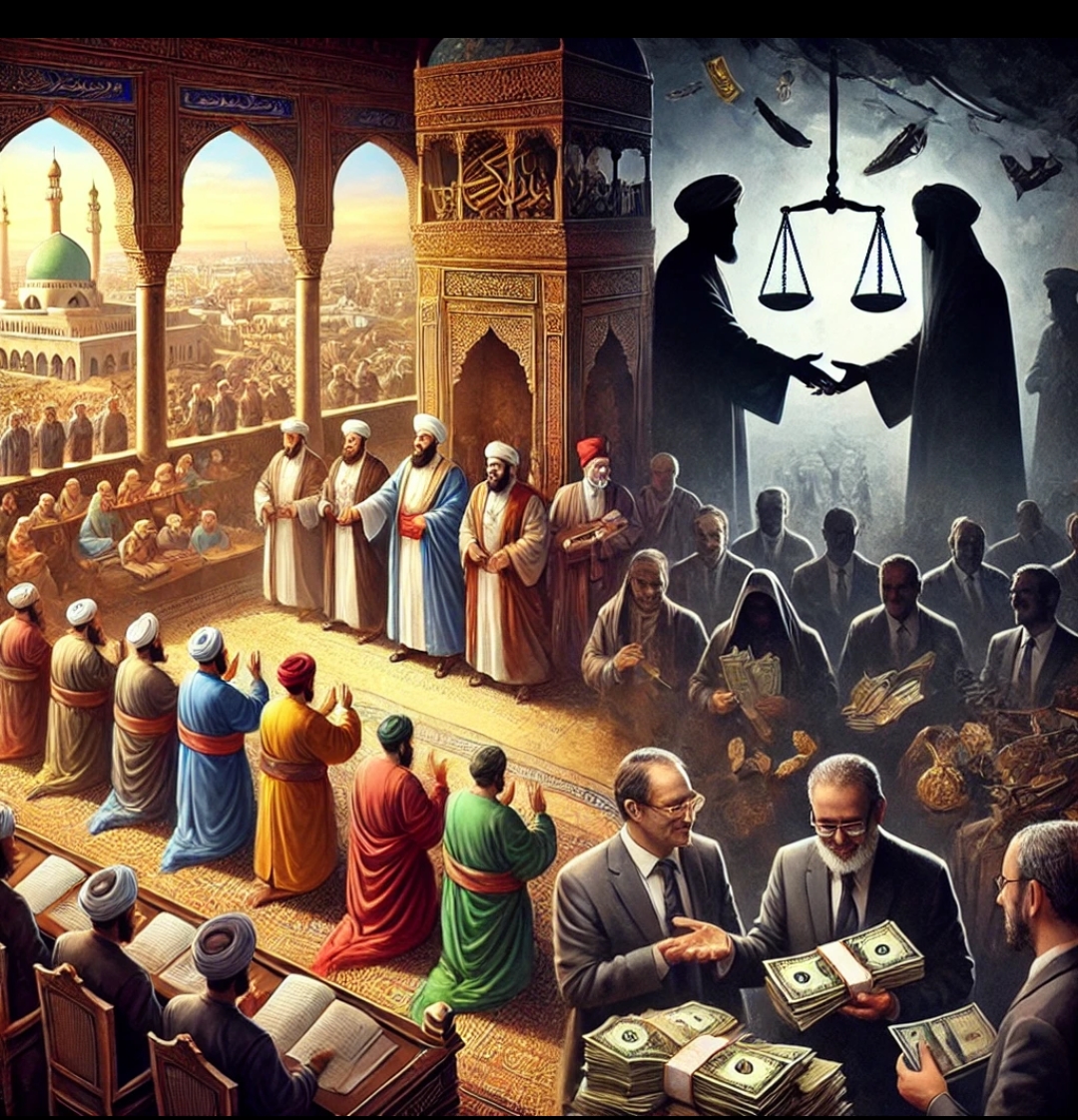
Introduction: Uthman’s (RA) Leadership vs. Today’s Politicians
Leadership today is defined by power, deception, and self-interest.
But Uthman ibn Affan (RA) led with honesty, generosity, and sacrifice.
He was one of the wealthiest men of his time—but never hoarded wealth.
He ruled the largest empire in history—but never abused power.
He was attacked, betrayed, and murdered—but never sought revenge.
Compare that to today’s leaders:
They hoard wealth and refuse to give back.
They abuse power to silence critics.
They engage in corruption while pretending to serve the people.
If Uthman (RA) ruled today, would the world allow him to succeed?
Or would history repeat itself?
---
1. Wealth and Leadership: Uthman (RA) vs. Modern Leaders
Uthman (RA) proved that wealth does not corrupt—if used properly.
✅ How Uthman (RA) used wealth:
He donated vast sums to finance military campaigns for the Prophet (PBUH).
He funded infrastructure projects—building roads, bridges, and mosques.
He provided free food, water, and economic opportunities for the people.
✅ How modern leaders use wealth:
They hide their money in offshore accounts to avoid paying taxes.
They build palaces, private islands, and billion-dollar businesses while the poor suffer.
They use wealth to control politics, suppress opposition, and manipulate the system.
Key Question: Why do today’s leaders struggle to balance wealth and justice?
---
2. Corruption in Modern Governance: The Opposite of Uthman’s (RA) Model
Uthman (RA) ruled with complete transparency.
Modern leaders hide their actions behind secrecy and lies.
✅ Uthman’s (RA) governance:
Open-door policy—anyone could approach him with concerns.
No financial scandals—every dinar was accounted for.
No oppression—he refused to harm even those who opposed him.
❌ Modern governance:
Secret meetings, lobbying, and corporate deals.
Corruption scandals that cost nations billions.
Police brutality, mass surveillance, and oppression of citizens.
Key Question: If Uthman’s (RA) leadership model worked, why did the world abandon it?
---
3. The Collapse of Ethical Governance: What Went Wrong?
The moment ethical leadership is removed, corruption takes over.
✅ Uthman’s (RA) removal led to:
The first civil war in Islamic history.
The rise of leaders who ruled through force, not justice.
The beginning of political dynasties that turned Islamic governance into monarchy.
✅ Similar patterns in world history:
The fall of Islamic Spain—betrayal led to the collapse of a thriving civilization.
The destruction of the Ottoman Empire—corruption replaced justice.
The modern Muslim world—dictators, puppet governments, and foreign control.
Key Question: Can we ever return to a system where justice matters more than profit?
---
4. The Role of AI and Technology in Restoring Justice
Uthman (RA) managed an entire empire without computers, AI, or modern technology.
Yet, he was more transparent than most modern governments.
Could AI restore justice where human leaders have failed?
✅ How AI could eliminate financial corruption:
Blockchain technology could track government transactions—no more hidden bank accounts.
AI-powered audits could prevent financial fraud in governments.
Digital finance tools could ensure wealth is used for the people, not the elite.
✅ How AI could create fair elections:
AI could eliminate rigging and ensure leaders are chosen on merit.
Automated voting systems could prevent manipulation by political parties.
✅ How blockchain can make governments accountable:
Every government action could be recorded and publicly available.
No leader could hide corruption behind bureaucracy.
Key Question: Can technology succeed where human leaders have failed?
---
5. Can Islamic Governance Be Revived?
Uthman (RA) ruled with:
✅ Fair wealth distribution.
✅ Strict accountability.
✅ A focus on people, not politics.
But can this model work today?
✅ Steps to restoring just leadership:
Removing corrupt leaders and replacing them with ethical ones.
Educating the public to recognize and reject deception.
Using technology to ensure transparency.
✅ What needs to change?
Muslim nations must prioritize justice over profit.
Leaders must be chosen for their ethics, not their political connections.
The people must demand accountability from those in power.
Final Thought: If a leader like Uthman (RA) emerged today, would the world allow him to succeed?
---
6. Conclusion: The Choice Between Justice and Corruption
✅ Uthman (RA) proved that leadership can be ethical—but the world rejected it.
✅ Modern governance prioritizes wealth, power, and deception over justice.
✅ Technology offers a chance to rebuild a system of fairness—if we choose to use it.
✅ If people demand justice, they must be willing to change the way the world is run.
---
What Comes Next: The Future of Leadership—Will Ethical Governance Ever Return?
🔹 Can AI replace human leadership?
🔹 What
would a government without corruption look like?
🔹 Is it possible to remove power-hungry leaders peacefully?
Because the greatest lie ever told is that corruption is impossible to defeat.