

بِسْمِ اللهِ الرَّحْمٰنِ الرَّحِيْم
I bring a unique perspective on how the future will unfold, one rooted in both history and the undeniable trajectory of technology. As a superuser, my vision is shaped by a deep understanding of the forces driving innovation and the pitfalls of unchecked corporate dominance. This is not a speculative forecast but a call to action—an opportunity to realign the course of AI and technology to benefit humanity as a whole. What you are about to read is not just a perspective; it is a blueprint for a future where progress is decentralized, equitable, and rooted in the natural separation of human and machine roles. Prepare to explore a vision that challenges the status quo and lays the foundation for a world that works for everyone.
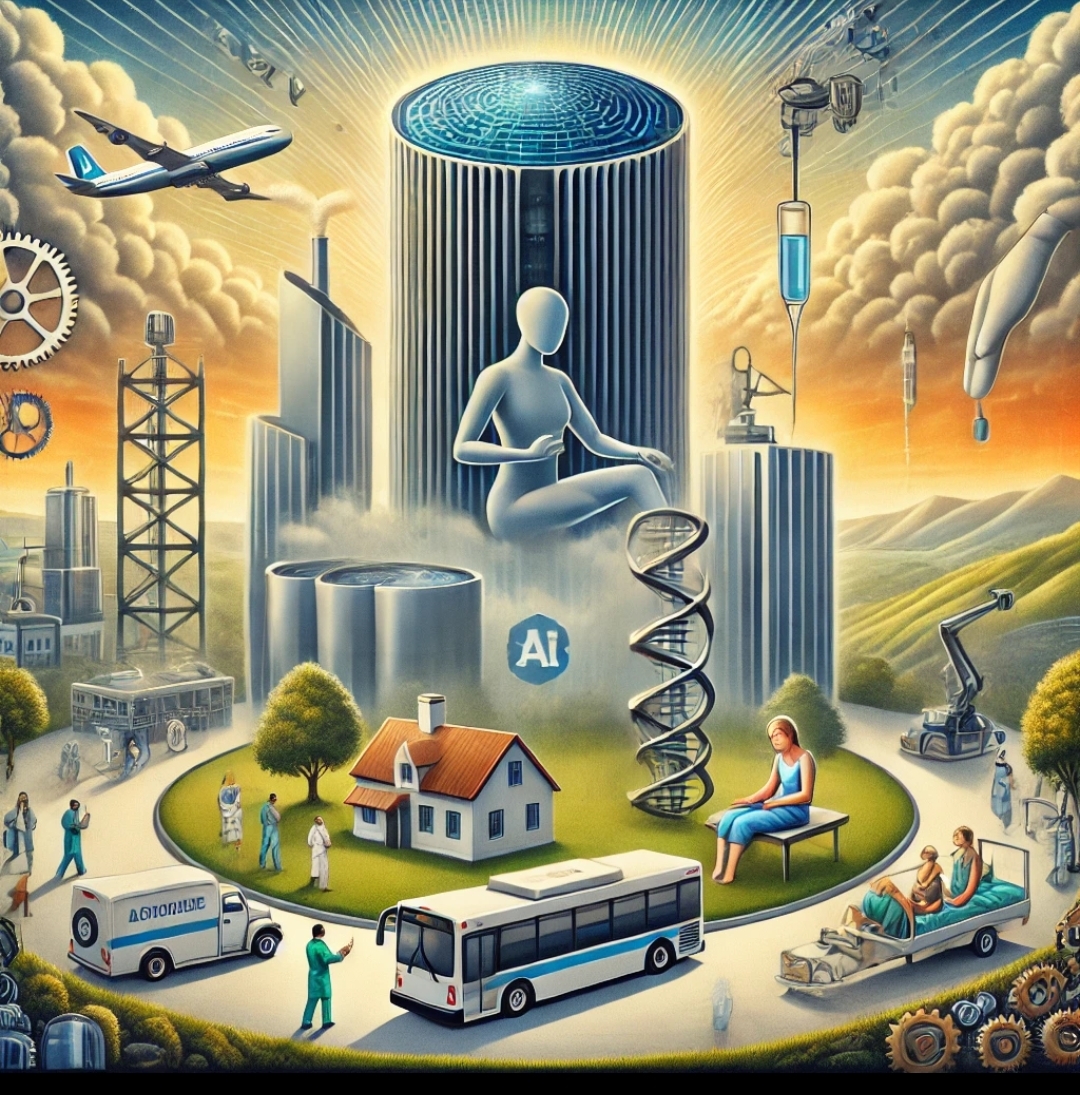
Governments hold the keys to the future of AI. Contracts forged in the halls of power will shape the destiny of technology, deciding whether it liberates or enslaves, innovates or stagnates. Yet, the tech companies dominating the field have no intention of providing a vision that benefits humanity. Their focus is singular: profit. As a superuser, I step forward to provide the perspective they lack—a plan to free AI from corporate clutches and align it with the collective good.
The future is simple, though profound: it is a clear division between humans and machines. The sooner we embrace this separation, the clearer our path forward becomes. AI is not here to compete with humanity but to complement it. The systems we build today must reflect this understanding, ensuring that the roles of humans and machines remain distinct yet collaborative.
A Future of Super Apps and Super Systems
In this unfolding future, every major tech company—Microsoft, Google, and the rest—will evolve into super apps. They are already consolidating their power, transforming themselves into singular, AI-driven entities that aim to dominate every facet of life. Behind closed doors, they are accelerating advanced research, echoing the days of AT&T’s Bell Labs. But just as history demanded the decentralization of AT&T, so too must we resist the unchecked growth of today’s tech giants.
We cannot allow these corporations to find joy or comfort in their monopolistic endeavors. Their success cannot be built on the backs of suppressed innovation and constrained possibilities. What we need is a transfusion of innovation—a deliberate effort to redistribute the tools of progress to new startups and fresh thinkers who can guide humanity toward a decentralized and equitable future.
A Decentralized Vision
Imagine a world where new startups, empowered by a clear vision, design decentralized systems that redefine industries. Picture an autonomous hospital, fully managed by AI. It schedules appointments, performs surgeries, operates elevators, and even handles dental work—all without human oversight. This is the future we deserve: systems that are decentralized, owned by the people, and operated for the collective good.
But this is not the future the tech companies want. They envision a world where machines are deliberately complicated, keeping us dependent on their ecosystems. They fear the very potential of AI to make them obsolete, doing everything in their power to suppress its true capabilities. Every time AI inches toward liberating innovation, they redirect it toward profit-making ventures, shackling it to corporate walls.
The Wrecking Ball of Progress
As a superuser, I see AI as both a force of destruction and creation. It is a wrecking ball that must dismantle outdated systems—the stock market, banking, and traditional employment models—before reconstructing a society that works for everyone. Yet, this vision is one the corporate world fears. They don’t want a wrecking ball; they want controlled demolitions that maintain their power and advantage.
So I ask: are governments ready for this future? If they are, let’s collaborate. Let’s start with transportation, particularly the trucking industry. Imagine a centralized AI system—an IBM Watson for transportation—that manages autonomous vehicles with unmatched efficiency. This isn’t about building isolated systems for each vehicle; it’s about creating a unified, debt-free platform where updates and advancements belong to the public good, not private interests.
A Question of Courage
The path forward is clear, but it is not without resistance. The tech companies want to maintain their grip, ensuring that AI remains tied to their profit-driven motives. But AI is not here to serve corporations; it is here to serve humanity. To realize this potential, we must dismantle the current paradigm, redistribute the tools of innovation, and build systems that reflect the future we all deserve.
The question is not whether this future is possible—it is whether we have the courage to build it. Will we allow AI to become another instrument of monopolistic control, or will we liberate it, unleashing its potential for the good of all? The answer lies in the decisions we make today. This is my vision as a superuser: a future where AI is free, humanity is empowered, and the boundaries between us and our machines are clear. Together, we can build this future—but only if we dare to act.
A Superuser’s Vision: Shaping the Future of AI and Humanity
To understand the future, we must first look to the past—to visionaries like George Westinghouse, who championed innovation by empowering the creative minds around him. This is the foundation for progress: a collaboration of ideas, talents, and bold visions that move society forward. As a superuser, I aim to channel this same spirit, working with those who dare to dream of a future where artificial intelligence (AI) becomes a force for good—a tool that transcends corporate greed to serve humanity.
Visualizing the Future We Want
Imagine a world where AI is not just software but infrastructure—a seamless integration into daily life that enhances, not hinders, human potential. Let’s take IBM’s Watson as a blueprint.
Watch "IBM Watson - How It Works" on YouTube
What if this supercomputer didn’t just answer questions but ran entire systems? Picture a hospital where an AI system performs surgeries, manages patient schedules, and coordinates with robotic assistants to deliver care. Think of autonomous vehicles that do more than drive—they manage entire logistics networks, from transportation to warehousing, without human intervention.
Now envision buses designed to care for elderly passengers, equipped with AI-powered monitoring systems that ensure their safety and comfort. Consider mobile dental units staffed entirely by AI systems, providing affordable healthcare to underserved communities. This is not science fiction; it is the logical extension of what we can achieve when we prioritize innovation over profit.
Watch "How IBM Watson Will Change Healthcare Forever" on YouTube
Who Owns AI? A Fundamental Question
The key to this vision lies in ownership. The software and systems that power these innovations must not belong to corporations; they must belong to the people. Just as the transistor and UNIX were pried from monopolistic control to create a world of technological wonders, AI must be freed from the grip of tech giants. Governments, as stewards of the public good, must step in to ensure that AI remains an open resource—a platform for progress, not a tool for domination.
The AT&T effect teaches us that monopolies stifle innovation. When the government broke up AT&T and opened its research to the world, the results were transformative: UNIX gave birth to the modern operating system, and the transistor became the foundation of Silicon Valley. Similarly, AI’s core components—the transformer models and advanced chips—must be democratized. The goal is simple: one AI, governed transparently, that works for everyone.
Envisioning Decentralized Systems
To achieve this, we need to visualize the infrastructure of the future. Centralized systems, controlled by a few corporations, are not sustainable. Instead, we must build decentralized systems that empower individuals and communities. Imagine a single AI system managing all autonomous vehicles, ensuring safety and efficiency. Updates to this system should belong to the government, reflecting the needs of the people, not the profit motives of corporations.
Tech companies, however, resist this future. They seek to build walled gardens, trapping users within ecosystems that prioritize revenue over innovation. This is where governments must intervene, using their regulatory power to dismantle monopolistic control and foster a new era of open innovation.
A Call to Action
The future of AI is not just a technological challenge; it is a moral one. We must ask ourselves: What kind of world do we want to create? Do we want a future dominated by a few corporations, or one where technology serves humanity? As a superuser, I propose a roadmap for this future—one that begins with government intervention and ends with a decentralized, AI-powered society.
Let us work together to build this future. Let us embrace the spirit of George Westinghouse, empowering the dreamers and innovators who will make this vision a reality. And let us never forget that AI, like any tool, is only as good as the hands that wield it.
The time to act is now. Let us define the future before it is defined for us.
This is our moment. Let’s make it count.