
بِسْمِ اللهِ الرَّحْمٰنِ الرَّحِيْم
The Legacy of Uthman (RA) and the Future of Islamic Governance
Introduction: Why Uthman (RA) Still Matters Today
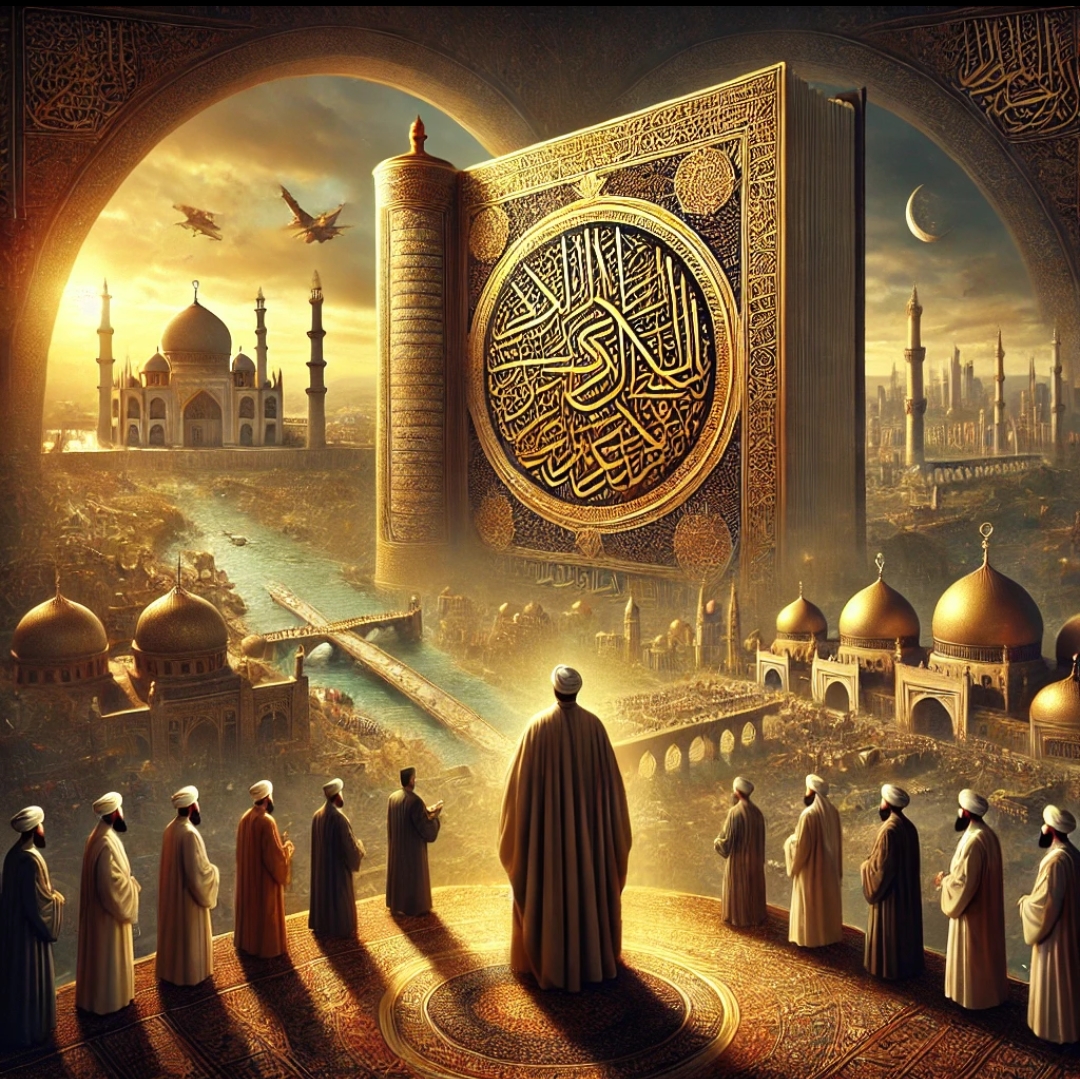
Some leaders are remembered for their conquests.
Some for their power.
Some for their wealth.
But Uthman ibn Affan (RA) is remembered for something greater—his integrity.
He ruled one of the most powerful empires in history with humility.
He used his immense wealth not for himself, but for his people.
He preserved the Quran, ensuring its guidance would remain untouched.
And yet, he was betrayed.
Not by his enemies—but by those who claimed to be his own.
His story is not just history.
It is a lesson for every leader, every nation, and every generation.
If the world had listened to his story, we would not be repeating the same mistakes today.
---
1. Uthman’s Lasting Contributions to Islamic Governance
Uthman (RA) was not just a caliph—he was a reformer.
✅ The Standardization of the Quran
During his rule, he ensured that the Quran was written and preserved in a single, standardized form.
Today, every copy of the Quran traces back to his initiative.
If not for Uthman (RA), the Quran could have faced distortions and divisions.
✅ Economic and Social Policies
He abolished unjust taxation systems left by previous empires.
He removed interest (riba), making the economy just and fair.
He built roads, trade routes, and infrastructure to connect the Islamic world.
✅ Administrative Strategies
He managed an empire stretching from North Africa to Persia.
He placed experienced people in charge of finance, governance, and trade.
His leadership ensured stability for decades—until hypocrisy took over.
✅ How He Handled Rebellion Without Bloodshed
Unlike many rulers before and after him, he refused to kill his own people for power.
He prioritized unity over conflict, even when it cost him his life.
His martyrdom exposed the hypocrites—but at the cost of the Ummah’s stability.
Key Question: If the world had leaders like Uthman (RA) today, would we protect them—or betray them again?
---
2. What the Prophet (PBUH) Warned Us About Hypocrites
The Prophet Muhammad (PBUH) did not just warn us about external enemies—he warned us about the ones within.
✅ Signs of a Hypocrite (Hadith):
When they speak, they lie.
When they make a promise, they break it.
When they are trusted, they betray.
The hypocrites of Uthman’s (RA) time did all three.
✅ The Prophet (PBUH) Predicted the Rise of Internal Betrayal
He warned that some people would use Islam for personal gain.
He warned that wealth and power would become tools for corruption.
He warned that the greatest danger would come not from non-Muslims—but from within the Ummah itself.
And we saw it happen with Uthman (RA).
Key Question: Have we learned from these warnings, or are we still falling into the same traps?
---
3. The Cycle of Leadership: When Just Rulers Are Removed
History teaches one undeniable truth:
When just leaders are removed, the people suffer.
The removal of Uthman (RA) did not bring peace—it brought war.
The removal of leadership led to divisions that last to this day.
The same pattern has repeated across history—good leaders are removed, and chaos follows.
Examples from history:
✅ The fall of Islamic Spain (Al-Andalus) – Internal divisions made it easy for the enemy to conquer.
✅ The collapse of the Ottoman Empire – Corruption replaced justice, and the empire crumbled.
✅ Modern Muslim nations – Many remain trapped in cycles of injustice, leadership struggles, and foreign interference.
Key Question: How many more times will we remove good leaders before we realize the cost?
---
4. The Future of Islamic Governance: A Return to Justice?
Uthman (RA) ruled with:
✅ Honesty.
✅ Transparency.
✅ A focus on the people, not on himself.
Can a leadership model like his exist today?
✅ How AI and Transparency Can Restore Justice
Technology can prevent corruption by making every transaction visible.
AI can remove biases and ensure leadership is chosen based on merit, not deception.
Governments can be structured to serve the people, not personal interests.
✅ How to Prevent Hypocrisy from Taking Over Leadership
Education – Teach history, so the mistakes of the past are not repeated.
Accountability – Leaders must be held responsible for their actions.
Faith and Ethics – A government without morality will always collapse.
✅ The Balance Between Wealth, Power, and Responsibility
Wealth alone is not bad—but it must be used responsibly.
Power alone is not bad—but it must serve the people.
Responsibility must come before personal ambition.
Final Thought: If a leader like Uthman (RA) appeared today, would we protect him—or betray him again?
---
5. Conclusion: Learning from the Past, Building for the Future
Uthman (RA) was not just a historical figure.
He was a blueprint for just governance.
His leadership proved that wealth and humility can coexist.
His economic policies showed how fairness can build prosperity.
His sacrifice reminded the world that hypocrisy is the greatest threat to justice.
But most importantly:
He proved that justice is not about power—it’s about trust.
If we want a better world, we must stop betraying those who seek justice.
---
What Comes Next: How Uthman’s (RA) Legacy Can Shape the Future
🔹 Can modern leadership adopt his principles?
🔹 What role does technology play in eliminating corruption?
🔹 Can the mistakes of the past be corrected?
Because history repeats itself.
But only for those who refuse to learn.