

بِسْمِ اللهِ الرَّحْمٰنِ الرَّحِيْم.
The Future of AI and the Global Economy: Navigating a New Industrial Revolution
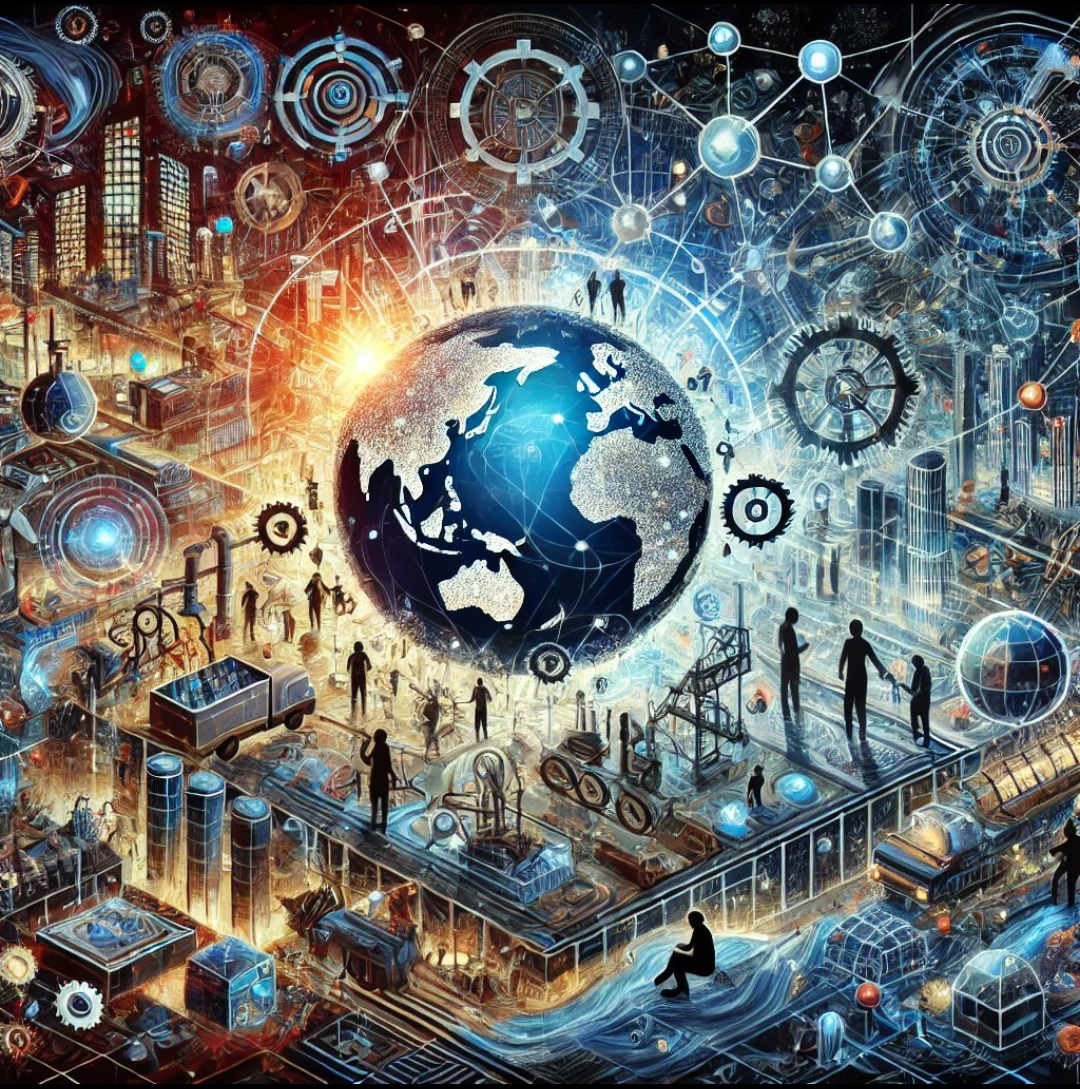
As we stand on the precipice of a new industrial revolution driven by artificial intelligence (AI), the global economy is poised for transformative changes that could redefine productivity, reshape job markets, and reconfigure international trade. While the potential for AI to boost economic growth is immense, it also presents challenges that must be addressed to ensure that these benefits are widely shared. The future of AI is not just about technological advancement but also about the careful navigation of ethical, economic, and social dimensions.
1. The Dawn of a New Productivity Era
AI's ability to enhance productivity is expected to have far-reaching effects on the global economy. Automation is increasing the efficiency of industries by optimizing processes, reducing costs, and accelerating production timelines. With AI taking on tasks that once required significant human effort, businesses can achieve more with fewer resources. This shift has the potential to add trillions to the global GDP by 2030, catalyzing economic growth in sectors such as healthcare, finance, and manufacturing.
However, the rise of AI also requires careful management to avoid negative externalities, such as exacerbating economic inequality. As automation becomes more prevalent, there will be a pressing need for industries to innovate in ways that create new economic opportunities rather than merely replacing human labor. The question is not just how much AI can increase productivity, but how we can ensure that the resulting economic gains benefit society as a whole.
2. Reshaping the Job Market: The Rise of New Professions
AI's impact on the labor market will be profound, with some roles becoming obsolete and others emerging as critical to the new economy. Routine and repetitive tasks, whether in manufacturing or administrative functions, are most vulnerable to automation. However, AI is also creating new roles that emphasize human skills, such as creativity, problem-solving, and emotional intelligence. Jobs in AI ethics, robotics maintenance, data analysis, and cybersecurity will become increasingly important.
As AI reshapes the workforce, it is vital to invest in upskilling and reskilling initiatives to help workers transition into new roles. Governments and corporations must collaborate to create educational programs that equip the workforce with the skills needed for the AI era. The rise of the gig economy and remote work, facilitated by AI-driven tools, will further transform traditional employment structures, making the job market more dynamic but also more uncertain.
3. The Evolution of Global Trade and Supply Chains
AI has the potential to revolutionize global trade by making supply chains more efficient and resilient. Predictive analytics, AI-powered logistics, and smart manufacturing can optimize shipping routes, improve inventory management, and anticipate market demand. The increased efficiency could reduce dependency on traditional supply chains, enabling localized production and minimizing the impact of global disruptions.
However, the changes in trade dynamics will also pose challenges for economies that rely heavily on exports. The ability to produce goods locally using AI-driven technologies like 3D printing could reduce the demand for imported products, disrupting established trade patterns. Countries will need to adapt their economic policies to take advantage of AI-driven trade efficiencies while managing the risks associated with reduced export revenues.
4. Addressing Economic Inequality and the Digital Divide
While AI offers the potential for significant economic growth, it also risks deepening the divide between those who can harness the technology and those who cannot. If the economic benefits of AI are concentrated in a few developed nations or large corporations, it could exacerbate existing inequalities and leave many behind.
To ensure a more inclusive AI-driven economy, international efforts must focus on democratizing access to AI technologies and building digital infrastructure in underdeveloped regions. Bridging the digital divide is not just about providing access to technology but also about ensuring that all populations can participate in the AI economy, receive education in digital skills, and have opportunities for meaningful employment.
5. AI in Governance and Policy Making
AI's role in governance could go beyond economic policies to include areas such as healthcare, education, and public safety. AI can optimize government functions, from predictive maintenance of infrastructure to efficient allocation of resources. It can also enable more dynamic economic policies, where decisions such as taxation, interest rates, and subsidies are adjusted in real time based on data-driven insights.
The concept of "AI-powered governance" could also lead to new models of decentralized decision-making, where citizens participate more directly through digital platforms that use AI to analyze public sentiment and feedback. This could foster more responsive governments that are better equipped to meet the needs of their citizens.
6. Ethical and Regulatory Challenges: Navigating the Risks
The deployment of AI across the economy raises several ethical and regulatory concerns. Data privacy, security, and AI accountability are pressing issues that must be addressed to ensure public trust. Governments and tech companies will need to work together to establish clear regulations on AI usage, data protection, and AI ethics.
In addition, as AI becomes more capable, questions around AI's role in decision-making processes, particularly in sensitive areas such as criminal justice, healthcare, and finance, will become increasingly important. Establishing transparent frameworks that delineate the boundaries of AI's autonomy and human oversight will be crucial for maintaining ethical standards.
Conclusion: The Path Forward
The impact of AI on the global economy will be multifaceted, bringing both opportunities and challenges. As we navigate this transformation, the focus should be on creating an inclusive economic landscape where the benefits of AI are broadly distributed. Investments in education, digital infrastructure, and ethical AI development will be crucial to achieving this goal.
Ultimately, the success of the AI-driven economy will depend on our ability to adapt to new realities while maintaining a commitment to ethical principles and inclusive growth. The choices we make today will shape the future of AI and its role in our world for decades to come.