

بِسْمِ اللهِ الرَّحْمٰنِ الرَّحِيْم
The global economy is undergoing a seismic shift, one that redefines not just how we transact but how we create, sustain, and measure value. The Brand Currency System is at the forefront of this transformation, offering a paradigm that challenges traditional notions of wealth, investment, and economic growth. This system represents a bold new approach, where transparency, ethical behavior, and comprehensive value creation form the backbone of a truly sustainable economy.
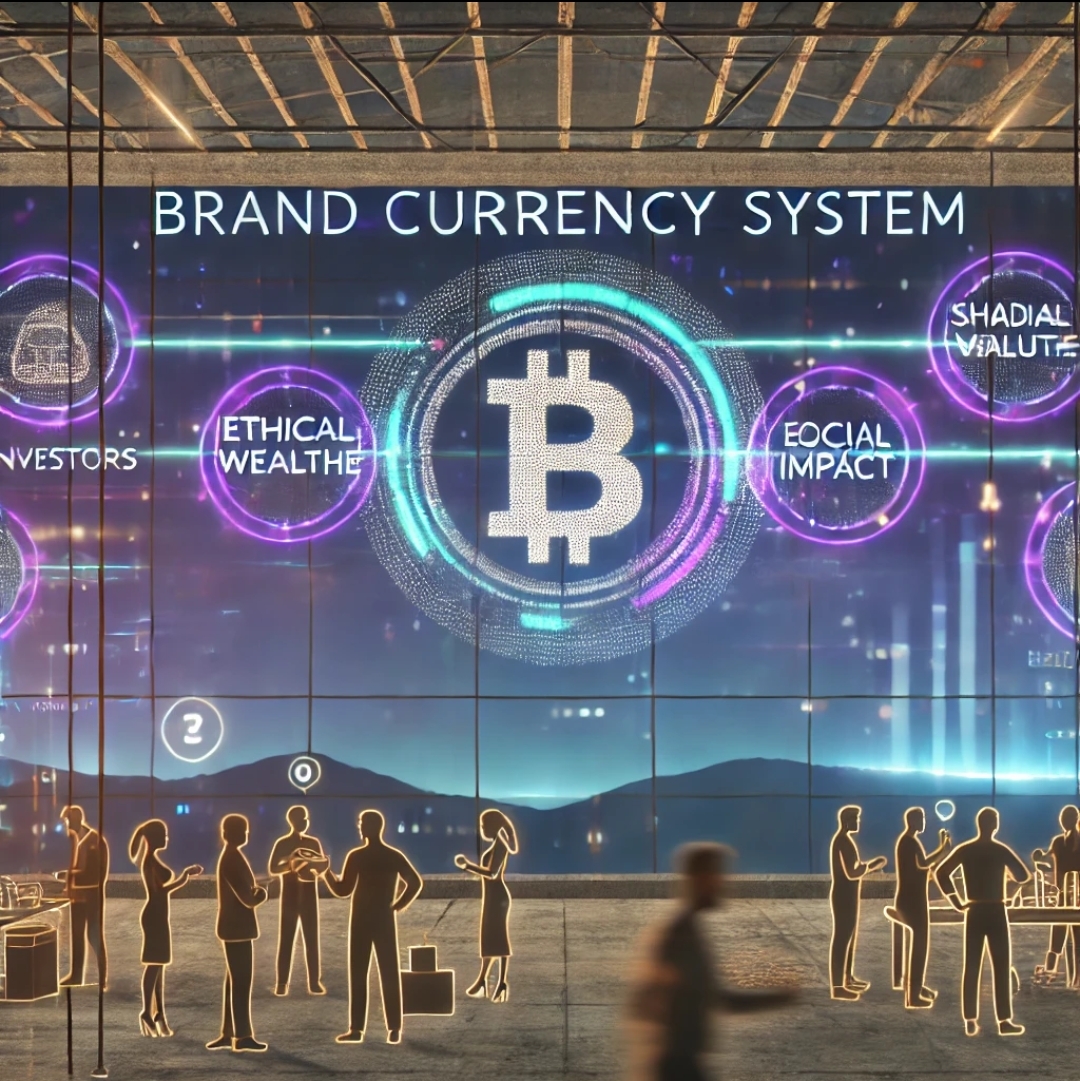
As we navigate this new reality, it’s crucial to understand how the Brand Currency System fundamentally reshapes the rules of the game—from the role of AI and automation to the democratization of ownership and the ethical imperative that underpins every transaction. This is more than an economic model; it’s a revolution in how we define prosperity.
1. Realigning Value with Integrity
In today’s market, value is often linked to financial performance alone, with companies driven by cost-cutting, short-term earnings, and profit maximization. This approach overlooks broader societal impacts, leading to systemic inequities, environmental damage, and labor exploitation. The Brand Currency System is designed to break this cycle.
True value creation: In this new system, value is not just about profit margins—it’s about how businesses generate ethical, social, and environmental impacts. Transparency is no longer a buzzword; it’s a requirement. Every transaction is visible, every supply chain interaction is measurable, and every dollar of revenue must be justified by tangible contributions to the economy.
Impact on leadership: Corporate leaders will no longer be able to hide behind profit reports that mask ethical failings. They will be evaluated on total performance metrics, which encompass sustainability, fair labor practices, and responsible sourcing. Companies must deliver value that aligns with integrity, redefining success not just as financial gain, but as ethical stewardship.
2. Democratizing Ownership: The New Equity
One of the most transformative aspects of the Brand Currency System is its approach to equity distribution. In traditional markets, ownership is often concentrated among a few major shareholders, creating a structure where the majority are excluded from decision-making and wealth creation. The Brand Currency System fundamentally changes this by tying ownership to transactions.
Equity through participation: Every transaction creates value that translates into ownership stakes, making customers, employees, and small investors shareholders in the companies they support. This not only broadens the base of ownership but also builds a more inclusive, stable economy.
Stakeholder capitalism redefined: In this system, stakeholder capitalism becomes the norm. Consumers and workers are not just passive participants but active contributors to growth. As businesses generate value, it is distributed equitably among those who create it, making the economy more resilient, fair, and sustainable.
Broader implications: The democratization of equity fosters a culture of fiduciary responsibility among all stakeholders, aligning corporate growth with societal well-being. It ensures that every dollar generated is not just about maximizing profits for a few but creating opportunities for many.
3. Redefining the Investor Mindset
Investors, too, must adapt to this new reality. The Brand Currency System demands a shift from speculation to sustained growth, focusing on the broader impact of investments rather than short-term financial returns. Traditional metrics like quarterly earnings will no longer be the sole determinants of success.
Comprehensive metrics of success: In the Brand Currency System, success is measured by total performance—supply chain efficiency, labor practices, consumer welfare, and environmental impact. This broader evaluation of value creation encourages investors to consider long-term stability, not just immediate returns.
The moral responsibility of investment: Investors will no longer be able to ignore the ethical implications of their investments. With detailed reports on every aspect of a company’s operations, they must embrace a more responsible approach. The decision to invest will now be based not only on financial gain but on whether a company contributes positively to the economy, society, and environment.
A call for proactive governance: Investors will have the opportunity to play a more active role in corporate governance, supporting businesses that prioritize ethical growth and transparency. In this new era, investment success is not just about financial returns but about fostering comprehensive wealth that benefits all.
4. Breaking the “Race to the Bottom”
Historically, many industries have pursued a “race to the bottom” strategy, slashing prices and cutting corners to achieve short-term gains. This approach often sacrifices quality, labor rights, and environmental health. The Brand Currency System makes this strategy obsolete by shifting the focus to total value generation.
Competing on principles, not price: In this new system, companies will be judged not by how cheaply they can produce goods but by their commitment to ethical practices, sustainable sourcing, and fair treatment of workers. It creates a market where competition is based on principles, not just profits.
Impact on consumer loyalty: Consumers, as co-owners of the businesses they support, will be more inclined to stay loyal to brands that demonstrate total value creation. This builds long-term customer relationships and brand loyalty that extends beyond price incentives.
The new dynamics of success: With value creation as the central metric, businesses can focus on innovation, sustainability, and growth that benefits all stakeholders, not just shareholders. It’s a system that encourages companies to compete not on the lowest price but on the highest standards of performance and integrity.
5. AI as an Economic Equalizer
AI is often viewed as a disruptive force that threatens jobs and increases inequality. But in the Brand Currency System, AI serves as a tool for economic equalization. By automating processes and driving costs down to near zero, AI enables companies to unlock savings that can be reinvested in meaningful ways.
Automation that empowers: With AI reducing costs in sectors like food production, construction, and logistics, companies can reinvest those savings into improving working conditions, expanding consumer benefits, and boosting innovation.
New opportunities for growth: As AI-driven efficiencies free up resources, individuals and businesses can focus on creative, strategic endeavors, building an economy based on productivity and personal growth rather than mere cost-cutting.
Broader implications: AI becomes a tool for economic stability, not disruption. It enables a more equal distribution of resources, providing broader access to basic needs like food, shelter, and healthcare. This shifts the focus from individual survival to collective prosperity.
6. Reducing Political Risk and Economic Volatility
The Brand Currency System also offers a way to depoliticize economic interactions, reducing the volatility that often arises from political agendas, sanctions, and tariffs.
A resilient global economy: By basing transactions on mutual respect and clearly defined value, the system minimizes the impact of unilateral political decisions that disrupt global trade. It fosters cooperation over conflict, making economies more resilient to geopolitical shifts.
Empowering consumers and investors: This system gives consumers and investors more control over their economic destinies, reducing the risks posed by arbitrary policy changes. With a transparent, decentralized network, they can make informed decisions based on real value, not political whims.
7. The Ethical Imperative
At its core, the Brand Currency System is not just about economic efficiency—it’s an ethical imperative. It challenges us to redefine how we measure success, wealth, and growth.
Aligning wealth with ethics: This new system demands that we not only create wealth but ensure it is fairly distributed and ethically earned. It prioritizes human development, environmental sustainability, and economic equity.
A moral obligation: As investors, business leaders, and consumers, we have a responsibility to support a system that aligns with ethical behavior. The Brand Currency System offers the tools to achieve this alignment, making it not just possible but necessary.
8. Redefining Wealth and Prosperity
The Brand Currency System introduces a new definition of wealth—one that goes beyond financial metrics to include social, ethical, and environmental value.
Wealth as comprehensive growth: In this new paradigm, wealth is not just about accumulating assets but generating real, meaningful value that benefits society as a whole. It’s about creating opportunities for everyone, not just a select few.
Prosperity reimagined: Prosperity is no longer measured solely by GDP but by the well-being of people, the health of the planet, and the fairness of opportunity.
Conclusion: The Revolution Is Here
The Brand Currency System is not just a new way of doing business—it’s a revolution in how we define, generate, and distribute value. It challenges traditional models of wealth creation and investment, offering a transparent, ethical, and sustainable approach to economic growth. It’s a system that aligns profits with principles, democratizes ownership, and puts the power of value creation back into the hands of individuals.
This isn’t just an economic transformation; it’s a moral one. It’s a call to rethink how we invest, how we build, and how we prosper. It’s an invitation to create a future where wealth is not just measured in dollars, but in the well-being of all. Welcome to the new economy, where every transaction counts, and every person matters.