
بِسْمِ اللهِ الرَّحْمٰنِ الرَّحِيْم
Bismillah ar-Rahman ar-Rahim
In the Name of God, Most Gracious, Most Merciful
🕋
The Bottom Line: Why the Banks Must Finance the Future — Interest-Free
I’ve been on the road most of my life — a truck driver with a front-row seat to the world’s distribution system.
I’ve seen the ports, the warehouses, the gas stations, the airports, the last mile where every delivery either succeeds or fails.
And let me tell you something: the last mile is not the problem.
The problem is at the top — the system of finance that forgot how to breathe.
Banks have built skyscrapers on interest, but they’ve forgotten that real value is movement — the flow of goods, people, and energy.
If the arteries of commerce stop flowing, the body dies.
And right now, our financial bloodstream is clogged.
So I’m here to tell the banks — not as a billionaire, not as a board member, but as a man who has touched the roads of every city in America:
It’s time to finance the future interest-free.
Why Interest-Free Financing Is the Only Way Forward
As a Muslim, I don’t take or give interest.
That doesn’t mean I don’t understand economics — it means I understand its soul.
Interest is a weight that slows progress. It creates fear where there should be flow.
When money grows from money, without labor, without effort, without movement — the system eats itself.
But when money grows from value, from transactions, from truth — that’s when civilizations rise.
So the new model is simple: fund what moves.
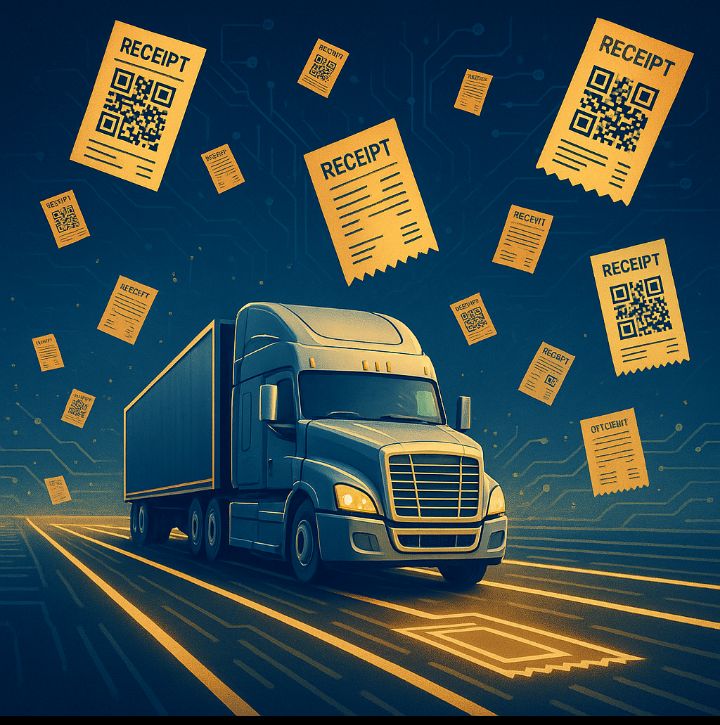
Finance the road, finance the receipts, finance the people who deliver.
I’ve built a system for it — the Superuser System — and it starts with something small: a receipt.
The Birth of the Digital Shelf
Every country deserves to bring its data home.
When Toyota sells a car, that transaction belongs to Japan.
When Kenya exports tea, that data belongs to Kenya.
When Shell sells gas, that information belongs to the host nation’s digital vault.
That’s what I call the Digital Shelf — the place where every transaction finds its rightful owner.
A transparent, intelligent marketplace where banks act as custodians of truth, not just profit collectors.
And this is where the banks come in.
You will finance the Digital Shelf.
You will power the supply chain of data itself.
And this time, the money will not come from speculation — it will come from verified transactions.
How It Works
It begins with non-perishable items — things that are easy to store, easy to verify, and needed by every household.
Each product carries a QR receipt, connected to its origin and destination.
When a person scans that code, the data travels to a public ledger — an open, auditable register that proves the transaction happened.
And that data — those receipts — will flow back to the banks.
Not as speculation.
Not as crypto.
But as verified participation.
Every receipt is a vote of confidence in the economy.
And every scan is a heartbeat of civilization.
Banks: From Victims of Blockchain to Masters of It
Blockchain was never meant to destroy banks — it was meant to reform them.
But fear and pride made the industry hesitate, while tech companies ran ahead.
Now, the banks have a second chance.
Not to fight the blockchain — but to take it over, refine it, and run it with integrity.
The public ledger will be yours to manage.
The receipts will flow through your digital infrastructure.
You will calculate value, stabilize markets, and restore trust.
This is not about creating new money — it’s about creating new meaning.
A Call to Action: The Pilot Programs Must Begin
We can’t wait for another financial collapse to act.
We must launch pilot programs — right now.
Start with one city.
Start with one supply chain.
Start with one category — non-perishable goods.
Let the banks handle the financing, interest-free, backed by the receipts themselves.
Those receipts become your collateral, your record, your proof of circulation.
Let the Superuser System map every truck, every delivery, every store.
Let every transaction be a data point that restores the heartbeat of our economy.
The Bottom Line
The bottom line is this:
The future of finance isn’t about minting coins — it’s about minting trust.
The last mile of delivery is easy.
The last mile of banking — that’s what’s hard.
And that’s where I come in.
I’ve been building this system one road at a time.
I’ve driven through the supply chain.
I’ve touched every industry from fuel to freight, from groceries to gold.
And I can tell you, without hesitation — the banks that understand movement will survive.
The ones that wait for miracles will perish.
So let’s move.
Let’s finance the future interest-free.
Let’s build the Digital Shelf where every nation’s data returns home.
Let’s make receipts the new gold — proof of value, proof of honesty, proof of civilization.
And when the world looks back, they’ll say:
It was the banks — the old giants of finance — who chose to evolve instead of collapse.
It was the banks who took the road less traveled.
And it was the Superuser System that showed them the way.
Omar Arizona
Truck Driver · Architect of the Brand Currency System
Founder of the Superuser System
Chairman, U.S. Money Plan