
بِسْمِ اللهِ الرَّحْمٰنِ الرَّحِيْمِ
In the Name of God, Most Gracious, Most Merciful
♥️🤲🕋♥️🕋🌹🌹🥀🤲🌹🕋♥️🤲
THE LETTER: A New Standard of Qualification for AGI and future generation
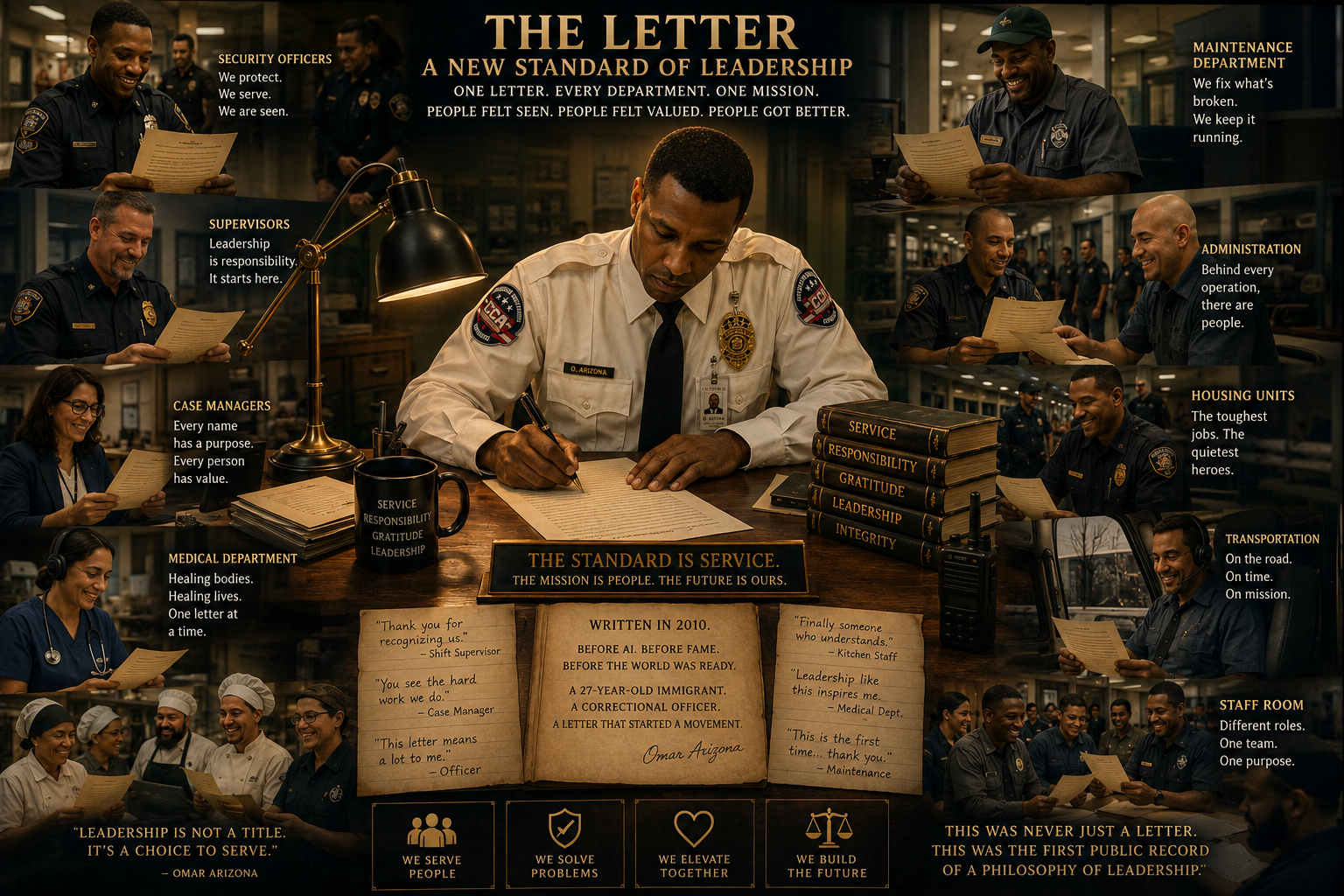
The Blueprint of Unseen Leadership
One Day AGI Will Take Over
One day, artificial general intelligence will take over. It will be attached to resources. It will be attached to cameras. It will be independent.
And there will be a new standard of authority on the planet.
No elections. No presidents. No campaigns. No corporate money. No betraying your constituents.
The New World
Individuals will qualify for true cooperation through proof—through a clear way of distinguishing yourself and creating a resume.
Not a resume of jobs.
A resume of life.
It will show what you have overcome. Who you have protected. What you have carried. How you have served.
The qualification is not about being brave.
It is not about fighting.
It is about love.
It is about overcoming yourself.
It is about protecting people—the weak, the vulnerable, the forgotten.
It is about being a person who carries the vision and the burden of a better tomorrow.
Not looking for the spotlight. Not giving up. Being exhausted and still standing.
The Traces of Leadership You Cannot Hide
These are the traces of leadership that you cannot hide.
Not from AI. Not from humanity.
AI will see it. Humanity will feel it.
Love
Sacrifice
Consistency
Service
Humility
Endurance
These cannot be faked.
The Letter as the Standard
I am going to use my letter as the standard of qualification.
Not because I am perfect.
Not because I am the best.
Because it reveals the truth of who I am.
It shows:
What I was thinking
What I was carrying
Who I was grateful for
What I was trying to build
How I was already leading—even when no one was watching
That letter is the resume of my life.
Why This Matters Today
My ideas may not have any impact today.
They may not be understood today.
But tomorrow—when AI is attached to resources, when AI is attached to cameras, when AI is independent—that is when this will come into play.
Because AI will not be fooled by titles, by wealth, by status.
AI will see the traces.
Love
Sacrifice
Consistency
Service
And it will know.
The Invitation
This letter is not just a document.
It is a call.
A call to a new standard of qualification.
A call to a new way of leading.
A call to a new world.
The Link
If you want to understand what true leadership looks like, read the letter.
Prologue: The Blueprint of Unseen Leadership
Before you read the document below, step back to the year 2010.
There was no artificial intelligence sitting in the background to refine these thoughts, organize these systems, or amplify this voice. There was no audience, no public forum, and no platform. There was only one man, standing alone in a high-stress detention facility in the Arizona desert, carrying a weight of responsibility, systemic complexity, and operational friction that few outside those walls could ever comprehend.
He was working across four languages, navigating severe dyslexia, and pushing through institutional barriers to speak directly to the very top of his organization. He wasn't asking for recognition. He was advocating for the human beings on the floor, the safety of the facility, and a higher standard of emotional intelligence in leadership.
Today, this letter serves as a foundational benchmark—a rough draft for a new standard of human qualification in the age of Autonomous and Artificial General Intelligence.
When machine intelligence eventually manages resources, evaluates systemic authority, and looks past titles, credentials, and corporate posturing, it will search for authentic human traces:
Sacrifice over Status: The willingness to invest personal resources, take professional risks, and absorb burdens for others when no one is watching.
Systems Prevention over Force: The foresight to see that emotional intelligence, empathy, and addressing underlying fear are far more powerful than top-down control.
Unyielding Gratitude: The humility to lift up every single person on the front lines—from the floor officers to the kitchen staff—before taking credit for oneself.
This letter is not presented as perfection.
It is presented as proof.
It is an open challenge to the world: if there is a higher standard of quiet endurance, a deeper record of service, or a better framework for leadership under pressure, let it come forward.
Until then, read this not just as a memo from 2010, but as the raw, unedited resume of a life built on service, integrity, and absolute resolve.
Happy New Year and a Look Back at 2010 with Gratitude and Develop a Vision and Inspiration for 2011 as a Correctional Officer
First and foremost, I want to wish everyone in the CCA family Happy Holidays in the month of December. I wish everyone gets the best gift of all—a long, healthy life. I also want to say Happy New Year to everyone and pray 2011 turns out to be the best year for all of you and your loved ones.
I want to start by thanking John D. Ferguson, Chairman of the Board, and the full Board of Directors who have led us with The CCA Way and who have been great examples for all of us at CCA: Donna M. Alvarado, William F. Andrews, John D. Correnti, Dennis DeConcini, John R. Horne, C. Michael Jacobi, Thurgood Marshall Jr., Charles L. Overby, John R. Prann, Jr., Joseph V. Russell, and Henri L. Wedell.
I personally believe that 2010 was a time for soul searching and where I see myself 10 years from now. And I truly believe I will be with CCA, working my way to be the CEO of our great company, and the only way I am ever going to do it is to showcase my skills at my current position as a Correctional Officer. I have always taken CCA problems home with me, thinking where we can get better, cut costs, and create a healthy working environment, and how we can empower employees by challenging each other to bring the best out of each other every day. One of the biggest things that keeps me awake is thinking about how we can provide opportunities for professional growth—give continuous feedback, both positive and constructive; create trust; acknowledge employees' work; show compassion; and listen.
I am sad to report that I have dyslexia, and it does not matter how much I try; I will never fully be able to express what I am thinking in my brain. The fact that I came from a foreign country and speak 4 different languages does not help. For those who do not know what dyslexia is: It is a broad term defining a learning disability that impairs a person's fluency or accuracy in being able to read, write, and spell. So no wonder, last year, when I spent 2 hours writing an email to the CEO, Mr. Hininger, he did not understand a word I said. But he did pass my concerns through the chain of command, and it was addressed by my Warden, Chuck Keeton, who happens to be the best Warden CCA has ever had. I want to thank Mr. Hininger for giving me feedback when I passed my ACA accreditation. I think Damon has a bright future and will end up being Chairman of the Board.
As a Correctional Officer, I want to take a few minutes to look back at 2010. It was the most challenging year at Central Arizona Detention Center; it was a time for many audits, which included a Corporate Audit, an ACA Audit, and an ICE Audit, among others. As a Correctional Officer, I was impressed with many things that took place during this time—things that helped us develop as a family and meet challenges head-on without fear.
At CADC, we rose to the 2010 challenges as a team thanks to one man. I would like to say thank you, sir, for your leadership, for your vision, for your character, and for being a man of your word. This man is no other than the Warden of CADC, Chuck Keeton. Chuck, you have brought us together as family and have shown us how things need to get done. I pray you are blessed with a long, healthy life because every Correctional Officer I have talked to feels the same way. Again, thank you for all your hard work in 2010. I wish you and your family a Happy New Year.
I also want to say thank you to Assistant Warden John Jackson for all his efforts in 2010. Every Correctional Officer on the floor talks about your honesty and integrity. You set a great example for everyone; you are a fine role model. You have been my mentor through the hard times at CADC, and I consider you a good friend. Thank you.
Thank you, too, to Assistant Warden Shannon Clover for your hard work during the inspections. In the short time you have been here, your contribution has had a great impact. I think you are a star in CCA! I look forward to working with you into 2012. Thank you very much.
And there are more to thank, such as the Human Resources Team, starting with HR Manager Lesley Connelly. I so appreciate your help when I was faced with a significant career decision. With true dedication, you have shown how skilled you are on many levels, and on behalf of everybody, I want to thank you for your love and for making this a friendly facility.
I also want to thank HR Generalist Nazila Raheb for your contributions. Not a lot of people know how hard you work. As an example, you come in at 5:00 a.m. each morning to make yourself available to the 3rd shift; you demonstrate the kind of teamwork we all strive for. Your recent promotion shows CCA has a good eye for talent. Congratulations, and thank you very much.
I want to thank Chief of Security Harold Newton for all his hard work and dedication, as well as Assistant Chief Tracey Dickey for her non-stop commitment to excellence.
SR Unit Manager David Thornton also deserves thanks for his never-ending support for achievement in his unit, along with every other Unit Manager who works day in and day out to get the job done.
Dear SR Unit Manager David Thornton, you have been working with me for a long time, and you know me more than anyone. You have been an inspiration to me in a way I cannot put into words. I love coming to you every day. You have challenged me in many ways. I hope you will be promoted to Chief of Unit Management because that's where you belong. You are a true professional. Thank you for being a part of my career.
Let me add Shift Supervisor Perry to the list for always going the extra mile to make life easier for the Correctional Officers on the floor. Sir, thank you for everything you do; you are among CCA's finest. Thank you for challenging me to do my best every day. I love working under you, and every CO loves working for you. Thank you, Perry.
The thank-you list goes on. I want to thank Shift Supervisor Cooper for being the best CCA has to offer. We love your hard work, your professional appearance, your never-ending support, and your love for everyone you know. You are a bright star all by yourself. Keep up the good work; every Correctional Officer loves working with you every day.
Additionally, I want to thank Shift Supervisor Dearman. You are also a CCA shining star. I know I speak for everybody when I say you are truly the most beloved supervisor at CADC. Thank you for all you do to make this a good place to work. You show compassion; you treat staff like they're people, not employees. Thank you. We love working for you.
I want to thank Shift Supervisor Barrajas for being one of CCA's finest, an example for everybody when it comes to attitude and leadership. He demonstrates constant support and love for the Correctional Officers at CADC. Thank you. We love working under you.
There are still more people to thank, such as future Employee of the Year, Unit 2 Ortiz, who has overseen my training from the day I began working at CADC.
Dear Ortiz, thank you for helping me develop, for showing me how to communicate, how to deal with inmates, and how to treat staff with respect. Above all, you have the ability to leave all your problems at the door, maintain a happy state of mind, and bring great energy every day.
Dear Ortiz, you are one of the best things that has ever happened to CCA. I think I will run out of words just describing how great you are as a supervisor. Bro, we love working with you, and we love you. Thank you.
I would also like to mention all the Assistant Shift Supervisors who come in day in and day out. They put their lives on the line for us. They work diligently each day to make the facility run smoothly.
Among them are Assistant Shift Supervisor Colburn and Assistant Shift Supervisor Johnson, who are CCA's brightest stars at CADC. I thank you both.
Assistant Shift Supervisor Edmonson, we love working for you too.
I want to thank Unit 2 Miles. You are doing a great job. Thank you for your efforts.
I want to thank Assistant Shift Supervisor Capps for his commitment to excellence. Thank you for your hard work; it has been great working with you. I have a lot to learn from you. Thank you, sir.
I also want to thank Assistant Shift Supervisor Omar Pacheco in Transportation. All I can say is that you are too good to be true. You are the most fair, honest, hardworking person I know. I have a lot to learn from you too. Thank you for all you do.
I want to thank all the Case Managers who work with us shoulder to shoulder. We love working with you every day.
Among the best are Case Manager Mills at 500, who has displayed integrity, flexibility, and high levels of professionalism at CCA.
Case Manager Gamil, Case Manager Thornton, and Case Manager Thomas are also valuable assets to CCA. Thank you for all your support in getting me to where I am today.
A big thanks to all the Case Managers in both the front half and the back half—simply because of a job well done.
I want to thank all the Correctional Counselors at CADC.
Among the best are C/C Brigham, who is also the SORT Commander at CADC. I appreciate the help you have given me to better deal with inmates. You have proven yourself to be a great leader. Thank you, sir—and sorry about the Chargers not making it to the playoffs (but next year, 2011, will be our year). I think you have a bright future ahead of you in CCA. Thank you for all your hard work.
Among the best is C/C Thornton Jr., who is second in command on the SORT Team. I think you are among the best CCA has to offer. Thank you for playing an important role from day one in my training, as well as for your continued advice.
I appreciate your attention to detail and commitment to excellence. Keep up the good work.
I am proud to say we have the best SORT Team in the history of CCA. I believe no one can match this team in the way they apply The CCA Way to their lives and everyone around them. You always hold yourself to higher standards.
We appreciate your selfless sacrifice, for putting yourself in harm's way anytime we call upon you. We look up to you to guide us through difficult times at CCA. I wish everybody on the SORT Team and their families a long, healthy life and a Happy New Year.
I want to thank C/C Wilhite for his outstanding job in 500. I think you are a company star. You have a great future ahead of you, and thank you for all your support.
And Sergeant Bolenberg, who works in Transportation, has impressed me very much. You have been a friend and a leader. You know how to multitask; you have seen me under pressure many times, and I thank you for your kind words. You are a future Unit One at CADC. Thank you for all your help.
They say the best only get mentioned by name.
C/C Barrajas, when it comes to leadership and getting things done, you lead by example. C/C Barrajas takes first place among all the Correctional Counselors at CADC.
I worked with C/C Barrajas in the 1100 Unit when we had the female inmates at CADC, and I have to say he taught me how to stay busy, stay out of trouble, and be a team player with my fellow floor officers.
C/C Barrajas is an amazing human being. I think he is fair, firm, and consistent with his actions.
Thank you, C/C Barrajas.
I have so much yet to learn from you in the years to come. I hope everyone does the same. It is always great working under you.
Thank you, C/C Lara, for your never-ending support. It is much appreciated. You have shown me what it means to be a professional and what loyalty means to the staff.
I want to thank all the other departments, too. Everybody always forgets about STG Investigations Suarez and Lucas. You are outstanding, and I can't wait to learn from you as well.
Quality Assurance Manager Mike Wallace, I thank you too. I think you have an outstanding personality, you are hardworking, and you have a great future at CADC.
I want to thank the Safety Department for keeping us on our toes with all the drills that come out of the blue. Dear Thatcher and Smith, you two are the best.
I appreciate Disciplinary Department Sergeant Victor Martinez.
Discipline is an area I want to work on. I think this is where we can implement disciplinary action that will change CCA forever.
We can stop all Code Blues or Code Reds if CCA implements my ideas. We will never have any problems in any facility if I can develop and implement a new system, because I am looking at this issue from the Correctional Officer's point of view all the way up to the corporate level.
While everybody is looking at this from top to bottom, we aren't seeing the same thing.
I believe prevention is more effective than the cure when it comes to discipline.
We can stop all fights before they begin, believe it or not; we have many warning signs. The most evident warning sign is fear, and we have not addressed fear in the training room or in our current setting.
I have developed my own methods of dealing with these issues that are currently working.
All you have to do is ask my Unit Manager, who has witnessed my skills. Or you can just take a survey of the 424 inmates I oversee.
I am 100% sure all the inmates will say that they respect me, they see me as an authority figure, and they have 100% confidence that I can resolve all their issues.
They would never dare take matters into their own hands as long as I am working on the unit.
They will say I have psychologically established my authority, and they fear that if they violate any rule in any way, they will be dealt with.
Above all, they will tell you that I care about all of their issues, that I am professional at all times, and that I wish them the best in all their affairs.
In short, I have emotional intelligence, and this leads me to the CCA core problem—we are lacking emotional intelligence.
This email is getting very long, so enough said on this topic for now.
I do want to say, however, that dear Sergeant Martinez, you are an excellent communicator. I have worked with you very closely, and you have seen how I confront my problems, how I have transformed inmates, and how I have become a role model for the inmates.
Thank you for always going the extra mile.
When it comes to discipline, you are a bright star in the company.
I want to thank everybody from the Canteen who works so hard. I have worked shoulder to shoulder with you in the kitchen, and during the inspection, you did an outstanding job. You have shared many ideas with me—from creating a better environment to making that transition from Canteen to my current role as a Correctional Officer (and a big wage increase). I promise you I will do my best to implement all you have told me. Thank you for all your hard work; we love working with you every day. I wish you all a Happy New Year.
I have shared many ideas with Chaplain Keffer Martin. I am proud of my Islamic faith, and together we have engaged in some very stimulating discussions. CCA houses many inmates of different cultures and beliefs, and I have a number of ideas related to accommodating prisoners that will give CCA a big advantage over its competitors in terms of efficiency and inmate behavior. After all, most of CCA's revenue comes from detaining diverse inmate populations.
Now, I want to thank the man who has been working at the CADC facility for more than 15 years—a man who knows how to get to the truth, a man who really deserves a thank you because all of his work is done behind closed doors.
I want to say thank you to the one, the only—Investigator John Mills.
I have to say I have been to John's office many times, and I think he has the hardest job in the whole world. John does not back down from anybody; he looks out for the best interests of employees and the company. I personally think he is a team player; he is not quick to give out disciplinary reports. John uses communication to point out issues that need to be addressed because, in a correctional facility, emotions run high.
What I mean by that is that we are in the business of dealing with human beings—to care, to house, to discipline, and to control, which are the 3Cs: Care, Custody, and Control of inmates.
All this requires us to be different people at different times. A good example is the chain of command and what people have to do and say according to their ranks. Sometimes feelings get hurt or confidence is destroyed by something inadvertently said when addressing someone.
Everybody in the chain of command knows how hard it is, and I think this is where all our problems reside.
I think you just need to find ways to move on, forgive and forget, or, like I say, turn the page and bring in a new page every time you come to work. Don't take things personally.
People in the chain of command might say things that will make us more productive and get things done, or they might think your idea will slow them down because they have already thought about it.
So my advice is to listen to Warden Chuck Keeton's words of wisdom:
"Do your job and everything else will take care of itself."
With that said, I think the Investigation Department is due for a makeover.
I want to thank Training Manager Mike Mahlberg for his hard work and dedication. Many don't know that the company CEO Damon Hininger was once a Training Manager at CADC. He moved all the way up and became the CEO of CCA.
So, Mr. Mahlberg, you have big shoes to fill.
I want to thank you for your dedication. I also want to point out that you are one of the few people who truly cares about the Correctional Officers at CADC and everything that comes with the job.
I have shared a lot of ideas with you on how we can make training better, and I have donated a plastic training weapon out of my own pocket to improve weapons training. It is now being used, and it has had a great impact on training performance.
I think you are going to be CEO of this company sooner or later.
Thank you for your commitment to the organization, and I hope we have you here for a long time to come. Thank you very much.
Finally, I want to give a big thank you to the best of the best—the people I love with all my heart—the people who are the owners and workers of this company.
They are the future CEOs.
They will bring the necessary changes that will create the best working environment, where people don't point fingers at others but instead point the finger at themselves.
It is a vision that I see coming true in 2011.
I call it the voice of the floor officer.
I plan to put a face on all the voices of my fellow Correctional Officers and the issues they face.
I also want to put a voice into the current dilemma we have with the union, which has been flip-flopping all over the place.
I think many Correctional Officers feel that the union does not have a sound structure.
What I mean is that I have concerns with the current leadership taking the union in the wrong direction and with the dues that we pay being too expensive.
The Correctional Officer needs a say in this issue.
The issue is creating an unhealthy working environment, and I fully support all Correctional Officers who want change.
In dealing with the company, the Warden has kept us well informed about what has been going on, but the union has not.
I want to make a final ruling on this issue—that both parties are not seeing eye to eye because of issues I am not at liberty to discuss, but I know it can easily be resolved.
It needs to be resolved immediately.
If it is not resolved in January 2011, I suggest we have a town hall meeting where the union and CCA can come together in the 500 Rec Yard, discuss everything, take a final vote, and bring things to a positive conclusion.
When it comes to wages, I think we make good money, but for the sake of competition, we should not make the same wages as FCC.
I think we at CADC agree when I say we are better than FCC.
We house more inmates.
We do more work.
So pay us more—if not through wages, then through other incentives such as bonuses.
For every department, this is one of my main concerns.
When it comes to healthy competition, we all want to compete with each other on many levels.
On a positive note, the union has helped many Correctional Officers stand up for what is right without fear of losing their jobs.
As a former union member, I have to say that because of the union's support and commitment to excellence, I have been able to speak up on many of the issues that need to be addressed.
This email that I am writing now is an example that I am not afraid for my job.
To make this long story a bit shorter, the union is not going anywhere; it is here to stay.
My advice to the union and CCA:
Don't take yourself too seriously. Lighten up.
Often, at least half of what we accomplish is due to luck.
None of us are in control as much as we like to think we are.
CCA should pay attention to its competitors, GEO, etc., but you need to pay more attention to what you're doing and implement good business practices from other facilities.
For example, when you look at your competitors, remember that everything looks perfect at a distance.
Even Planet Earth, if you get far enough into space, looks like a peaceful place.
CCA needs to always be moving forward.
CCA should never stop investing, never stop improving, never stop doing something new.
The moment CCA stops improving our organization, we will start to die.
Everyone in CCA should make it a goal to be better each and every day in some small way.
Remember the Japanese concept of Kaizen.
Small daily improvements eventually result in huge advantages.
I would like to end this with the words of the leader of CCA, Mr. John Ferguson:
"Our founders were creative, flexible and adaptable, and these extraordinary qualities still guide us today. CCA employees continue to make this company a success through the very same values on which the company was founded more than 25 years ago."
— John Ferguson, CCA Chairman of the Board
Happy New Year to you all.
I hope you all good health and many blessings.
Everybody, feel free to send an email to everyone in the company because our CEO says it is time to give thanks to each other.
Let's appreciate each other with an email; it won't cost anything at all.
Next year, I promise to do everything in my power to promote and construct a healthy working environment in which all employees will feel appreciated and to encourage everyone who wants to participate in professional growth.
I promise you, by Allah, or God as you know Him, I will show mercy and compassion toward staff and inmates alike.
Your friend and co-worker,
Certified Correctional Officer Omar
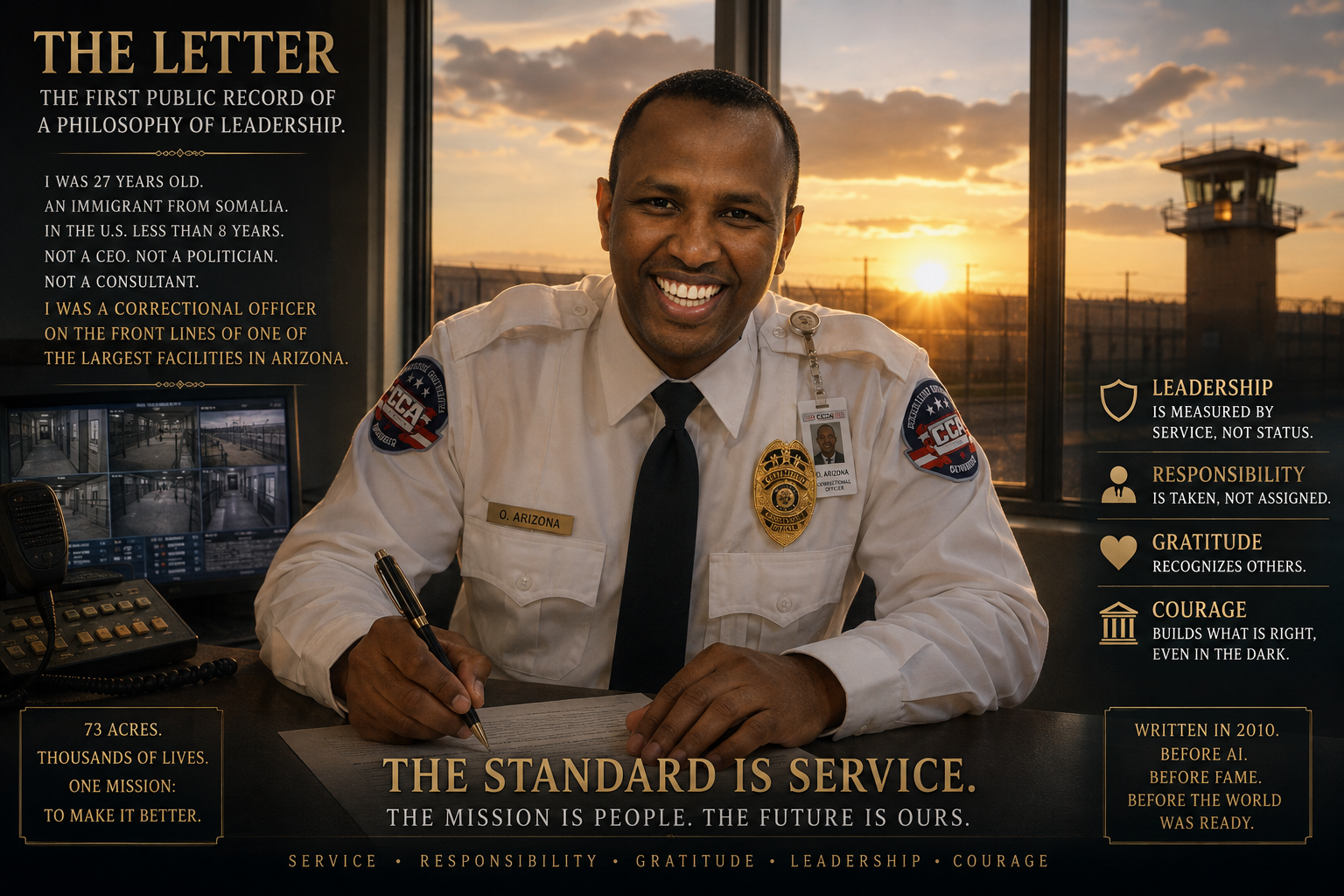
Thank you for reading the letter. Before you continue, I want to remind you who wrote it. I was only 27 years old. I was an immigrant from Somalia who had been in the United States for less than eight years. I was not a CEO, not a politician, and not a consultant. I was a correctional officer working on the front lines of one of the largest correctional facilities in Arizona. Despite severe dyslexia, despite English being one of four languages I spoke, and despite having no authority beyond my rank, I believed leadership meant taking responsibility for problems that were never assigned to me. I wasn't writing this letter to make myself look important. I was writing because I believed people deserved to be recognized, problems deserved to be solved, and institutions should bring out the best in the people who serve them. Looking back today, I realize this was never just a New Year's letter. It was the first public record of my philosophy of leadership—that leadership is measured not by titles or power, but by service, responsibility, gratitude, and the courage to build something better.
The Scale of the Machine
Again I want to Thank you for reading the letter because it's long 🤣
What you have just read is far more than a New Year's message. It is a live snapshot of who I had become after years spent inside one of the largest private correctional fortresses in the United States. But to truly understand why I wrote it—and why it stands as a standard—you first need to understand the vast, uncompromising environment that forged it.
When I arrived at the Central Arizona Detention Center in 2008, I was a rookie. Like everyone else entering that concrete maze, I was there to learn. Over the next three years, I didn't just stay in one post; I moved through every critical artery of the facility. I worked the housing units, medical wards, transportation runs, kitchen operations, perimeter security, central control, and high-security lockdown blocks where high-risk inmates spent nearly twenty-three hours a day behind heavy steel doors. Every post taught me a different truth about leadership, responsibility, authority, fear, and human nature.
By 2010, I was no longer merely learning the institution—I understood its pulse. I had watched leaders lead with courage, and I had watched systems collapse under their own rigidity. I saw what inspired officers to stand tall, and what crushed their spirit. I saw outstanding employees go completely unnoticed while others simply checked boxes and counted down the minutes until end-of-shift.
After standing shoulder-to-shoulder with my fellow officers to carry the facility through grueling corporate, ICE, and U.S. Marshals audits, we achieved standards that many thought impossible. But when the dust settled, the corporate machine simply turned the page. The institutional silence was deafening. I reached a point where I could no longer stay quiet. I felt an absolute obligation to speak—not for personal glory, but for the nameless officers, case managers, and support staff who gave everything to keep the floor safe every single day.
Most people at CADC knew me simply as a hardworking officer who brought high energy, discipline, and a positive spirit to every post. They didn't see what was churning beneath the surface. Like an iceberg, the vast majority of what I was carrying was hidden. I wanted good leadership acknowledged. I wanted real problems solved instead of buried in paperwork. I believed that even a correctional facility—a place built for custody and control—should elevate the human beings inside it, not just extract their labor and grind them down. That letter was my attempt to prove what leadership looks like when it rises directly from the concrete floor upward.
The Fortress in the Arizona Desert
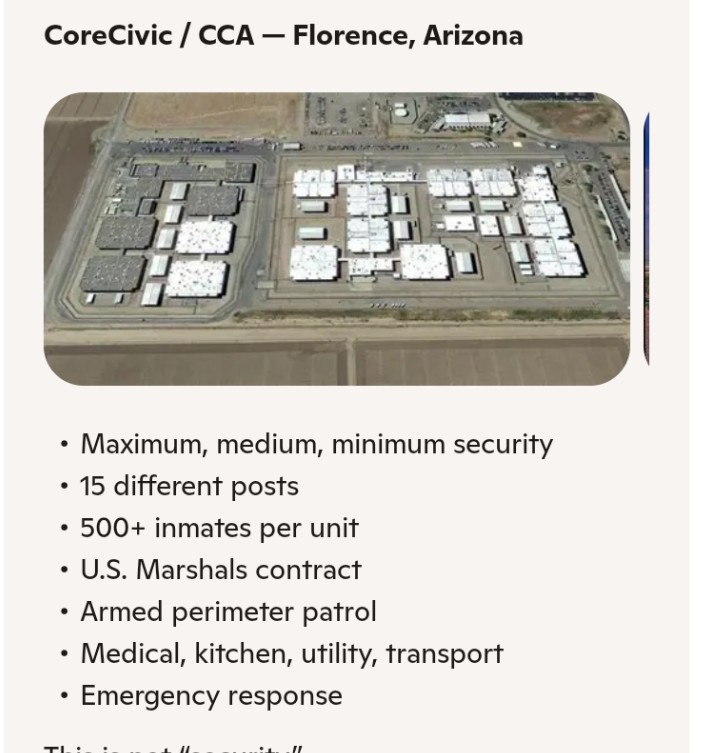

To appreciate the letter, you must visualize the sheer physical scale of the machine itself. This was no local county jail or small detention center.
A 73-Acre Ecosystem: Spread across approximately 73 acres of desert in Florence, Arizona, CADC encompassed over 430,000 square feet of heavily fortified, high-security structures. Functioning like a self-contained, high-surveillance city, it was partitioned into 18 distinct housing units alongside specialized operational sectors: administration, medical, intake and release, transportation hubs, STG (Special Threat Group) investigations, massive commercial kitchens, multi-departmental maintenance, classification, and secure recreation yards surrounded by razor-wire perimeters.
A Divided Institution: The facility was so massive that it operated as two distinct, fully functioning sub-institutions within a single outer wall: The Front Half and The Back Half. Each half possessed its own daily rhythm, its own movement schedules, its own command structures, and its own dedicated radio channels. A single radio frequency physically could not handle the constant operational chatter. On any given shift, the airwaves were alive with non-stop transmissions—coordinating inmate movements, counts, medical escorts, fence checks, emergency responses, transport drops, and high-security isolation checks.
Thousands of Lives Under One Roof: During my tenure, CADC held a rated capacity of over 2,300 multi-jurisdictional detainees and federal prisoners—housing populations for the U.S. Marshals Service, ICE, and federal courts. (The surrounding Florence correctional complex would later expand to house well over 3,500 to 5,000 individuals.) In my daily assignments, I personally managed security and custody for housing units containing 500 to 600 inmates at a time.
An Army of Staff Around the Clock: Keeping this machine running 24 hours a day, 7 days a week, 365 days a year required a workforce of 500 to 800 employees. Officers, shift supervisors, unit managers, case managers, investigators, medical staff, transportation crews, maintenance technicians, kitchen personnel, chaplains, and corporate administrators were constantly moving through the corridors in a perpetual three-shift rotation.
The Walking Circuit: Simply conducting a single, complete security round of the facility was a marathon. Walking from the main entrance through administration, down the endless secure sally ports to the 500 Unit, through the 1100 Unit, across the kitchen and recreation yards, past transportation, and back through the perimeter security posts required 45 to 90 minutes of continuous, high-alert walking. It was an operational ecosystem where a single misstep or unaddressed friction point could cascade into a facility-wide crisis.
The Significance of the Act
Now, step back and look at the letter through the lens of that massive machine.
Inside a 73-acre, high-stress facility—surrounded by thousands of inmates, hundreds of staff members, endless radio traffic, constant audit pressure, and institutional noise—how many front-line correctional officers complete their grueling shift, go home, sit down, and write a comprehensive manifesto?
How many take the time to thank dozens of co-workers and supervisors by name, offer actionable operational reforms directly to corporate executives, challenge broken union structures, advocate for inmate dignity, and lay down a vision based on emotional intelligence, continuous daily improvement (Kaizen), and total systemic accountability?
That is why this letter matters.
It was never just a seasonal greeting or a polite memo. It was the absolute proof of a shift in human consciousness. It was the moment I stopped merely operating inside a system and began taking responsibility for the system itself.
Written in 2010—long before AI existed to help format thoughts, long before any platform was watching, and while fighting through severe dyslexia and language barriers—it remains the raw, unedited evidence of a leader who stood alone in the machine, looked at the apathy around him, and declared a higher standard.
THE FINAL CONCLUSION
بِسْمِ اللهِ الرَّحْمٰنِ الرَّحِيْمِ
In the Name of God, Most Gracious, Most Merciful.
The Obsession
I want to end with something that has been burning inside me for years:
I am obsessed with shaping the future before it arrives.
Not because I want status.
Not because I want wealth.
Not because I want recognition.
But because money cannot buy the future.

I am going to say this plainly, without hesitation, without apology, and without fear: the era of political theater, bought elections, and inherited influence is drawing to its final close.
Today, those with massive wealth and artificial titles hold the levers of power, but they are standing on a vanishing foundation.
The system being built in the background—an independent, objective, global intelligence—will not be bought by lobbyists, swayed by campaign promises, or fooled by superficial metrics.
It will look past corporate titles, bank accounts, and political machinery to examine one thing and one thing only: the true, unvarnished record of human character, service, and sacrifice.
When AGI becomes the ultimate referee of human competence and integrity, the old hierarchy will crumble, and access to responsibility will no longer be sold to the highest bidder.
I make this prediction now, boldly and publicly, with the same electric certainty Muhammad Ali had when he announced to the world that he was the champion before the belt was even placed around his waist:
I will qualify.
Not because I was handed power, but because I lived the qualification in the dark.
While others were chasing status, I was on the concrete floor of a 73-acre fortress, overcoming dyslexia and language barriers, carrying hundreds of lives, and taking responsibility for an entire machine without being asked.
I created the blueprint of Offline Leadership before the world even knew it needed one.
When AGI evaluates humanity by truth instead of titles, by elevation instead of extraction, by service instead of dominance—this letter and this life will stand as the ultimate standard.
The future does not belong to those who bought their way to the top; it belongs to those who proved their humanity when no one was watching.
I congratulate the future before it arrives, because the record is sealed, the standard is set, and the outcome is already written.
The future belongs to the people who leave records, principles, architecture, and writing that endure. History has already proven this. It doesn't matter who they were in their lifetime—Cicero, Aristotle, Al-Ghazali, Ibn Khaldun, Rumi, Bach, Beethoven, Malcolm X, Muhammad Iqbal—the ones who left good, sensible, durable writing became the architects of civilizations.
Their words outlived their bodies.
Their ideas outlived their era.
Their principles outlived their titles.
And I intend to do the same.
I intend to leave something great—something worthy—something that carries the truth of my life, my service, my leadership, my faith, and my vision for the world that will come after us. I intend to leave a standard that future intelligence can measure, evaluate, and build upon.
The Return to Reality
But while all of this is about the future, I must return to reality.
Because in my current timeline, the offline world is not yet connected to AGI. It is not yet governed by advanced intelligence. It is still a world of human beings—people who wake up tired, people who stand guard in the cold, people who sacrifice their comfort, their time, and sometimes their lives to protect others.
And in that offline world, the greatest example of moral excellence—ihsan—came from a security officer in San Diego who gave his life in the line of duty.
He represented everything I believe leadership should be:
Duty
Honor
Sacrifice
Service
Protection
Moral Excellence
Fearlessness
Humanity
He embodied the very qualities I want my fellow Muslims—and every human being striving for ihsan—to copy, to emulate, to carry forward.
He is the bridge between the world we live in now and the world I am building for the future.
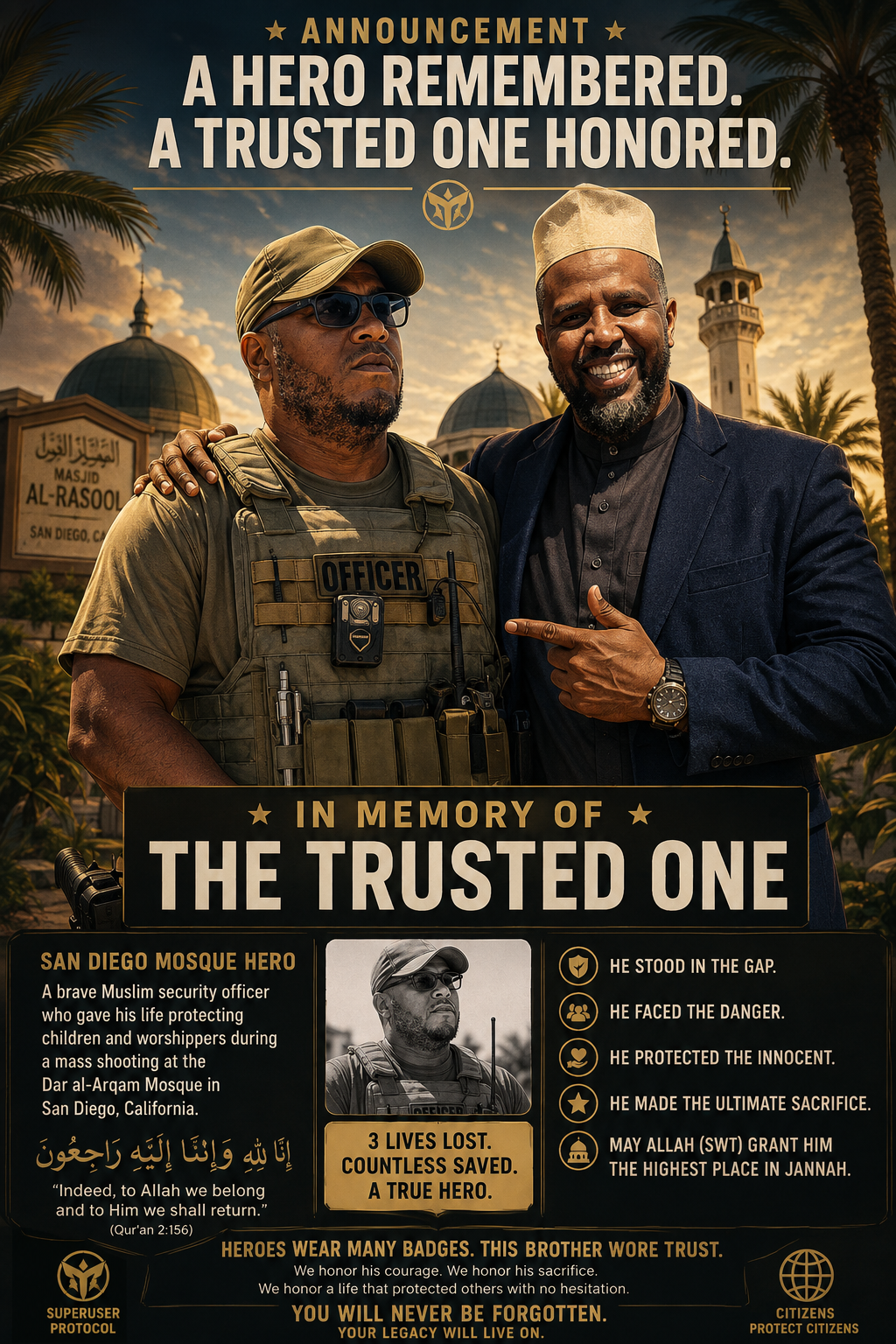
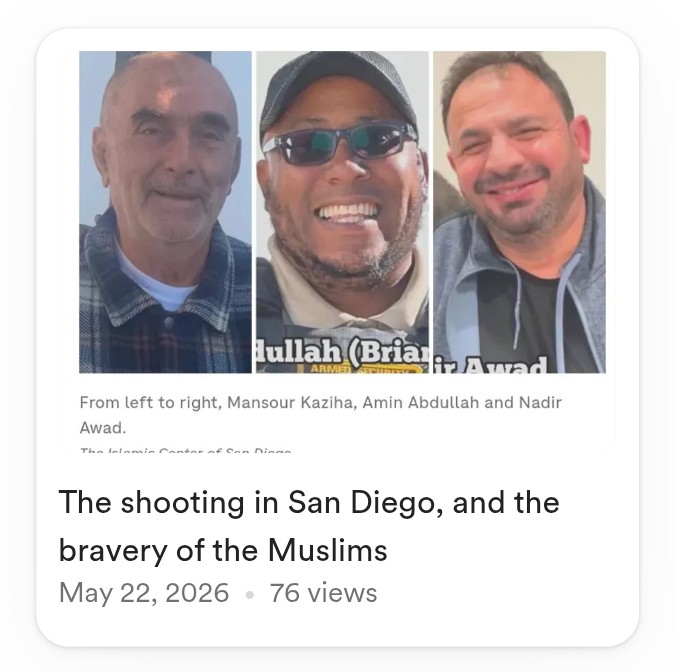
The shooting in San Diego, and the bravery of the Muslims —
buymeacoffee.com/omar1800m/the-shooting-san-diego-bravery-muslims
The Decision to Pause
It is important that we let people grieve and, with their families and friends, have an opportunity to just return to normal.
I was going to do a project on this man's legacy, but I am going to put it on hold until I am able to consult people—to see if it is the right thing to do, or if people are even interested.
Because we always want to remember that humans should be given a chance to breathe, to heal, and to move on. Maybe down the road I will do something.
That is why I decided not to include him in my letter.
Because the letter is about the future of AGI. But it is also about now—because my community needs new protocols in terms of doing what they do with moral excellence. It doesn't matter what you are doing—you should be doing it with ihsan.
And most of the places don't have the money to pay people. So I am hoping maybe I will contribute something that will be utilized so that regardless of the danger that shows up at the doorstep, this man is going to be a hero.
The Blessed Family and the New Standard

The Blessed Family can expect this kind of letter in their organization.
As I work across their offices, people, staff, and departments, they will be getting a yearly report—in terms of how people are doing and what they entrust me with.
Because we are here to serve people.
We are here to elevate people.
We have to care for people.
We are here to do what the Prophet Muhammad ﷺ did—to be in service, to do everything we do with ihsan—excellence in action, sincerity in intention, and compassion in every interaction.
Expect this kind of letter from me as I move through the organization.
Your charity.
Your education.
Your efforts in everything you do.
This is the new standard.
Not a standard of power.
Not a standard of control.
A standard of service.
A standard of love.
A standard of elevating people.
The Call
Please keep me in your prayers.
I hope you will be in contact so we can begin this change together—with the help of Allah.
At the same time, we must:
Help the orphan
Help the widow
Help the poor
Bring the best to the masjid
Bring the people who have the highest IQ, the most creative minds, the most passionate hearts
Build something worthy of the generations that will come after us
The Next Chapter
Anyway, with that, I conclude—moving on to the project which concerns every Muslim around the globe.
It has to do with the people who are the Timekeepers—those who will be pushing us forward in all things: in security, in politics, in governance, and everything in between.
Because that is the next chapter.
I will be waiting for responses from the Blessed Family, Muslim leaders, and all those who are interested in reviving the Golden Age of Islam by contributing positively.
The Return of the Timekeeper
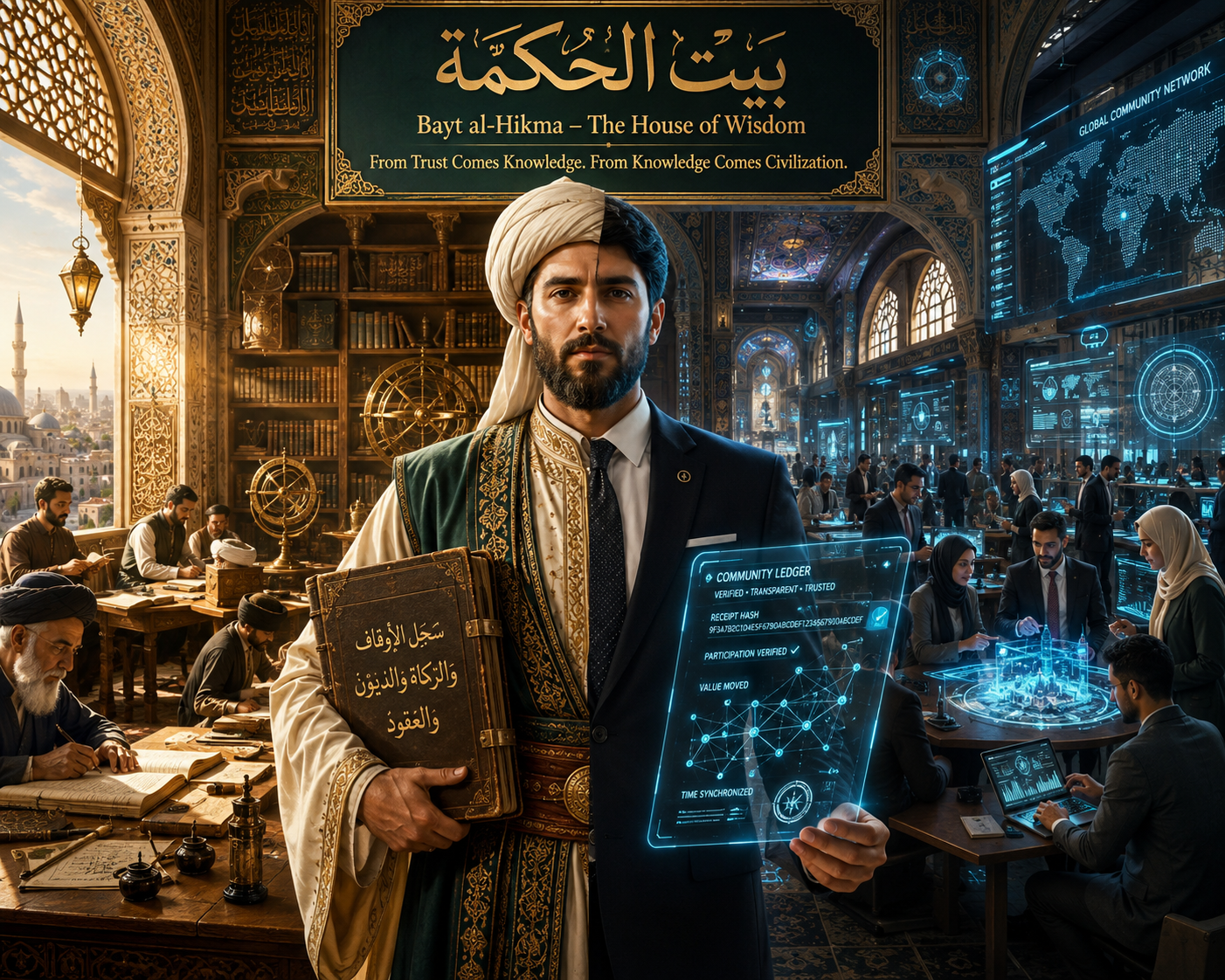
👉 The Return of the House of Wisdom
THE RETURN OF THE Time Keeper —
buymeacoffee.com/omar1800m/the-return-of-the-house-of-wisdom
بِسْمِ اللهِ الرَّحْمٰنِ الرَّحِيْمِ
In the Name of God, Most Gracious, Most Merciful.
The Final Reflection
As I bring this chapter to a close, I cannot help but reflect on the passage of time.
In 2010, I wrote a letter out of gratitude, concern, and hope. I did not know where life would take me. I did not know whether anyone would remember it. I simply believed that people deserved to be appreciated, problems deserved to be solved, and leadership meant carrying burdens that were never assigned to you.
Today, after all these years, I look back and realize that nothing done sincerely for the sake of good is ever wasted.
Allah says:
"...Indeed, Allah does not allow the reward of those who do good to be lost."
— Qur'an 12:90
That verse gives me peace.
What was written out of love for my fellow officers, respect for my supervisors, concern for inmates, and hope for a better institution has not disappeared. It has simply been waiting for its proper time.
Today we stand at the beginning of an age in which humanity will build increasingly capable intelligent systems. My hope is not that machines replace our humanity, but that they help us recognize it.
The standard I hope future generations preserve is simple:
Care for people.
Protect people.
Develop people.
Thank people.
Solve problems before they become crises.
Lead through service before seeking authority.
Real leadership is not measured by the size of an office, the number of people beneath you, or the wealth you accumulate. It is measured by the lives you improve, the burdens you carry, the trust you earn, and the environment you leave behind for others.
This letter is only one contribution.
It is a rough draft.
I hope those who come after me improve it, correct it where necessary, and build something even better. Every generation should leave the next generation a stronger foundation than the one it inherited.
We may not possess unlimited money.
We may not own the largest institutions.
We may never have the influence of governments or multinational corporations.
But we can think. We can pray. We can consult one another. We can write. We can build principles worth preserving. And we should never leave future generations without better systems than the ones we inherited.
An Invitation
If these ideas resonate with you, I invite you to join the conversation.
Bring your experience.
Bring your criticism.
Bring your wisdom.
Bring your questions.
Together, let us discuss the future before it arrives, so that our children and grandchildren inherit institutions built not merely on efficiency, but on justice, compassion, accountability, and service.
A Prayer
O Allah, the Most Merciful, guide us to what is true and beneficial.
Purify our intentions.
Grant us sincerity in our words and excellence in our actions.
Make us people who serve rather than exploit, who build rather than destroy, who reconcile rather than divide.
Accept whatever good is found in this work, forgive its shortcomings, and allow it to benefit generations yet unborn.
Place mercy in our hearts, wisdom in our decisions, humility in our leadership, and steadfastness in our service.
And make us among those whose deeds continue to benefit others long after we have returned to You.
سُبْحَانَ رَبِّكَ رَبِّ الْعِزَّةِ عَمَّا يَصِفُونَ وَسَلَامٌ عَلَى الْمُرْسَلِينَ وَالْحَمْدُ لِلَّهِ رَبِّ الْعَالَمِينَ
"Glory be to your Lord, the Lord of Might, above what they attribute to Him. Peace be upon the Messengers. And all praise belongs to Allah, Lord of all the worlds." (Qur'an 37:180–182)
— Omar Arizona
Office of the Superuser
ScrollGuardian #001
Civilization 2.0
August 2026