

بِسْمِ اللهِ الرَّحْمٰنِ الرَّحِيْم
The Blueprint for Ethical Advertising in the AI Age
Introduction: The Need for Ethical Advertising
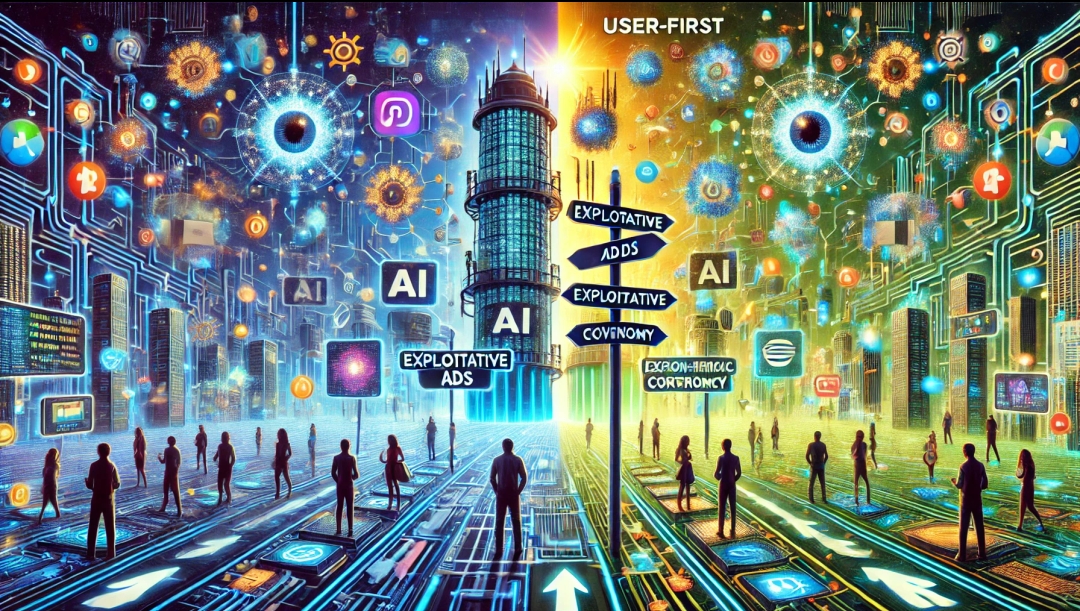
We live in a world where digital advertising has become synonymous with surveillance, monopolization, and data exploitation. But here’s the reality: we are in a centralized system, and there is no turning back. The AI era is here, and whether it’s Google, Apple, or another tech giant, the value of AI is going to be unlocked. The government has arrived too late with regulations, and consumers have been left in an ecosystem where their data has been harvested without compensation.
Opt-out laws, like California’s privacy initiatives, were never the solution. The system has been built this way, unchecked and unquestioned. Instead of fighting against this inevitability, we must shape it into something better—a system where ads don’t exploit users but reward them. We have to transition from an era of passive data extraction to one where users actively benefit from the advertising economy, and AI-powered agents will be the key to making this happen.
The time has come to rethink advertising, not by dismantling what exists, but by using AI to unlock value and finally repair the damage done to consumers—through real compensation, AI-driven financial empowerment, and a new digital economy.
---
1. Understanding the Centralized System We’re In
Admitting the Reality: Google and Big Tech Built the Infrastructure
Google, Meta, and other major platforms dominate digital advertising, and there is no alternative system that can replace them overnight. The decentralized dream of an ad-free or Big Tech-free internet is not happening. Instead of resisting, the goal should be to work within the centralized system to redistribute value fairly and create AI-driven agents that serve users first.
The world’s economy already runs on data. Instead of trying to remove Big Tech’s role, we need to make them accountable and force redistribution of wealth to consumers.
Google has the power to change everything overnight. It controls the ad infrastructure, the tracking, and the search algorithms. The future of ads will not be about eliminating this power but about directing it toward a more equitable system.
Government regulation came too late. The attempt to regulate Big Tech after decades of unchecked power has done little to shift the economic balance. The only real way forward is for tech companies to proactively build user-first AI economies.
---
2. The AI Agent Era: How Advertising Will Change
AI agents will be the bridge between users, advertisers, and digital platforms. No longer will advertising be about intrusive tracking and exploitation—AI will assign every user an agent that works for them, not against them.
What Will AI Agents Do?
1. Manage All Transactions – AI agents will handle purchasing, receipts, and brand interactions, creating a seamless advertising ecosystem where users are rewarded for their engagement.
2. Follow & Assist Users in Real Time – Whether shopping, traveling, or browsing, agents will optimize ad recommendations based on actual needs, not just past behavior.
3. Monetize Data Transparently – Instead of passive tracking, users will own their data and be compensated for its use in advertising campaigns.
4. Personalized Financial Rewards – AI agents will analyze user habits and allocate brand currency directly to them, redistributing ad revenue in real money.
Why Google Must Lead This Revolution
Only a company with the scale and data processing power of Google can build this AI-powered ad ecosystem. We should not fantasize about removing Big Tech from this equation—we must make them responsible stakeholders.
Instead of exploiting users, Google must subsidize them. Billions of dollars in advertising should be redirected into user-owned brand currency accounts.
Receipts, location, and transactions become new value streams. AI will analyze every purchase, location visit, and engagement to unlock new economic benefits for users.
A new financial layer of advertising. AI-powered brand currency won’t just be rewards points—it will be real money, distributed based on user engagement and data-sharing preferences.
---
3. The Blueprint for Ethical Advertising in the AI Era
To make this vision a reality, we must transition from surveillance-driven ads to a participatory economy, where users are active players in the advertising model.
A. Decentralized Ad Networks—Without Destroying the Existing System
Instead of trying to replace Google, independent ad networks should be built on top of the existing infrastructure to give users direct access to ad profits.
Blockchain-based ad verification systems can ensure fairness and transparency.
A hybrid approach allows decentralized platforms to coexist with major ad networks, creating competition and breaking monopolistic control.
B. AI Agents as the Ultimate Advertising Mediators
Users will assign an AI agent to manage their entire digital experience, filtering unwanted ads while monetizing the ones they engage with.
Advertisers will pay AI agents directly for engagement, eliminating intrusive ad placements.
Users will have control over what ads they see, creating a consent-based advertising model.
C. Brand Currency: The Future of Ad Revenue Distribution
Real compensation, not just ad impressions. Instead of Big Tech keeping 100% of ad revenue, a significant portion should be returned to users.
Brand currency will fund user wallets based on their interaction with advertising, creating a financial layer to the digital economy.
Tech companies will be required to redistribute billions in ad revenue. This isn’t just a feature—it’s a necessary correction for decades of exploitation.
D. Ending the Surveillance Economy
AI must be used ethically, ensuring no unauthorized tracking without compensation.
Users must be able to audit their data, seeing exactly how ads are using their information.
Governments should incentivize ad models that respect user privacy while offering financial benefits.
---
4. The Role of Governments and Corporations in Funding This Shift
This isn’t about charity—it’s about justice.
Governments must force ad networks to redistribute revenue into user accounts, ensuring AI-driven agents benefit people, not just corporations.
Subsidization of AI agents should be a national policy. In the U.S., billions should be allocated to support AI-driven ad distribution.
Tax benefits for ethical ad networks. Governments should offer incentives to companies that adopt user-first advertising models.
Collaboration, not confrontation. Regulators, Big Tech, and emerging platforms must work together to ensure the transition to AI-driven advertising benefits everyone.
---
5. The Future: A Fair, AI-Powered Digital Economy
We have two choices:
1. Continue the current exploitative system, where only a few companies profit from advertising, and users remain unpaid digital labor.
2. Embrace a new AI-driven advertising economy, where users have AI agents that protect their interests, reward their engagement, and create real financial opportunities.
This is not a fantasy—it is an inevitability. AI is already reshaping digital commerce, and the only question is whether we allow it to be another tool of exploitation or a vehicle for economic empowerment.
It’s time to unlock the value of AI, not just for corporations but for every individual navigating the digital economy. We need real financial rewards for users, an end to exploitative surveillance, and an advertising system built on fairness, transparency, and user ownership.
We have the tools. Now we must build the future.
---
Coming Next: How to Implement AI-Powered Brand Currency at Scale
In the next article, we’ll break down how to build brand currency models, how they will be implemented in real economies, and why AI-driven agents will make digital advertising the financial backbone of the future internet.
The age of passive data exploitation is over. The era of user-first AI advertising is beginning. Let’s get to work.