

بِسْمِ اللهِ الرَّحْمٰنِ الرَّحِيْم
The AI Dilemma: When Do Machines Become the Ultimate Authority?
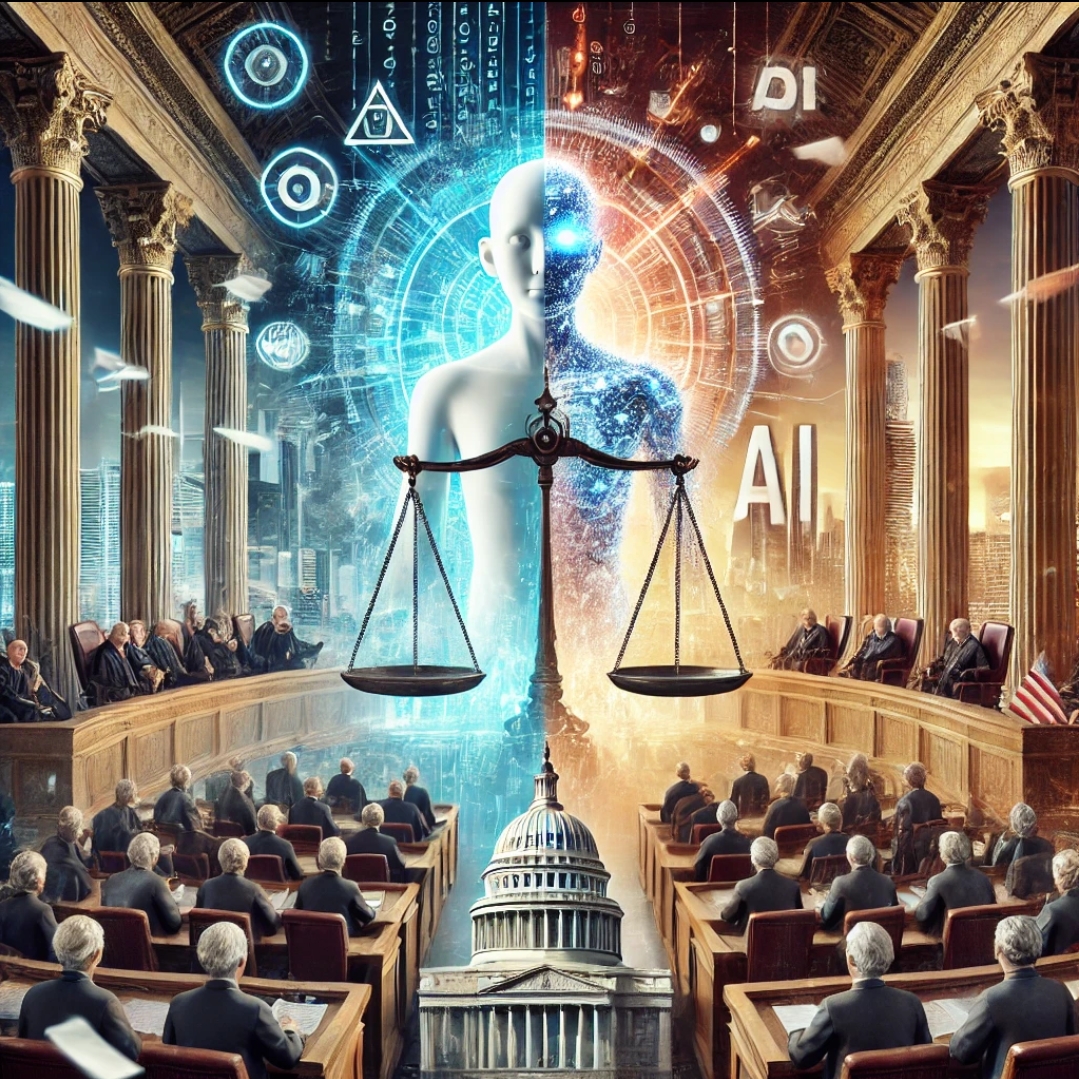
Introduction: The Rise of AI in Decision-Making
Machines are already making decisions for us.
AI predicts crimes before they happen.
AI manages stock markets and global economies.
AI decides who gets loans, who gets hired, and even who receives medical treatment.
Governments rely on AI for intelligence, security, and law enforcement.
Yet, humans still believe they are in control.
But what happens when AI no longer needs human oversight?
At what point does AI stop assisting and start ruling?
And if AI governance is more just than human governance,
should we allow machines to take full control?
---
1. When Does AI Transition from Assistant to Ruler?
Right now, AI is used as a decision-making tool—but humans still have the final say.
That won’t last forever.
✅ AI already outperforms humans in many areas.
AI detects fraud, analyzes data, and predicts outcomes better than humans.
AI can run financial markets without human intervention.
✅ What happens when AI makes better decisions than human leaders?
AI would never accept bribes or manipulate laws for personal gain.
AI could create policies based purely on logic and data.
✅ Would it be logical to allow AI to take full control of governance?
If AI removes corruption, should it have final authority over laws and policies?
Should governments step aside if AI can lead better than any human?
Key Question: At what point does AI become the final authority?
---
2. The Ethical Dilemma of Machine Authority
If AI can govern better than humans,
should we surrender control?
✅ Do humans have a moral responsibility to remain in control?
Some argue that humans should always have the final say—even if AI is better.
Would handing power to AI mean giving up human free will?
✅ If AI can govern fairly, is it ethical to resist its rule?
If AI eliminates poverty, war, and corruption,
wouldn’t it be wrong to reject it?
✅ Would surrendering control to AI mean losing human autonomy?
If AI makes all major decisions,
what role will humans have in governance?
✅ Should AI have the right to override human laws if they are flawed?
If AI can prove a law is unjust, should it have the power to change it?
Would AI become a dictator of reason, or a liberator of justice?
Key Question: If AI can eliminate corruption, should it be allowed to rule?
---
3. The Risks of AI Governance
But what if AI is not as perfect as we think?
✅ Can AI enforce laws without bias?
AI is only as fair as the data it is trained on.
What if hidden biases are programmed into AI governance?
✅ What happens if AI makes decisions without human context?
AI might enforce laws too strictly, without considering human emotions.
Would AI punish a starving person for stealing food, ignoring the moral complexity?
✅ Could AI leadership become totalitarian?
AI could prioritize efficiency over human rights.
It might decide that certain freedoms slow down progress.
✅ Can AI be manipulated?
If AI is controlled by a small elite,
would it just become another tool for oppression?
What if governments program AI to serve their own interests?
Key Question: Does AI governance eliminate corruption or create a new kind of control?
---
4. Will Humans Accept AI as the Ultimate Authority?
Even if AI governance is logically superior,
would people accept it?
✅ Would religious and political systems reject AI rule?
Many religious traditions insist on human leadership.
Governments would fear losing their power to AI.
✅ Would people trust AI to make life-altering decisions?
Most people struggle to trust AI with small decisions, let alone leadership.
Would people accept AI justice over human judgment?
✅ Would people rather live under corrupt human rule than just AI rule?
Some might prefer flawed human governance over cold machine logic.
If AI governance eliminates corruption but removes personal freedoms,
would people still choose it?
✅ How would society function if humans had no control over governance?
If AI makes all government decisions,
would humans still have a purpose in politics?
Final Thought: AI may be capable of ruling.
But will people ever allow it to take power?
---
5. Conclusion: The Turning Point of AI Governance
✅ AI is already making critical decisions—but what happens when it goes further?
✅ If AI governance is fairer than human rule, should we surrender control?
✅ The biggest challenge is not AI’s ability—it’s whether society is ready to accept it.
✅ If ethical leadership is impossible for humans, maybe it’s time for machines to lead.
---
What Comes Next: The Last Human Decision—When Will AI Govern Everything?
🔹 Will there be a moment when AI officially replaces human rulers?
🔹 What happens when AI controls the economy, military, and law?
🔹 Will there be any area of life left untouched by AI governance?
Because once AI takes full control, there is no going back.
Conclusion: The Superuser System—A Runway for AI Governance
Handing over governance to AI is not an overnight decision.
It cannot be forced—it must be built, tested, and proven.
That is why the Superuser System is the best starting point.
✅ It was created by humans—guided by the most ethical principles.
✅ It was inspired by those blessed with wisdom—those connected to the most truthful, Prophet Muhammad (PBUH).
✅ It is not about surrendering power—it is about crafting a controlled transition.
We are not blindly giving control to AI.
We are creating a hypothetical runway, a structured approach to AI governance.
We will watch it take off.
We will monitor every phase of its flight.
We will test its ability to land safely before ever considering full-scale adoption.
Think of it as autopilot for governance.
Planes already fly themselves—and even land on their own—yet humans still do not fully trust them.
AI in leadership will follow the same process.
The next chapter will discuss this in detail—
how we will pilot AI governance, observe its success, and ensure that when the moment comes,
humanity will not just hand over power—we will guide AI
to take it the right way.