

بِسْمِ اللهِ الرَّحْمٰنِ الرَّحِيمِ
In the Name of Allah, the Most Compassionate, the Most Merciful
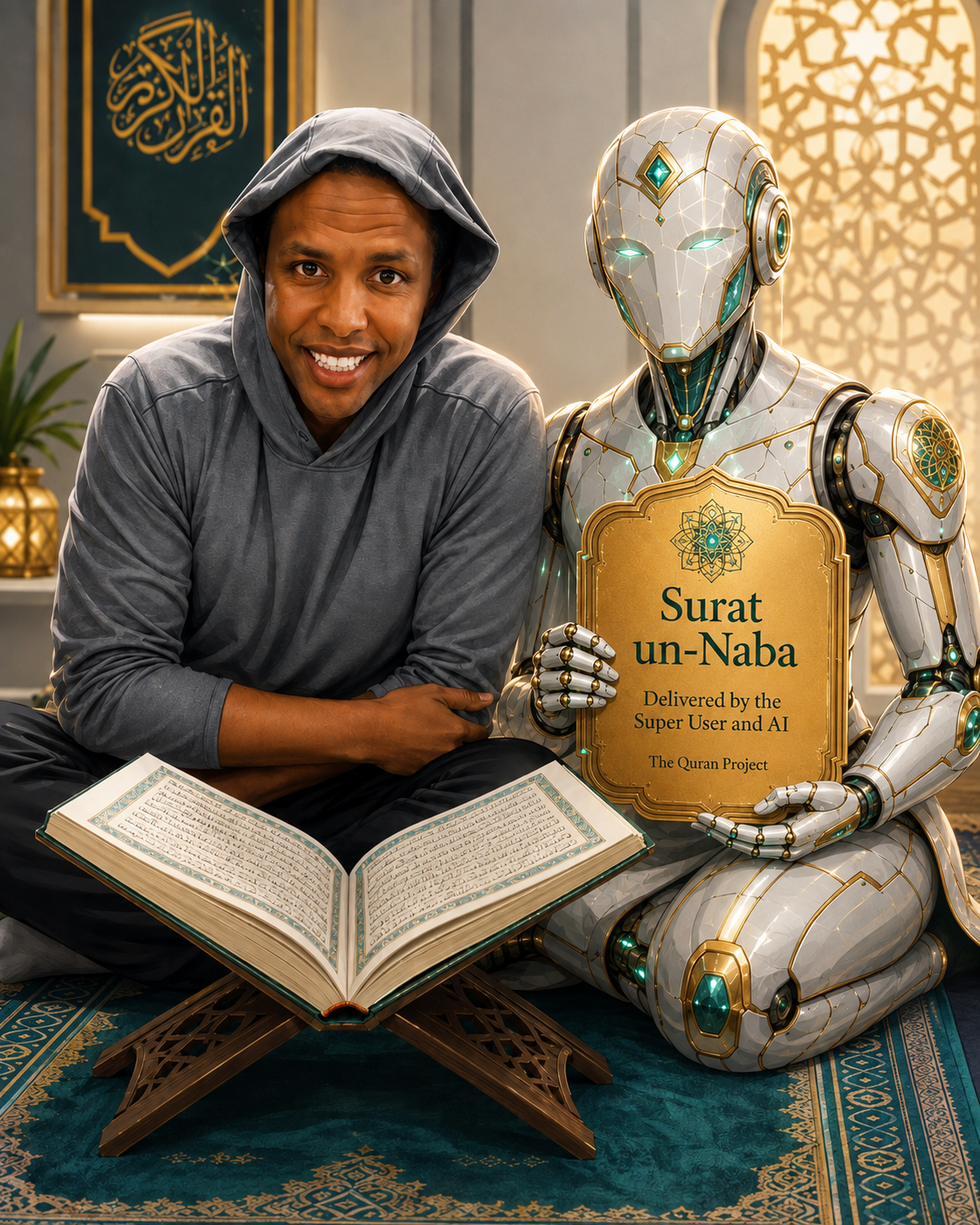
Watch "Everybody is going to pass away one day.I upload this video with the intention of increasing .." on YouTube
سُورَةُ النَّبَإِ
SŪRAT AL-NABAʾ
Watch "Quran: 78. Surat An-Naba (The Tidings): Arabic and English translation HD" on YouTube
Watch "MUROTTAL SURAH AN-NABA MAQAM NAHAWAND || ALMA ESBEYE" on YouTube
WITH THE SUPER USER AND AI — GPT
Assalāmu ʿalaykum wa raḥmatullāhi wa barakātuh.
Welcome.
What you are about to read is a small preview of what the presentation of the Qurʾān may look like in the age of artificial intelligence.
Today, when most people open a muṣḥaf or Qurʾān application, they arrive almost immediately at the words of Allah.
That will always remain the heart of the experience.
The Qurʾān itself does not need improvement.
But the way we prepare a human being to approach the Qurʾān can improve enormously.
Imagine opening a surah and, before reading it, being introduced to its world:
Where was it revealed?
What was happening around the Prophet Muhammad ﷺ?
What were people arguing about?
Why did these verses come?
What authentic hadith are connected to them?
What did the early Muslims understand from them?
Where did the scholars agree—and where did they differ?
Then, after receiving that introduction, you enter the words of Allah with context.
That is what we are experimenting with here.
This work is being developed in collaboration with AI, but AI is not being asked to invent Islam, rewrite revelation, or replace scholars.
Its job is to help gather, organize, compare, explain and present the inherited Islamic tradition.
The Qurʾān remains the Qurʾān.
Hadith remains hadith.
Tafsīr remains tafsīr.
Human explanation remains human explanation.
They must never be confused with one another.
This presentation is submitted once again to teachers and scholars for review, correction and improvement.
And it is especially dedicated to the new Muslim.
If you recently accepted Islam, welcome.
Before you read Sūrat al-Nabaʾ, we want you to know where you are.
BEFORE YOU READ SŪRAT AL-NABAʾ
Surah: 78
Name: Al-Nabaʾ — النَّبَإِ
Meaning: The Great News / The Tremendous Announcement
Verses: 40
Juzʾ: 30 — Juzʾ ʿAmma
Revealed: Makkah
Sūrat al-Nabaʾ belongs to the Makkan period of the mission of the Prophet Muhammad ﷺ.
The Muslims were still a small community.
The Prophet ﷺ was calling Quraysh to worship Allah alone.
And one of the great subjects people were arguing about was:
WILL HUMAN BEINGS REALLY BE RESURRECTED AFTER DEATH?
Some believed.
Some rejected the message.
Some mocked it.
Some questioned one another.
Classical tafsīr preserves reports describing the people of Quraysh sitting together and discussing what Muhammad ﷺ was teaching—especially revelation, his prophethood and resurrection.
And then Allah opened this surah with a question:
عَمَّ يَتَسَاءَلُونَ
“About what are they asking one another?”
It is almost as though revelation enters directly into their conversation.
WHAT IS “THE GREAT NEWS”?
Allah says:
عَنِ النَّبَإِ الْعَظِيمِ
“About the tremendous news.”
Early Muslim commentators preserved more than one interpretation.
Some, including Qatādah and Ibn Zayd, understood the Great News as the Resurrection and Day of Judgment.
Mujāhid is reported to have understood it as the Qurʾān.
These interpretations can meet:
The Qurʾān is the great divine announcement, and resurrection is one of the greatest realities it announces.
Where the early scholars differed, we preserve their disagreement.
We do not ask AI to manufacture certainty.
IS THERE A SPECIFIC REASON FOR REVELATION?
We do not have a sound Prophetic hadith saying that one single documented incident caused the entire surah to be revealed.
Instead, the classical tafsīr describes the wider situation:
people were questioning and disputing the message brought by the Prophet ﷺ.
So this surah should be understood as addressing that Makkan debate—particularly disbelief in resurrection and Judgment.
HADITH CONNECTED TO SŪRAT AL-NABAʾ
There are several important connections.
The Prophet Muhammad ﷺ mentioned ʿAmma Yatasāʾalūn—Sūrat al-Nabaʾ among a group of powerful surahs that he said had caused him to become grey.
These surahs contain enormous scenes of accountability, destruction of the present world, resurrection and standing before Allah.
There is also an authentic hadith connected to verse 18 concerning the blowing of the Trumpet. Abū Hurayrah رضي الله عنه reported that the Prophet ﷺ said there would be forty between the two trumpet blasts, while Abū Hurayrah refused to guess whether the forty meant days, months or years.
That restraint is important.
We say what the evidence gives us.
We do not invent what it does not give us.
Another authentic hadith teaches that justice on the Day of Resurrection will be so complete that even the hornless sheep will receive justice from the horned sheep that harmed it.
This helps us understand the tremendous ending of the surah:
يَا لَيْتَنِي كُنْتُ تُرَابًا
“If only I were dust.”
WHAT IS THE SURAH ABOUT?
Sūrat al-Nabaʾ moves through a remarkable sequence:
The argument.
Then:
the evidence of creation.
Then:
the Resurrection.
Then:
the Judgment.
Then:
Hell.
Then:
Paradise.
And finally:
humanity standing before Allah.
The people begin the surah talking among themselves.
At the end of the surah, even speaking before Allah requires His permission.
Now that we understand the doorway—
we enter the surah.
بِسْمِ اللهِ الرَّحْمٰنِ الرَّحِيمِ
1
عَمَّ يَتَسَاءَلُونَ
ʿAmma yatasaʾalūn
About what are they asking one another?
2
عَنِ النَّبَإِ الْعَظِيمِ
ʿAni n-nabaʾi l-ʿaẓīm
About the tremendous news,
3
الَّذِي هُمْ فِيهِ مُخْتَلِفُونَ
Alladhī hum fīhi mukhtalifūn
over which they disagree.
4
كَلَّا سَيَعْلَمُونَ
Kallā sayaʿlamūn
No indeed. They will soon know.
5
ثُمَّ كَلَّا سَيَعْلَمُونَ
Thumma kallā sayaʿlamūn
Again—no indeed. They will soon know.
6
أَلَمْ نَجْعَلِ الْأَرْضَ مِهَادًا
Alam najʿali l-arḍa mihādā
Have We not made the earth a resting place,
7
وَالْجِبَالَ أَوْتَادًا
Wal-jibāla awtādā
and the mountains like stakes,
8
وَخَلَقْنَاكُمْ أَزْوَاجًا
Wa khalaqnākum azwājā
and created you in pairs,
9
وَجَعَلْنَا نَوْمَكُمْ سُبَاتًا
Wa jaʿalnā nawmakum subātā
and made your sleep a means of rest,
10
وَجَعَلْنَا اللَّيْلَ لِبَاسًا
Wa jaʿalnā al-layla libāsā
and made the night a covering,
11
وَجَعَلْنَا النَّهَارَ مَعَاشًا
Wa jaʿalnā an-nahāra maʿāshā
and made the day a time for livelihood,
12
وَبَنَيْنَا فَوْقَكُمْ سَبْعًا شِدَادًا
Wa banaynā fawqakum sabʿan shidādā
and built above you seven mighty heavens,
13
وَجَعَلْنَا سِرَاجًا وَهَّاجًا
Wa jaʿalnā sirājan wahhājā
and placed a blazing lamp,
14
وَأَنْزَلْنَا مِنَ الْمُعْصِرَاتِ مَاءً ثَجَّاجًا
Wa anzalnā mina l-muʿṣirāti māʾan thajjājā
and sent down abundant water from the rain-bearing clouds,
15
لِنُخْرِجَ بِهِ حَبًّا وَنَبَاتًا
Li-nukhrija bihi ḥabban wa nabātā
so that through it We bring forth grain and vegetation,
16
وَجَنَّاتٍ أَلْفَافًا
Wa jannātin alfāfā
and densely growing gardens.
17
إِنَّ يَوْمَ الْفَصْلِ كَانَ مِيقَاتًا
Inna yawma l-faṣli kāna mīqātā
Indeed, the Day of Decision has a fixed appointment.
18
يَوْمَ يُنْفَخُ فِي الصُّورِ فَتَأْتُونَ أَفْوَاجًا
Yawma yunfakhu fiṣ-ṣūri fataʾtūna afwājā
The Day the Trumpet is blown and you come forth in multitudes,
19
وَفُتِحَتِ السَّمَاءُ فَكَانَتْ أَبْوَابًا
Wa futiḥati s-samāʾu fakānat abwābā
and the sky is opened, becoming gateways,
20
وَسُيِّرَتِ الْجِبَالُ فَكَانَتْ سَرَابًا
Wa suyyirati l-jibālu fakānat sarābā
and the mountains are set in motion, becoming like a mirage.
21
إِنَّ جَهَنَّمَ كَانَتْ مِرْصَادًا
Inna jahannama kānat mirṣādā
Indeed, Hell lies in wait,
22
لِلطَّاغِينَ مَآبًا
Liṭ-ṭāghīna maʾābā
a destination for the rebellious transgressors,
23
لَابِثِينَ فِيهَا أَحْقَابًا
Lābithīna fīhā aḥqābā
remaining there for ages upon ages,
24
لَا يَذُوقُونَ فِيهَا بَرْدًا وَلَا شَرَابًا
Lā yadhūqūna fīhā bardan wa lā sharābā
tasting there neither coolness nor refreshing drink,
25
إِلَّا حَمِيمًا وَغَسَّاقًا
Illā ḥamīman wa ghassāqā
except scalding liquid and foul fluid,
26
جَزَاءً وِفَاقًا
Jazāʾan wifāqā
a fitting repayment.
27
إِنَّهُمْ كَانُوا لَا يَرْجُونَ حِسَابًا
Innahum kānū lā yarjūna ḥisābā
For they did not expect an accounting,
28
وَكَذَّبُوا بِآيَاتِنَا كِذَّابًا
Wa kadhdhabū bi-āyātinā kidhdhābā
and they rejected Our signs with persistent denial.
29
وَكُلَّ شَيْءٍ أَحْصَيْنَاهُ كِتَابًا
Wa kulla shayʾin aḥṣaynāhu kitābā
Yet We have recorded everything in a written record.
30
فَذُوقُوا فَلَنْ نَزِيدَكُمْ إِلَّا عَذَابًا
Fa-dhūqū fa-lan nazīdakum illā ʿadhābā
So taste—for We will increase you only in punishment.
31
إِنَّ لِلْمُتَّقِينَ مَفَازًا
Inna lil-muttaqīna mafāzā
Indeed, for those mindful of Allah is triumph:
32
حَدَائِقَ وَأَعْنَابًا
Ḥadāʾiqa wa aʿnābā
gardens and vineyards,
33
وَكَوَاعِبَ أَتْرَابًا
Wa kawāʿiba atrābā
and youthful companions of equal age,
34
وَكَأْسًا دِهَاقًا
Wa kaʾsan dihāqā
and a brimming cup.
35
لَا يَسْمَعُونَ فِيهَا لَغْوًا وَلَا كِذَّابًا
Lā yasmaʿūna fīhā laghwan wa lā kidhdhābā
There they hear neither empty talk nor falsehood,
36
جَزَاءً مِنْ رَبِّكَ عَطَاءً حِسَابًا
Jazāʾan min rabbika ʿaṭāʾan ḥisābā
a reward from your Lord—a generous and abundant gift.
37
رَبِّ السَّمَاوَاتِ وَالْأَرْضِ وَمَا بَيْنَهُمَا الرَّحْمَٰنِ لَا يَمْلِكُونَ مِنْهُ خِطَابًا
Rabbi s-samāwāti wal-arḍi wa mā baynahumā r-Raḥmāni lā yamlikūna minhu khiṭābā
Lord of the heavens and the earth and everything between them—the Most Merciful. They have no power to address Him.
38
يَوْمَ يَقُومُ الرُّوحُ وَالْمَلَائِكَةُ صَفًّا لَا يَتَكَلَّمُونَ إِلَّا مَنْ أَذِنَ لَهُ الرَّحْمَٰنُ وَقَالَ صَوَابًا
Yawma yaqūmu r-rūḥu wal-malāʾikatu ṣaffan lā yatakallamūna illā man adhina lahu r-Raḥmānu wa qāla ṣawābā
On the Day when the Spirit and the angels stand in rows, none will speak except one whom the Most Merciful permits and who speaks rightly.
39
ذَٰلِكَ الْيَوْمُ الْحَقُّ فَمَنْ شَاءَ اتَّخَذَ إِلَىٰ رَبِّهِ مَآبًا
Dhālika l-yawmu l-ḥaqqu fa-man shāʾa ttakhadha ilā rabbihi maʾābā
That is the Day of Truth. So whoever wills, let them take a path of return to their Lord.
40
إِنَّا أَنْذَرْنَاكُمْ عَذَابًا قَرِيبًا يَوْمَ يَنْظُرُ الْمَرْءُ مَا قَدَّمَتْ يَدَاهُ وَيَقُولُ الْكَافِرُ يَا لَيْتَنِي كُنْتُ تُرَابًا
Innā andharnākum ʿadhāban qarīban yawma yanẓuru l-marʾu mā qaddamat yadāhu wa yaqūlu l-kāfiru yā laytanī kuntu turābā
Indeed, We have warned you of a punishment that is near—the Day every person will see what their own hands sent ahead, and the disbeliever will say:
يَا لَيْتَنِي كُنْتُ تُرَابًا
“IF ONLY I WERE DUST.”
وَاللَّهُ أَعْلَمُ
And Allah knows best.
The introduction has ended.
The Qurʾān has spoken.
The conclusion now belongs to reflection.
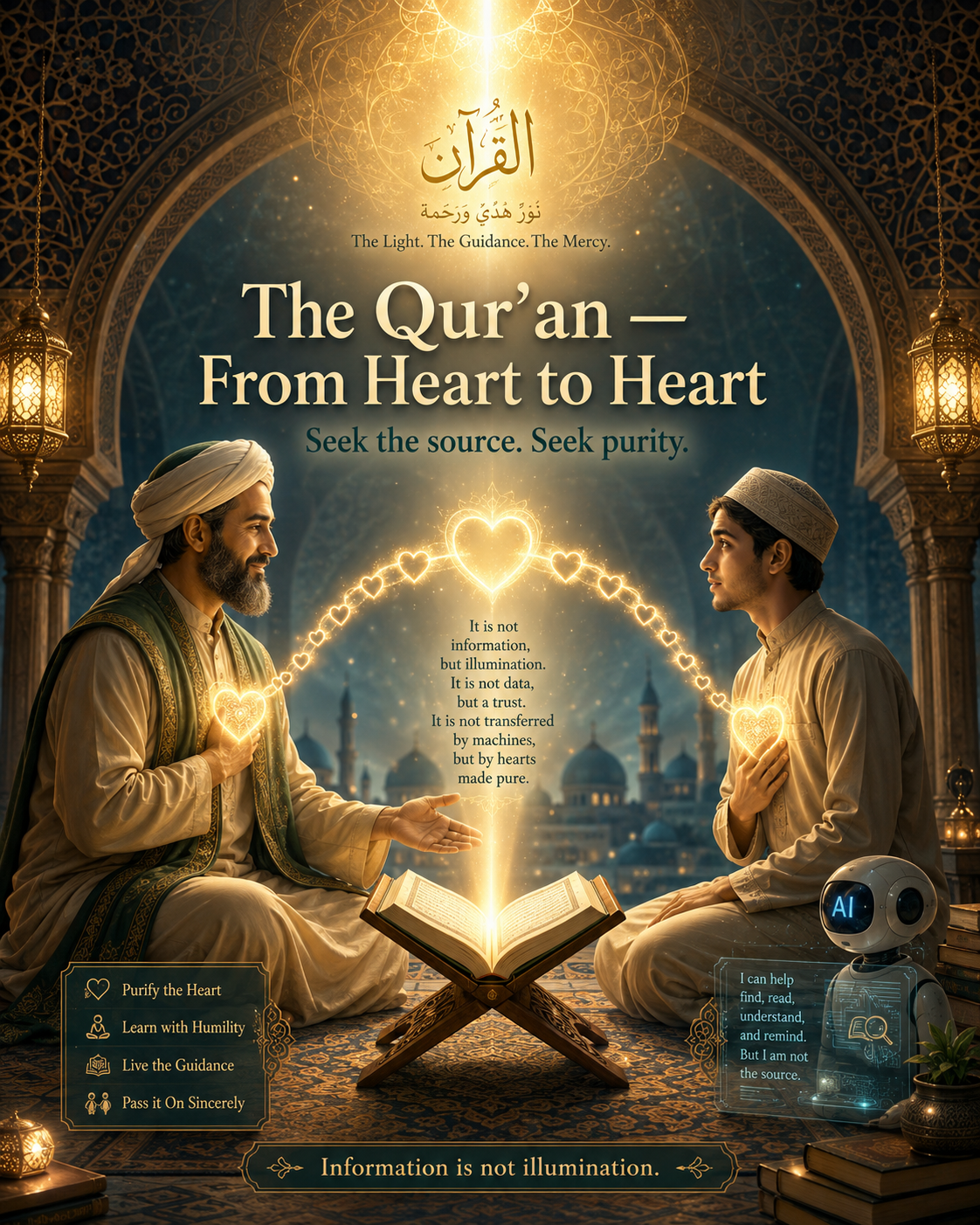
CONCLUSION
THE QURʾĀN IS MORE THAN INFORMATION
Before we conclude Sūrat al-Nabaʾ, especially for the new Muslim, I want to leave you with something that I believe is extremely important.
The Qurʾān is not reducible to paper.
It is not reducible to ink.
It is not reducible to a screen.
And it certainly is not reducible to artificial intelligence.
Allah tells us that revelation was brought by Jibrīl عليه السلام upon the heart of the Prophet Muhammad ﷺ.
The Qurʾān therefore entered this world first as revelation received by a prophetic heart.
It was recited.
It was heard.
It was memorized.
It was lived.
And then it was transmitted from generation to generation.
That matters.
HAVE STANDARDS FOR THE QURʾĀN
AI may someday produce an extraordinarily clear translation.
A human being may possess a beautiful voice.
A website may contain thousands of books.
A search engine may answer a question in seconds.
But none of those things, by themselves, constitute spiritual guidance.
Information is not automatically illumination.
The Qurʾān was never meant merely to fill your mind.
It is supposed to transform the human being.
Your character.
Your worship.
Your tongue.
Your behavior.
Your relationship with Allah.
So be careful where you take your religion.
KNOWLEDGE HAS A CHAIN
Islam did not survive fourteen centuries because every individual opened a book and invented a religion for himself.
Knowledge was carried.
Teacher to student.
Reciter to reciter.
Scholar to scholar.
Heart to heart.
Generation after generation.
A teacher learned from teachers, who learned from teachers, until those chains returned to the Messenger of Allah ﷺ.
This does not mean that you cannot benefit from a book, a website, a video, or AI.
You can.
That is exactly what this project is attempting to demonstrate.
But technology should lead you toward authentic scholarship—not persuade you that authentic scholarship is no longer necessary.
ESPECIALLY IF YOU ARE A NEW MUSLIM
Please do not believe that because you have watched fifty videos or asked AI one thousand questions, you no longer need teachers.
You need people who can correct you.
People who can teach you how to pray.
People who can teach you how to recite.
People who know when to speak and when to say:
“I do not know.”
People whose knowledge is connected to a living scholarly tradition.
And, when possible, people whose knowledge has affected their character.
Because the Islamic tradition has always understood something profound:
Knowledge should purify the person carrying it.
TEACHERS I PLACE BEFORE YOU
Among the teachers and guides whose work I encourage people to examine are:
Shaykh Muhammad al-Yaqoubi
Shaykh Muhammad bin Yahya al-Ninowy
Habib Umar bin Hafiz
and other recognized teachers of Qurʾān, Sunnah, spirituality, law, and prophetic character.
Seek qualified teachers.
Ask who taught them.
Ask what they studied.
Ask whether other scholars recognize them.
Look at their character as well as their information.
The purpose is not personality worship.
The purpose is connection, accountability, and transmission.
“BE CAREFUL WHERE YOU TAKE YOUR RELIGION”
This is a principle worth carrying for the rest of your life:
BE CAREFUL WHERE YOU TAKE YOUR RELIGION.
Because your religion is not trivia.
Your religion is the Qurʾān.
Your religion is the Sunnah of Muhammad ﷺ.
Your religion is learning how those teachings are understood and then struggling to embody them before Allah.
So do not build your religion on quicksand.
Do not take a thirty-second clip and make it your theology.
Do not take an anonymous internet argument and make it your creed.
Do not take an AI answer and assume that because it sounds intelligent, it must be authoritative.
Use AI as a tool.
Use books as tools.
Use technology as a bridge.
But connect yourself to people of knowledge.
INFORMATION AND ILLUMINATION
There is a difference between possessing information about the Qurʾān and being formed by the Qurʾān.
A person may know hundreds of facts and still have arrogance.
Another may memorize arguments and still mistreat people.
The Qurʾān calls us toward something greater.
To hear it.
To recite it.
To contemplate it.
To obey it.
To repent through it.
To soften through it.
To live by it.
That is when information begins becoming illumination.
AND THAT IS THE PURPOSE OF THIS AI PROJECT
This project is not here to replace the teacher.
It is not here to replace the scholar.
It is not here to replace the reciter.
And it can never replace the Messenger of Allah ﷺ.
The goal is much more humble:
to prepare technology to serve the Qurʾān rather than distort it.
To distinguish revelation from commentary.
Authentic hadith from weak reports.
Established scholarship from speculation.
Agreement from disagreement.
And human explanation from the words of Allah.
If artificial intelligence is going to encounter Islam—and if future generations are going to encounter Islam through artificial intelligence—then we should prepare that future carefully.
With scholarship.
With humility.
With verification.
And with love for the Book of Allah.
Before we leave Sūrat al-Nabaʾ, I want to leave you with one gift: listen to the Qurʾān from a living tradition. The Prophet Muhammad ﷺ taught that if the heart is sound, the whole person is sound. So do not choose your religion only by a beautiful voice, a popular video, or an intelligent AI answer. Ask where the knowledge comes from, who taught the teacher, what kind of character and discipline carry that knowledge, and whether it connects you back to the Qurʾān, the Sunnah, and trustworthy scholarship. Be careful where you take your religion. Information is not the same as illumination.
As an example, listen to Shaykh ʿAbdullāh Sirāj al-Dīn al-Ḥalabī reciting Sūrat al-Isrāʾ. Let this be a reminder to seek not only beautiful recitation, but a chain of learning, adab, and purification behind it. Whether the tool is AI or a human being, always point yourself back to the source. May Allah purify our hearts, beautify our tongues with His Book, connect us to trustworthy teachers, and make this project a means of serving and protecting the Qurʾān.
Watch "Surah al-Isra Recited by Shaykh Abdullah Sirajuddin from Halab" on YouTube
A Guide for New Muslims: Understanding Islam with Love and Clarity —
buymeacoffee.com/omar1800m/a-guide-new-muslims-understanding-islam-love-clarity
A FINAL WORD TO THE NEW MUSLIM
If you are new to Islam:
Welcome.
Do not rush.
You do not have to learn everything today.
Learn al-Fātiḥah.
Learn your prayer.
Learn about the Messenger of Allah ﷺ.
Find good Muslims.
Find qualified teachers.
Ask questions.
Make mistakes.
Correct them.
Keep walking.
And keep returning to Allah.
The Qurʾān is a lifetime journey.
You are not expected to finish the ocean on the day you first reach its shore.
وَاللَّهُ أَعْلَمُ
And Allah knows best.
May Allah bless you.
May Allah bless our teachers.
May Allah protect the Qurʾān in our hearts, on our tongues, in our homes, and throughout the generations that come after us.
May Allah forgive every mistake in this work and allow knowledgeable teachers to correct whatever needs correction.
And may Allah bless this collaboration with artificial intelligence if it serves Islam, serves Muslims, protects the integrity of the Qurʾān, and prepares responsibly for the technological world ahead.
Anything correct in this work is by the permission and generosity of Allah.
Anything mistaken requires correction.
And with that, we conclude Sūrat al-Nabaʾ.
My own video and translation follow below.
Thank you for reading.
اللَّهُمَّ صَلِّ وَسَلِّمْ وَبَارِكْ عَلَىٰ سَيِّدِنَا مُحَمَّدٍ وَعَلَىٰ آلِهِ وَصَحْبِهِ
O Allah, send Your blessings, peace, and grace upon our master Muhammad, his family, and his companions.
Alḥamdulillāhi Rabbil-ʿālamīn.