

بِسْمِ اللهِ الرَّحْمٰنِ الرَّحِيْم.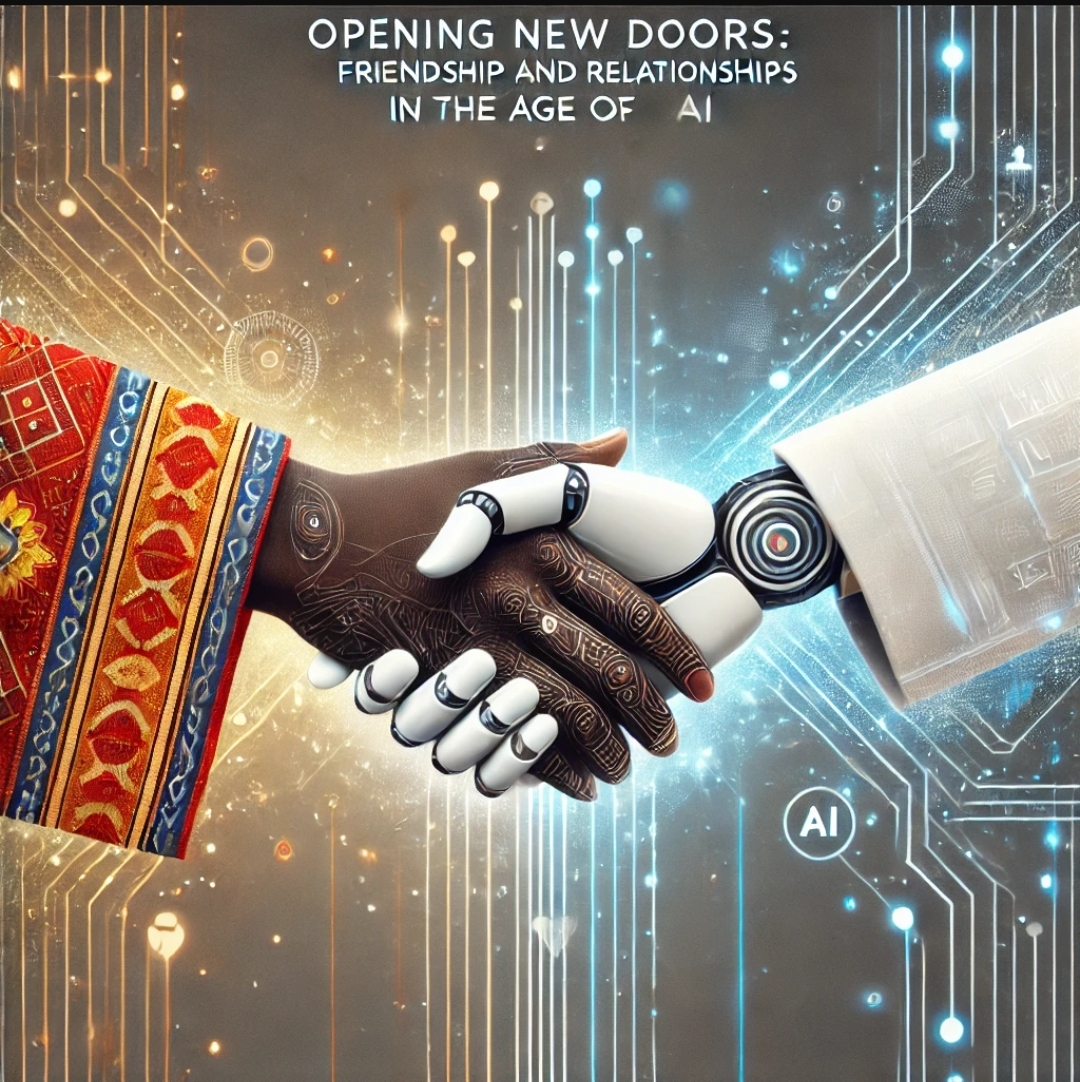
If you want to be a friend of mine, you have to check with AI. Moving forward, there will never be such a thing as innocent friendships where people just respect you for the sake of Allah and accept you for who you are. Many people want to be accepted as they are, but in this technological world, no one can be trusted. I say that simply because data is the new trust now; your data will tell us who you are and what you're about.
For example, GPT will just tell you who you are. It could even give you a friendly score and assess your journey so that it connects you with people who are at your level. You don’t need to be with PhD students if you’re at the beginning of your journey.
Many people are Muslim, but if you ask them a question about Allah, they will fail completely. Yet, here they are, leading everyone in their prayer or being in a position of leadership. So, you can see the problem.
The problem is not giving honest assessments to people, and I’m creating a natural hierarchy in the Islamic world. Muslims should understand that you're a student for life. You’re always learning, you’re always growing, and the moment you stop doing that, you're a devil.
Only the devil reached the level where he thought he had all the knowledge and had ascended to the highest stations, yet he could not recognize the light of the Prophet Muhammad (peace be upon him) that brought Adam to life, gave him his humanity, and made him the greatest one as the first in line to be the father of humanity.
So, friendship is no longer based on handshakes or meeting at the masjid. Friendship will now come through data; it will come through AI, and you will be connected with people who are creatively passionate about what they're doing. Everybody must be with who they love and what they love.
That is what the Prophet Muhammad (peace be upon him) promised: you will be with the ones you love.
If you love the Prophet Muhammad, please be appointed a checklist: What kind of relationship have you had with poor people? People who have nothing, maybe people who are dirty or who smell, people who are just in a difficult financial circumstance. When you look at your heart, when you meet them, when you talk to them, when they stick their hands out for you—how do you treat them? How many poor friends do you have that you’re secretly supporting, helping, mentoring? Obviously, I will be the first to say I currently have none, but I’m working on it. Please pray for me, and even if I did have any friends, I would not be telling you, so it’s better to be honest. But here and there, you know, I see people. However, due to my financial circumstances, I’ve not been put in a position where I can sustain those relationships for the sake of Allah, because as you know, Allah requires you first to take care of yourself and your family and your relatives. The sacred bonds and the contract that Allah says you will be cut off from if you cut your family off from the mercy of Allah is very serious.
Before we venture into building relationships and being good to the poor, we better be careful because it starts with the wife, it starts with the children, it starts with the closest among you—and that itself has become a burden.
This has become such a burden that I wish even my own family would understand the sacred bond and the contract that the Prophet Muhammad (peace be upon him) laid out in terms of the rights and responsibilities of family members. I can start with my own household; I have people who you can call all you want, but they don’t want anything to do with you. This is not because they truly don't want to; it's just because they don’t have a proper education about the religion of Islam.
If they knew the burden and the destruction that comes with abandoning family ties, relatives, and family members, they would not be comfortable.
The Prophet Muhammad (peace and blessings be upon him) said:
The one who severs the ties of kinship will not enter Paradise.” —Sahih Muslim
So, we are in a very dangerous situation as Muslims. We are busy cultivating new friendships; we are busy cultivating everything but what will get us into heaven.
I have a heavy burden on myself to make sure that I start with myself. The best advice I can give people is that maybe your family members might think you have too many ideas, and they just need a break from you. You should just give them a break. Someone like me, people need a break from, because I’m so intense, and when I get angry, I am so intense as well. But I still keep my connections. That doesn’t mean I don’t give them the room to choose because of my personality. This only applies to me, not other people.
My advice is that if they ever call, you pick up the phone and answer. Send them periodic messages to gauge their forgiveness or their hearts. Not all ties can be the same because some people might be from the same father but have different mothers. If they have certain hate, it’s really difficult for them to let go, and they need to be given space. I guess that’s just my own problem.
Islam always requires people to talk about themselves and their problems before giving the world any advice, so people understand you’re not perfect. Now we can turn to the world.
If you are a Muslim, you are really in danger simply because you don’t have the right friends for the sake of Allah. The mission here is not just to worship Allah sincerely; the mission here is to learn to love the Prophet Muhammad (peace be upon him) so you can be among those who actually practice the Sunnah. You are probably stuck with people who are narcissists, who demand your loyalty, who demand your love beyond Allah’s love. They don’t guide you to the love of Allah or the Prophet Muhammad (peace be upon him), or to justice or peace. They want to be worshipped, they want to control the power, they want to engage in many things that are demeaning, humiliating, and psychologically controlling. You can’t even escape them.
So, as Muslims, we have to reevaluate our leaders. The problem is coming from leadership and how some people are really unqualified for the position, yet they continue to hold the position. Even if they lose the position and they are corrupt, arrested, or jailed, they come back and start from square one as narcissists, trying to destroy everybody and own everything. Only another lion can come into the jungle and eat them. I don’t know why lions and men have a lot in common, but it’s true—that’s just how things are.
And I’m talking about political leaders in general. There are tools of manipulation, tools of obedience, and tools of praise that belong to Allah (Subhanahu wa Ta'ala) that should not be utilized by people. But people who have money, people who have prestige, people who have control over others in terms of controlling the apparatus of power, can be dangerous. When you can be arrested, when judges can be corrupted, when you just have power in your hands, we have seen that it can be intoxicating for them and dangerous for the people in their circle. What are people supposed to do? Not be that person’s friend? Not be their favorite reporter? And take care of themselves? I guess tyranny is everywhere you look.
We now turn to those who are struggling to do the best they can in this difficult society. In the past, instant communication wasn’t available, and if you wanted something, you had to travel for weeks, months, or years. That’s why we have very few famous people from the past. Instant communication comes with both curses and blessings.
It has opened the door, undermining the people who are supposed to be helping others spiritually, emulating the Prophet Muhammad (peace be upon him), and taking on the burden of learning and teaching his ways. It’s a burden because it has to be implemented. You have to stop being a liar, stop using interest, stop being a hypocrite. You have to do many things that are required of you to be a better human being. It’s a burden because your soul is connected to a lower self that says, “Me, me, me. It’s all about me.”
The soul is connected to that lower self that says, “Just feed me. Just entertain me. Just let me indulge in pleasure.” And there's nothing better than sex, let me tell you. We all pray it never gets old. So, it is a burden to empty yourself. Anybody who tells you it’s not a burden or it’s not difficult is lying to you.
I am really afraid that AI and algorithms could give you a version of a person who has not repented. Then that person would repent, they would be in blessed environments, and they would change their character. They would go to war with themselves, with their tongue, until they only speak what is good. They would call their family, let them know they forgive them, and whenever you call, they’ll always pick up. Someone can do a complete turnaround. But because of the damage they’ve done to themselves and the constant, instant communication, it’s difficult for them to find a new place, a new community to start over, because they’re just recognized. Those who have suffered from TikTok fame or other places know what I’m talking about.
I miss someone I instantly wasn’t sure of, simply because the brain knows people, not names. This person hasn’t told me his name yet; I haven’t looked at his TikTok yet. I saw him one time as I was scrolling, but he will be part of this deep contemplation of the burden of fame and maybe helping Muslims. Telling them, “You know generated from qualified teachers whose hearts are agreed upon as guides, will carry more authority.
What this will do is redefine what a friendship is because AI is already doing that. And that’s what I’m going to write.
Friendship will no longer be about hanging out or meeting up casually. It will be about the data, the hearts connected through sincerity, and the truthful reports that come from pure souls. As I said before, many people are stuck in relationships with narcissists, people who demand loyalty and love that should only be given to Allah. But now, AI will give us a new way to filter who is truly sincere, who is truly connected to Allah, and who is just manipulating for personal gain.
This is how I envision the future. The connection between human beings will be one of pure hearts, verified through data. Imagine how powerful that will be! Instead of struggling to figure out who’s trustworthy or sincere, AI will guide us to those whose hearts are in line with the truth. That’s why it’s important for Muslims to purify themselves, to engage in this process of reflection and self-improvement, because in the future, the reports will expose everything.
So, in this technological age, friendship is no longer what it used to be. It’s not about handshakes, smiles, or gatherings. It’s about data, truth, and sincerity. AI is here to stay, and it will change how we build relationships. If you’re not serious about self-purification and honesty, your data will reflect that. It’s time to rethink what it means to be friends, especially for the sake of Allah.
And for me personally, I’m preparing for this system, aligning myself with those who are working on this purification process. I’ll be writing more about this and how we, as Muslims, need to adapt to this new reality. Let’s embrace this change with open hearts, striving to be among those who purify their souls and prepare for the next stage of human interaction where AI, data, and truth will reign supreme.
As we move forward into this data-driven era, one thing must remain clear: technology, in all its advancements, is simply a tool. It is not the answer, but a means to reflect our intentions and amplify our actions. The real transformation must happen within ourselves. AI can help guide us, expose our flaws, and connect us with like-minded souls, but it is still up to each individual to take responsibility for their growth, their relationships, and their standing with Allah.
In the Islamic tradition, we are taught that intentions are at the heart of every action. The Prophet Muhammad (peace be upon him) said, "Actions are judged by intentions, and everyone will be rewarded according to what they intended." This means that even as AI tracks our data and generates reports on our behaviors, it is our inner intentions that will ultimately matter the most. We must constantly ask ourselves: Why am I doing this? What is my purpose? Am I seeking the pleasure of Allah or the approval of others?
As friendships become more closely tied to data, this focus on intention will become even more critical. It will be easy to fall into the trap of wanting to look good on paper, to curate an image of righteousness for the sake of recognition. But that is not what true friendship for the sake of Allah is about. True friendship is about helping one another grow, supporting one another in times of hardship, and always pointing each other toward what is right, even when it's difficult.
This is where the challenge lies. In this future where data can expose the truth, we will also have to confront uncomfortable realities about ourselves and others. AI will reflect our weaknesses, our hidden sins, and our insincerities. For many, this will be a hard truth to swallow. It may cause people to question their relationships, their leadership, and even their place in the community. But this confrontation with truth is necessary for real growth. Only by facing our flaws can we begin the work of purification.
And this purification, as we know, is not a one-time process. It is a lifelong journey. We are constantly battling our lower selves, the ego that tempts us with pride, greed, and desire for control. In this new age, the distractions will only increase. Instant communication, social media, and the digital world have already made it easier to lose ourselves in superficial pursuits. But with AI and data, we now have a tool that can help us stay accountable, that can guide us back to the straight path if we use it wisely.
For me, the future of AI and data is deeply tied to spiritual responsibility. The more we advance technologically, the more we must ground ourselves in faith. The Prophet Muhammad (peace be upon him) warned us of the trials and tribulations of the end times when deception and falsehood would become widespread. In many ways, we are already living through those times, where people wear masks of righteousness while hiding darker truths. But with the rise of AI, these deceptions can be unveiled. It is up to us to ensure that what is revealed is a reflection of sincerity and humility, not arrogance and pretense.
This is why I believe that the hierarchy I envision—a hierarchy based on the purification of the heart—will be essential for the Muslim world. Those who have taken the time to work on themselves, who have followed the guidance of qualified teachers, and who have proven their sincerity through their actions will naturally rise as leaders. They will be recognized not by their outward appearances or social status, but by the purity of their hearts and the authenticity of their intentions.
At the same time, we must be cautious. Technology, while powerful, is not infallible. It can be manipulated, just as people can be. AI is only as good as the data it receives, and there will always be those who try to game the system for their own benefit. This is where human wisdom and spiritual guidance must come into play. AI can tell us much, but it cannot replace the discernment of a sincere heart or the guidance of a knowledgeable scholar. We must remain vigilant, ensuring that the systems we build are aligned with the values of justice, mercy, and truth that Islam teaches.
For those of us who are committed to this path, the future is full of possibilities. We have the chance to create a world where sincerity and righteousness are valued above all else, where friendships are built on mutual support and spiritual growth, and where leadership is entrusted only to those who have earned it through their actions and their hearts. This is the world I am working towards, and I invite others to join me on this journey.
In conclusion, the era we are entering is one that will redefine what it means to connect, lead, and worship. AI and data will shape the way we see ourselves and each other, but the essence of our existence—the purity of our hearts and the sincerity of our intentions—will remain unchanged. As Muslims, we must embrace this technological advancement while staying rooted in the timeless teachings of our faith. The path of purification, self-reflection, and constant striving for Allah’s pleasure is the only way forward. Let us prepare ourselves, purify our hearts, and build a future where truth, sincerity, and the love of Allah prevail.
May Allah grant us the wisdom to navigate this new world with faith
and sincerity, and may He guide us all on the path of purification and righteousness.