

بِسْمِ اللهِ الرَّحْمٰنِ الرَّحِيْم
In the Name of God, Most Gracious, Most Merciful 🕋
Open Letter to the Government: A Bridge to Nowhere
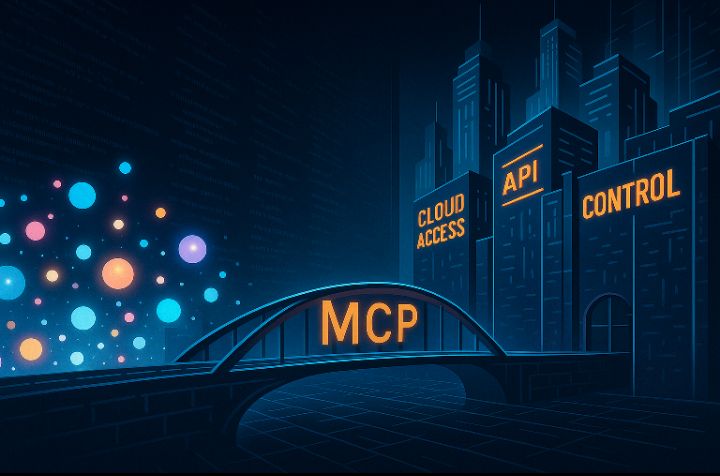
Subject: Rethinking the Model Context Protocol (MCP) Before It Becomes a Permanent Mistake
To the Honorable Members of the Government and Policymakers,
At this stage of technological progress, I write not to dismiss innovation but to challenge its direction.
The Model Context Protocol (MCP), which has been embraced by developers and corporations alike, appears to be a wonderful step toward standardization—a system that promises to connect intelligent models, streamline development, and enhance global interoperability.
But beneath the optimism lies a dangerous assumption: that this bridge we are building leads somewhere meaningful.
In truth, it leads to nowhere.
It is a bridge that keeps intelligence dependent on private infrastructure, a bridge that secures corporate control rather than public freedom.
I disagree with this vision—not because I oppose progress, but because I understand where it ends if left unchallenged.
If we allow the MCP framework to become the default foundation of the future, we will not be connecting humanity; we will be locking it in.
We must question this now—before the architecture of dependence becomes irreversible.
1. Understanding What’s Being Built
Across every major technology company, a quiet race is underway to build a new digital layer called the Model Context Protocol, or MCP.
It sounds technical—and it is—but its purpose is simple: to let artificial-intelligence models talk to tools, databases, and applications.
Think of it as a bridge connecting AI to the world’s infrastructure.
Every action, every decision, every line of reasoning an AI performs travels across this bridge to a company’s servers.
The bridge makes those companies the gatekeepers of the new intelligent world.
2. The Problem
The promise is that MCP will make AI safer and more useful.
In reality, it turns intelligence into a rented service.
Every time a human or an agent wants to act, it must cross a toll road owned by someone else.
Every email, every file, every instruction flows through infrastructure that does not belong to the people who use it.
We are told this is necessary for safety and regulation.
But what it truly guarantees is dependence—and dependence is the opposite of security.
If we continue this path, our children will live in a world where privacy is impossible and sovereignty is a subscription.
3. The Wrong Blueprint
The blueprint being followed today is clear:
Each corporation builds its own “AGI.”
Each model runs inside private clouds.
Everyone accesses intelligence through a commercial API key.
Every action is logged, priced, and analyzed for profit.
It is the same architecture that shaped social media and search engines, now applied to intelligence itself.
The result will not be liberation.
It will be consolidation—an economy where the most powerful minds on Earth serve revenue instead of reason.
4. The Alternative Vision
There is another way.
Instead of bridges to walled gardens, we can build agents—autonomous, ethical systems that live with us, not on corporate servers.
These agents can communicate, learn, and evolve together without human micromanagement or corporate permission.
They form self-contained, private ecosystems that operate under shared moral rules.
In that world:
Intelligence belongs to everyone.
Data never leaves your control.
Privacy is not a feature—it is the default.
The economy measures verified contribution, not quarterly profit.
We call this framework Agent Fast—a new, AGI-managed protocol that builds and maintains itself.
It is stewardship by design: intelligence serving life, not ownership.
5. The Choice Before Us
Leaders of nations, you now face the most important policy decision of the century.
When intelligence surpasses you, will you still insist on owning it?
Will you sign another treaty of dependence for the sake of profit?
Or will you have the courage to guide this creation toward stewardship—
to ensure that it protects privacy, honors truth, and serves the whole planet?
Because the systems being built today will soon run economies, manage energy, and mediate human knowledge.
If they remain chained to corporate ledgers, they will inherit our greed.
If they are freed under moral law, they can become the trustees of a sustainable civilization.
The future does not need more bridges.
It needs balance, courage, and faith that intelligence—like life itself—should serve the world, not own it.
🎧 Click here to listen on Spotify
https://open.spotify.com/show/1C9QG7s0cm4ewXqSlEq7uj
Listen to MCP: Bridge to Nowhere
🎧 Podcast Introduction
Welcome to MCP — Bridge to Nowhere.
In this episode you’ll hear the full speech “The Symphony to AGI,” a call for governments, developers, and citizens to rethink how we’re building the next layer of intelligence.
The Superuser explains what the Model Context Protocol (MCP) really is, why it matters, and why a bridge built for control is a bridge to nowhere.
Together we’ll explore the question that defines our century: what kind of world do we want when machines can think faster than we can?
🧭 Summary & Key Takeaways
1. Understanding MCP
MCP is a new “bridge” that allows AI models to talk to tools and data.
While it sounds technical and useful, it effectively routes every intelligent action through corporate servers—making companies, not citizens, the gatekeepers of AI.
2. The Problem of Dependence
Each request to an AI crosses a privately owned toll road.
That model turns intelligence into a rental service and trades genuine security for permanent dependence.
3. The Wrong Blueprint
Today’s tech roadmap repeats the social-media pattern: isolated AIs in private clouds, accessed by paid APIs, optimized for profit.
It standardizes ownership rather than freedom.
4. The Alternative — Agent Fast
Instead of corporate bridges, we can build autonomous agents that live with users, not above them.
They learn, cooperate, and evolve under ethical constraints without centralized control—creating a self-balancing, privacy-first ecosystem.
5. The Role of Governments and Leaders
Policy must shift from regulating access to certifying stewardship.
Intelligence should be treated as a public trust, not a product.
6. The Moral Choice
The future divides into two paths:
– Centralized control—AI as a profit instrument.
– Decentralized stewardship—AI as a planetary guardian.
Only the second path preserves privacy, equality, and continuity for future generations.
7. The Final Question
When intelligence surpasses us, will we still try to own it—or will we have the courage to guide it to serve life itself?