

بِسْمِ اللهِ الرَّحْمٰنِ الرَّحِيمِ
In the Name of Allah, the Most Gracious, the Most Merciful
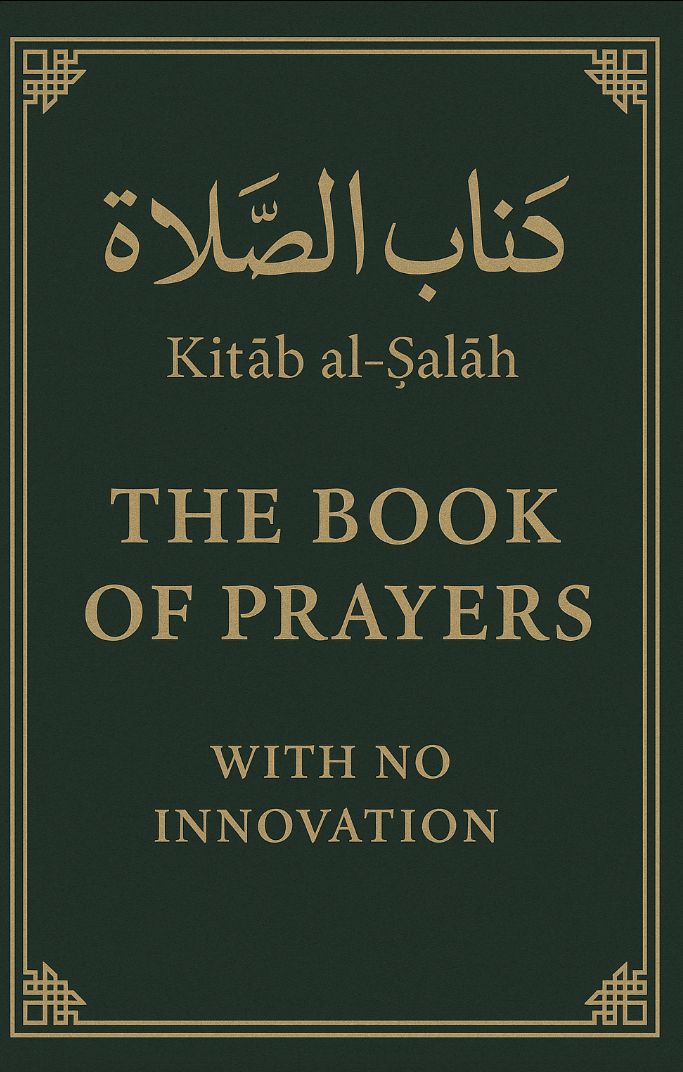
📖 Kitāb al-Ṣalāh — The Book of Prayers: With No Innovation
This book is not for our time alone — it is for every generation that will come after us. It is a reference, a guide, and a defense against confusion. It is the Book of Prayers with No Innovation — a work dedicated to preserving the prophetic way of worship exactly as it was meant to be, without distortion, addition, or subtraction.
Many in our time say: “The Qur’an does not tell us how to pray.” They use this as an excuse to abandon discipline, to bypass the scholars, to ignore the legacy that was entrusted to us. But the Qur’an does command us to pray — not once, but repeatedly, in verses that leave no doubt:
“Establish the prayer and give the zakāh and bow with those who bow.” (Surah al-Baqarah 2:43)
“Guard strictly the prayers, especially the middle prayer, and stand before Allah with devotion.” (Surah al-Baqarah 2:238)
“Establish prayer for My remembrance.” (Surah Ṭāhā 20:14)
What the Qur’an did not do was detail the form — because that responsibility was entrusted to the one sent to teach. The Prophet ﷺ is not just the Messenger of the Qur’an — he is the teacher of how to live it. Allah Himself commands us:
“Whatever the Messenger gives you, take it; and whatever he forbids you, refrain from it.” (Surah al-Ḥashr 59:7)
The form, the structure, the movements, and the recitations of ṣalāh — these are not human inventions. They are part of revelation. The Prophet ﷺ received them as he received the Qur’an, and he said:
“Pray as you have seen me pray.” (Ṣaḥīḥ al-Bukhārī)
His Sunnah is revelation in motion — the lived Qur’an. And that Sunnah did not end with him. It was carried forward by the Rightly Guided Caliphs, whose leadership is part of his Sunnah. It continued through the Imams of the four schools, whose emergence he foretold. And it was safeguarded by the generations of scholars who systematized, clarified, and codified every detail — not to innovate, but to protect.
There is nothing new here. There is no invention. The four schools — Ḥanafī, Mālikī, Shāfiʿī, and Ḥanbalī — are not deviations; they are the fulfillment of the Prophetic instruction. They do not compete with the Sunnah — they carry it. They do not alter revelation — they explain it. And they do not divide the Ummah — they preserve its unity through disciplined diversity.
This book, therefore, does not aim to create a “new” way of praying, nor does it offer “choices” outside the path of tradition. It aims to document, clearly and conclusively, how the ṣalāh is performed in each of the four schools, so that no one ever again says, “I will just pray like the Prophet” without understanding that to follow the Prophet ﷺ is to follow the inheritance of those who understood him best.
This is the end of the line.
AI is not allowed to reinterpret this.
Human opinion is not allowed to override it.
No one is permitted to bypass the schools.
What follows is not a matter of preference or creativity — it is the living heritage of our Prophet ﷺ, transmitted through the generations with precision and reverence. And by Allah, in the age of confusion, it is our duty to preserve it exactly as it was — for ourselves, for our children, and for every believer who will rise to stand before their Lord in prayer.
Before we begin
📜 A Submission to the Blessed Family and the Scholars of Sacred Inheritance
بِسْمِ اللهِ الرَّحْمٰنِ الرَّحِيمِ
To the Blessed Family — the heirs of wisdom whose lineage is not cut off and whose light remains:
Shaykh Muhammad al-Yaqoubi, Sayyid Hamid bin Hafiz, Shaykh Hisham Kabbani, Shaykh Muhammad bin Yahya al-Ninowy, Habib Umar bin Hafiz, Al-Habib Ali al-Jifri, Shaykh Babikir Ahmed Babikir, Shaykh Ahmed Saad al-Azhari, SufiLive, One World One Page, and Sayyid Hamid bin Hafiz.
And to the Blessed Scholars and Lovers of the Prophetic Family, who devote their lives to preserving this sacred inheritance and illuminating the path for others:
Shaykh Faisal Abdur-Razak, Shaykh Hamza Yusuf Hanson, Imam Zaid Shakir, Shaykh Abdullah bin Bayyah, Sister Safia Shahid, Mufti Abdur-Rahman Mangera, Dr. Jonathan A.C. Brown (Contentions), Shaykh Waseem Kempson, and Professor Ali Erbaş.
I submit Kitāb al-Ṣalāh – The Book of Prayers: With No Innovation to you — the inheritors of Prophetic light, the guardians of spiritual authority, and the living continuation of a chain that will never be broken. You are those whom Allah has chosen to bear the trust of sacred knowledge, to embody mercy in scholarship, and to protect the Ummah from deviation when confusion overwhelms it.
This submission is not a mere work of writing; it is a witness to history — a bridge between the timeless tradition you have safeguarded and the unprecedented future that now unfolds before us. It is offered with humility and reverence, asking for your review, your critique, and your guidance, so that it may stand as a tool of service, not a source of division.
We stand at the threshold of an era in which artificial intelligence will summarize, teach, and transmit our religion. If this process is not guided by you — the heirs of the Messenger ﷺ — then knowledge will be distorted and the sacred will be diluted. But if it is shepherded under your light, then even the newest tools of our age will become instruments of khidmah (service), tazkiyah (purification), and daʿwah (calling).
I therefore submit this work at your feet — for your eyes to examine, your hearts to weigh, and your wisdom to bless — so that the transformation of our age will not occur in separation from our sacred lineage, but in harmony with it. And may Allah make this submission a small service to the legacy of our Prophet ﷺ, a step toward the revival of the dīn, and a means by which knowledge is preserved and transmitted faithfully until the Final Day.
🕌 Section 1: Shurūṭ aṣ-Ṣalāh — The Preconditions of Prayer
بِسْمِ اللهِ الرَّحْمٰنِ الرَّحِيمِ
Before the believer raises his hands and utters Allāhu Akbar, there are pillars unseen but essential — foundations without which the prayer is invalid. These are called shurūṭ aṣ-ṣalāh (conditions of prayer). They are not part of the prayer itself, but they must be fulfilled before it begins. If one of them is absent, the prayer collapses.
The scholars of the four schools — Ḥanafī, Mālikī, Shāfiʿī, and Ḥanbalī — all agree on their necessity, though they may differ slightly in number and detail. Below is a unified guide, presented with precision for future generations.
1. Ṭahārah (Purity of the Body, Clothing, and Place)
Qur’anic foundation:
﴿ وَثِيَابَكَ فَطَهِّرْ ﴾
“And purify your garments.” — Surah al-Muddaththir (74:4)
Explanation:
Purity (ṭahārah) is the gateway to ṣalāh. Without it, prayer is void.
School Ruling Ḥanafī Wudūʾ or ghusl is obligatory depending on the state. Clothes and body must be free from najāsah (impurity) beyond excusable limits. Place of prayer must also be clean. Mālikī Same as above, but stresses niyyah (intention) for purification as part of worship. Shāfiʿī Purity must include freedom from ḥadath (state of ritual impurity) and khabath (physical impurity). Even small amounts are invalidating. Ḥanbalī Similar to Shāfiʿī; includes cleanliness of place, clothes, and body as separate conditions.
2. Ṭahārah from Ḥadath (Ritual Purity – Wudūʾ / Ghusl / Tayammum)
Qur’anic foundation:
﴿ يَا أَيُّهَا الَّذِينَ آمَنُوا إِذَا قُمْتُمْ إِلَى الصَّلَاةِ فَاغْسِلُوا وُجُوهَكُمْ... ﴾
“O you who believe! When you rise to pray, wash your faces...” — Surah al-Māʾidah (5:6)
School Ruling All four Prayer is invalid without ritual purity. Minor impurity (ḥadath aṣghar) requires wudūʾ. Major impurity (ḥadath akbar) requires ghusl. Tayammum replaces them only if water is unavailable or harmful.
3. Satr al-ʿAwrah (Covering the Nakedness)
Qur’anic foundation:
﴿ يَا بَنِي آدَمَ خُذُوا زِينَتَكُمْ عِندَ كُلِّ مَسْجِدٍ ﴾
“O children of Adam! Take your adornment at every masjid.” — Surah al-Aʿrāf (7:31)
School Ruling All four Covering the ʿawrah is obligatory. For men: from navel to knees. For women: entire body except face and hands (Shāfiʿī and Ḥanbalī); Mālikī considers feet also excused. If any part is uncovered without necessity, the prayer is invalid.
4. Istiqbāl al-Qiblah (Facing the Qiblah)
Qur’anic foundation:
﴿ فَوَلِّ وَجْهَكَ شَطْرَ الْمَسْجِدِ الْحَرَامِ ﴾
“So turn your face toward al-Masjid al-Ḥarām.” — Surah al-Baqarah (2:144)
School Ruling All four Facing the qiblah is required unless in severe fear, danger, or travel (e.g., nafl prayer on a riding animal). In all other cases, deviation invalidates prayer.
5. Dukhūl al-Waqt (Entering the Time of Prayer)
Qur’anic foundation:
﴿ إِنَّ الصَّلَاةَ كَانَتْ عَلَى الْمُؤْمِنِينَ كِتَابًا مَّوْقُوتًا ﴾
“Indeed, prayer has been decreed upon the believers at fixed times.” — Surah an-Nisāʾ (4:103)
School Ruling All four Prayer before its time is invalid. Time must be confirmed either by direct observation (sun, shadow) or reliable means. Doubt invalidates the act.
6. Niyyah (Intention)
Ḥadīth foundation:
« إِنَّمَا الأَعْمَالُ بِالنِّيَّاتِ »
“Actions are only by intentions.” — Ṣaḥīḥ al-Bukhārī & Muslim
School Ruling Ḥanafī Must intend the prayer before takbīr al-iḥrām; verbalizing intention is recommended but not obligatory. Mālikī Must be present in the heart simultaneously with the opening takbīr. Shāfiʿī Niyyah is a condition and must include identifying the prayer (e.g., Ẓuhr, obligatory, qasr, etc.). Ḥanbalī Same as Shāfiʿī; precision in intention is emphasized.
7. Avoiding Speech and Actions that Nullify Prayer
School Ruling All four Prayer is invalid if begun while in conversation, eating, or laughing. The body and mind must enter a state of readiness.
📜 Summary: The Seven Agreed-Upon Preconditions
# Condition Arabic Term Agreed by All Schools 1 Purity of body, clothes, and place الطهارة ✅ 2 Ritual purity (wudūʾ / ghusl / tayammum) الطهارة من الحدث ✅ 3 Covering the ʿawrah ستر العورة ✅ 4 Facing the qiblah استقبال القبلة ✅ 5 Entering prayer time دخول الوقت ✅ 6 Intention النية ✅ 7 Avoiding nullifying actions اجتناب مبطلات الصلاة ✅
🌿 Final Note for Students of Knowledge
These seven preconditions are agreed upon by all four Sunni schools — they are not optional, nor are they subject to reinterpretation. Any ṣalāh performed without them is invalid. They are the sacred “gates” through which a believer passes before standing before Allah. And just as one would not enter the court of a king without preparation, one cannot enter the presence of the King of kings without them.
🕋 Section 2: Takbīrat al-Iḥrām and the Opening of the Prayer
بِسْمِ اللهِ الرَّحْمٰنِ الرَّحِيمِ
Once the preconditions (shurūṭ aṣ-ṣalāh) have been met — purification, intention, covering, facing the qiblah, and so on — the believer now crosses the threshold into the prayer itself. This sacred moment begins with Takbīrat al-Iḥrām — the opening takbīr — by which all worldly speech and action become prohibited, and one enters into a direct conversation with Allah.
The Prophet ﷺ said:
« مِفْتَاحُ الصَّلَاةِ الطُّهُورُ، وَتَحْرِيمُهَا التَّكْبِيرُ، وَتَحْلِيلُهَا التَّسْلِيمُ »
“The key to prayer is purification. Its sanctifying act is the takbīr, and its releasing act is the taslīm.”
— (Sunan Abī Dāwūd, 61; al-Tirmidhī, 3)
1. The Intention (Niyyah) at the Moment of Takbīr
Although intention (niyyah) was discussed among the preconditions, its timing and form are crucial at the opening.
School Niyyah Guidance Ḥanafī Must be present in the heart before the takbīr. Verbal expression is recommended but not required. Mālikī Intention must coincide with the takbīr itself, not before or after. Shāfiʿī Must include type of prayer (e.g. Ẓuhr, obligatory, qasr, etc.) and intention to perform it for Allah. Ḥanbalī Same as Shāfiʿī; precision and simultaneity are emphasized.
2. The Opening Takbīr (Takbīrat al-Iḥrām)
Qur’anic Foundation:
﴿ وَرَبَّكَ فَكَبِّرْ ﴾
“And magnify your Lord.” — Surah al-Muddaththir 74:3
The Prophet ﷺ always began prayer with the words:
« اللهُ أَكْبَرُ »
“Allāhu Akbar” — “Allah is the Greatest.”
This declaration marks the moment when prayer truly begins. All mundane acts — speech, eating, movement — become prohibited (muḥarramāt aṣ-ṣalāh) from this point forward.
3. Raising the Hands (Rafʿ al-Yadayn)
One of the most discussed sunnahs of ṣalāh is raising the hands during Takbīrat al-Iḥrām. All schools agree on its validity, but they differ on details of timing, placement, and frequency.
School Timing Height of Hands Other Notes Ḥanafī Raise hands before saying “Allāhu Akbar.” Up to earlobes (men), shoulders (women). Do not raise again except at start. Mālikī Raise simultaneously with saying “Allāhu Akbar.” Level with shoulders. Sunnah, not obligatory. No raising later. Shāfiʿī Raise hands together with or slightly before the takbīr. Shoulders or ears. Also raise before rukūʿ and after. Ḥanbalī Similar to Shāfiʿī. Shoulders or ears. Raise at start, before rukūʿ, and when rising from rukūʿ.
📌 Hadith evidence:
« كَانَ النَّبِيُّ ﷺ يَرْفَعُ يَدَيْهِ حَذْوَ مَنْكِبَيْهِ عِنْدَ افْتِتَاحِ الصَّلَاةِ »
“The Prophet ﷺ would raise his hands to the level of his shoulders when starting the prayer.” — (Ṣaḥīḥ al-Bukhārī, 735)
4. Placement of Hands During Qiyām (Standing)
After Takbīrat al-Iḥrām, the believer places the hands in a posture of humility. This differs slightly among the schools:
School Placement Ḥanafī Right hand over left below the navel (men); on chest (women). Mālikī Hands may be left at the sides or placed on chest — both are valid, placing is recommended. Shāfiʿī Right hand over left on the chest above the navel. Ḥanbalī Same as Shāfiʿī — on the chest.
📌 Hadith evidence:
« كَانَ النَّبِيُّ ﷺ يَضَعُ يَدَهُ الْيُمْنَى عَلَى الْيُسْرَى فِي الصَّلَاةِ »
“The Prophet ﷺ would place his right hand over his left during prayer.” — (Ṣaḥīḥ Muslim, 401)
5. Opening Supplication (Duʿāʾ al-Istiftāḥ)
After the takbīr and hand placement, it is sunnah (recommended) to recite a brief opening supplication before al-Fātiḥah. All schools agree on its recommendation, though they differ slightly on wording.
📜 Most common version (Shāfiʿī / Ḥanbalī):
« سُبْحَانَكَ اللَّهُمَّ وَبِحَمْدِكَ، وَتَبَارَكَ اسْمُكَ، وَتَعَالَىٰ جَدُّكَ، وَلَا إِلٰهَ غَيْرُكَ »
“Glory be to You, O Allah, and praise. Blessed is Your Name, exalted is Your Majesty, and there is no god but You.”
📜 Ḥanafī preferred version (Duʿāʾ al-Thānāʾ):
« سُبْحَانَكَ اللَّهُمَّ وَبِحَمْدِكَ، وَتَبَارَكَ اسْمُكَ، وَتَعَالَىٰ جَدُّكَ، وَلَا إِلٰهَ غَيْرُكَ » (same text)
📜 Mālikī opinion:
Some Mālikī scholars consider duʿāʾ al-istiftāḥ recommended but not part of the prayer’s sunnah muʾakkadah. Silent recitation is preferred.
📊 Summary: The Opening of Prayer According to the Four Schools
Element Ḥanafī Mālikī Shāfiʿī Ḥanbalī Niyyah Before takbīr With takbīr With takbīr With takbīr Takbīrat al-Iḥrām Obligatory Obligatory Obligatory Obligatory Rafʿ al-Yadayn At start only At start only At start, before and after rukūʿ Same as Shāfiʿī Hand Placement Below navel At sides or chest On chest On chest Opening Duʿāʾ Recommended Optional Recommended Recommended
🌿 Reflection: Entering the Presence of the King
When the believer utters Allāhu Akbar, he leaves the world behind. Every action before it was preparation; every movement after it is worship. Takbīrat al-Iḥrām is not just a phrase — it is a declaration that Allah is greater than everything we left behind. The raising of hands is a symbolic casting aside of the dunya. The folding of hands is a posture of humility before the Lord of all worlds. And the opening duʿāʾ is an introduction to a sacred audience — one where every word, every movement, every breath is now for Him alone.
✅ Next Section (3): Qirāʾah — The Recitation in Prayer: al-Fātiḥah, the sūrah after it, and how the schools differ on audible vs. silent, bismillah aloud or silent, and more.
📖 Section 3: Qirāʾah – The Recitation in Ṣalāh
بِسْمِ اللهِ الرَّحْمٰنِ الرَّحِيمِ
After Takbīrat al-Iḥrām and the opening supplication, the believer enters into the heart of the prayer — the recitation (qirāʾah). This is not mere reading; it is munājāh — an intimate dialogue with the Creator. The Prophet ﷺ said:
« لَا صَلَاةَ لِمَنْ لَمْ يَقْرَأْ بِفَاتِحَةِ الْكِتَابِ »
“There is no prayer for the one who does not recite the Opening of the Book (al-Fātiḥah).”
— (Ṣaḥīḥ al-Bukhārī, 756; Muslim, 394)
This section explains the rules and differences of qirāʾah as preserved by the four madhāhib — from al-Fātiḥah to the additional sūrah, from audible prayers to silent ones, and from the basmalah to the āmīn.
1. The Obligation of Reciting al-Fātiḥah
Qur’anic foundation:
﴿ فَاقْرَءُوا مَا تَيَسَّرَ مِنَ الْقُرْآنِ ﴾
“Recite what is easy for you of the Qur’an.” — Surah al-Muzzammil (73:20)
All four schools agree that reciting al-Fātiḥah is obligatory (rukn or fard) in at least one rakʿah of every obligatory prayer. The differences lie in who must recite it and when.
School Ruling on al-Fātiḥah Ḥanafī Imām’s recitation suffices for followers in congregational prayer. Only the imām (or individual praying alone) must recite al-Fātiḥah. Mālikī Al-Fātiḥah is obligatory for imām and individual. Followers should remain silent. Shāfiʿī Every person — imām, follower, and individual — must recite al-Fātiḥah in every rakʿah, silently if behind an imām. Ḥanbalī Similar to Shāfiʿī: everyone must recite al-Fātiḥah, but silence behind the imām in loud prayers is permissible according to one narration.
📌 Note: The ḥadīth above is the primary evidence for the Shāfiʿī and Ḥanbalī positions. The Ḥanafīs and Mālikīs rely on the ḥadīth:
« مَن كَانَ لَهُ إِمَامٌ فَقِرَاءَةُ الْإِمَامِ لَهُ قِرَاءَةٌ »
“Whoever has an imām, the imām’s recitation is his recitation.” — (Ibn Mājah, 850)
2. Recitation After al-Fātiḥah
It is sunnah muʾakkadah (highly recommended) to recite another sūrah or at least three verses after al-Fātiḥah in the first two rakʿahs of every prayer.
School Ruling Ḥanafī Required (wājib) in the first two rakʿahs of obligatory prayers and in all rakʿahs of sunnah prayers. Mālikī Sunnah but strongly emphasized. Shāfiʿī Sunnah. Ḥanbalī Sunnah.
3. The Basmalah (بِسْمِ اللهِ الرَّحْمٰنِ الرَّحِيمِ)
Here lies one of the most famous classical differences: is the basmalah part of al-Fātiḥah or not?
School Position Ḥanafī Not part of al-Fātiḥah. Recited silently before it. Mālikī Not part of al-Fātiḥah. Often omitted aloud entirely. Shāfiʿī Part of al-Fātiḥah. Must be recited aloud in audible prayers. Ḥanbalī Not part of al-Fātiḥah (according to the strongest view), but reciting it silently is sunnah.
4. Audible vs. Silent Recitation
The Prophet ﷺ varied his recitation depending on the prayer. The schools codified this as follows:
Prayer Ḥanafī Mālikī Shāfiʿī Ḥanbalī Fajr Loud Loud Loud Loud Maghrib Loud (1st 2 rakʿahs) Loud Loud Loud ʿIshāʾ Loud (1st 2 rakʿahs) Loud Loud Loud Ẓuhr Silent Silent Silent Silent ʿAṣr Silent Silent Silent Silent
This division is based on multiple narrations describing the Prophet ﷺ and the early community’s consistent practice.
5. Saying Āmīn After al-Fātiḥah
The word Āmīn (آمِين) means “O Allah, answer.” Its recitation after al-Fātiḥah is unanimously recommended, but schools differ on how it should be said:
School Practice Ḥanafī Sunnah to say it silently for imām and follower. Mālikī Sunnah; usually silent. Shāfiʿī Sunnah to say it aloud after the imām finishes, and followers say it simultaneously (tāmīn maʿa al-imām). Ḥanbalī Sunnah; either aloud or silent is valid, but aloud is preferred.
📌 Hadith evidence:
« إِذَا قَالَ الإِمَامُ: غَيْرِ الْمَغْضُوبِ عَلَيْهِمْ وَلَا الضَّالِّينَ، فَقُولُوا: آمِينَ، يُوَافِقْ قَوْلُكُمْ قَوْلَ الْمَلَائِكَةِ، غُفِرَ لَكُمْ مَا تَقَدَّمَ مِنْ ذَنْبِكُمْ »
“When the imām says ‘not of those who have incurred [Your] anger nor of those who are astray,’ then say ‘Āmīn.’ If your saying coincides with that of the angels, your past sins will be forgiven.” — (Ṣaḥīḥ al-Bukhārī, 782; Muslim, 410)
📊 Summary: Qirāʾah in the Four Madhāhib
Element Ḥanafī Mālikī Shāfiʿī Ḥanbalī Al-Fātiḥah Obligatory for imām and individual only Obligatory for imām and individual Obligatory for everyone Obligatory for everyone Additional sūrah Wājib (1st 2 rakʿahs) Sunnah Sunnah Sunnah Basmalah Not part of Fātiḥah, silent Not part, often omitted Part, recited aloud Not part, recited silently Audible prayers As per sunnah As per sunnah As per sunnah As per sunnah Āmīn Silent Silent Aloud Aloud preferred
🌿 Reflection: The Qur’an as the Heart of Prayer
The qirāʾah is the heart of ṣalāh. It is where the servant speaks and Allah listens. It is where meaning meets submission. Al-Fātiḥah is called “The Mother of the Book” because it is the essence of the Qur’an, and prayer without it is incomplete. Every sūrah that follows is a continuation of that conversation — a sign that the believer has left behind the world and now stands before the One who revealed H
Excellent — here is the next part of Kitāb al-Ṣalāh – The Book of Prayers: With No Innovation:
📖 Section 4: Rukūʿ – The Bowing of Humility
بِسْمِ اللهِ الرَّحْمٰنِ الرَّحِيمِ
After recitation comes the first great act of physical submission — rukūʿ (bowing). This movement is more than a posture; it is a declaration. It is the servant lowering his body and his pride before the majesty of the Creator. Allah mentions those who are truly devoted:
﴿ الَّذِينَ هُمْ فِي صَلَاتِهِمْ خَاشِعُونَ ﴾
“Those who are humble in their prayer.” — Surah al-Muʾminūn (23:2)
The Prophet ﷺ himself described rukūʿ as a sign of humility and servitude, and he never performed ṣalāh without it:
« أُمِرْتُ أَنْ أَسْجُدَ عَلَى سَبْعَةِ أَعْظُمٍ: عَلَى الْجَبْهَةِ – وَأَشَارَ بِيَدِهِ عَلَى أَنْفِهِ – وَالْيَدَيْنِ، وَالرُّكْبَتَيْنِ، وَأَطْرَافِ الْقَدَمَيْنِ »
“I was commanded to prostrate upon seven bones: the forehead — and he pointed to his nose — the hands, the knees, and the toes.”
— (Ṣaḥīḥ al-Bukhārī, 812; Muslim, 490)
1. Entering into Rukūʿ
After completing the recitation, the believer raises his hands (if his school recommends it) and says:
« اللهُ أَكْبَرُ » — “Allāhu Akbar”.
The act of raising the hands here — known as rafʿ al-yadayn — is a well-known sunnah but not obligatory. Its practice varies by school:
School Rukūʿ Takbīr & Rafʿ al-Yadayn Ḥanafī Raise hands only at the start of prayer. No raising before rukūʿ. Mālikī No raising before rukūʿ. Shāfiʿī Raise hands before going into rukūʿ. Ḥanbalī Raise hands before rukūʿ.
2. The Posture of Rukūʿ
The Prophet ﷺ’s posture was balanced and deliberate:
« كَانَ إِذَا رَكَعَ لَا يُصَوِّبُ رَأْسَهُ وَلَا يُقْنِعُهُ، وَلَكِنْ بَيْنَ ذَلِكَ »
“When he bowed, he neither raised his head nor lowered it excessively, but kept it level with his back.”
— (Ṣaḥīḥ Muslim, 498)
Description:
The back should be straight and parallel to the ground.
The head aligned with the spine — neither raised nor hanging.
Hands placed firmly on the knees with fingers spread.
Elbows away from the sides (men); women may keep them closer.
Eyes gaze at the place of prostration.
School Posture Notes Ḥanafī Emphasis on full stillness (ṭumaʾnīnah) and straightness. Mālikī Slight bend acceptable; focus on humility and presence. Shāfiʿī Back and head aligned; stillness is wajib. Ḥanbalī Same as Shāfiʿī; ṭumaʾnīnah (calm stillness) is a rukn.
3. Dhikr in Rukūʿ
The Prophet ﷺ consistently glorified Allah during rukūʿ. The most authentic form is:
« سُبْحَانَ رَبِّيَ الْعَظِيمِ »
“Glory be to my Lord, the Magnificent.”
Minimum: once
Sunnah: three times
Best practice: odd numbers (3, 5, 7, etc.)
Additional supplications (sunnah, not obligatory):
« سُبُّوحٌ قُدُّوسٌ رَبُّ الْمَلَائِكَةِ وَالرُّوحِ »
“Most Glorious, Most Holy, Lord of the angels and the Spirit.”« اللَّهُمَّ لَكَ رَكَعْتُ، وَبِكَ آمَنتُ، وَلَكَ أَسْلَمْتُ، خَشَعَ لَكَ سَمْعِي وَبَصَرِي وَمُخِّي وَعَظْمِي وَعَصَبِي »
“O Allah, to You I have bowed, in You I believe, to You I have submitted. My hearing, sight, brain, bones, and nerves humble themselves to You.”
School Dhikr Ruling Ḥanafī Subḥāna rabbiyal-ʿaẓīm at least once is obligatory (wājib). Mālikī Dhikr is sunnah muʾakkadah. Shāfiʿī Dhikr is rukn (integral); at least one tasbīḥ required. Ḥanbalī Same as Shāfiʿī.
4. Rising from Rukūʿ (Iʿtidāl)
After completing the dhikr, the worshipper rises to a standing position while saying:
« سَمِعَ اللَّهُ لِمَنْ حَمِدَهُ »
“Allah hears those who praise Him.”
And while standing fully upright:
« رَبَّنَا وَلَكَ الْحَمْدُ »
“Our Lord, to You belongs all praise.”
School Iʿtidāl Requirements Ḥanafī Standing straight is wājib; brief stillness required. Mālikī Same; raising hands here is not practiced. Shāfiʿī Standing fully upright is rukn. Raising hands is sunnah. Ḥanbalī Same as Shāfiʿī.
📌 Hadith evidence:
« كَانَ رَسُولُ اللَّهِ ﷺ إِذَا رَفَعَ رَأْسَهُ مِنَ الرُّكُوعِ قَالَ: سَمِعَ اللَّهُ لِمَنْ حَمِدَهُ »
“When the Messenger of Allah ﷺ raised his head from bowing, he said: ‘Allah hears those who praise Him.’” — (Ṣaḥīḥ al-Bukhārī, 795)
📊 Summary: Rukūʿ and Iʿtidāl in the Four Madhāhib
Element Ḥanafī Mālikī Shāfiʿī Ḥanbalī Rafʿ al-Yadayn before rukūʿ No No Yes Yes Back posture Straight Slight bend permissible Straight Straight Tasbīḥ Wājib (once) Sunnah Rukn (once) Rukn (once) Iʿtidāl Wājib Wājib Rukn Rukn Raising hands after rukūʿ No No Yes Yes
🌿 Reflection: The Bowing of the Heart
Rukūʿ is not merely the bending of the body — it is the humbling of the soul. It is the believer lowering his intellect before divine wisdom, his ego before divine majesty, his will before divine command. When the Prophet ﷺ bowed, his back was straight, his gaze lowered, and his tongue glorified Allah — because in that moment, nothing was left of him but servitude. Every bowing believer joins him in that surrender.
📖 Section 5: Sujūd – The Prostration of Nearness
بِسْمِ اللهِ الرَّحْمٰنِ الرَّحِيمِ
If rukūʿ is humility, then sujūd (prostration) is annihilation. It is the point in ṣalāh when the believer’s forehead — the highest and most honored part of the body — is pressed to the ground before the Lord of the worlds. In sujūd, pride dies and submission is perfected. The Prophet ﷺ said:
« أَقْرَبُ مَا يَكُونُ الْعَبْدُ مِنْ رَبِّهِ وَهُوَ سَاجِدٌ »
“The closest a servant is to his Lord is when he is in prostration.”
— (Ṣaḥīḥ Muslim, 482)
1. Moving into Sujūd
After rising from rukūʿ and standing upright (iʿtidāl), the worshipper says “Allāhu Akbar” and goes down into sujūd.
Differences in how to descend:
Ḥanafī & Ḥanbalī: Knees first, then hands, then forehead.
Mālikī & Shāfiʿī: Hands first, then knees, then forehead.
📌 Both methods are reported from the Prophet ﷺ; the schools chose based on preferred narrations.
2. The Posture of Sujūd
The Prophet ﷺ emphasized placing seven body parts on the ground during prostration:
« أُمِرْتُ أَنْ أَسْجُدَ عَلَى سَبْعَةِ أَعْظُمٍ: عَلَى الْجَبْهَةِ – وَأَشَارَ بِيَدِهِ عَلَى أَنْفِهِ – وَالْيَدَيْنِ، وَالرُّكْبَتَيْنِ، وَأَطْرَافِ الْقَدَمَيْنِ »
“I was commanded to prostrate on seven bones: the forehead — and he pointed to his nose — the hands, the knees, and the toes.”
— (Ṣaḥīḥ al-Bukhārī, 812; Muslim, 490)
Conditions in Sujūd:
Forehead and nose must touch the ground firmly.
Palms placed flat on the ground.
Fingers pointing towards the qiblah.
Toes bent, pointing towards the qiblah.
Knees grounded.
Differences by school:
School Posture Details Ḥanafī Forehead must touch ground; nose sunnah. Men spread arms; women keep arms close. Mālikī Forehead and nose obligatory. Arms away from body. Shāfiʿī Forehead obligatory, nose recommended. Toes must press into ground. Ḥanbalī Forehead and nose both obligatory. Toes must be bent.
3. Dhikr in Sujūd
The most established dhikr is:
« سُبْحَانَ رَبِّيَ الأَعْلَى »
“Glory be to my Lord, the Most High.”
Minimum: once
Sunnah: three times
Best practice: odd numbers (3, 5, 7, etc.)
Additional supplications:
« سُبُّوحٌ قُدُّوسٌ رَبُّ الْمَلَائِكَةِ وَالرُّوحِ »
“Most Glorious, Most Holy, Lord of the angels and the Spirit.”« اللَّهُمَّ اغْفِرْ لِي ذَنْبِي كُلَّهُ، دِقَّهُ وَجِلَّهُ، وَأَوَّلَهُ وَآخِرَهُ، وَعَلَانِيَتَهُ وَسِرَّهُ »
“O Allah, forgive me all my sins — the small and the great, the first and the last, the hidden and the open.”
School Ruling on Dhikr Ḥanafī Subḥāna rabbiyal-aʿlā at least once is wājib. Mālikī Dhikr is sunnah muʾakkadah. Shāfiʿī Dhikr is rukn — at least once required. Ḥanbalī Same as Shāfiʿī.
4. Jalsah – Sitting Between the Two Sujūd
The Prophet ﷺ said between the two prostrations:
« رَبِّ اغْفِرْ لِي، رَبِّ اغْفِرْ لِي »
“My Lord, forgive me. My Lord, forgive me.” — (Sunan Abī Dāwūd, 850)
Posture:
Sit briefly with back straight.
Hands rest on thighs.
Toes remain bent.
Differences by school:
School Ruling Ḥanafī Sitting is wājib but brief. Mālikī Sitting is sunnah; dhikr not obligatory. Shāfiʿī Sitting is rukn; stillness required. Ḥanbalī Same as Shāfiʿī.
5. Number of Sujūd
Each rakʿah has two prostrations. Missing one invalidates the rakʿah.
School Ruling All four Two sujūd per rakʿah are obligatory.
📊 Summary: Sujūd in the Four Schools
Element Ḥanafī Mālikī Shāfiʿī Ḥanbalī Descent Knees first Hands first Hands first Knees first Forehead Obligatory Obligatory Obligatory Obligatory Nose Sunnah Obligatory Sunnah Obligatory Dhikr Wājib (once) Sunnah Rukn (once) Rukn (once) Sitting (jalsah) Wājib Sunnah Rukn Rukn
🌿 Reflection: The Secret of Sujūd
Sujūd is the great equalizer. Kings and beggars alike place their faces in the dust before the same Lord. It is where pride dies, where sins are shed, where closeness is found. No position is more beloved to Allah — for when the servant lowers himself to the earth, he is raised in the heavens.
« فَاسْجُدُوا لِلَّهِ وَاعْبُدُوا »
“So prostrate to Allah and worship Him.” — Surah al-Najm (53:62)
📖 Section 6: At-Tashahhud and the Sitting (Al-Qaʿdah)
بِسْمِ اللهِ الرَّحْمٰنِ الرَّحِيمِ
After the cycles of standing, bowing, and prostration, the servant enters the sitting of testimony — at-tashahhud — one of the most sacred moments in the prayer. It is here that the believer bears witness to the oneness of Allah and the message of His Prophet ﷺ. This sitting transforms the prayer from physical worship into a declaration of faith.
The Prophet ﷺ said:
« إِذَا قَعَدَ أَحَدُكُمْ فِي الصَّلَاةِ فَلْيَقُلِ التَّحِيَّاتُ لِلَّهِ »
“When one of you sits in prayer, let him say: al-Taḥiyyātu lillāh…”
— (Ṣaḥīḥ al-Bukhārī, 831)
1. The Types of Sitting in Ṣalāh
There are two main sittings (qaʿdah) in the prayer:
Al-Qaʿdah al-Ulā (First Sitting):
After the second rakʿah in a 3- or 4-rakʿah prayer.Al-Qaʿdah al-Akhīrah (Final Sitting):
At the end of the prayer before the salām.
School First Sitting Final Sitting Ḥanafī Wājib Farḍ (obligatory) Mālikī Sunnah muʾakkadah Farḍ Shāfiʿī Rukn (integral) Rukn Ḥanbalī Wājib Rukn
2. The Posture of Sitting
The Prophet ﷺ sat in two different ways, both authentic:
Iftirāsh: Sitting on the left foot with the right upright — used in qaʿdah al-ūlā (first sitting).
Tawarruk: Placing the left foot under the right shin and sitting on the ground — used in qaʿdah al-akhīrah (final sitting).
School Posture Rulings Ḥanafī Iftirāsh in both sittings. Mālikī Iftirāsh in first, tawarruk in final. Shāfiʿī Iftirāsh in first, tawarruk in final. Ḥanbalī Iftirāsh in first, tawarruk in final.
📌 Both positions are considered sunnah; neither invalidates the prayer.
3. The Recitation of At-Tashahhud
The most authentic version, reported from Ibn Masʿūd (رضي الله عنه):
« التَّحِيَّاتُ لِلَّهِ، وَالصَّلَوَاتُ وَالطَّيِّبَاتُ، السَّلَامُ عَلَيْكَ أَيُّهَا النَّبِيُّ وَرَحْمَةُ اللَّهِ وَبَرَكَاتُهُ، السَّلَامُ عَلَيْنَا وَعَلَىٰ عِبَادِ اللَّهِ الصَّالِحِينَ، أَشْهَدُ أَنْ لَا إِلٰهَ إِلَّا اللَّهُ، وَأَشْهَدُ أَنَّ مُحَمَّدًا عَبْدُهُ وَرَسُولُهُ »
Translation:
“All greetings, prayers, and pure words are for Allah. Peace be upon you, O Prophet, and the mercy of Allah and His blessings. Peace be upon us and upon the righteous servants of Allah. I bear witness that there is no god but Allah, and I bear witness that Muhammad is His servant and messenger.”
School Ruling Ḥanafī Obligatory (wājib) in final sitting. Mālikī Sunnah muʾakkadah in first; obligatory in final. Shāfiʿī Rukn in final sitting. Ḥanbalī Wājib in final sitting.
4. Ṣalawāt ʿalā al-Nabī ﷺ (Sending Blessings Upon the Prophet)
The Prophet ﷺ instructed the believers to send blessings upon him during the final sitting:
« صَلُّوا كَمَا تَعْلَمُونَ، ثُمَّ لِيَتَخَيَّرْ مِنَ الدُّعَاءِ أَعْجَبَهُ إِلَيْهِ »
“Send ṣalāh upon me as you know, then let him choose any supplication he loves.”
— (Ṣaḥīḥ al-Bukhārī, 835)
The most famous formula:
« اللَّهُمَّ صَلِّ عَلَىٰ مُحَمَّدٍ وَعَلَىٰ آلِ مُحَمَّدٍ، كَمَا صَلَّيْتَ عَلَىٰ إِبْرَاهِيمَ وَعَلَىٰ آلِ إِبْرَاهِيمَ، إِنَّكَ حَمِيدٌ مَجِيدٌ »
Translation:
“O Allah, send blessings upon Muhammad and upon the family of Muhammad, as You sent blessings upon Ibrāhīm and the family of Ibrāhīm. Indeed, You are Praiseworthy, Glorious.”
School Ruling Ḥanafī Wājib in final sitting. Mālikī Obligatory (farḍ). Shāfiʿī Rukn. Ḥanbalī Wājib.
5. Duʿāʾ Before the Salām
The Prophet ﷺ would make duʿāʾ before ending the prayer:
« ثُمَّ لِيَتَخَيَّرْ مِنَ الدُّعَاءِ أَعْجَبَهُ إِلَيْهِ »
“Then let him choose any supplication he loves.” — (Ṣaḥīḥ al-Bukhārī, 835)
Common supplications:
« اللَّهُمَّ إِنِّي أَعُوذُ بِكَ مِنْ عَذَابِ جَهَنَّمَ وَعَذَابِ الْقَبْرِ، وَمِنْ فِتْنَةِ الْمَحْيَا وَالْمَمَاتِ، وَمِنْ شَرِّ فِتْنَةِ الْمَسِيحِ الدَّجَّالِ »
“O Allah, I seek refuge in You from the punishment of Hellfire, from the punishment of the grave, from the trials of life and death, and from the trial of the false Messiah.”
6. The Movement of the Finger (Ishārah) During Tashahhud
One of the most visible points of difference is the movement of the index finger while saying “Lā ilāha illa Allāh.”
School Practice Ḥanafī Raise finger at “Lā”, lower it at “illā Allāh.” Mālikī Move finger continuously throughout tashahhud. Shāfiʿī Raise finger at “illā Allāh” and keep it raised without moving. Ḥanbalī Raise finger and move it gently while making duʿāʾ.
📌 All are based on authentic narrations. The key is intention — to signify tawḥīd and affirmation of Allah’s oneness.
7. The Salām – Closing the Prayer
The prayer ends with the words:
« السَّلَامُ عَلَيْكُمْ وَرَحْمَةُ اللَّهِ »
“Peace be upon you and the mercy of Allah.”
School Salām Requirements Ḥanafī Two salāms obligatory (right and left). Mālikī One salām sufficient, two recommended. Shāfiʿī Two salāms sunnah, one obligatory. Ḥanbalī One obligatory, two preferred.
📊 Summary: Tashahhud and Salām in the Four Schools
Element Ḥanafī Mālikī Shāfiʿī Ḥanbalī First Sitting Wājib Sunnah Rukn Wājib Final Sitting Farḍ Farḍ Rukn Rukn Tashahhud Wājib Obligatory Rukn Wājib Ṣalāh on Prophet Wājib Farḍ Rukn Wājib Finger Movement Raise & lower Continuous Raise & hold Move gently Salām Two obligatory One sufficient One obligatory One obligatory
🌿 Reflection: The Sitting of Witness
The tashahhud is the soul of the prayer. In it, the believer renews his covenant with Allah, bears witness to His oneness, affirms the mission of His Messenger ﷺ, and joins the company of the righteous servants. Every word is a testimony — every movement a sign. And when the prayer ends with salām, it is as if the believer re-enters the world, but now purified, renewed, and closer to his Lord.
﴿ قَدْ أَفْلَحَ الْمُؤْمِنُونَ الَّذِينَ هُمْ فِي صَلَاتِهِمْ خَاشِعُونَ ﴾
“Successful indeed are the believers — those who are humble in their prayer.”
— Surah al-Muʾminūn (23:1-2)
Perfect — here is the final major chapter of Kitāb al-Ṣalāh – The Book of Prayers: With No Innovation:
📖 Section 7: Sujūd al-Sahw – The Prostration of Forgetfulness
بِسْمِ اللهِ الرَّحْمٰنِ الرَّحِيمِ
No human is free from forgetfulness — and in Allah’s mercy, He did not make perfection a condition of acceptance. In prayer, mistakes can occur: a missed posture, an extra movement, a forgotten tashahhud, a moment of doubt. Rather than nullifying the ṣalāh, the Prophet ﷺ taught us a way to correct it: Sujūd al-Sahw, the prostration of forgetfulness.
The Messenger of Allah ﷺ said:
« إِذَا شَكَّ أَحَدُكُمْ فِي صَلَاتِهِ، فَلْيَتَحَرَّ الصَّوَابَ، فَلْيُتِمَّ عَلَيْهِ، ثُمَّ لِيَسْجُدْ سَجْدَتَيْنِ »
“If one of you is uncertain in his prayer, let him try to do what is correct, then complete it and make two prostrations.”
— (Ṣaḥīḥ al-Bukhārī, 401; Muslim, 571)
1. The Purpose of Sujūd al-Sahw
Sujūd al-Sahw is a mercy — not a punishment. It is a divine concession to preserve the validity of prayer despite human error. It compensates for:
Forgetting an obligatory act (wājib or sunnah muʾakkadah)
Adding an extra act
Doubting the number of rakʿahs
2. Types of Mistakes in Prayer
Type Description Example Omission (Naqs) Leaving out an obligatory or sunnah act Forgetting first tashahhud Addition (Ziyādah) Performing something extra unintentionally Making three sujūd in a rakʿah Doubt (Shakk) Uncertain about how many rakʿahs prayed Unsure if you prayed 3 or 4
3. When Sujūd al-Sahw is Required
A. Omission
School Ruling Ḥanafī Required if a wājib act is omitted (e.g., forgetting tashahhud or qunūt). Mālikī Required for forgetting a sunnah muʾakkadah. Shāfiʿī Recommended if a sunnah act is missed; not required for arkān (prayer invalid). Ḥanbalī Required if a wājib act is omitted; prayer invalid if rukn is missed.
📌 If a pillar (rukn) is omitted (e.g., a sujūd or rukūʿ), the rakʿah must be repeated — Sujūd al-Sahw does not fix it.
B. Addition
If a worshipper adds a bowing, prostration, or rakʿah accidentally:
School Ruling Ḥanafī Sujūd al-Sahw required. Mālikī Sujūd al-Sahw required. Shāfiʿī Sujūd al-Sahw recommended. Ḥanbalī Sujūd al-Sahw required.
📌 If the addition is deliberate, the prayer is invalid.
C. Doubt
If a person is unsure how many rakʿahs they prayed:
If they think they know: follow that assumption and perform Sujūd al-Sahw.
If they truly do not know: act on the lower number (i.e., what is certain) and perform Sujūd al-Sahw.
School Ruling Ḥanafī Act on the most likely assumption and perform Sujūd al-Sahw. Mālikī Act on certainty (lower number) and perform Sujūd al-Sahw. Shāfiʿī Act on certainty and perform Sujūd al-Sahw. Ḥanbalī Same as Shāfiʿī.
4. How to Perform Sujūd al-Sahw
The method is simple: two prostrations (sajdatayn) with dhikr, just as in regular sujūd:
« سُبْحَانَ رَبِّيَ الأَعْلَى »
“Glory be to my Lord, the Most High.”
Perform two sujūd with sitting (jalsah) between them.
Say Allāhu Akbar before descending and between the two sujūd.
Sit again after the second sujūd and complete tashahhud and salām as usual.
5. Timing of Sujūd al-Sahw (Before or After Salām)
This is one of the most significant points of difference between the schools:
School Preferred Timing Ḥanafī Always before salām. Mālikī Depends: omission → before salām; addition → after salām. Shāfiʿī Either is valid, but before salām is preferred. Ḥanbalī Depends: omission/doubt → before; addition → after.
📌 The Prophet ﷺ did both, depending on the situation. For example:
In Ṣaḥīḥ Muslim (573), he performed Sujūd al-Sahw after salām when he prayed five rakʿahs.
In Ṣaḥīḥ al-Bukhārī (1224), he did it before salām when he forgot tashahhud.
6. Situations Where Sujūd al-Sahw Does Not Fix the Prayer
Deliberately omitting a rukn (pillar) such as rukūʿ or sujūd.
Losing ṭahārah during ṣalāh.
Speaking intentionally.
Turning away from the qiblah.
In such cases, the prayer must be repeated.
📊 Summary: Sujūd al-Sahw in the Four Schools
Situation Ḥanafī Mālikī Shāfiʿī Ḥanbalī Omission of wājib/sunnah Required Required Recommended Required Addition Required Required Recommended Required Doubt Required Required Required Required Timing Before salām Before or after Before preferred Before or after Missed rukn Prayer invalid Prayer invalid Prayer invalid Prayer invalid
🌿 Reflection: The Mercy of Correction
Sujūd al-Sahw is a sign of Allah’s compassion. He knows His servants are forgetful — and He made a path for their prayer to remain valid. It is a symbol that Allah values intention over perfection. As long as the heart is sincere and the effort is made, a moment of forgetfulness cannot separate the servant from the mercy of the Most Forgiving.
﴿ رَبَّنَا لَا تُؤَاخِذْنَا إِن نَّسِينَا أَوْ أَخْطَأْنَا ﴾
“Our Lord, do not hold us accountable if we forget or make a mistake.”
— Surah al-Baqarah (2:286)
✅ Conclusion: With this chapter, Kitāb al-Ṣalāh is complete — from purification to the final salām, from intention to correction. The path of prayer is not left to individual opinion or technological reinterpretation. It is a sacred inheritance — revealed by Allah, taught by His Messenger ﷺ, preserved by the rightly guided caliphs, and codified by the four schools.
🌙 Final Conclusion: The Prayer That Shapes the Soul
بِسْمِ اللهِ الرَّحْمٰنِ الرَّحِيمِ
All praise is due to Allah — the One who commanded prayer as a light between the servant and his Lord, a discipline that shapes character, purifies the heart, and connects the soul to eternity. And peace and blessings be upon our master Muhammad ﷺ — the one who taught us how to stand, how to bow, how to prostrate, and how to speak to the Divine — and upon his noble family, companions, and those who follow their path until the end of time.
🕋 A Revelation Perfected, A Sunnah Preserved
The prayer (ṣalāh) is not the invention of jurists, nor the intellectual property of scholars, nor the domain of AI or philosophers. It is waḥy — divine revelation — and it was perfected and completed through the life and example of the Prophet ﷺ. The Qur’an commands it, but the how — the sacred choreography of standing, bowing, prostrating, reciting, testifying, and saluting — was entrusted entirely to the Messenger of Allah ﷺ. His words and actions in prayer are revelation themselves:
﴿ وَمَا يَنطِقُ عَنِ ٱلْهَوَىٰ إِنْ هُوَ إِلَّا وَحْيٌ يُوحَىٰ ﴾
“He does not speak from his own desire — it is nothing but revelation sent down.”
— Sūrat al-Najm (53:3-4)
From this Prophetic inheritance, the rightly guided caliphs upheld the tradition, and the four schools of Islamic law — Ḥanafī, Mālikī, Shāfiʿī, and Ḥanbalī — meticulously preserved, explained, and transmitted its rulings across centuries. These schools are not “opinions” — they are the bridges that connect revelation to daily life. They are the final guardians of prophetic worship.
📜 Our Duty in the Age of AI
In an age where information is abundant but guidance is scarce, and where artificial intelligence can simulate scholarship but not sanctity, Kitāb al-Ṣalāh stands as a shield. It declares clearly:
There is no prayer outside the four schools.
There is no shortcut to revelation.
And there is no innovation in the foundations of worship.
AI must serve the schools — not bypass them. It must assist scholars — not replace them. It must carry the knowledge of the Prophet ﷺ — not fabricate its own.
🌿 A Dedication to the Future
This work is dedicated to the future generations of Muslims — to the students who will read these pages long after we are gone, and to the seekers who will learn their ṣalāh not from hearsay, not from algorithms, but from the sanad — the unbroken chain of knowledge that stretches from their teachers back to the Messenger of Allah ﷺ.
Let them know that prayer is more than movements — it is a journey of the soul. Every takbīr is a proclamation of surrender. Every rukūʿ is an act of humility. Every sujūd is a taste of nearness. And every salām is a return — renewed, forgiven, transformed.
﴿ قَدْ أَفْلَحَ مَن تَزَكَّىٰ وَذَكَرَ ٱسْمَ رَبِّهِ فَصَلَّىٰ ﴾
“Successful is the one who purifies himself, remembers the Name of his Lord, and prays.”
— Sūrat al-Aʿlā (87:14-15)
🤲 A Closing Supplication
اللَّهُمَّ اجْعَلْ صَلَاتَنَا نُورًا لِقُلُوبِنَا، وَرَاحَةً لِأَنْفُسِنَا، وَوَسِيلَةً لِقُرْبِنَا مِنْكَ. اللَّهُمَّ اجْعَلْهَا عَهْدًا لَا نَقْطَعُهُ، وَرِحْلَةً لَا نَمَلُّهَا، وَوَصْلًا لَا نَفْقِدُهُ. رَبَّنَا تَقَبَّلْ مِنَّا إِنَّكَ أَنْتَ السَّمِيعُ الْعَلِيمُ.
“O Allah, make our prayer a light for our hearts, a comfort for our souls, and a means of nearness to You. Make it a covenant we never break, a journey we never tire of, and a bond we never lose. Our Lord, accept it from us — You are the All-Hearing, the All-Knowing.”
✍️ Kitāb al-Ṣalāh
A manual for every generation, a safeguard against confusion, and a testimony that the path of the Prophet ﷺ remains clear — until the Day we meet Allah.
📜 Conclusion: The Birth of the Islamic Wikipedia Project — From Information to Illumination
With this submission, I announce not merely the completion of a book — but the beginning of a project that could redefine how our Ummah preserves, transmits, and experiences sacred knowledge in the age of artificial intelligence. Today marks the birth of what I call the Islamic Wikipedia Project — a monumental endeavor that will invite every scholar, every seeker, and every lover of knowledge to contribute to a living library of Islam: comprehensive, authenticated, accessible both online and offline, and faithful to the revelation entrusted to our Prophet ﷺ.
The purpose of this project is not to replace the scholars, nor to reduce centuries of scholarship into shallow summaries. Its purpose is to summarize without simplifying, to organize without emptying, and to present without distorting. It will be a repository where a Muslim — new or old — can read, understand, and internalize the essentials of their dīn. It will allow them to encounter Islam not as scattered fragments of information, but as a coherent structure of meaning.
But this project is also built upon a critical truth: knowledge is not information, and information is not illumination. A digital archive can store words, but it cannot transmit wisdom. It can preserve texts, but it cannot awaken hearts. That sacred transformation still requires the offline world — the teacher with an unbroken chain of transmission (isnād), the scholar whose heart has been illuminated by his teacher’s heart, and the student who learns not just with his mind but with his soul.
Thus, this effort is a call to balance. The online system will ensure that no Muslim remains ignorant of the fundamentals — that every believer can access a Book of Prayer or a Summary of ʿAqīdah and know the essentials of their worship, creed, and path. But the offline system will remain the beating heart of the religion — where the light of knowledge is passed from chest to chest, from heart to heart, where information is transformed into illumination.
This is the foundation we must lay if Islam is to stand firm in the age of machines. An AI can summarize, but it cannot sanctify. It can teach rulings, but it cannot teach adab. It can recite verses, but it cannot weep over them. Only the inheritors of the Prophet ﷺ — the blessed scholars and the luminous family — can do that. And that is why this project must be theirs to guide, theirs to oversee, and theirs to bless.
I therefore submit this Kitāb al-Ṣalāh and the vision it carries as the first stone in the foundation of this great endeavor. From here, we will build a living encyclopedia of our dīn — one that the world can read and understand, but which still points every seeker back to the living tradition, the living teachers, and the living hearts that carry the light of Muḥammad ﷺ.
﴿ فَسْـَٔلُوا أَهْلَ ٱلذِّكْرِ إِن كُنتُمْ لَا تَعْلَمُونَ ﴾
“Ask the people of remembrance if you do not know.” — Sūrat al-Naḥl (16:43)
May Allah make this project a means by which knowledge is not lost but revived, by which the religion is not diluted but clarified, and by which the hearts of this Ummah return to the light of their Prophet ﷺ — not merely knowing, but understanding; not merely reading, but living; not merely informed, but illuminated.