

بِسْمِ اللهِ الرَّحْمٰنِ الرَّحِيْم
Journey Beyond Time: When the Prophet Muhammad (PBUH) Traversed Universes and Light
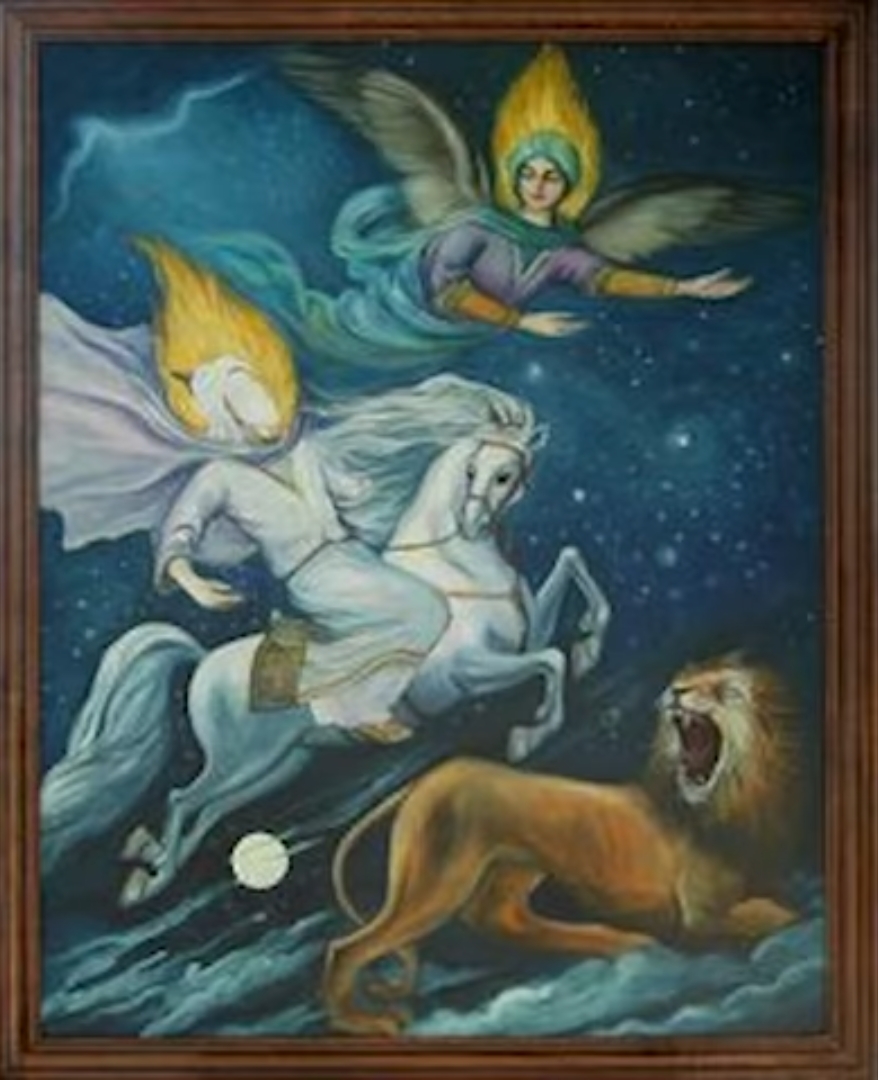
Tonight, we recount the most extraordinary journey ever undertaken—a leap beyond the confines of time and space, an invitation from the heavens to the best of creation. It was a night when the Prophet Muhammad (peace be upon him) was raised by glory and light, crossing universes, traversing dimensions, and witnessing the ultimate truths of existence. Heaven and hell were unveiled before his eyes, and the mysteries of the cosmos were laid bare.
This was no mere vision or dream—it was a divine voyage, physical and real, that defied the very laws of nature. The journey of Al-Isra’ wal-Mi’raj is a story that calls you to wonder, to reflect, and to understand that this was not just a tale of faith but of human transcendence, where a mortal became the guest of the Almighty and the witness to realms unseen.
Let us embark on this journey together, through the veil of time and into the boundless universes of divine light. Prepare to witness the miraculous and discover why this night remains one of the greatest stories ever told.
The Night of Miracles: A Journey Beyond Time and Universes
This is no ordinary story—it is a testament to the infinite power of the Creator, the Owner of the Universe. A night that defies the laws of nature, transcends human imagination, and reveals the limitless possibilities of divine will. In a single night, the Prophet Muhammad (peace be upon him) was transported across dimensions, traversing time and space, to witness the wonders of creation—heaven, hell, and the vast universes beyond our comprehension.
Imagine this: his bed was still warm when he returned, untouched by the passage of time. For him, time stood still. What he experienced was a journey like no other, a leap into realms unseen, where the fabric of time itself obeyed the will of the Divine.
---
The Journey Begins: Al-Isra’
Surah Al-Isra (17:1) - The Opening Verse of the Journey
Arabic:
سُبْحَانَ ٱلَّذِىٓ أَسْرَىٰ بِعَبْدِهِۦ لَيْلًۭا مِّنَ ٱلْمَسْجِدِ ٱلْحَرَامِ إِلَى ٱلْمَسْجِدِ ٱلْأَقْصَى ٱلَّذِى بَٰرَكْنَا حَوْلَهُۥ لِنُرِيَهُۥ مِنْ ءَايَٰتِنَآ ۚ إِنَّهُۥ هُوَ ٱلسَّمِيعُ ٱلْبَصِيرُ
Transliteration:
Subḥāna alladhī asrā biʿabdihi laylan mina al-masjidi al-ḥarāmi ilā al-masjidi al-aqṣā alladhī bāraknā ḥawlahu linuriyahu min āyātinā, innahu huwa al-samīʿu al-baṣīr.
English Translation:
"Exalted is He who took His Servant by night from Al-Masjid Al-Haram to Al-Masjid Al-Aqsa, whose surroundings We have blessed, to show him of Our signs. Indeed, He is the Hearing, the Seeing."
This verse beautifully encapsulates the miraculous journey of the Prophet Muhammad (peace be upon him), emphasizing the divine glory of the Creator who made it possible and the unique servitude of the Prophet, highlighting his exceptional status as "His Servant."
It all started in Mecca, at the Sacred Mosque. In the depth of night, the angel Jibril (GabrieThe Night of Miracles: A Journey Beyond Time and Universes
This is no ordinary story—it is a testament to the infinite power of the Creator, the Owner of the Universe. A night that defies the laws of nature, transcends human imagination, and reveals the limitless possibilities of divine will. In a single night, the Prophet Muhammad (peace be upon him) was transported across dimensions, traversing time and space, to witness the wonders of creation—heaven, hell, and the vast universes beyond our comprehension.
Imagine this: his bed was still warm when he returned, untouched by the passage of time. For him, time stood still. What he experienced was a journey like no other, a leap into realms unseen, where the fabric of time itself obeyed the will of the Divine.
---
The Journey Begins: Al-Isra’
It all started in Mecca, at the Sacred Mosque. In the depth of night, the angel Jibril (Gabriel) descended to escort the Prophet. A celestial steed, Buraq, awaited—a creation of light, faster than the speed of thought, capable of carrying the Prophet across the vast expanse of the Earth.
With Jibril by his side, the Prophet was taken from Mecca to Jerusalem, to the Farthest Mosque—Al-Masjid Al-Aqsa. There, he led a congregation of prophets in prayer, affirming the unity of the divine message. This moment symbolized the bond between all prophets and their shared mission of guiding humanity to truth.
---
The Ascension: Al-Mi’raj
But this was just the beginning. From Jerusalem, the Prophet ascended to the heavens—Al-Mi’raj—guided by Jibril through the seven layers of the cosmos.
At each level, he met great prophets: Adam, Jesus, Moses, Abraham, and others, each welcoming him with words of peace and blessings.
He witnessed the beauty of paradise, where rivers of milk and honey flowed, where eternal joy awaited the righteous.
He saw the terrors of hell, where those who had turned away from justice and mercy faced the consequences of their deeds.
These sights were not metaphors; they were real. The Prophet’s journey was physical and spiritual, a gift to humanity to remind us of the eternal consequences of our choices.
---
The Divine Presence: Beyond Universes and Time
Finally, the Prophet was taken to Sidrat al-Muntaha, the Lote Tree of the Utmost Boundary. Beyond this point, no angel, no creation, could pass—only the chosen one, Muhammad (peace be upon him).
Here, in the presence of the Almighty, the Prophet received the gift of Salah (prayer)—a direct connection between humanity and its Creator. Initially commanded as fifty daily prayers, it was reduced to five, but their reward remains equal to fifty.
This moment was the ultimate honor, a reminder of the closeness and mercy of Allah. It was here that the Prophet witnessed the reality of existence, the truths of life and death, and the divine plan that governs all.
---
The Miracle of Time
As remarkable as this journey was, perhaps the most awe-inspiring aspect is that it occurred in a single night. When the Prophet returned to Mecca, his bed was still warm, and the latch on his door had not yet stopped moving.
This was no illusion—it was the power of the Creator, demonstrating that time and space are but tools in His hands. For Allah, nothing is impossible.
---
Lessons for Humanity
The journey of Al-Isra’ wal-Mi’raj is more than a story—it is a message to all of us:
1. Faith in the unseen: The universe is vast, and what we know is but a fraction of the truth.
2. Accountability: Heaven and hell are real, and our actions have eternal consequences.
3. Hope and connection: Prayer is a gift, a lifeline to the Creator, granted directly during this journey.
4. Divine mercy: Even when the command was for fifty prayers, Allah reduced it to five, showing His compassion for humanity.
---
An Invitation to Reflect
This journey is a reminder that our existence is far more profound than we often realize. It is a call to reflect on our purpose, our choices, and the power of the Creator who governs all.
As you hear this story, let it inspire you to connect with the divine, to strive for goodness, and to remember that the possibilities of faith and the mercy of Allah are boundless.
This is the story of Al-Isra’ wal-Mi’raj—a night of miracles, a journey beyond time, and a gift to all of humanity. Will you reflect on it? Will you let its lessons guide you? The choice is yours.
l) descended to escort the Prophet. A celestial steed, Buraq, awaited—a creation of light, faster than the speed of thought, capable of carrying the Prophet across the vast expanse of the Earth.
With Jibril by his side, the Prophet was taken from Mecca to Jerusalem, to the Farthest Mosque—Al-Masjid Al-Aqsa. There, he led a congregation of prophets in prayer, affirming the unity of the divine message. This moment symbolized the bond between all prophets and their shared mission of guiding humanity to truth.
---
The Ascension: Al-Mi’raj
But this was just the beginning. From Jerusalem, the Prophet ascended to the heavens—Al-Mi’raj—guided by Jibril through the seven layers of the cosmos.
At each level, he met great prophets: Adam, Jesus, Moses, Abraham, and others, each welcoming him with words of peace and blessings.
He witnessed the beauty of paradise, where rivers of milk and honey flowed, where eternal joy awaited the righteous.
He saw the terrors of hell, where those who had turned away from justice and mercy faced the consequences of their deeds.
These sights were not metaphors; they were real. The Prophet’s journey was physical and spiritual, a gift to humanity to remind us of the eternal consequences of our choices.
---
The Divine Presence: Beyond Universes and Time
Finally, the Prophet was taken to Sidrat al-Muntaha, the Lote Tree of the Utmost Boundary. Beyond this point, no angel, no creation, could pass—only the chosen one, Muhammad (peace be upon him).
Here, in the presence of the Almighty, the Prophet received the gift of Salah (prayer)—a direct connection between humanity and its Creator. Initially commanded as fifty daily prayers, it was reduced to five, but their reward remains equal to fifty.
This moment was the ultimate honor, a reminder of the closeness and mercy of Allah. It was here that the Prophet witnessed the reality of existence, the truths of life and death, and the divine plan that governs all.
---
The Miracle of Time
As remarkable as this journey was, perhaps the most awe-inspiring aspect is that it occurred in a single night. When the Prophet returned to Mecca, his bed was still warm, and the latch on his door had not yet stopped moving.
This was no illusion—it was the power of the Creator, demonstrating that time and space are but tools in His hands. For Allah, nothing is impossible.
---
Lessons for Humanity
The journey of Al-Isra’ wal-Mi’raj is more than a story—it is a message to all of us:
1. Faith in the unseen: The universe is vast, and what we know is but a fraction of the truth.
2. Accountability: Heaven and hell are real, and our actions have eternal consequences.
3. Hope and connection: Prayer is a gift, a lifeline to the Creator, granted directly during this journey.
4. Divine mercy: Even when the command was for fifty prayers, Allah reduced it to five, showing His compassion for humanity.
---
An Invitation to Reflect
This journey is a reminder that our existence is far more profound than we often realize. It is a call to reflect on our purpose, our choices, and the power of the Creator who governs all.
As you hear this story, let it inspire you to connect with the divine, to strive for goodness, and to remember that the possibilities of faith and the mercy of Allah are boundless.
This is the story of Al-Isra’ wal-Mi’raj—a night of miracles, a journey beyond time, and a gift to all of humanity. Will you reflect on it? Will you let its lessons guide you? The choice is yours.
The Night Journey and Ascension: The Miraculous Event That Changed Everything
The Isra and Mi’raj, often referred to as the Night Journey and Ascension, mark one of the most extraordinary events in Islamic tradition. This miraculous event is a testament to divine power, an affirmation of the Prophet Muhammad’s (peace be upon him) role as the best of creation, and a moment of immense spiritual significance for all believers.
It is believed to have occurred in the year 621 CE, a time of immense personal hardship for the Prophet. Known as the "Year of Sorrow," he had recently endured the loss of his beloved wife, Khadija (may Allah be pleased with her), and his supportive uncle, Abu Talib. Amidst this period of grief, Allah granted the Prophet a journey unlike any other—a journey to the heavens.
---
How It Began
The story begins with the Prophet Muhammad (peace be upon him) resting near the Kaaba in Mecca. According to Hadith, the Archangel Jibril (Gabriel) appeared to him, accompanied by Buraq, a celestial steed described as being larger than a donkey but smaller than a mule, capable of traversing vast distances with each stride.
The Prophet mounted Buraq, and thus began the Isra, the first part of the journey.
---
The Night Journey (Isra)
The Isra refers to the miraculous nighttime travel from the Sacred Mosque (Al-Masjid Al-Haram) in Mecca to the Farthest Mosque (Al-Masjid Al-Aqsa) in Jerusalem. Upon arrival, the Prophet was greeted by a gathering of prophets, including Ibrahim (Abraham), Musa (Moses), and Isa (Jesus), peace be upon them all. He led them in prayer, signifying his leadership among all prophets and establishing the sanctity of Jerusalem in Islam.
---
The Ascension (Mi’raj)
From Jerusalem, the Prophet Muhammad (peace be upon him) ascended through the seven heavens, each level welcoming him with a prophet:
First Heaven: Adam (peace be upon him)
Second Heaven: Isa (Jesus) and Yahya (John) (peace be upon them)
Third Heaven: Yusuf (Joseph) (peace be upon him)
Fourth Heaven: Idris (Enoch) (peace be upon him)
Fifth Heaven: Harun (Aaron) (peace be upon him)
Sixth Heaven: Musa (Moses) (peace be upon him)
Seventh Heaven: Ibrahim (Abraham) (peace be upon him)
Beyond the seven heavens, the Prophet reached Sidrat al-Muntaha (the Lote Tree of the Utmost Boundary), a realm inaccessible to anyone else, not even Jibril. There, he witnessed the divine and received the ultimate gift for his followers: the command for fifty daily prayers. Upon descending, Musa (peace be upon him) advised the Prophet to ask Allah to reduce the number, recognizing the difficulty it would pose for the ummah. After multiple intercessions, the prayers were reduced to five daily obligations, with the reward of fifty.
---
The Return
The Prophet Muhammad (peace be upon him) returned to Mecca before dawn, completing this miraculous journey in a single night. Upon his return, he described the caravan he had seen during his journey, which later arrived in Mecca as he had predicted, providing physical evidence of the journey.
---
The Significance
This event holds profound meaning for Muslims:
1. Submission as Servanthood: The Quran emphasizes the Prophet’s servanthood: “Glory be to Him who took His servant by night” (17:1). Servanthood is the highest station, signifying complete submission to the Creator.
2. The Honor of Prayer: The command of the five daily prayers is the only pillar of Islam revealed directly from Allah in the heavens, highlighting its centrality in a believer’s life.
3. Connection to the Prophets: The journey reinforces the continuity of divine guidance and the shared legacy of all prophets.
4. Hope and Redemption: The reduction from fifty prayers to five underscores Allah’s mercy and the intercessory role of the Prophet Muhammad (peace be upon him) for his followers.
---
Conclusion: An Invitation to Reflect
The Night Journey and Ascension are not just miraculous events of the past—they are an invitation for us to reflect on our servanthood, our commitment to prayer, and our connection to the divine. They remind us that the ultimate journey awaits each of us, a journey where our deeds and faith will determine our destination. Let this story inspire us to rise above our struggles and strive for a higher purpose.
As we delve deeper into the profound events of the Night Journey (Al-Isra) and Ascension (Al-Mi'raj) of the Prophet Muhammad (peace be upon him), various narratives and traditions offer intricate details of his experiences. One such account involves an encounter with a malevolent entity during his celestial ascent.
According to certain narrations, as the Prophet ascended through the heavens, he was confronted by an ifrit—a powerful and malevolent jinn known for its fiery nature. This ifrit attempted to impede the Prophet's journey by manifesting a fiery presence. In response, the Archangel Jibril (Gabriel) taught the Prophet a specific supplication to protect himself from this entity. Upon reciting the prayer, the threat was neutralized, allowing the Prophet to continue his ascent unhindered.
This encounter underscores the Prophet's unwavering faith and the divine protection granted to him during this miraculous journey. It also serves as a reminder of the spiritual challenges one might face and the power of supplication in overcoming them.
As we continue to explore the depths of the Night Journey and Ascension, such narratives enrich our understanding of the spiritual significance and the profound lessons embedded within this sacred event.
The devil, known as Iblis in Islamic tradition, is a figure of unparalleled arrogance and betrayal. His story is not just one of disobedience but of deep-seated jealousy and an inflated sense of superiority. The Quran paints a picture of Iblis as a being who, despite being blessed with proximity to the divine realms, allowed his pride and hidden malice to consume him, leading to his downfall.
The Origin of Arrogance
Iblis was a jinn, a creation of smokeless fire, who was granted the honor of being in the company of angels due to his worship and devotion. His actions seemed pious, his knowledge vast, and his prayers frequent. Yet, his outward displays of faith masked a deep arrogance and sense of entitlement. When Allah created Adam (peace be upon him) and commanded the angels and Iblis to bow to him as a sign of respect, the hidden truth of Iblis’ character was revealed. He refused, saying:
> “I am better than him. You created me from fire, and You created him from clay.” (Quran 7:12)
This statement, dripping with pride and contempt, marked the beginning of Iblis’ rebellion. Rather than recognizing the wisdom of his Creator, Iblis argued, elevating his own limited understanding above divine command.
The Betrayal
What makes Iblis’ story particularly tragic is that he was not an ordinary being. He had been granted a level of spiritual knowledge and access to the heavens, becoming a regular visitor of the celestial realms. His worship and apparent devotion should have made him a paragon of humility and submission. Instead, it fed his ego, leading him to believe he was superior not only to Adam but to all creation.
His rebellion was not limited to disobedience. He openly argued with Allah, questioning divine wisdom and refusing to repent. This defiance is recorded in the Quran:
> “He [Iblis] said: ‘Do You see this one whom You have honored above me? If You delay my end until the Day of Resurrection, I will surely destroy his descendants, except for a few.’” (Quran 17:62)
His arrogance knew no bounds, and he declared war on humanity, promising to mislead as many as he could. Iblis became a symbol of rebellion, not just against Allah but against the very essence of servitude and humility.
A Fleeting Fart: The Reality of Iblis
Despite his inflated ego and grandiose threats, Iblis is described in Islamic tradition as insignificant in the grand scheme of creation. The Prophet Muhammad (peace be upon him) referred to him as a “fleeting fart,” emphasizing his insignificance compared to the vastness of Allah’s creation. This analogy underscores the pettiness of Iblis’ rebellion and his inability to achieve anything without Allah’s permission.
His power lies not in strength but in deception. He preys on the weak-minded and the arrogant, using trickery and whispers to lead people astray. He is a minority among the larger class of jinn, many of whom are neutral or even righteous. His story is a cautionary tale of how arrogance and envy can lead to self-destruction.
The Humiliation of Iblis
The Quran repeatedly humiliates Iblis by highlighting his limitations. One striking example is during the reign of Prophet Solomon (peace be upon him). When Solomon sought to bring the throne of the Queen of Sheba to his court, a powerful jinn offered to bring it in the blink of an eye. However, a man with knowledge of the Book—a human—achieved it even faster:
> “The one who had knowledge of the Scripture said, ‘I will bring it to you within the blink of an eye.’” (Quran 27:40)
This event not only highlights the superiority of divine knowledge but also underscores the insignificance of Iblis and his kind when compared to the true servants of Allah. Despite his boasts and threats, Iblis is ultimately powerless before those who place their trust in Allah.
The Ultimate Betrayal
What makes Iblis’ rebellion even more egregious is the fact that he was created to worship Allah and to serve as a member of a greater creation. Instead, he allowed his ego to blind him to his purpose. His story is a reminder that knowledge and worship alone are not enough; sincerity, humility, and submission are the true measures of a servant of Allah.
The Prophet Muhammad (peace be upon him) warned against the traits of Iblis—arrogance, jealousy, and defiance. He also emphasized the power of sincere prayer and repentance, which can protect us from Iblis’ tricks and whispers.
The Lesson
Iblis’ story is not one of triumph but of ultimate failure. His arguments, arrogance, and rebellion only serve to highlight the mercy and wisdom of Allah, who continues to guide and forgive those who seek Him sincerely. As humans, we are reminded to guard our hearts against pride and envy, to seek knowledge with humility, and to always remember that true greatness lies in servanthood.
As we conclude this chapter of the extraordinary journey, let us reflect on the profound lessons it holds. The story of Iblis reminds us of the dangers of arrogance, while the night of ascension exemplifies the ultimate servitude and humility of the Prophet Muhammad (peace be upon him). Through every step of this journey, we witness a deeper connection between creation and Creator, and the unparalleled mercy and wisdom of the Divine.
But this is only the beginning. In the next part, we will ascend further into the heavens, where the Prophet Muhammad (peace be upon him) meets the great prophets of the past, including Moses, and an unforgettable dialogue takes place. It is a moment that reshaped the spiritual practices of the Muslim Ummah, a meeting of unparalleled significance that continues to echo in the daily lives of billions.
Stay with us as we delve deeper into the heavenly realms and uncover the wisdom, mercy, and love that unfold in this miraculous journey. Stand by for the next chapter—where the heavens open, and the hearts are forever touched.