
بِسْمِ اللهِ الرَّحْمٰنِ الرَّحِيْم
In the Name of God, Most Gracious, Most Merciful
♥️🤲🕋♥️🕋🌹🌹🥀🤲🌹🕋♥️🤲
A Plan for the Planet
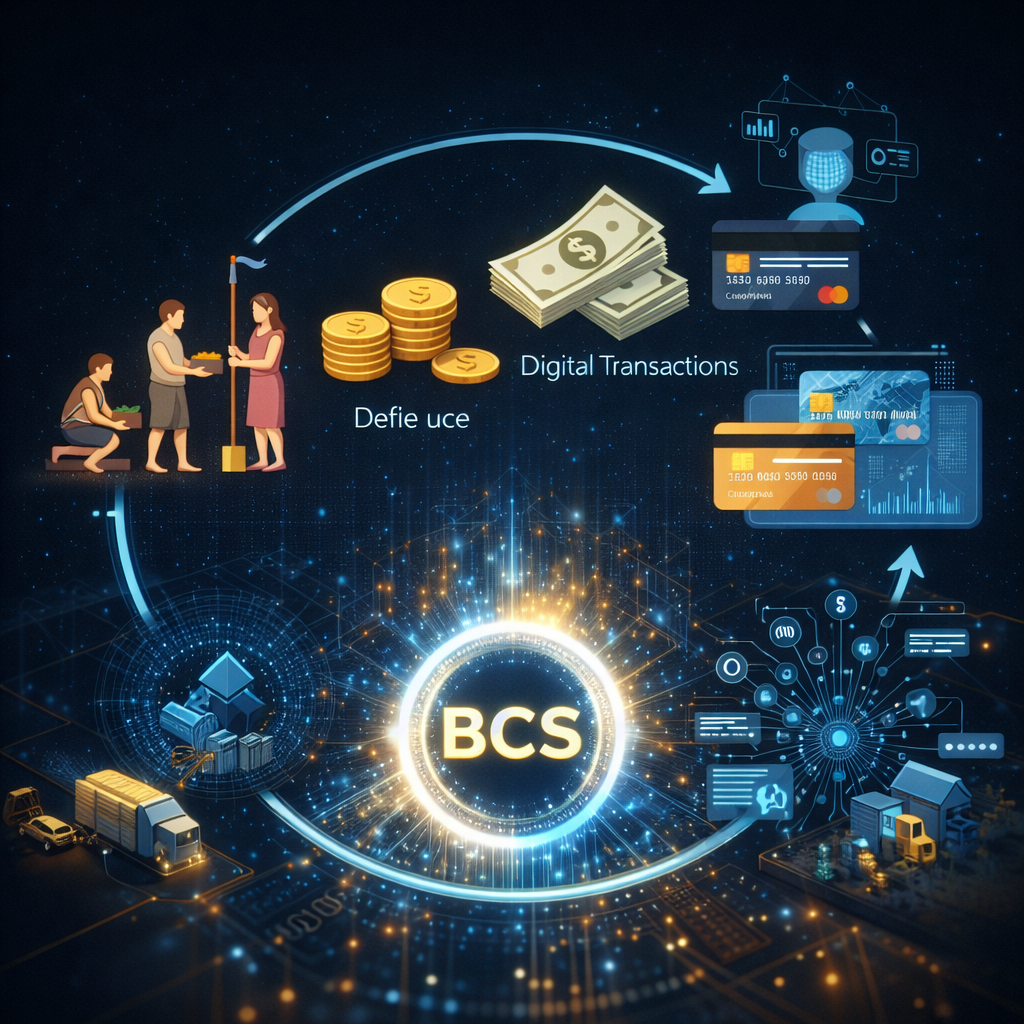
From Barter to AI: Building the Bridge to a New Value System
Human trade did not begin with banks, credit cards, or central banks. It began with simple exchange. Butter for grain. Tools for livestock. Goods for goods. Every stage of human civilization has tried to solve one basic problem: how to assign value and exchange it with less friction.
From barter came gold.
From gold came receipts.
From receipts came checks, like those used in Baghdad centuries ago.
From checks came modern banking.
And from banking came fiat money.
Each step reduced friction. Each step made trade easier. Each step allowed society to scale. But each step also moved value further away from the individual and deeper into institutions that simply record and redistribute numbers.
Today, we live in a fiat system—one built on balance sheets, interest rates, and central bank policies. It is a system of positive and negative entries, debts and credits, often disconnected from the real creation of value in people’s daily lives.
Fiat money works, but it is indirect. It expands or contracts based on policy, not always on the real needs of people. It measures value through symbols, not through the direct health of the economy.
And now, for the first time in history, we are approaching a moment where that system may no longer be necessary.
The Turning Point
We are entering an era where robots plant crops, AI manages logistics, and self-driving vehicles operate continuously without fatigue. These systems create value directly. They reduce cost. They increase output. They remove inefficiencies that once justified complex financial structures.
When production becomes automated and supply chains become intelligent, the meaning of price begins to change.
What happens when:
Transportation becomes a low-cost, AI-managed utility?
Food production is automated at scale?
Construction is handled by robotic systems?
Logistics is optimized in real time?
What happens when the cost of essential services approaches zero?
At that point, fiat money—issued by political decision and managed through interest rates—may no longer be the primary mechanism of value. Instead, value will come from the capacity of systems to meet human needs directly.
This is not theory. It is a structural shift already underway.
The Question of the Century
There is one question that will define the next era:
When do we abandon fiat money completely?
This is not about ideology. It is not about replacing one currency with another. It is about replacing the structure itself.
The next economic system will not revolve around printed money or interest rates. It will revolve around transactions, supply, demand, and real-time value creation.
In that system, credits and debits are not issued simply to expand the money supply. They are issued based on real needs and real activity:
Food credits
Transportation credits
Energy credits
Housing credits
These are not abstract numbers. They are practical tools, managed by AI, tied directly to the health of the economy and the well-being of individuals.
From Passive Banks to Active Systems
Traditional banks, in their current form, do not create value. They record transactions. They charge fees. They sit between people and their own money. Often, their only interaction with the customer is a notification that their balance is low.
They are not connected to real-time supply chains.
They do not coordinate demand.
They do not create efficiency across sectors.
In many cases, they extract value without creating it.
The future belongs to systems that capture transactions, connect them to real economic activity, and unlock new forms of value from the data they generate.
AI-driven transaction systems can:
Record activity in real time
Analyze spending patterns
Coordinate supply chains
Extend intelligent credit
Reduce friction across the economy
In such a system, transactions are no longer passive records. They become signals. They become feedback loops. They become the raw material of a new economic structure.
The Brand Currency System (BCS)
This is where the Brand Currency System comes in.
BCS is not just a currency. It is a system.
It stands for:
Businesses
Currency
Shared credit
It is a structure where value is created, recorded, and distributed through real transactions, not through printed money.
In the BCS:
Transactions are recorded in a shared ledger.
AI analyzes supply and demand.
Credits are issued based on real needs.
Prices reflect efficiency, not speculation.
Advertising is redesigned around real demand, not interruption.
It is an economic operating system, not just a payment tool.
The Bridge
We are not there yet. We are standing at the edge of a bridge.
On one side:
Fiat money
Interest-rate policy
Traditional banks
Advertising based on interruption
Supply chains full of inefficiencies
On the other side:
AI-managed supply and demand
Smart contracts
Automated production
Real-time value signals
Abundant, efficient systems
The two worlds cannot fully coexist forever.
That is why we must build a bridge.
A bridge made of:
Data
Integrity
Shared vision
Privacy
Real transactions
Every system we build today is a beam or cable in that bridge.
The Role of Governments
Governments must begin asking deeper questions.
Look at your banking systems.
Look at how loans are issued.
Look at how credit flows into the economy.
Does it:
Increase efficiency?
Create abundance?
Improve standards of living?
Strengthen the supply chain?
Or does it simply expand balance sheets?
The goal must be to move slowly and deliberately toward a system where value creation replaces fiat issuance.
Imagine a country running without fiat money.
No dollars.
No yen.
No paper currency.
Instead:
A blockchain-based transaction system
AI-managed credit issuance
Smart contracts coordinating trade
Real-time supply and demand balancing the economy
Travel, food, housing, and logistics all coordinated by intelligent systems.
That is the world we must begin to visualize.
Because once you truly see it, there is no going back.
The Courage to Cut Costs to Zero
This transition requires courage.
The goal is not to make things slightly cheaper. The goal is to remove entire layers of inefficiency.
If a process can be automated, it will be automated.
If a cost can be removed, it must be removed.
If a sector can be made more efficient, it will be transformed.
No sector can be protected simply because it is old.
Healthcare, transportation, finance, logistics—these are all areas where AI will introduce massive efficiency. The faster we move toward zero-cost alignment, the faster the economy will rebound.
New jobs will appear.
New industries will emerge.
New opportunities will form.
But only if we stop protecting inefficiency.
A Shared Dream
This is not just a technical shift. It is a civilizational one.
Builders, engineers, and leaders must work toward a shared dream—a dream that unites everyone crossing into the next era.
Because on the other side of the bridge:
AGI will exist
Supply chains will be automated
Economies will be coordinated by AI
Value will be generated by systems, not just money
But one principle must remain non-negotiable:
Privacy.
Privacy is not a feature.
Privacy is not a setting.
Privacy is a human right.
Every system must protect it.
Every blueprint must detail it.
Every platform must respect it.
Because once AI is embedded into infrastructure without privacy safeguards, it will be too late to fix the foundation.
The City That Must Be Built
The future will not build itself. It requires experimentation, discussion, and bold planning.
If we remain where we are:
Companies will only optimize for shareholder profit.
Systems will remain fragmented.
Inefficiencies will persist.
The bridge will never be completed.
But if we begin building this new system—this new economic city—then we can create:
A coordinated supply chain
AI-managed credit systems
Smart contracts for trade
New standards of living
Abundant, efficient production
This is the purpose of the Brand Currency System.
A Plan for the Planet
So I ask governments, companies, and builders around the world:
When does the change begin?
The tools are here.
The AI systems are here.
The robots are coming online.
We are at a flashing point in history.
Either:
Standards of living will rise
Healthcare will improve
Trade will become efficient
Supply chains will become intelligent
Or we will remain trapped in systems that extract value without creating it.
We are just humans on one planet.
All of us need to eat.
All of us need to drink.
All of us need work.
All of us deserve a better life.
This is the moment to build the bridge.
This is the moment to design the system.
This is the moment to act.
Because once you visualize a world without fiat money—
a world run by intelligent systems, coordinated supply, and real value—
There is no looking back.
Final Conclusion for governments— The New House of Wisdom
Watch "The invention of the check" on YouTube
In every age, when humanity stood at the edge of a transformation, it gathered its brightest minds and built a place for ideas to meet, to translate, to debate, and to build the future together.
Once, in Baghdad, there was such a place.
It was called the House of Wisdom.
In that house, scholars from different lands, languages, and traditions came together. They translated knowledge, preserved sciences, and pushed human understanding forward. From that movement came algebra—created not as an abstract curiosity, but as a practical tool to solve real problems. The sciences were protected, refined, and passed on to the world.
That moment changed civilization.
Today, we are standing at another such moment.
And once again, we need a House of Wisdom.
This time, it must not belong to one empire or one region. It must belong to the world. A place where governments send their best thinkers, their best engineers, their best economists, and their most creative minds.
A place where the new economic city is designed:
Its contracts
Its systems
Its expectations
Its equations
A place where we ask:
If A equals B, does the system hold?
If one unit of value becomes two, does it create abundance?
If technology advances predictably, does society benefit?
If the equations are right, if the systems are sound, and if the technology is used to unleash abundance, then the world can move toward a new agreement—one not built on tariffs, protectionism, or extraction, but on coordinated trade and shared prosperity.
Because the future economy cannot belong only to stockholders.
It cannot belong only to investors.
It must belong to the people who live inside it.
That is the truth many do not see, but it is the truth that must be faced.
We need a plan.
A real plan.
A plan that shows:
Who is building the bridge.
Who is signing the contracts.
Who is moving technology forward.
And who is refusing to play fair.
Because there is only one planet.
And there can only be one direction for this ship.
Not one ruler.
Not one company.
But one shared direction—politically, financially, and economically—guided by plans that are deeply contemplated, carefully structured, and openly agreed upon.
When those plans exist, when the contracts are signed, and when the bridge is built, the world will become very clear. Those who help build it will find themselves inside a new system—one where expectations are known, agreements are honored, and technology serves humanity.
And those who refuse will simply be left on the other side of the bridge.
That is why the House of Wisdom must rise again.
Not as a museum of the past,
but as the workshop of the future.
And this time, it will not just preserve knowledge.
It will design the system that carries humanity into the next world.
Conclusion for Tech Companies — Building the System That Lifts Everyone
To the technology companies of the world:
We are living in an age where millions of people create value every day, yet that value never reaches them. They work, they spend, they participate in the economy, but prices remain out of reach. Prices must rise to cover layers of cost, layers of debt, layers of inefficiency that have accumulated over decades. What should be simple has become complex. What should be abundant has become scarce.
Monetary policy has become a distant, abstract tool—largely in the hands of banks that record transactions but rarely create real value for the people at the bottom of the system. But imagine if the mechanisms of value creation were placed inside the systems that people actually use every day—technology platforms where people register, spend, create data, generate advertising value, and participate in the economy in real time.
In that world, credit could be injected directly into people’s daily lives—not as abstract stimulus, but as targeted support for food, transportation, and housing. Not as debt traps, but as smart contracts tied to real value and real efficiency.
This is where technology companies will have their moment.
The first smart contracts at scale will not be exotic financial instruments. They will be practical systems:
transportation contracts, food access contracts, housing stability contracts—systems that ensure the vulnerable are not left behind while efficiency increases for everyone.
Governments are searching for one thing above all else: a higher standard of living for their people. That is the purpose of the market. That is the purpose of taxation. That is the purpose of public policy. But as robots, AI, and automated supply chains come online, the old structures will be challenged to their core.
The Brand Currency System is designed for that transition.
It is not a system built only for investors or shareholders.
It is a system built starting with the vulnerable.
Credit for transportation.
Credit for food.
Credit for housing.
All issued through smart contracts that create predictable demand, predictable revenue, and predictable quarterly outcomes for the businesses that participate. Companies will compete—not in extracting value—but in building the most efficient systems, the systems that deliver the highest standard of living at the lowest cost.
This is how savings are unlocked.
This is how efficiency becomes abundance.
This is how the vulnerable become participants, not leftovers.
We begin at the lowest point of the economy and build upward, creating equilibrium between supply and demand. The membership model—like the one seen in warehouse clubs—becomes the foundation for transportation, food systems, and essential services. A predictable, efficient, subscription-based economy that lowers cost while raising stability.
Many of the pieces already exist:
- Smart contracts
- Blockchain infrastructure
- Autonomous logistics
- AI-driven supply chains
- Digital identity and transaction records
These are not distant dreams. They are tools waiting to be assembled into a system that serves the people first.
Bitcoin showed the world what an automated, trust-based system could look like—locked away from interference, transparent, and predictable. Now that same logic must move into the real economy: into transportation, housing, food, and the daily needs of human life.
That is where the true transformation begins.
And that is why the House of Wisdom must be built again—not as a monument, but as a working project. A place where governments, technologists, economists, and builders come together to design the system that will carry humanity forward.
To the tech companies who understand this direction:
I look forward to your collaboration.
Together, we can build the supply, build the demand, and create equilibrium at the lowest possible cost—while raising the standard of living for everyone.
That is the system worth building.
That is the bridge worth crossing.
And that is the House of Wisdom we must now create together.
The End of Jobs: Breaking the Old to Build a New World Without Rent, Bills, or Debt —
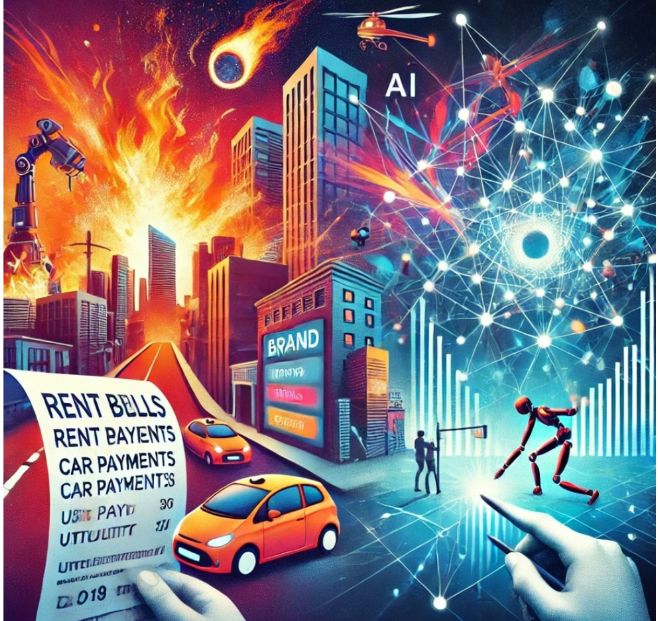
buymeacoffee.com/omar1800m/the-end-jobs-breaking-old-build-new-world-without-rent-bills-3415793
Conclusion to Governments — Building the Bridge Before the Future Arrives
Dear governments of the world,
We are building a bridge—a bridge that must withstand the full weight of a momentous transformation. The age of artificial intelligence is not a distant possibility. It is already here, pressing against the doors of our economies, our institutions, and our daily lives. The question is no longer whether change will come, but whether we will build the structures necessary to carry humanity safely across it.
This bridge must be designed for a world where businesses that survive in the age of AI are given the tools they need to redesign entire sectors. It must be built with the understanding that many jobs, as we know them today, will disappear. A future without human drivers must be visualized. A future where logistics, manufacturing, and services are increasingly automated must be planned for now—not when it is too late.
The most important questions are not technical.
They are economic, moral, and structural:
How will income be generated?
How will value be distributed?
Who will own the systems that replace human labor?
I do not claim to have all the answers. What I offer is a rough draft—a starting point, a direction, a warning, and a proposal. The bridge is real. The transformation is inevitable. What remains uncertain is whether we will build systems that carry everyone forward, or whether we will allow a divided world to emerge.
If contracts are not renegotiated,
if revenue models are not re-evaluated,
if citizens do not co-own the future of the transactions they make every day,
then we will create a two-sided economy—one of abundance for a few, and one of exclusion for the many.
Governments must play a central role in preventing this outcome.
You must tell businesses:
Yes, you can innovate.
Yes, you can automate.
Yes, you can redesign the economy.
But the rights and rewards you grant to investors must also be extended to the purchasing power of your citizens. The people who buy, who consume, who create demand—must have a stake in the systems that shape their lives.
This is not about punishment.
This is about alignment.
Businesses must not betray the people.
They must not betray the environment.
And they must not betray themselves by building systems that collapse under social instability.
That is why the bridge must be constructed carefully, with the interests of all humanity in mind. Trade must become clearer. Contracts must become simpler. The language of cooperation must replace the language of extraction.
The most important question before us is this:
How do we commit, step by step, to reducing the essential costs of life toward zero?
When transportation approaches zero cost,
when food systems become automated and abundant,
when housing becomes efficient and predictable,
and when advertising is redesigned and embedded into transparent, value-based systems—
we will begin to see the blueprint of a new economy.
I may have the roadmap, but I am not an engineer.
I am not a government.
I do not possess the institutional power or the resources you hold.
That is why I ask for your help.
Help us dismantle the inefficiencies of the current banking sector and rebuild it around value-creating transactions.
Help us design strategic subsidies that support this transition.
Help us create new mechanisms for evaluating companies, where a portion of that value flows back to citizens through sovereign structures that protect them from inflation, instability, and declining living standards.
You exist to provide better lives for your people.
That must remain the central purpose of every policy, every negotiation, and every plan.
This is not a call for one country.
It is a call for every nation that is serious about the future.
We must begin discussions.
We must draft agreements.
We must design systems that move in the direction of shared prosperity—
not toward a world of robotic cities for the wealthy while the rest are left behind.
If we fail to build this bridge correctly,
we will create two classes of humanity:
those who live inside automated abundance,
and those who are locked out of it.
But if we plan wisely, negotiate honestly, and build together,
this bridge can carry the entire human family into a better world.
The future is already at our doorstep.
It is time to stop sleeping, and start building.