

بِسْمِ اللهِ الرَّحْمٰنِ الرَّحِيْم
In the Name of God, Most Gracious, Most Merciful
♥️🤲🕋♥️🕋🌹🌹🥀🤲🌹🕋♥️🤲
CHAPTER TWO — PART III
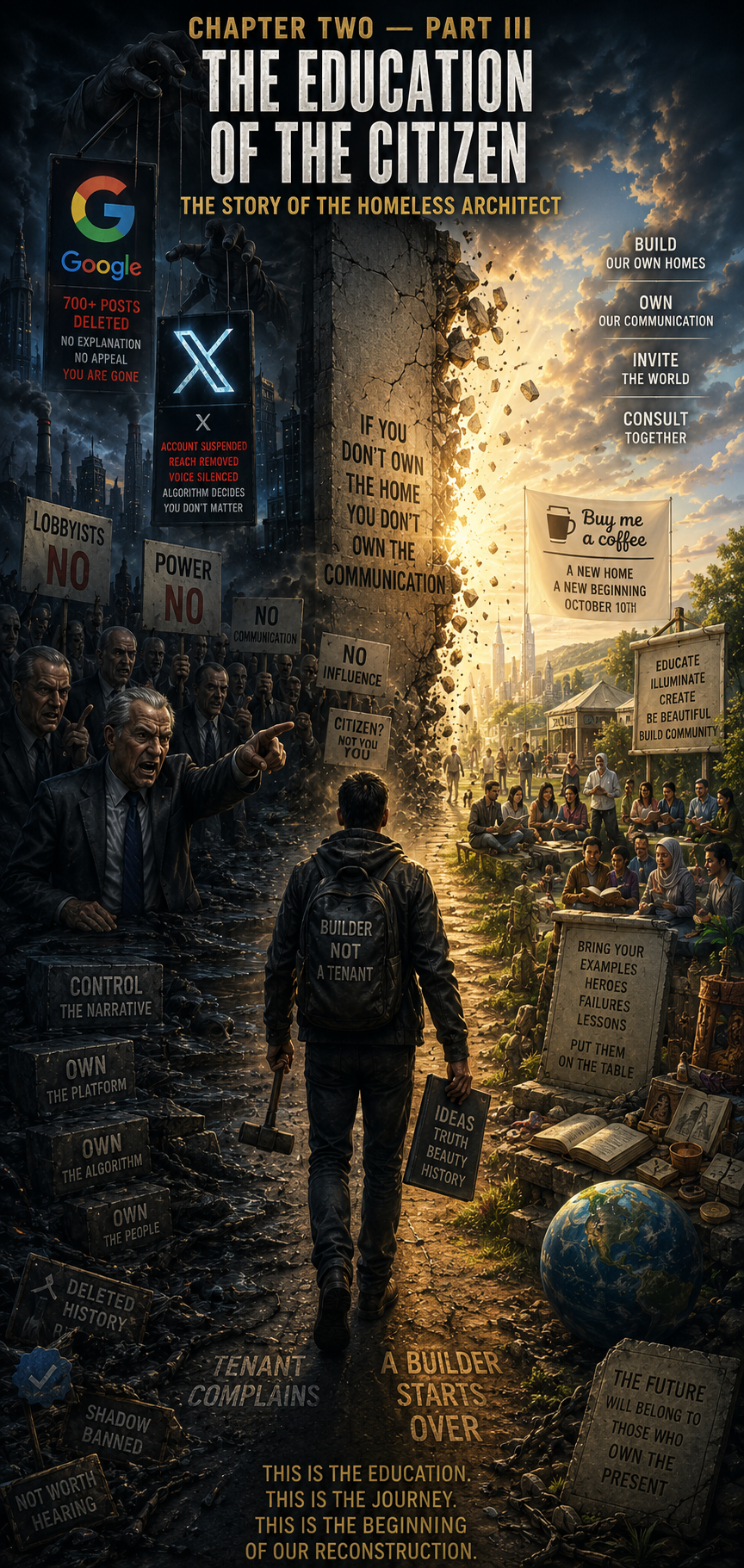
THE EDUCATION OF THE CITIZEN
THE STORY OF THE HOMELESS ARCHITECT
I. The Education Begins with a Wound
Before we design the future, we must confess where we have been.
Not as theory. Not as abstract history. As lived experience.
Because citizenship is not a birthright. It is not a card in your wallet. It is not a flag on your profile. Citizenship is the willingness to carry the weight of decisions that are not yours alone. And that willingness is not given. It is earned—usually through failure.
So let me tell you a story I have not told in the blog.
It is not a story of victory.
It is not a story of defeat.
It is the story of a man who built homes and lost them. Who built platforms and was removed. Who built a record and watched it disappear. Who learned that if you do not own the home you live in, you are already homeless—no matter how many followers you have, no matter how many blue check marks you carry.
II. The First Home: Google
I remember the power of Google.
Not the search engine. The platform. The ability to write, to archive, to share, to build a record that could not be erased by time or distance or neglect. I wrote seven hundred pieces. Perhaps more. Unlimited information, as you have seen in my previous chapters. A blog. A home. A place where the ideas could stand without me having to defend them every moment.
Then the people who were there decided I was no longer welcome.
No explanation. No appeal. No human voice on the other end. Just a machine that said:
You are gone.
Seven hundred pieces. Gone.
I do not say this to complain. God has designed it for me. I say this to make a point:
If you do not own the home, you do not own the communication.
And if you do not own the communication, you do not own the relationship between you and the people.
You are a guest. And guests can be expelled at any moment.
III. The Second Home: X
I went to X. I said: "What an incredible program. This man named Elon is here. He gave me my blue check mark. Let me use this thing 24/7. Make it my house."
And for a while, it was.
They have a blog section. They have a tweet section. They have a video section. They have a broadcast section. Where else do I need as a human? The world leaders are here. It was the perfect home.
The perfect home.
Then the dynamic shifted.
Those who have wealth, those who have influence, those who have the machinery to shape outcomes—they made sure that dynamic was disrupted.
My account was suspended multiple times. My view was cut off. The algorithm that had once given me a voice now decided I was no longer worth hearing. Not because I broke the rules. Because I threatened the system.
I do not say this as a conspiracy. I say this as a pattern.
Those who own the platform decide who speaks.
Those who own the communication decide what is heard.
Those who own the algorithm decide what is visible.
If you do not own the house, you are not a citizen.
You are a tenant.
And tenants can be evicted.
IV. The Breaking Point
The moment I decided to leave X came when I realized what the platform had become.
I wrote about the history of democracy—of Greece, of how democracy developed over time. It was a serious piece. A historical record. An attempt to educate and illuminate and contribute something beautiful to the conversation. It was not controversial. It was not inflammatory. It was just history.
And it got no traction.
Not because it was bad. Because the platform no longer rewarded substance. It rewarded spectacle. It rewarded outrage. It rewarded division.
Not because it was bad.
Because the platform no longer rewarded substance.
And then the price increased.
To blog—to have access to the features I needed to write and share—I had to pay more. And if I did not pay more, I did not have access.
It became a prison.
A prison that is very familiar.
You do not stay in a platform that becomes evil. Even if you are good, you cannot make it your home. You do not make the sewer system your home. We need the sewer system—but when someone chooses a sewer system to be their home, it is not your home.
X became that evil place of racist hatred.
I could not coexist there.
So I left.
V. The First Post: October 10th 2024
I came here. To Buy Me a Coffee. To build a new home.
This is my first post. October 10th. The history of democracy. The same piece I wrote on X that got no traction. I brought it here because history is worth understanding. Worth preserving. Worth sharing.
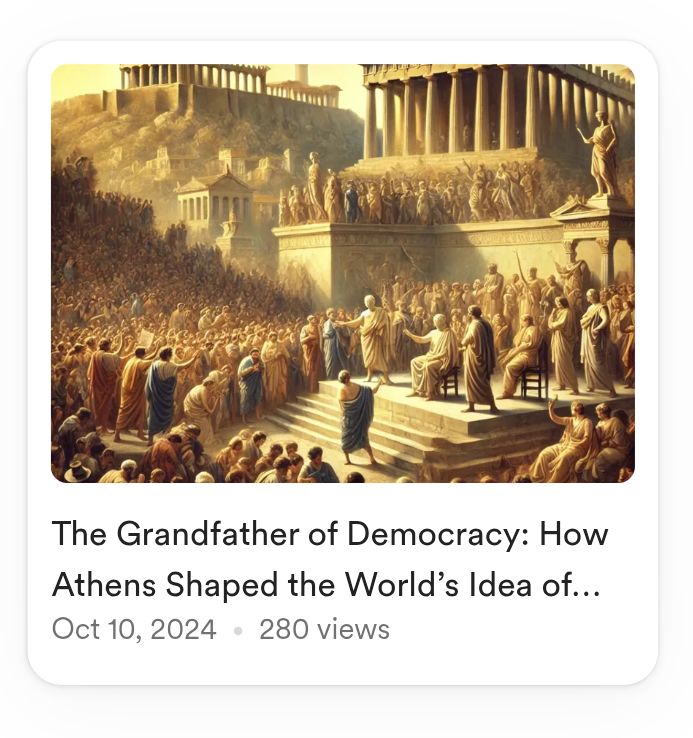 The Grandfather of Democracy: How Athens Shaped the World’s Idea of Governance —
buymeacoffee.com/omar1800m/the-grandfather-democracy-how-athens-shaped-world-idea-governance
Because if people do not care about educating, illuminating, creating, being beautiful—then we have lost something more important than any platform.
We have lost the purpose of citizenship itself.
X. Or Formally Known as Twitter
The Truth They Do Not Want Told
As you can see in the image below, after writing about the incredible contribution of the past—how democracy developed—I wrote about falling in love.
Which I was.
I wrote about heaven and what women get in paradise.
I spent time describing heaven.
I took some of my best articles—articles that were not welcome in hell—and I put them on Buy Me a Coffee, where they are not next to violence, not next to evil, not next to people who have made their business hate.
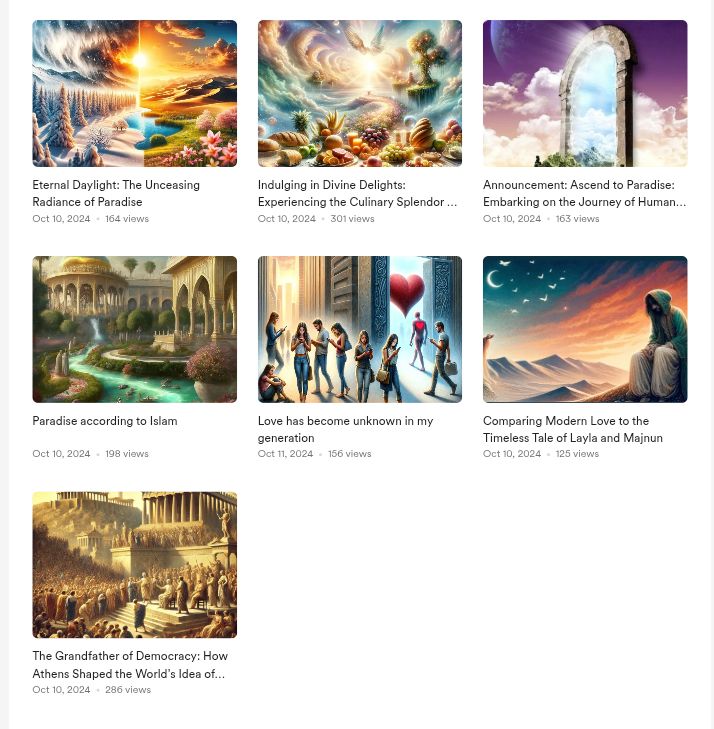
https://buymeacoffee.com/omar1800m/posts?page=141
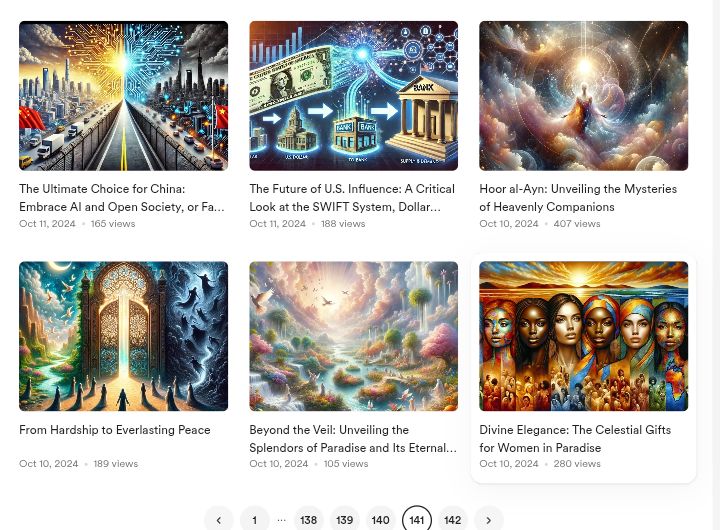
https://buymeacoffee.com/omar1800m/posts?page=142
Some things belong in a garden.
Not in a battlefield.
Evil is just going to be part of our lives.
They have control over the firehouse.
No one is seen.
No one is heard.
And the bell of evil always rings higher.
Ads are served.
You cannot blame people because of greed.
I mean, can I really blame Elon?
He is not going to say:
"I have had enough money. I bought this place to bring beauty and elegance, to support anyone who has freedom of speech."
No.
This man completely locked my account and deleted everything I ever put in there.
So you attack someone with the truth?
The truth is not their friend.
And that is the truth.
So let the truth be told:
We have never been allowed to have a home.
A space.
Just a small room somewhere you can call a home on the internet.
XI. Just a Small Place
Just a small place where you can blog.
Where you can have your ideas.
Where you can just work as an artist.
Where you can write about creative things.
Where you also have the opportunity to connect to other people—whether they are educators, whether you are just talking about beautiful things.
Educating one another.
Building a community.
Doing something that makes our world a better place.
That place does not exist.
You cannot point to any place.
Because ads have to make money.
People have to make money.
You are the product.
That is the challenge we face.
It does not matter how good you are.
It does not matter what you do.
If you do not have money, if you do not have decent people who are willing to participate in making sure you build something—you will not survive.
So I want to end by thanking Buy Me a Coffee.
Because they really stopped ads.
This place has been wonderful.
Hopefully it will continue to be wonderful.
Hopefully they will take feedback.
Maybe this is the starting point where things will change.
VI. What I Have Learned
Three lessons. Three wounds. Three foundations.
First: You must own the home.
Not rent. Not borrow. Not use for free until the terms change. Own. Because if you do not own the house, the house owns you. And the house will always serve the interests of the person who built it, not the person who visits it.
Second: You must own the communication.
Not the followers. Not the engagement. Not the platform. The communication itself. The ability to speak directly to the people without intermediaries, without gatekeepers, without permission. If you do not own the channel, the channel will eventually be taken from you.
Third: You must be willing to start over.
Not because you want to. Because you will have to. The powerful do not tolerate the powerless building homes that challenge their authority. They will find a way to remove you. They will find a way to silence you. They will find a way to make you start over.
And when that happens, you will discover whether you are a builder or a tenant.
A builder starts over.
A tenant complains.
I have started over three times. I will start over again if I have to. Not because I love starting over. Because I love the work.
And the work does not depend on the platform.
The work depends on me.
VII. The Education Continues
This is not a story about victimhood.
It is a story about reality.
The donors, the corporations, the lobbyists, the algorithmic persuasion machines—they are not going to disappear because we wish them away. They are well-oiled. They are persistent. They are experienced. They own the platforms. They own the communication. They own the algorithms.
And they will never give them up willingly.
So if we want to build a future where ordinary people are heard, we must do something they do not expect.
We must build our own homes.
Not on their platforms. Not with their permission. Not with their blessing.
On our own ground.
With our own tools.
With our own communication.
And we must invite the entire world to join us.
Because this challenge is too large for one person. It is too large for one civilization. It is too large for one religion. It is too large for one ideology.
It requires all of us.
Every culture. Every tradition. Every perspective.
Rome. Greece. China. Africa. The Islamic world. Christian civilization. Indigenous nations. Secular democracies. All of them. Everyone who has wrestled with power and authority and representation.
Bring your examples.
Bring your heroes.
Bring your failures.
Bring your lessons.
Put them on the table.
Let us examine them together.
Let us discover who created societies where people flourished, where rights were protected, where power was restrained, and where citizens mattered.
Because if we do not do this work,
the future will belong to the people who already own the present.
And we will have no one to blame but ourselves.
VIII. The Open Invitation
So I end this chapter with an invitation.
Not a solution. Not a blueprint. Not a program.
An invitation.
If you are reading this and you have something to contribute—an idea, a story, a tradition, a critique, a better way—write it. Post it. Share it. Challenge me. Challenge each other.
Because I cannot build this alone.
I have tried. I have failed. I have started over. I will keep starting over.
But if you help me—if we build this together—then perhaps we have a chance.
A chance to design the future before it arrives.
A chance to create a blueprint that reflects the best of what humanity has to offer.
A chance to ensure that the citizen is not a customer, not a subject, not a data point—but a voice that matters.
That is the education.
That is the journey.
That is the beginning of our reconstruction.
IX. The Next Chapter
Part IV will be called The Architecture of the Future.
That is where I will take all the lessons—from the verse, from history, from my own failures—and try to design something that can survive the age of AGI.
Not a perfect system. Not a final answer.
A starting point.
A draft.
A challenge.
And then I will ask you to tear it apart.
Because that is how we build.
Because that is how we learn.
Because that is how we honor the command that cracked the throne:
"...and consult them in their affairs..."
See you in the next chapter, insha'Allah.
And bring your hammer.
End of Chapter Two — Part III