
بِسْمِ اللهِ الرَّحْمٰنِ الرَّحِيمِ
Chapter 9
Authority Without Worship: Preventing the Idolization of Leaders
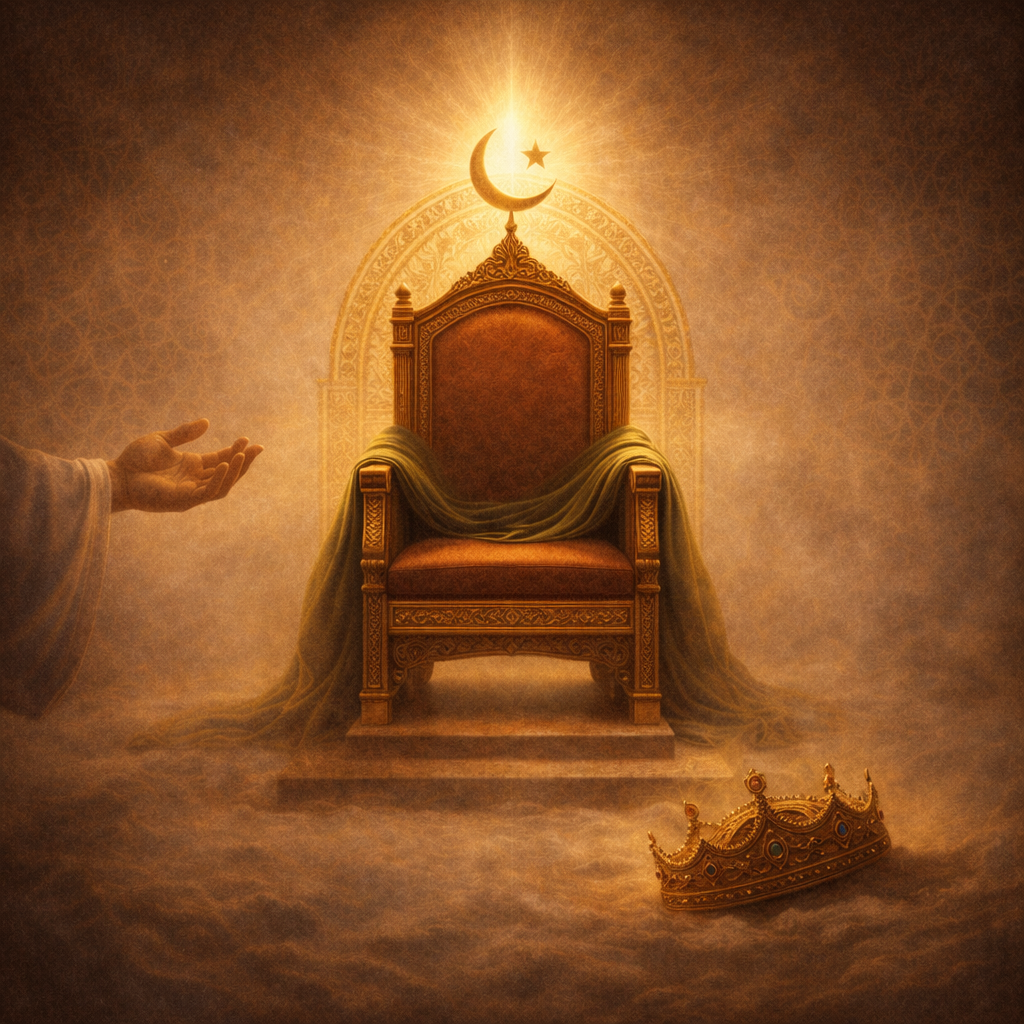
Orientation
Every political system faces a final, silent danger—the worship of authority.
Not worship in the religious sense alone, but in the psychological and social sense:
unquestioned loyalty,
emotional dependency,
moral suspension,
and the transfer of conscience from self to leader.
History shows that societies rarely collapse because they lack leaders. They collapse because leaders become idols, and people surrender their moral agency to them.
The Prophet Muhammad ﷺ confronted this danger directly—from the very beginning of his mission to the final moments of his life.
1) Why Idolization Is More Dangerous Than Opposition
Opposition challenges leaders.
Idolization protects them from accountability.
An idolized leader:
is never wrong,
is always justified,
cannot be corrected,
and eventually becomes untouchable.
This is not stability.
This is decay.
The Prophet ﷺ understood that the greatest threat to a moral community is not rebellion—but blind devotion.
2) “I Am Only a Servant”: Defining Authority Early
The Prophet ﷺ consistently emphasized his humanity:
he ate,
he slept,
he became tired,
he made personal judgments,
he sought counsel.
He rejected titles that implied divinity. He corrected excessive praise. He redirected admiration toward God.
This was intentional political education.
He knew that if followers mistook the messenger for the source, the message would be lost.
3) The Qur’anic Line That Ends Political Idolatry
When the Prophet ﷺ passed away, confusion shook the community.
Then came the reminder:
“Muhammad is only a messenger. Messengers have passed before him…”
This verse was not merely theological—it was political stabilization.
It severed authority from personality. It preserved continuity. It prevented collapse.
A system tied to one individual dies with that individual. A system tied to principles survives generations.
4) Authority Rooted in Trust, Not Fear
The Prophet ﷺ never demanded loyalty through intimidation.
People followed him because:
he was just,
he was consistent,
he was transparent,
and he lived what he preached.
Fear-based authority breeds resentment. Trust-based authority breeds endurance.
This distinction determines whether societies fracture or mature.
5) Correcting the Leader Was Allowed—and Encouraged
The Prophet ﷺ welcomed correction when it was sincere.
Companions questioned decisions. They offered alternatives. They disagreed respectfully.
He did not punish dissent. He distinguished rebellion from disagreement.
This preserved:
intellectual honesty,
moral agency,
and civic confidence.
A leader who cannot be corrected becomes dangerous—even if righteous.
6) The Refusal of Kingship
Multiple opportunities arose where the Prophet ﷺ could have:
centralized power,
established dynasty,
accumulated wealth,
ruled as a king.
He refused.
Not because power was forbidden—but because worship of power is.
He chose servanthood over sovereignty. Responsibility over dominance. Trust over spectacle.
7) Preventing Emotional Dependency
The Prophet ﷺ did not build a community dependent on his presence.
He trained people to:
think,
judge,
consult,
and act responsibly.
This is why the community did not collapse after his death.
Leaders who create dependency leave chaos behind. Leaders who create capacity leave stability.
8) When Love Becomes Dangerous
Love is noble. But ungoverned love blinds.
The Prophet ﷺ accepted love—but rejected obsession.
He taught followers:
love without exaggeration,
respect without sanctification,
loyalty without surrender of conscience.
This preserved moral clarity.
9) Modern Politics and the Cult of Personality
Modern systems often replicate what the Prophet ﷺ prevented:
personality cults,
emotional allegiance,
moral exceptions for leaders,
permanent justification of wrongdoing.
The prophetic model dismantles this entirely.
It insists:
no one is beyond accountability,
no one replaces truth,
no one inherits moral immunity.
10) Authority as a Trust, Not an Identity
The Prophet ﷺ treated authority as:
temporary,
conditional,
accountable.
He did not internalize power as self-worth.
This distinction saved him—and the community—from corruption.
Closing of Chapter 9
This chapter delivers one of the most urgent political lessons in human history:
Leadership must never be worshipped.
Authority must never replace conscience.
And loyalty must never silence truth.
The Prophet Muhammad ﷺ demonstrated how to carry immense authority without becoming an idol—and how to lead people toward God, not toward himself.
This is why his leadership endured beyond his life.
Next Chapter
Succession, Continuity, and the Test of After
Because the final test of leadership is not how it rules—but what it leaves behind.