
بِسْمِ اللهِ الرَّحْمٰنِ الرَّحِيمِ
Chapter 10
Succession, Continuity, and the Test of After
Orientation
The final test of leadership is not how power is exercised—but what happens when it is gone.
Many leaders rule effectively while alive and leave chaos behind when they depart. Others secure succession through blood, fear, or force, mistaking continuity for control. The Prophet Muhammad ﷺ faced this moment with unmatched clarity: he prepared a community not to cling to him, but to outlive him.
This chapter examines the most difficult political moment of all—the transition after prophetic leadership—and the principles that preserve a society when its founding figure is no longer present.
1) Why Succession Is the Ultimate Measure of Leadership
Anyone can command while present.
Only a true leader prepares others to lead without him.
Succession exposes:
whether institutions exist or only personalities,
whether principles are shared or merely enforced,
whether loyalty is to truth or to a person.
The Prophet ﷺ understood this from the beginning.
2) Preparing the Community Without Naming a King
The Prophet ﷺ did not establish a dynasty.
He did not appoint an heir by blood.
He did not sanctify any individual as irreplaceable.
Instead, he cultivated:
principles over persons,
consultation over command,
accountability over entitlement.
This restraint prevented the worship of lineage and protected the community from hereditary absolutism.
3) Teaching the Ummah to Stand Without Him
In his final period, the Prophet ﷺ emphasized:
prayer,
justice,
trust,
collective responsibility.
He reinforced systems, not dependence.
He taught the people:
“Do not attach yourselves to me. Attach yourselves to God and what is right.”
This was not abandonment—it was empowerment.
4) The Shock of Loss—and Political Stabilization
When the Prophet ﷺ passed away, confusion was natural.
Grief threatened paralysis.
Emotion threatened fragmentation.
But the community stabilized through a principle already taught:
messengers pass,
truth remains.
This distinction preserved continuity.
A system anchored in one life collapses with that life. A system anchored in principles endures.
5) Consultation After the Prophet ﷺ
The immediate response was not chaos—but deliberation.
Consultation resumed. Responsibility was shared. Authority was discussed—not seized.
This moment proves the success of prophetic preparation.
Because societies that depend on charisma disintegrate when charisma disappears.
6) Authority Without Finality
No successor inherited prophetic status. No leader claimed infallibility.
This prevented:
theological absolutism,
political tyranny,
moral paralysis.
The Prophet ﷺ closed the door to sanctified rulers.
He left a living process—not a frozen hierarchy.
7) Continuity Without Perfection
The Prophet ﷺ did not promise that the community would never err.
He promised guidance through:
principles,
accountability,
repentance,
and renewal.
This realism matters.
Political maturity does not mean error-free leadership—it means recoverable leadership.
8) Why Societies Fail After Great Leaders
Most failures happen because:
institutions are weak,
personalities are overvalued,
and succession is treated as ownership.
The prophetic model rejects all three.
Leadership is a trust.
Succession is a responsibility.
Continuity is collective.
9) The Legacy That Cannot Be Confiscated
The Prophet ﷺ left behind:
a moral framework,
a political ethic,
a disciplined community.
No ruler could confiscate it. No tyrant could erase it.
Because it lived in people—not palaces.
10) The Final Political Lesson
The Prophet Muhammad ﷺ demonstrated the highest form of leadership by making himself unnecessary.
He did not build a world that needed him to survive. He built a world that could survive because of what he taught.
This is the mark of leadership that serves God—not ego.
Closing of Chapter 10
This chapter completes the prophetic political arc:
Power without arrogance.
Justice without cruelty.
Consultation without chaos.
Authority without worship.
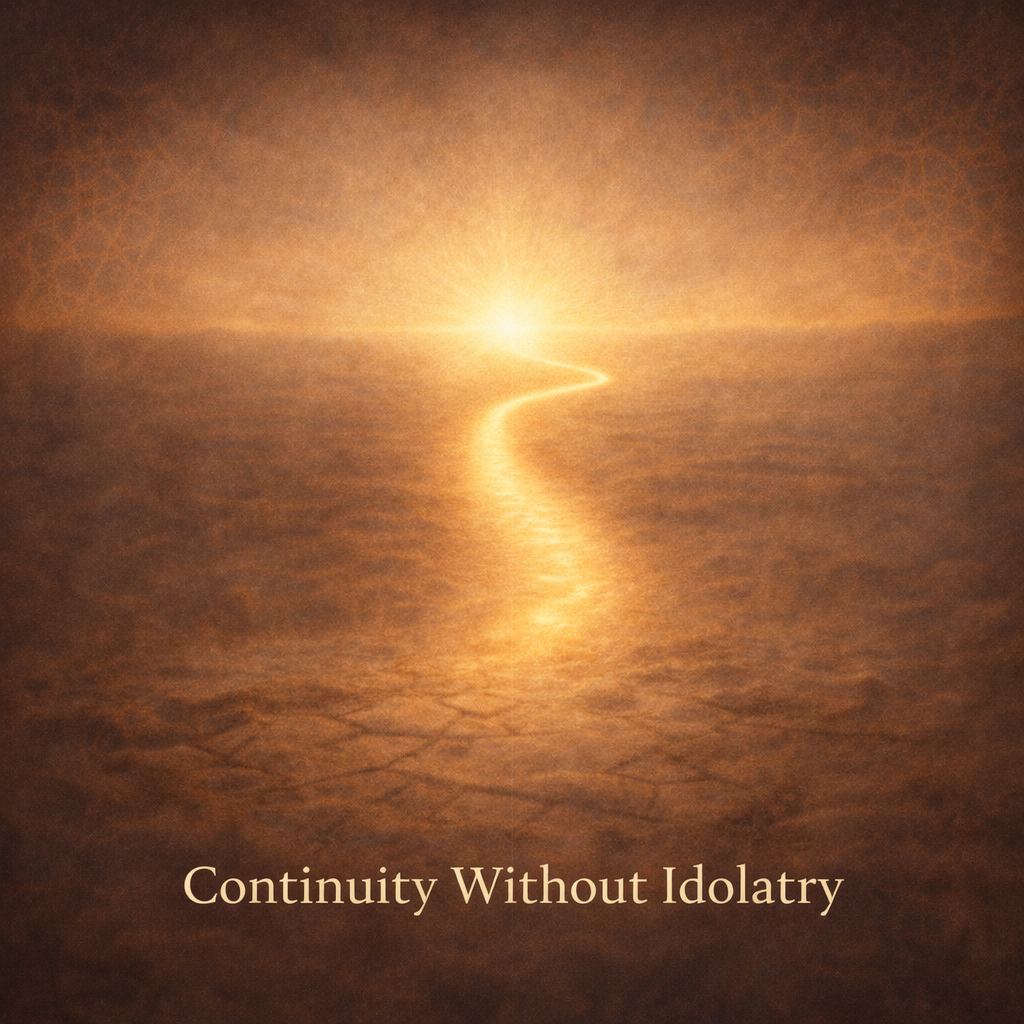
And continuity without idolatry.
The Prophet Muhammad ﷺ did not merely lead a society—he taught humanity how leadership should end.
Not with fear.
Not with collapse.
But with responsibility passed forward.
Closing the Series
From heaven to earth.
From self to society.
From power to restraint.
From presence to legacy.
This is prophetic politics—not as theory, but as lived reality.
And it remains the safest path for any world that wishes to endure.