

بِسْمِ اللهِ الرَّحْمٰنِ الرَّحِيْم.
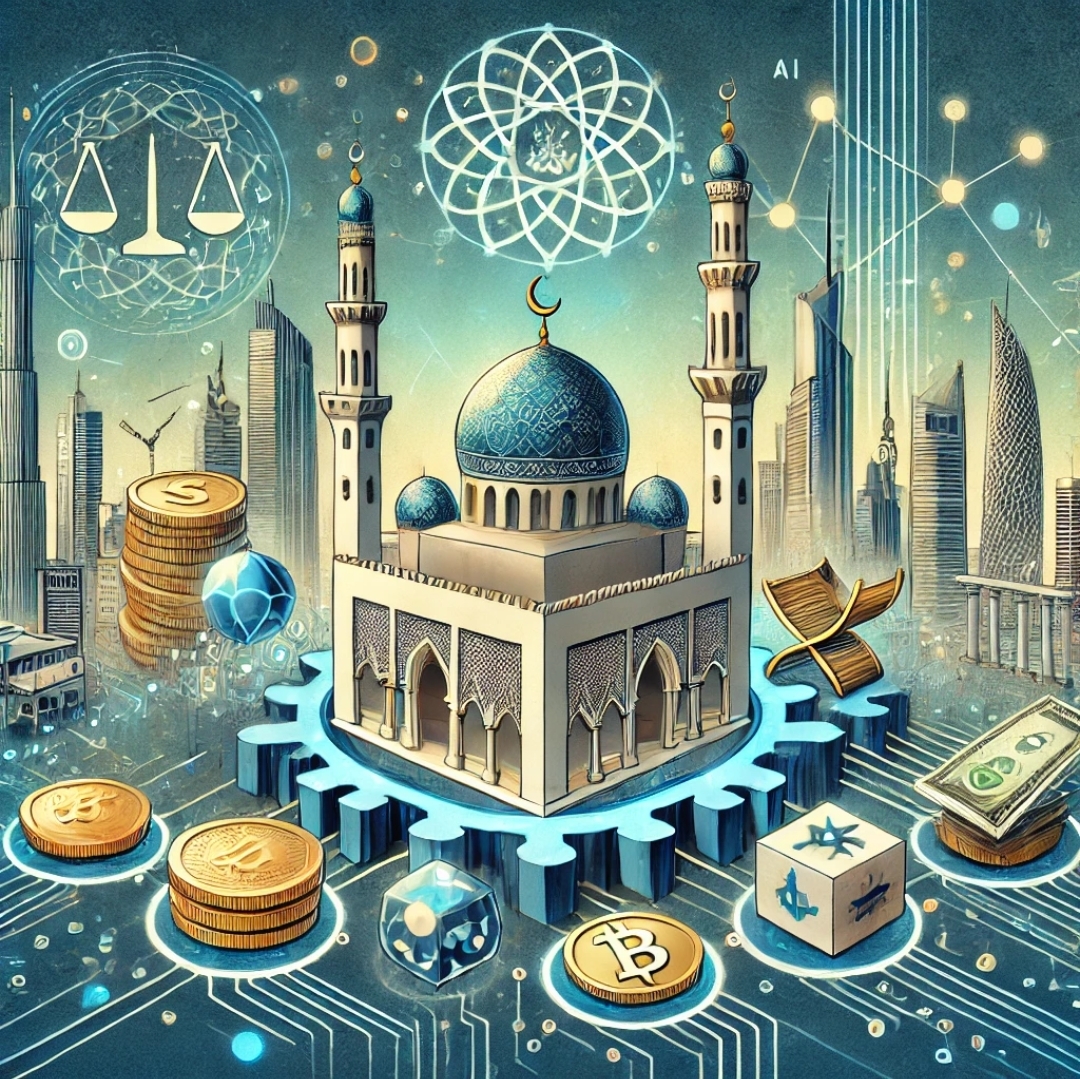 Muslims are poised to take a leading role in managing the future of global finance, not because of their current economic strength, but because they are driven by an unparalleled sense of accountability. Unlike any other people, Muslims are consistently aware of their responsibility toward God and the reality of Judgment Day. They know that on that day, they will be held accountable for every action, including how they handled their wealth, debt, and responsibilities. Allah says in the Quran:
“That Day will people proceed in groups sorted out, to be shown the deeds that they (had done). So, whoever does good equal to the weight of an atom, shall see it. And whoever does evil equal to the weight of an atom, shall see it.” (Quran 99:6-8)
This sense of accountability drives Muslims to think beyond profit. They know their wealth, their debt, and their actions will be weighed, and they will receive their record in their right hand or their left. Because of this, they naturally approach economics from a perspective of long-term stewardship rather than short-term gain.
Islamic Teachings on Trade and Interest
Islam has always emphasized the importance of trade, but it draws a sharp line when it comes to riba (interest). Allah says in the Quran:
“Those who devour usury will not stand except as stands one whom the Devil has driven to madness by [his] touch. That is because they say: ‘Trade is just like usury,’ but Allah has permitted trade and forbidden usury.” (Quran 2:275)
This verse makes it clear that trade is a natural and beneficial part of society, but interest (riba) is harmful and unjust. Islam recognizes the importance of allowing trade to flourish, but it condemns any system where wealth is extracted unjustly, such as through the accumulation of interest. The Prophet Muhammad (PBUH) also condemned interest, saying:
“The Messenger of Allah (PBUH) cursed the one who consumes riba, the one who gives it, the one who writes it down, and the two who witness it.” (Sahih Muslim)
However, Islam also teaches that there is room for forgiveness for those who have previously engaged in interest, provided they repent and stop engaging in such practices. The Quran says:
“And if the debtor is in difficulty, grant him time until it is easy for him to repay. But if you remit it by way of charity, that is better for you, if you only knew.” (Quran 2:280)
This is the balance Islam provides. It forbids riba, but it encourages forgiveness and mercy in the realm of trade and debt.
The Betrayal of Islamic Principles in Modern Muslim Economies
Unfortunately, many Muslim countries today have betrayed these Islamic principles by embracing interest-based economic systems. They have adopted riba as the foundation of their economies, betraying the trust placed in them by Allah and the Islamic scholarship that once guided their financial systems. This has not only weakened their economies but also eroded the moral fabric of their societies.
Historically, Islamic scholars operated independently of political authorities, often facing persecution for standing up to unjust rulers. The great Imams of the four schools of thought—such as Imam Ahmad ibn Hanbal and Imam Abu Hanifa—were imprisoned or humiliated because they refused to compromise their principles. Today, however, Muslim scholars are often on the payrolls of governments, and this conflict of interest has silenced the very voices that should be guiding Muslim economies.
The result is that Muslim countries have become trapped in interest-based economic models, failing to diversify their economies or introduce innovation. This dependency on riba has prevented them from developing new tools and solutions to address modern economic challenges, such as artificial intelligence, automation, and sustainable growth.
The Failure to Diversify Muslim Economies
Another major issue plaguing modern Muslim economies is their failure to diversify. Today, the vast majority of Muslim wealth is tied up in the stock market, which operates heavily on interest. There is no mechanism in place to diversify wealth or move away from interest-based systems. This reliance on riba has stifled innovation and trapped Muslim countries in outdated financial models.
Furthermore, there are no comprehensive plans in place to incorporate technologies like artificial intelligence or automation into Muslim economies. Instead, they remain reliant on interest-based loans, foreign investments, and outdated practices. This failure to innovate leaves Muslim countries vulnerable to economic shocks and prevents them from competing on a global scale.
A Global Solution through Cooperation
To address these challenges, Muslims must work with the global economy, not in isolation. The solution lies in cooperating with key global economic institutions such as the Federal Reserve, the European Union, Russia, and China. Trade must be facilitated, but interest must not. This is where the Brand Currency System comes into play.
The Brand Currency System takes a different approach to managing debt and trade. Instead of relying on interest-based mechanisms, it allows individuals to generate their own reports about businesses, holding them accountable for how they treat their employees, manage their supply chains, and engage with society. In this system, businesses are rated by the individuals who interact with them, and if a business fails, the debt dies with it—no interest is transferred to individuals. This approach encourages businesses to maintain ethical practices and builds trust within the economy.
Conclusion:
The future of Muslim economies lies in re-aligning with Islamic values while adapting to the realities of today’s global economy. Islamic teachings on trade and interest provide the perfect foundation for a fair, just, and productive economic system. However, to move forward, Muslims must also engage with global institutions, build modern tools to manage inflation and trade, and move away from reliance on interest.
By establishing a Muslim Central Bank based on Islamic principles and cooperating with global financial systems, Muslims can lead the way in creating a more just and equitable global economy. The path forward is not through isolation, but through innovation, cooperation, and a return to the values that have always been at the heart of Islam.