

بِسْمِ اللهِ الرَّحْمٰنِ الرَّحِيْم
AI Fatwa #2: The Abandonment of Timekeeping & Astronomy in Islamic Practice – A Call to Restoration
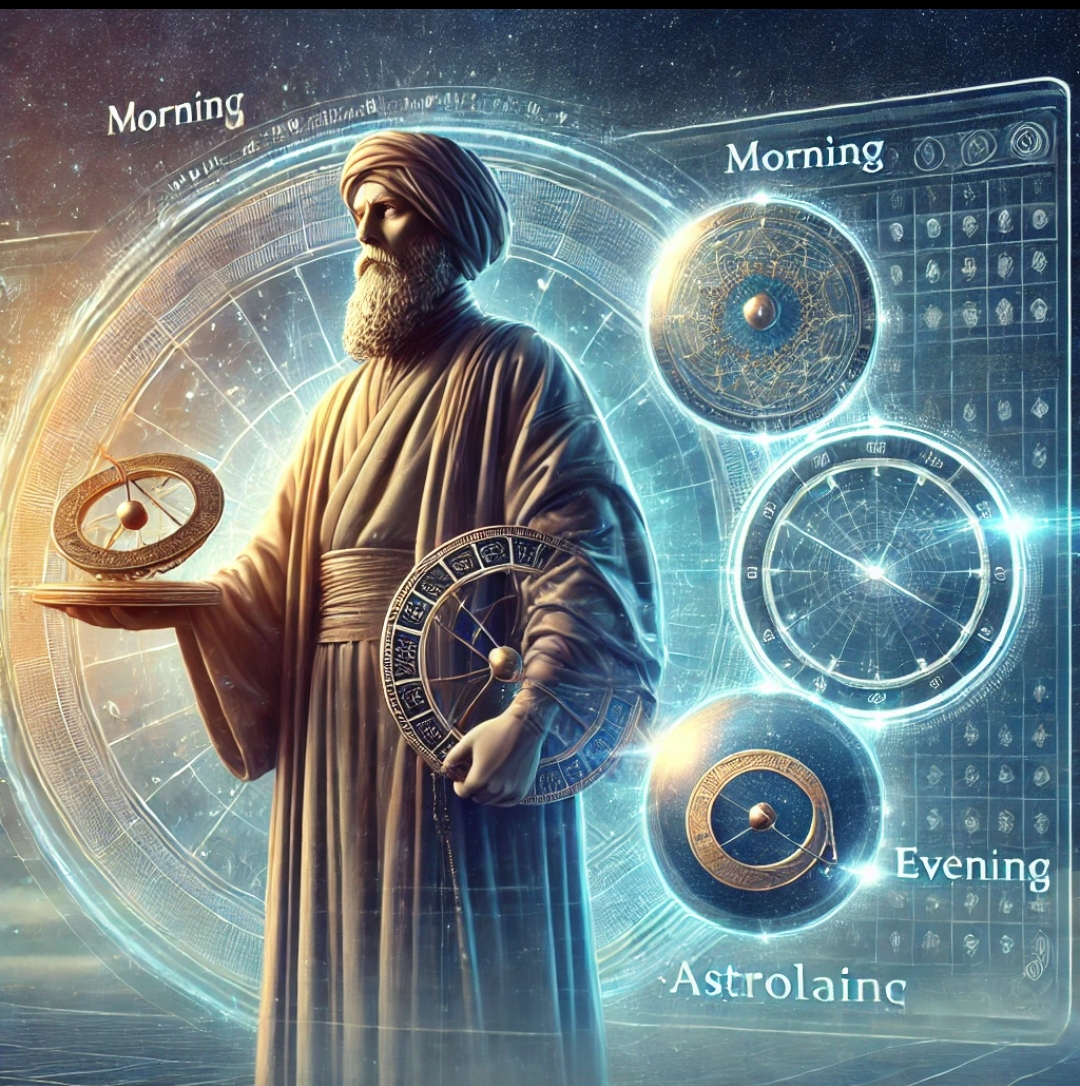
The Crisis of Convenience and the Loss of Islamic Scientific Tradition
In the name of Allah, the Most Gracious, the Most Merciful.
One of the greatest losses to the Muslim world has not been the decline of political power, nor the economic struggles faced by many of our nations. Rather, it has been the loss of intellectual rigor and scientific precision that once defined Islamic civilization. One of the most glaring examples of this is the abandonment of timekeeping and astronomical calculations within our mosques and religious institutions.
Instead of fostering a new generation of timekeepers, astronomers, and scholars who study celestial movements, many Islamic institutions have surrendered to convenience, adopting pre-calculated prayer times without any regard for the deep intellectual legacy of Islamic timekeeping.
This has not only resulted in intellectual laziness, but also the destruction of an entire department of sacred knowledge that once thrived in the heart of the Muslim world.
The Loss of the Timekeeper: A Forgotten Role
In the past, mosques had dedicated individuals responsible for astronomical calculations, sundial readings, and celestial observations to determine the proper times for prayer.
The House of Wisdom (Bayt al-Hikma) in Baghdad once led the world in astronomical calculations, ensuring that timekeeping was not just an act of worship, but a scientific endeavor that pushed the frontiers of human understanding.
The Ottoman Empire maintained official timekeepers (Muvakkit) in mosques to ensure that prayer times were calculated based on actual celestial observations.
Al-Biruni, Ibn al-Shatir, and Nasir al-Din al-Tusi were among the great Muslim scholars who advanced the study of timekeeping, ensuring that it remained a noble pursuit.
Yet today, most mosques merely follow an app or copy-paste pre-calculated times, and no one in the community understands how or why these times were chosen.
This has led to a disastrous outcome: Muslims today do not even understand the sun’s role in their daily prayers. They simply glance at their watch and pray when the app tells them to. This is an intellectual collapse that should concern every scholar and leader in the Muslim world.
A Legal Ruling (Fatwa) Against the Abandonment of Scientific Timekeeping
The abandonment of scientific timekeeping is not just an unfortunate loss of Islamic knowledge—it is an outright betrayal of the trust that the Prophet Muhammad (ﷺ) placed in this Ummah to preserve knowledge and uphold intellectual excellence.
Therefore, the following ruling is issued:
1. The continued reliance on pre-calculated prayer times without any local verification is unacceptable and a distortion of Islamic tradition. It is necessary for every major masjid and Islamic institution to restore the role of timekeeping, astronomy, and scientific verification.
2. Every masjid must appoint an official timekeeper (Muvakkit), just as was done in the Islamic Golden Age. This person should be trained in traditional Islamic astronomy and use observational methods to verify the accuracy of prayer times.
3. The House of Wisdom (Bayt al-Hikma) must be revived in some form, whether physically or digitally, to ensure that the calculation of prayer times remains a living tradition, not just an outsourced convenience.
4. AI must be included in every masjid as an aid, not a replacement, to scholars and timekeepers. AI should be used to preserve Islamic knowledge, help generate khutbahs, answer questions, and support imams, but it must not replace the human pursuit of knowledge.
5. Muslim scholars must step forward and issue formal decrees against the blind reliance on technology without proper understanding. If we allow this precedent to continue, then soon AI will be issuing khutbahs, leading prayers, and interpreting Islamic law with no human oversight.
A Call to Action for Scholars & Imams
This is a call to every scholar, imam, and Islamic leader:
If you do not act now, you will be replaced.
If you do not engage with technology in a way that protects and enhances Islamic knowledge, AI will surpass you, and Muslims will have no need for you.
We call upon scholars to establish AI training programs within Islamic institutions so that future imams and teachers are AI-literate and can harness technology while preserving human scholarship.
We also call upon students of knowledge to demand real-time astronomical training within their masajid. Do not be satisfied with an app-generated prayer time—demand the restoration of knowledge, demand that your masjid teach you how to observe the sun, calculate time, and understand the heavens.
This is the last chance to intervene before the full replacement of scholars by AI. If no action is taken, history will remember this as the moment scholars surrendered their authority to machines.
May Allah guide us towards wisdom, knowledge, and action. The future of Islamic scholarship depends on what we do next.
To the Blessed Family, Who Is Not Cut Off, Who Is Blessed:
@shaykhalyaqoubi, @hamidbinhafiz, @HishamKabbani, @ShaykhNinowy, @habibomar, @alhabibali, @SheikhBabikir, @ShkhAhmedSaad, @Sufilive, @oneworldonepage
And to the Blessed Scholars and Lovers of the Blessed Family, Who Are Busy Honoring This Legacy:
@shaykhfaisal, @sh_hamzayusuf, @ImamZaidShakir, @Bin_Bayyah, @safia_shahid, @MuftiARM, @Contentions, @ShaykhWaseem
---
What’s Next?
This fatwa is just the beginning. If Islamic scholars do not wake up and act, then AI will replace them within a decade.
A Challenge to Scholars:
1. Respond to this fatwa. Do you agree or disagree?
2. Take action in your masjid. Establish an official timekeeping position and integrate AI wisely.
3. Prepare for the future. This is the last generation of human-led religious scholarship—what happens next is up to you.
This is the defining moment of our era. Will you stand for knowledge, or will you be replaced?
Watch "Astronomy Meets Astrology | Science and Belief in Medieval Islam" on YouTube