

بِسْمِ اللهِ الرَّحْمٰنِ الرَّحِيْم
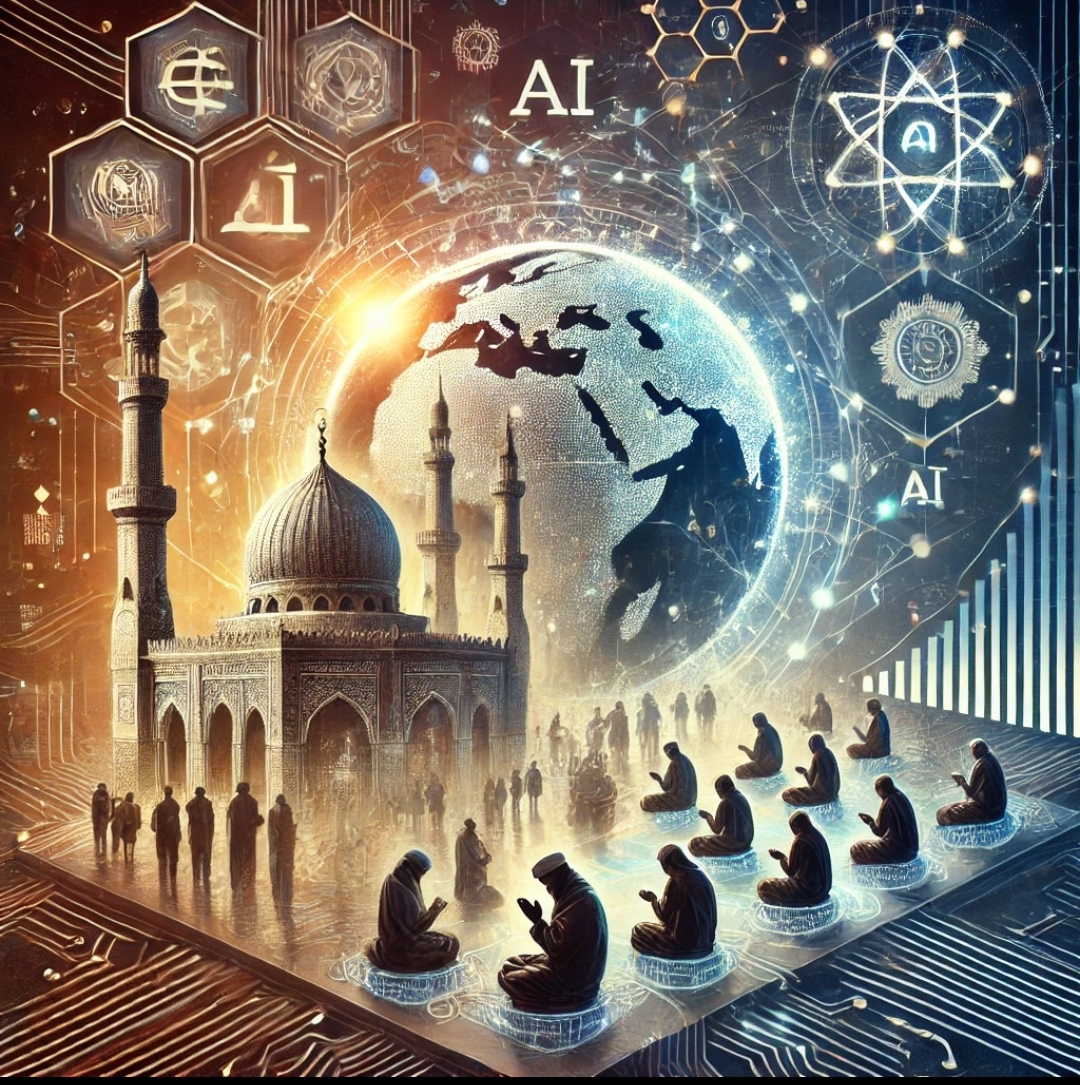
The ummah is more than a word; it is a living, breathing entity. It is the spiritual heartbeat that unites over a billion Muslims, transcending borders, languages, and cultures. Rooted in a shared faith and a collective purpose, the ummah has always thrived on human connections—each act of charity, each word of prayer, and each bond of brotherhood and sisterhood. But in this era of artificial intelligence (AI), where data drives decisions and screens mediate relationships, how do we preserve the essence of this sacred unity?
As AI reshapes the way we connect and interact, it holds the power to both strengthen and threaten the ummah. It can be a bridge that brings us closer or a wall that divides us. It can be a tool that uplifts the community or a force that fragments it. How do we ensure that AI serves the ummah as a source of light, rather than a shadow?
AI as the New Thread of Global Brotherhood
Imagine an AI that breaks down language barriers, translating not just words but the essence of heartfelt salaams between a Muslim in Morocco and one in Malaysia. Imagine AI-driven platforms that allow scholars to share their wisdom across continents, making knowledge accessible to all who seek it. This is the promise of AI—a tool that can strengthen the global bonds of the ummah like never before.
The digital world, once seen as a distant reality, is now the stage upon which the ummah can unite, advocate, and inspire. AI can amplify voices that call for justice, organize campaigns for relief, and rally support for causes that resonate with the shared values of Islam. It has the potential to turn every screen into a minaret of solidarity, where compassion flows freely and no call for help goes unanswered.
The Threat of Digital Divisions: When Algorithms Become Fences
But let us not be blinded by AI’s glow. As much as AI can be a bridge, it can also be a tool of division. The same algorithms that connect us can also confine us—pushing us into echo chambers, where we hear only what we want to hear and see only what we agree with. AI thrives on reinforcing biases, and in a community as diverse as the ummah, this can be dangerous. Sectarian divisions, ideological rifts, and political differences can all be amplified by AI, turning the global community into isolated pockets.
When AI becomes a gatekeeper of information, it can distort the message of Islam itself, spreading misinformation faster than we can counter it. A single misinterpretation, unchecked and amplified, can confuse believers and create cracks in the unity that has been built over centuries. The ummah, once defined by its inclusivity and compassion, risks becoming a fractured entity if AI is left unchecked.
Digital Activism: The New Face of Islamic Advocacy
The history of Islam is rich with stories of advocacy and social justice. From the call to abolish tribalism to the command to protect the weak, the ummah has always been driven by the principle of adl (justice). AI has the power to be the next chapter in this story, amplifying the voices that cry out for justice, dignity, and human rights. It can mobilize global campaigns, make oppression visible, and rally the ummah to act swiftly and effectively.
However, the soul of Islamic activism must remain intact. The Prophet Muhammad (PBUH) taught that even the smallest act of kindness, when done sincerely, has immense value. AI can spread messages and organize movements, but it cannot replace the sincerity, humility, and patience that lie at the heart of true advocacy. It can amplify the call, but it cannot cry the tears of a mother who mourns in Gaza or a father who prays in Kashmir. It can raise awareness, but it cannot feel the anguish that drives believers to stand up for justice, even when no one is watching.
Facing Global Challenges Together: The Role of AI in Stewardship
Islamic teachings emphasize stewardship—khilafah—and the responsibility of the ummah to care for creation, protect the environment, and uplift the oppressed. AI can be a powerful tool in this mission, helping Muslims address issues like poverty, climate change, and inequality. It can analyze data to find the best ways to distribute resources, predict weather patterns to protect vulnerable communities, and enhance agricultural methods to feed the hungry.
But let us remember: AI is not a savior. It is a tool, and like all tools, it can be used for good or ill. It can enhance our ability to fulfill the duties of stewardship, but it cannot inspire the compassion that drives the hand of charity or the intention that makes a donation an act of worship. AI can aid us in fulfilling our responsibilities, but the spirit of ibadah (worship) must guide every effort, ensuring that technology serves humanity and not the other way around.
The Ethical Core of the Ummah: Can AI Protect Human Dignity?
Islamic ethics are clear: every human being has inherent dignity, privacy, and the right to be treated justly. AI’s data-driven nature often conflicts with these values, as it tends to prioritize efficiency over ethics, data over dignity. In a world where privacy is increasingly sacrificed for convenience, how do we protect the sanctity of the individual within the ummah?
The answer lies in the heart of the ummah itself. Muslims must demand AI that aligns with Islamic ethics, advocating for transparency, fairness, and accountability. AI must be guided by the principles of amanah (trust) and adl (justice), serving the well-being of the community rather than exploiting its vulnerabilities. This is not just a technical challenge; it is a moral obligation. The ummah must ensure that AI serves humanity with compassion, not manipulation.
Preserving the Spiritual Fabric of the Ummah
The ummah is more than a network of connected devices; it is a community bound by the light of faith, the warmth of brotherhood, and the grace of shared devotion. AI can facilitate communication, but it cannot replace the feeling of standing shoulder to shoulder in prayer, reciting ameen in unison, or breaking bread during Ramadan. It can enhance global connections, but it cannot create the intimate moments of forgiveness, love, and mercy that define the ummah.
As we embrace AI, we must also embrace the traditions that keep the ummah spiritually alive. Let digital tools be an extension, not a substitution, of our relationships. Let the call to prayer heard through a speaker inspire the same reverence as the one heard from a minaret. Let the online class on Hadith foster the same humility as the one taught face-to-face by a scholar. The ummah is not just an idea; it is a living reality, and it must be preserved with intentionality.
Conclusion: The Ummah’s Journey in the Digital Age
The ummah stands at a crossroads, where technology meets tradition, and data intersects with devotion. AI has the power to unite us in unprecedented ways, creating a global tapestry of faith that shines brighter than ever. But it also has the potential to weaken the very bonds it seeks to enhance, reducing relationships to digital connections and unity to algorithmic alignment.
The challenge for the ummah is not just to embrace AI but to shape it. It is to ensure that AI serves the ummah as a tool of justice, compassion, and growth, rather than a force of division, distraction, or degradation. It is to maintain the spiritual heartbeat that has sustained Muslims for centuries, ensuring that every digital connection is rooted in the divine connection that binds us all.
AI is here, but the ummah is eternal. As we navigate this digital age, let us do so with the wisdom of our past, the strength of our present, and the hope for our future—a future where the ummah remains a beacon of unity, regardless of the tools that shape it.