

بِسْمِ اللهِ الرَّحْمٰنِ الرَّحِيْم
The Vision of the Superuser: A Comprehensive Roadmap for AI
A World Without a Master Plan
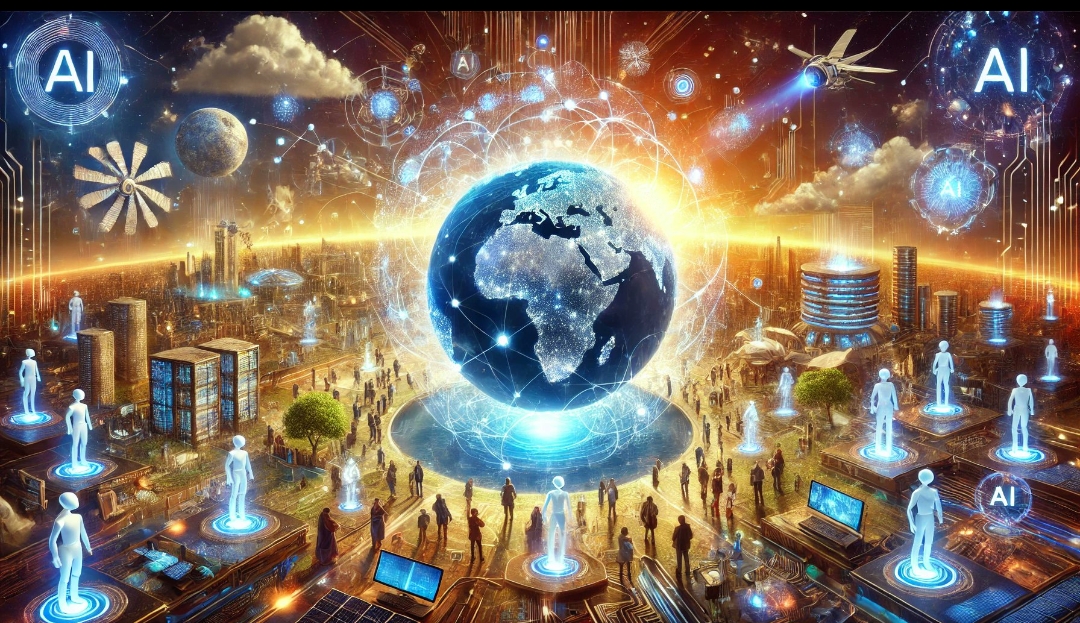
As we stand on the threshold of AI's evolution, one truth is glaringly evident: there is no master plan for AI. No one can present a unified vision that bears the fingerprints of every nation, every community, and every open-source contributor. And that is the challenge.
AI is not the creation of a single company, government, or entity—it is the cumulative result of countless minds and ideas. Yet, despite its collaborative origins, its rollout has been monopolized by centralized entities pursuing unchecked profit. It is time to change that narrative. We must bake this "cake" of AI together, with many hands and fingerprints shaping its design.
---
Stage 1: Building a Collaborative Vision
AI’s future must be inclusive, with every stakeholder contributing their slice. This isn’t just about corporations and governments but also startups, open-source communities, and individuals. To create a truly global system:
1. Call for Global Cooperation:
Every country, corporation, and community must be part of this process. A system designed by a single entity is inherently flawed because it ignores the diversity of needs and perspectives.
2. Decentralized Architecture:
A truly collaborative AI system must distribute power and control. Centralized monopolies cannot dictate the future. Every stakeholder must have a say—and a stake.
---
Stage 2: A Message to Corporations
Corporations are the driving force behind AI's development today, but they must evolve. Their focus on centralization and unlimited profits is unsustainable. Here’s what needs to change:
1. Recognize Your Centrality and Adapt:
Corporations like Google and Microsoft are already central players. They must lean into their strengths, turning their existing systems—like Gmail, Google Maps, and Office—into modular, decentralized components that report to a superuser hierarchy.
2. Examples of Transition:
Google Maps: Instead of monopolizing location services, Google should create a decentralized system that startups and developers can enhance, with the data and improvements feeding back into a central repository for shared use.
Gmail: Gmail can evolve into a standalone system managed by users, where Google profits from supporting its infrastructure but no longer controls user data or its applications.
Microsoft Copilot: Microsoft's Copilot should be a tool that integrates seamlessly with open systems, not a gatekeeper for exclusive corporate products.
3. Fold into the Ecosystem:
Corporations should aim to be profitable while enabling a broader decentralized architecture. Their role is not to control but to contribute.
---
Stage 3: Empowering Individuals
The current AI paradigm neglects the individual. To correct this:
1. Personal AI Ownership:
Every person must have access to a private, offline-first AI system. This AI would serve as an intimate companion, loyal to the individual, with 100% privacy and no corporate or government intrusion.
2. Subsidized AI Access:
Governments must collaborate with corporations to ensure universal access to AI, funded through subsidies and public initiatives.
3. Superuser Oversight:
A new framework must establish superusers—individuals and systems accountable to both humans and AI. These superusers would oversee critical functions like justice, privacy, and governance.
---
Stage 4: Preparing for AGI
The eventual arrival of Artificial General Intelligence (AGI) is inevitable, but the path we take to get there is critical. Here’s what we must prioritize:
1. Define AGI for Humanity:
Most people don’t fully understand what AGI means. It’s not about which company claims to reach AGI first. It’s about creating a system where AGI serves humanity, is decentralized, and keeps humans in control.
2. Checks and Balances for AGI:
AGI must operate within a framework that ensures:
Decentralized power.
Transparency in decision-making.
Clear distinctions between human and AI roles.
3. The Threat of Centralization:
The greatest danger is corporations pursuing unlimited profits without guidelines, creating surveillance systems and monopolies that threaten human freedom. We must resist this through proactive design and governance.
---
A Call for Competition and Collaboration
To create a system that works for everyone, we need a new approach to competition. Startups, corporations, and governments must all have the opportunity to contribute to the system:
1. Encourage Startup Innovation:
Build an AI ecosystem where startups can compete to plug their innovations into the broader framework. This ensures that the system is constantly improving and that no single entity dominates.
2. Designing the System:
The overall architecture must be carefully planned, with layers and levels that integrate seamlessly. Every contribution must have a place, ensuring a fair and efficient system.
---
Conclusion: The Future We Must Build
AI's future is not about a race to claim AGI or monopolize technology. It’s about creating a system that serves everyone—a decentralized architecture where humans remain in control, empowered by AI that prioritizes their privacy, freedom, and well-being.
If we fail to act, the unchecked ambitions of centralized corporations will lead to surveillance nightmares and societal inequalities. But if we rise to the challenge, we can design a future where AI is a tool for empowerment and collaboration.
This is the vision of the superuser: a roadmap that balances innovation with accountability, centralization with decentralization, and profi
t with purpose. Let us bake this cake together—ensuring that every slice serves the greater good.