
Greetings. While I still can't say exactly when the full series will be released, I can say we're still working on it, albeit slowly!
In the meantime, I wanted to preview what we anticipate being part six of the series. The working title for the episode is Pictures on the Radio and it will explore the clash, or maybe even the relationship between MTV and the radio medium.
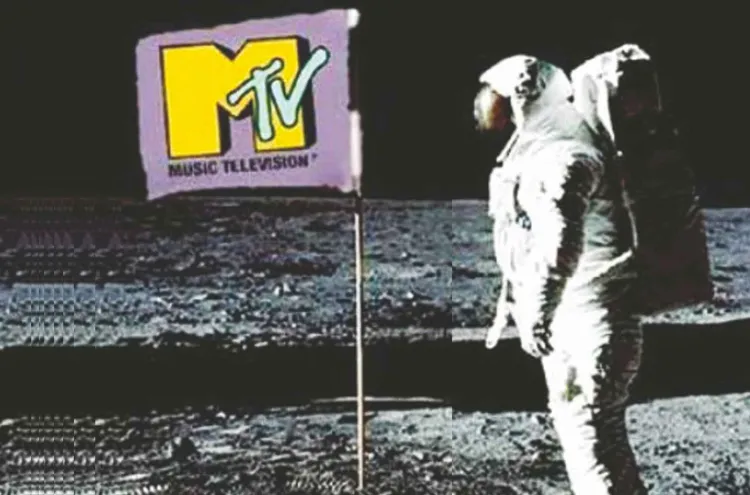
When MTV launched in 1981, it seemed like nothing else that had ever existed before. Music you could watch. A channel that was always on. A new language for a new generation.
But here's the thing. MTV wasn't invented out of thin air. It borrowed everything — the format, the philosophy, even the pacing — from radio.
For part six of Our Beloved Medium, we're going back to a time when Radio was stagnating — clinging to an Album Oriented Rock format while punk, new wave, and a dozen other sounds were relegated to mostly community and college radio stations. MTV spotted the gap and filled it, mirroring radio's AOR roots before pivoting to a Top 40 style by 1984.
Last year, I spoke to podcasting legend and former MTV VJ, Adam Curry about the early days of MTV, and as he put it:
"MTV was initially run by totally by radio people. And they're like, we're making radio with, with, with pictures, which meant they were using all of the radio systemology and thought processes."
But radio didn't disappear quietly. Like I mentioned, underground and indie stations became a refuge — a place where bands that couldn't crack the mainstream found their audience anyway. WZRD in Chicago was one of the stations quietly holding the line for weirder, more adventurous music while the rest of the dial played it safe. I'm proud to say, I got my start in college radio at WUAG in Greensboro almost 20 years ago.
I also spoke to Nora Patterson, an associate professor of Media Studies at Auburn and she argues, that MTV actually helped radio
"whether or not radio stations were aware of it, they were benefiting from just, just from the promotion of music and records and artists. I would imagine you would have artists, the same artists going on to MTV, like to meet with the VJs and then going to radio stations and radio or broadcaster events to promote their music as well."
So far, I've also read two books to help prepare for the episode.
I Want My MTV — Craig Marks & Rob Tannenbaum · The definitive oral history of how the channel was built and what it nearly destroyed.
Our Band Could Be Your Life — Michael Azerrad · Widely considered one of the greatest books about rock music, tracing how indie and underground radio became a lifeline for bands locked out of the mainstream.
I'd love to contact any of these authors, but have not yet been able to connect!
So, that's it for now. Thanks for sticking it out with us, for one of the slowest roll outs ever :/
-Stuart