

This article is not a professional one and does not claim to be one hundred percent accurate. It is only the author's subjective opinion.
Introduction & History
It's no longer a secret that 21st-century warfare is a battleground for new technologies and drones. The use of Unmanned Aerial Vehicles (UAVs) represents a true revolution in the field of warfare, as it eliminates one of the most significant problems on the battlefield - the human factor and self-preservation instinct.
In essence, the first UAVs can be traced back to Austrian balloons that dropped ordnance on Venice during the distant year of 1849. Since then, much has changed and nowadays, when people hear the abbreviation "UAV" they typically picture a traditional aerial drone or quadcopter.
The New Era of UAVs
Just like in any other technological sphere, a technology makes its greatest strides when it becomes accessible to the average person on a modest budget.
The commercialization of the drone market and the emergence of popular brands like "DJI" and "Autel" have been key factors in the widespread use of civilian UAVs in military operations. In 2006 the German company MikroKopter introduced the first commercial quadcopter designed for professional use (video production).
But while in 2006, quadcopters costing tens of thousands of dollars were used only by professionals, by 2023, small UAVs priced at just a few dozen dollars can be operated even by children.
Types of UAVs
To move forward, let's briefly discuss all the main types of modern UAVs. First, we'll divide them into civilian and military categories.
In the civilian category, we can include classic quadcopters (such as the Mavic series) and more specialized First Person View (FPV) drones.
Among the main military UAVs, we can distinguish reconnaissance (tactical/strategic), attack (Like Bayraktar TB2) and kamikaze drones. It's the combination of kamikaze drones and FPV drones that will be the focus of our attention today.
What is FPV?
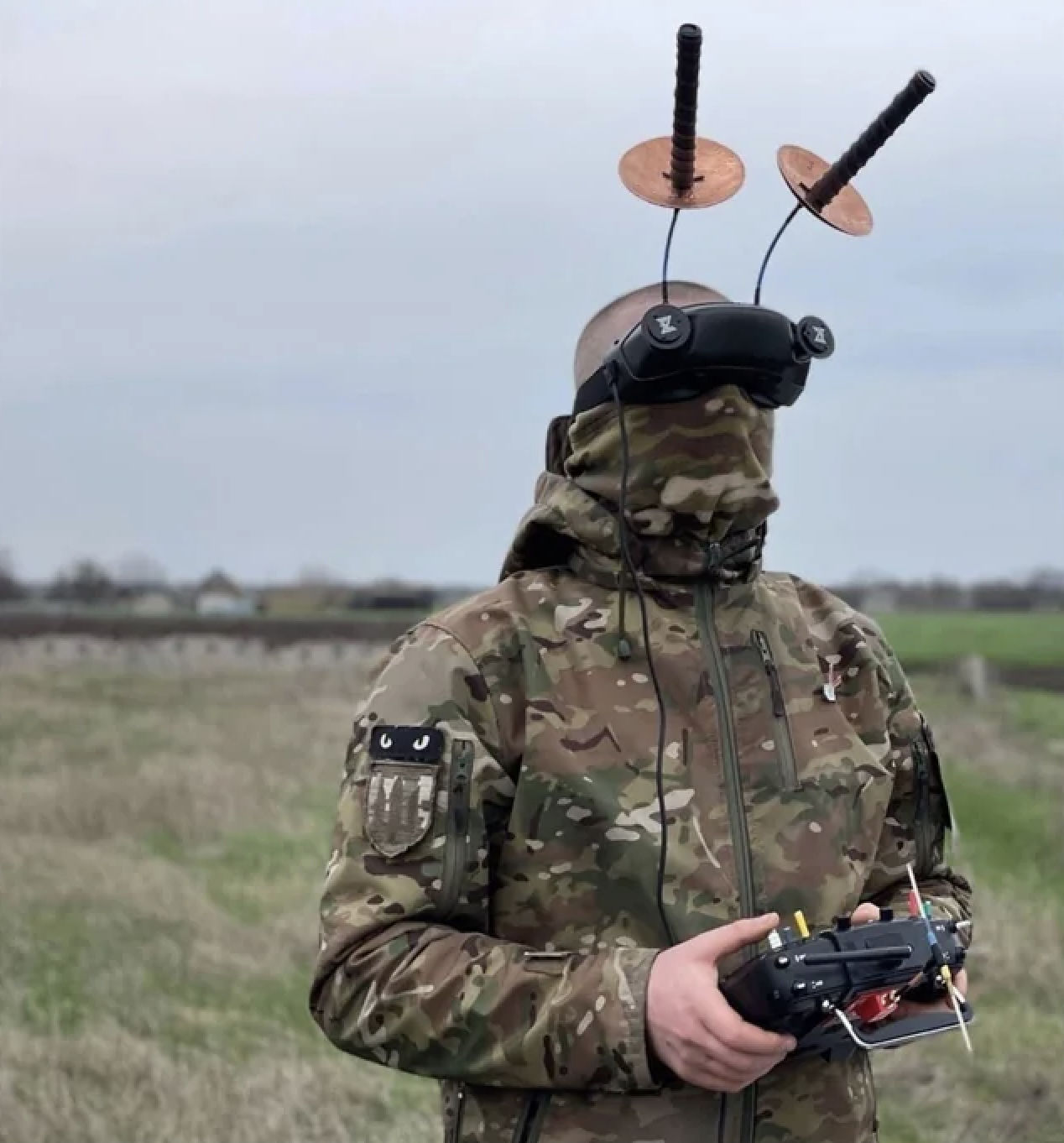
First Person View drones, are unmanned aerial vehicles equipped with a camera and a transmitter that broadcasts video from the camera to virtual reality goggles or the pilot's screen. This allows the operator to control the drone as if they were inside it, providing complete visual immersion in what's happening. The first FPV systems emerged in the late 2000s, but over time, they have undergone significant improvements, including better cameras, transmitters and comfortable video goggles, making this type of drone more accessible and popular.
The Concept of Kamikaze Drones
The concept of a kamikaze drone involves an unmanned device loaded with explosives and controlled for the purpose of delivering a strike or attacking enemy targets. FPV (First Person View) technology allows the operator to control the kamikaze drone and guide it toward the target, improving precision and effectiveness compared to conventional methods of delivering firepower, such as artillery.
FPV in the Ukrainian-Russian War
For the first time, FPV drones were used as kamikaze drones by Ukrainian defense forces in the spring of 2022. At that time, it was a significant rarity, and this type of weaponry was met with skepticism by military experts and often went unnoticed.
As of now, both sides of the conflict have deployed at least hundreds of FPV kamikaze drones daily on the front lines. In other words, FPV is not just a nice bonus for carrying out specific tasks; it's a comprehensive solution.
As of August 2023, in the Ukrainian Armed Forces, under the decree of the Chief Commander Valeriy Zaluzhny, 17 full-fledged squadrons of attack UAVs have been established. Volunteer organizations mainly handle the procurement of these new "birds". In August 2023, Ukraine's most popular foundation, "Povernys Zhyvym" (Come Back Alive), raised 235 million hryvnias (6.3 million dollars) to purchase 10,000 FPV drones. Additionally, in late September 2023, the second most popular volunteer foundation in Ukraine, the ”Sergii Prytula Foundation", was fundraising for 2000 FPV drones, two months of training for 420 pilots and the purchase of various components and transmitters (the total amount raised was 50 million hryvnias or 1.35 million dollars). It is known that Ukraine also procures these drones from the Ministry of Defense budget, but these contracts are classified, so specific figures cannot be provided.
Mykhailo Fedorov, Ukraine's Minister of Digitalization and one of the creators of the fundraising platform UNITED 24, claims that by the end of this year, the production of this type of UAV in Ukraine will increase 100-110 times, which is a cause for optimism.
Moreover, on October 1, 2023, for the first time, an FPV drone pilot from the M2 group was awarded the title of "Hero of Ukraine" for destroying several hundred enemy vehicles. "Hero of Ukraine" - is the highest state award in Ukraine.
All FPV drones used by the Ukrainian defense forces are assembled manually in Ukraine from Chinese components, except for the casing and detonators, which can be manufactured using readily available materials or 3D printing.
The cost of such kamikaze drones can range from $200 to $1000. The price depends directly on the assigned tasks, namely, the flight range and the weight of the explosive payload it carries. There are cases where Ukrainian pilots operated FPV drones more than 20 kilometers behind enemy lines in the vicinity of Bakhmut. However, this is more of an exception than the rule. Most pilots operate within a range of up to 5 kilometers.
Regarding the payload, most FPV drones are capable of carrying a cumulative warhead weighing up to 1,5 kg. Such a warhead can include the familiar RPG-7 grenade for shooter enthusiasts.
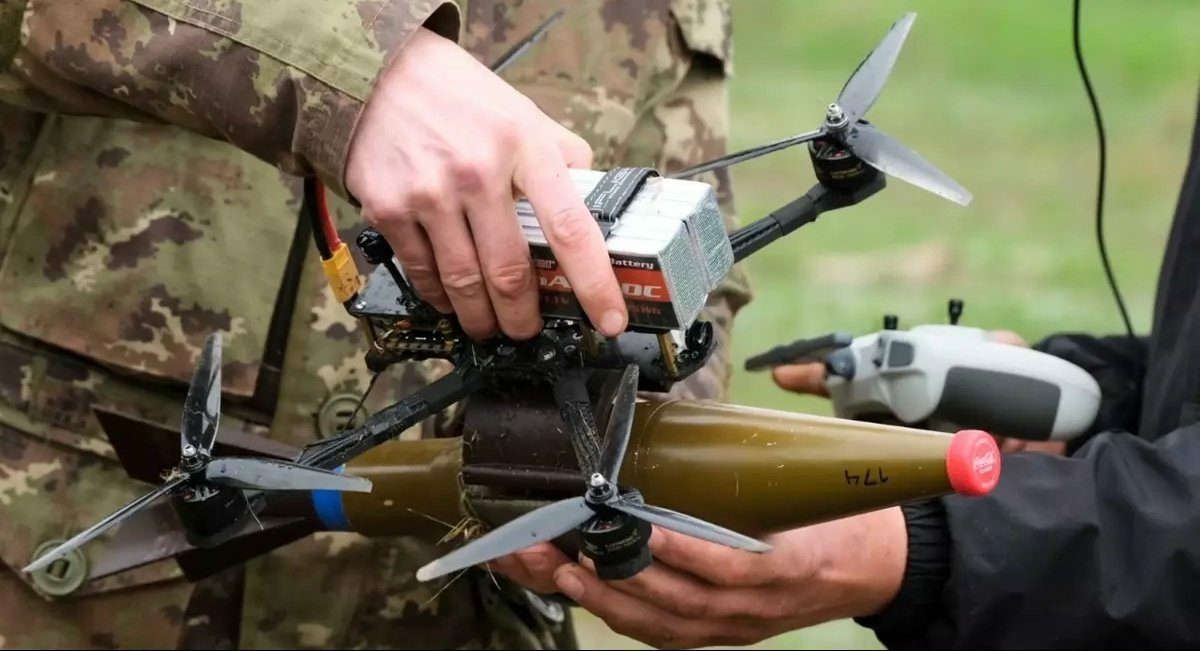
Nevertheless, a drone with a mid-range cost of $600 can undeniably destroy any enemy vehicle worth tens of millions of dollars. Here are examples of a Ukrainian FPV drone destroying the latest Russian T-90 tank worth 4 million dollars and eliminating the rare Russian TOS-1A "Solntsepyok" missile system, which costs more than ten million dollars using FPV technology.
https://youtube.com/shorts/UzXmcy3YRHM?si=hX1R11QevpOLT0AX
(Destruction of the TOS-1A "Solntsepyok" missile system)
https://youtu.be/hRYxJcbjkY4?si=SiyQlC1rOfg75oa4
(Destruction of the T-90M tank)
Weaknesses and Issues
At first glance, FPV may seem like a real game-changer and a "wunderwaffe" of this war. In other words, just ramp up their production to tens of thousands per month and all Russian equipment will be destroyed in no time.
In reality, it's not that simple.
First of all, successfully hitting the desired target is far from guaranteed on the first try. Sometimes, it takes the expenditure of five kamikaze drones on a single enemy target like an armored infantry vehicle, and the target may still not be destroyed. On social media we only see successful attempts to destroy targets, the classic "survivor's bias".
Also, it's not always possible for the operator to hit the target due to signal and UAV control issues. Operating FPV requires extremely complex skills that demand hundreds of hours of practice on simulators.
The vast majority of FPV drones use analog signals because digital signals can be easily jammed using electronic warfare systems. Analog signals have better resistance to enemy electronic warfare systems, but they are also susceptible to interception. In other words, the enemy can literally receive a live stream of images from the operator's control station. This is why FPV is essentially a one-way journey because if the operator decides to return to base without finding a target, the enemy can reveal their position in real-time.
Additionally, the analog signal transmits images in very low quality, making the operator's job much more challenging. This is why most FPV videos resemble watching an 80s television.
Despite Western press and the global community making fun of the Russian army's mistakes, Russia remains a formidable adversary that constantly evolves. The realm of FPV is no exception. The enemy has learned to use portable electronic warfare, thus protecting their military equipment. The enemy has also become better at camouflaging themselves and digging deeper trenches and fortifications to make it harder for kamikaze drones to hit their targets. It's essential to remember that the war is not only fought on the battlefield but also in hybrid warfare. Russians actively attempt to disrupt deals between Ukrainian buyers and Chinese companies that supply components for these drones.
Conclusion
Nevertheless, FPV is one of the few areas where Ukraine still maintains a significant advantage over Russia, and this type of weaponry has already destroyed over a thousand pieces of enemy equipment. Here is a graph showing the frequency of FPV usage on all fronts by both sides, based on open sources:
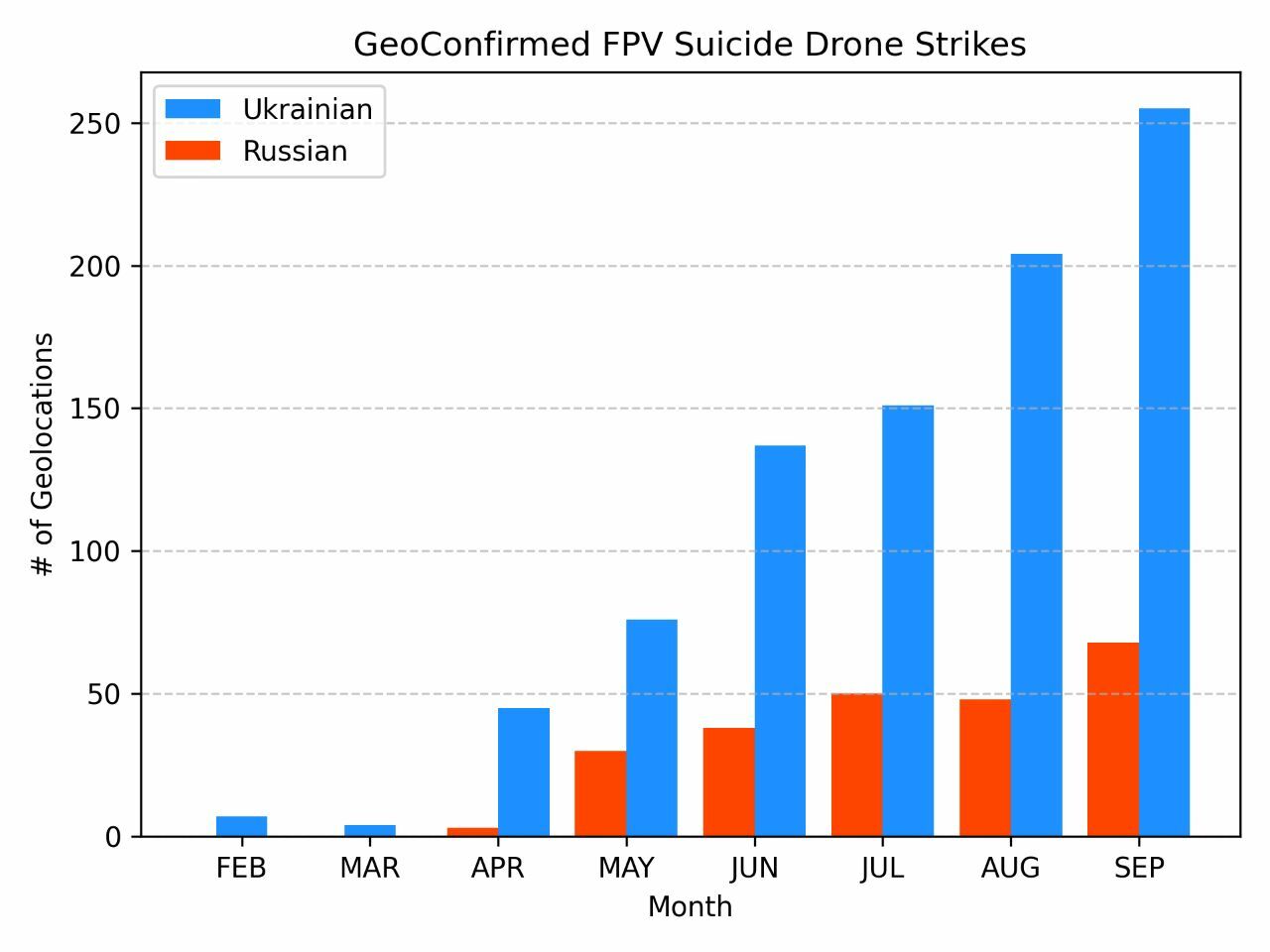
Please note that Western partners do not provide Ukraine with these drones because they simply do not have them in stock. We hope that Ukraine will be able to increase the production of this type of UAV and improve its quality, primarily by extending the flight range, making it even more effective at destroying the occupier's army.
If possible, we urge you to donate to Ukrainian foundations involved in the production and procurement of FPV drones.
Thank you for your time ❤️ Glory to Ukraine! 🇺🇦