

He realized that Afghanistan needed to cooperate with the West — and paid for it with his life.
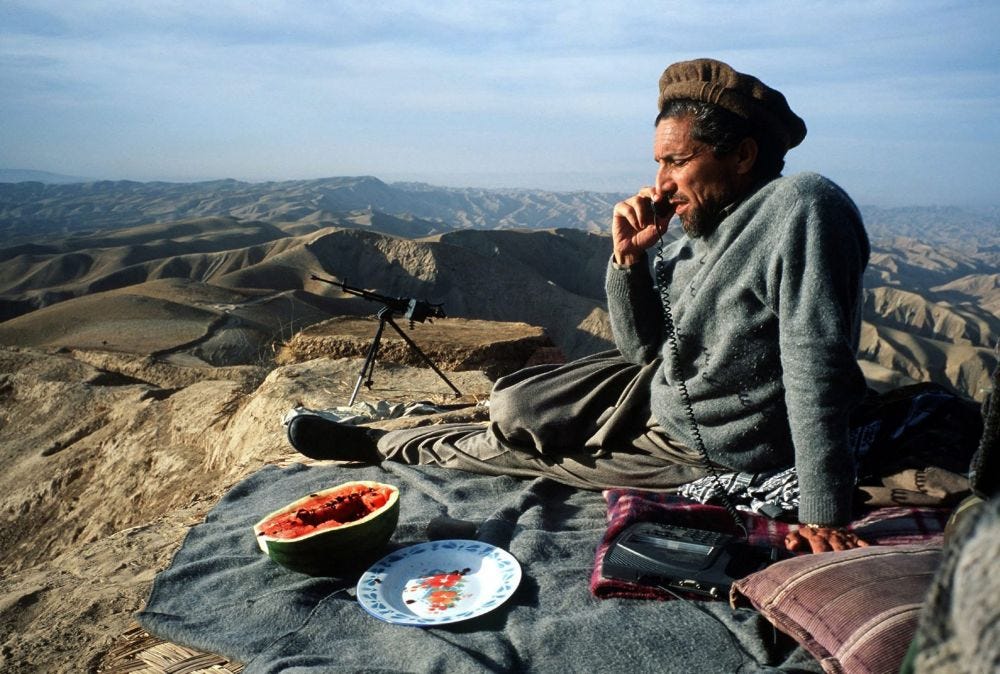 Ahmad Shakh Massoud. Public domain
Men carrying Kalashnikov rifles were a familiar sight in the villages of Afghanistan’s Panjshir Valley. The sound of artillery and explosions echoed through the mountain passes, reminders that the country had been at war for nearly a decade after the Soviet invasion of 1979.
Yet every morning, another scene unfolded that seemed almost impossible for a country frozen in time around tribal customs and strong religious requirements: girls walking to school along boys and women leaving their homes for work.
This is a story about one man who deserves to be remembered not just for his military achievements but especially for his contributions four decades ago to see one day a free, democratic Afghanistan.
Afghanistan in the 1980s was a deeply conservative, religious society where tradition shaped everyday life and armed fighters were often more visible than civil servants. It still is these days. But back then, in this corner of the country, education and civilian life continued despite the fighting.
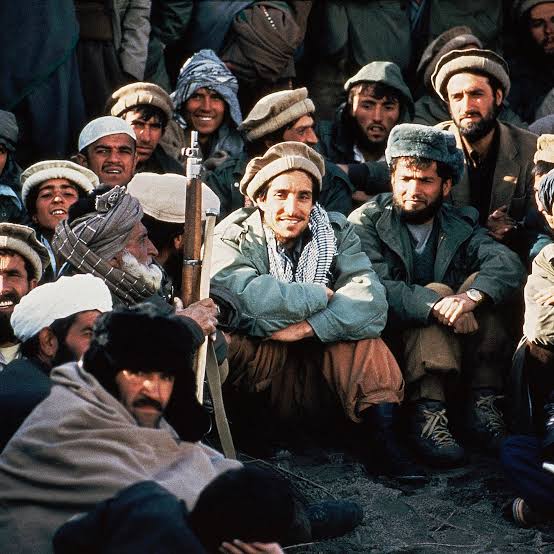 Young Massoud in the 1980s. Public domain
The valley was controlled by a disciplined Mujahedeen force led by a young commander named Ahmad Shah Massoud. A devout Muslim and a respected military strategist who became legendary for resisting the Soviet army, earning the nickname the “Lion of Panjshir”, he also deserves recognition for something very few Afghan field commanders had attempted before or after him: building civilian institutions while simultaneously running a military campaign.
Massoud ordered the public institutions in Panjshir Valley to reopen and appointed a civilian administration to oversee the routine public services. This was remarkable because Massoud did something rare in Afghanistan’s wartime history: a commander with near-total military authority deliberately separated military command from civilian governance and willingly devolved powers to local leaders.
His directive also pissed off anti-reform Islamic mullahs who in spite of their enormous influence in Afghani society did not participate in the management of schools, courts or public services simply by virtue of their status.
So, schools remained open. Children studied math and calligraphy while their fathers were in missions in the mountains nearby. Girls attended classes at a time when in many other parts of Afghanistan traditional authorities increasingly argued that female education was unacceptable. Anyone willing to learn to read and write was encouraged to take a course, including adult residents, Massoud ruled.
Massoud understood the power of education and the need to give women a greater role in public life. Himself a graduate of the Franco-Afghan Lycée Esteqlal and fluent in French, Massoud saw education as the only way to transform Afghanistan.
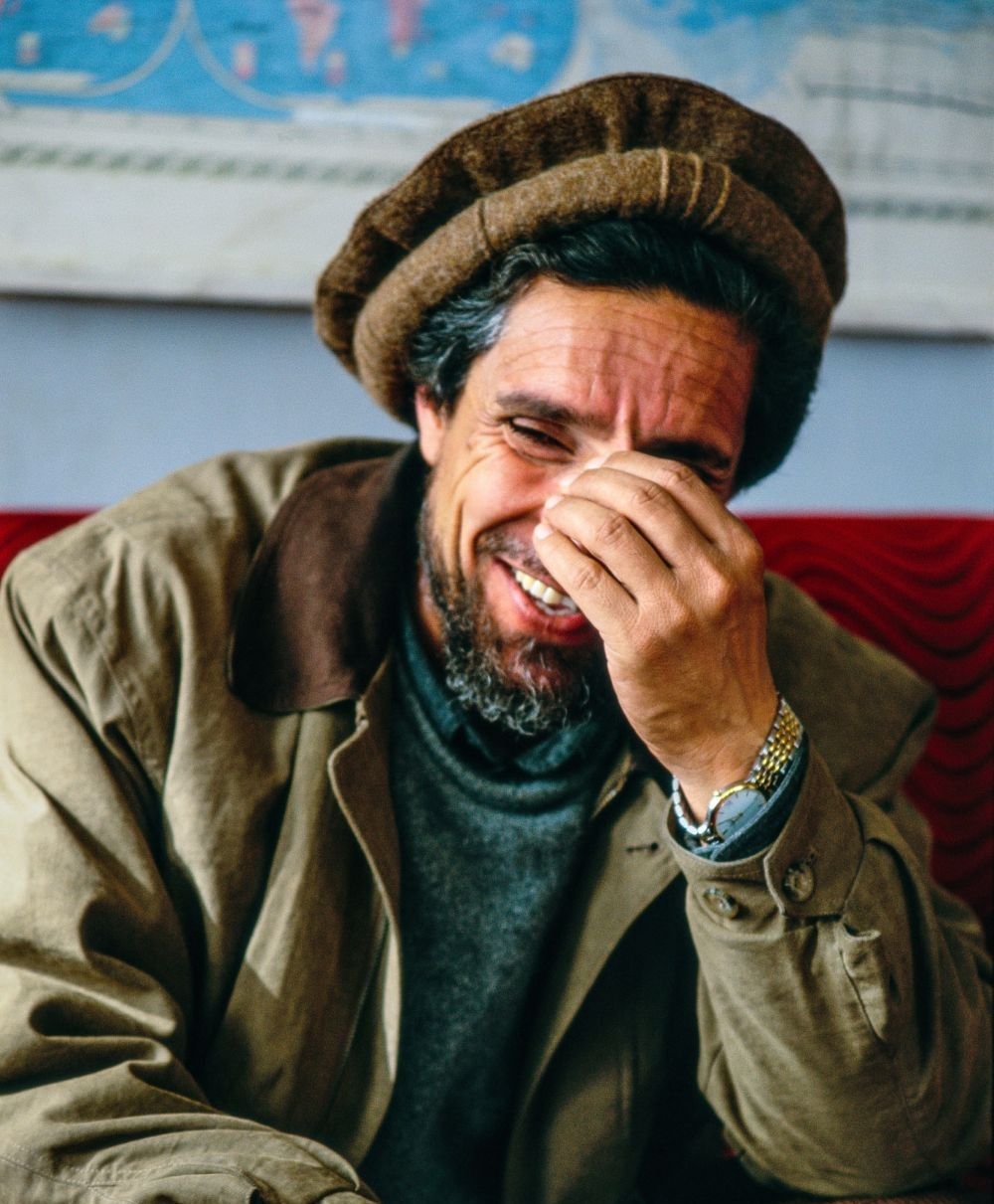 Ahmad Shakh Massoud. Public domain
Massoud also wanted women to play a bigger role in the Afghan society. In interviews, he argued that changing attitudes toward women would take generations, and that it could only happen through education.
In the territory under his control, not only did he allow women to take jobs — he asked local leaders to offer them jobs where staff shortages were critical. Years of war had created thousands of wounded fighters and civilians, while Afghanistan had only a tiny number of trained medical professionals compared with Western countries. Hospitals needed doctors, nurses and caretakers.
In the Panjshir Valley, women continued to play a role in caring for the wounded and maintaining basic healthcare services. Their work was not simply a symbolic gesture or a political statement — it was a practical necessity that helped save lives.
A country fighting for survival could not afford to exclude half of its population from helping those who needed it most, Massoud believed.
Massoud’s warning on al-Qaeda
Stating that Ahmad Shakh Massoud was a democratic thinker would be an exaggeration. Nor was he a Western loyalist. He was pragmatic.
He understood that Afghanistan’s future could not be built only through military victories. The country had spent decades caught between foreign powers, ideological movements and internal conflicts. A true independence does not mean isolation — the country needed international support, access to knowledge and cooperation with countries that could help rebuild a functioning state.
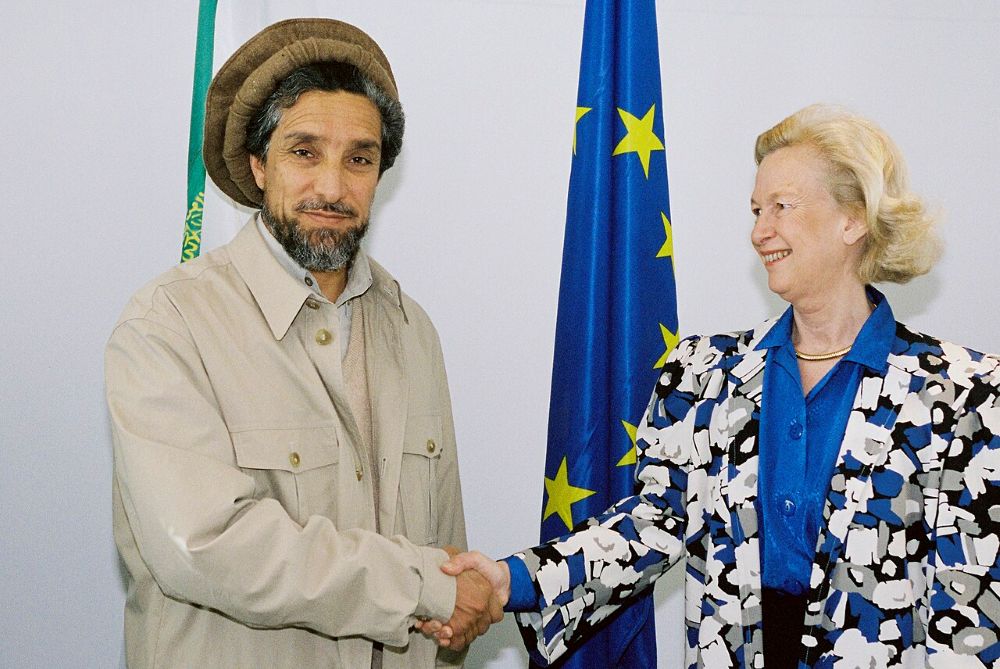 Massoud and European Parliament President Nicole Fontaine in April 2001. Wikipedia
Unlike many Afghan commanders who viewed the outside world mainly through the lens of military aid, Massoud the politician increasingly sought political support and dialogue with Western countries. He believed that Afghanistan’s struggle was no longer only against Soviet forces or rival factions inside the country. The rise of extremist movements and the growing influence of Osama bin Laden’s al-Qaeda network posed a threat that Afghanistan could not handle alone.
Between 1992 and 2001, General Massoud — called by media the “Napoleon of Afghanistan” — served the Afghani government as the vice-president and defense minister. In this capacity, traveled to Europe in April 2001 and addressed the European Parliament, warning politicians that Afghanistan had become a sanctuary for international terrorism. He urged Western leaders not to ignore what was happening under the growing Taliban influence — against which he organized an armed resistance — and argued that supporting a more inclusive and stable Afghanistan was in their own interest.
In Strasbourg, he also revealed to European MPs and the whole world that al-Qaeda were preparing a terrorist attack in a Western country — most likely in the United States.
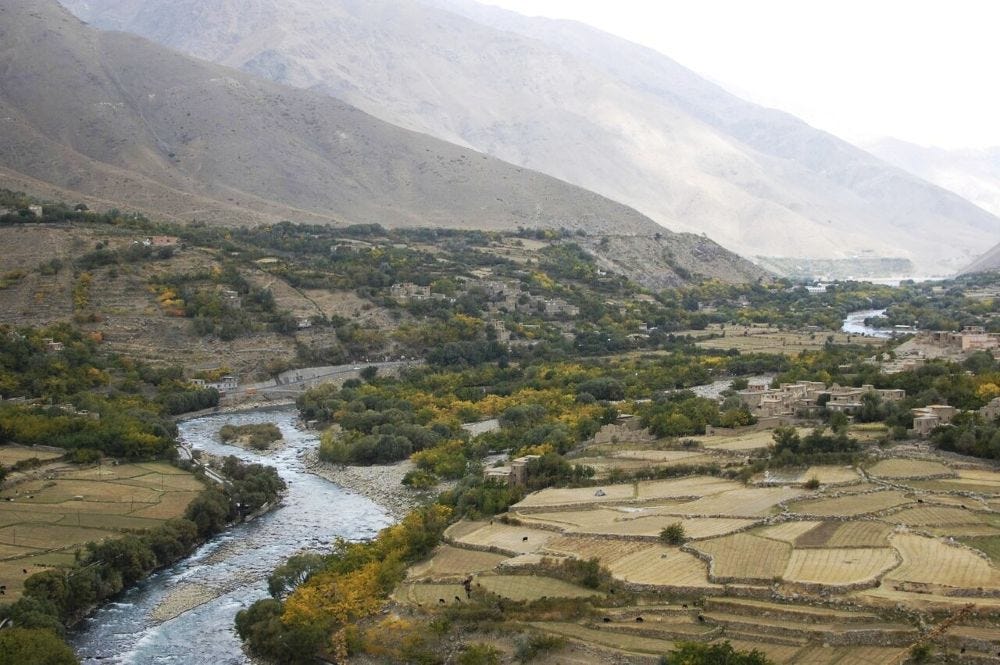 View of Panjshir Valley from Massoud’s Tomb. Wikipedia
His speech was met with polite applause, but few paid attention to his words at the time.
Five months later, on 9 September 2001, two al-Qaeda operatives posing as journalists assassinated Massoud during a fake interview.
Just two days later, al-Qaeda carried out a series of devastating attacks in the United States.
Massoud did not live to see the United States and its allies intervene in Afghanistan — the very cooperation he had spent years urging. Nor did he witness the brief return of girls to classrooms and women to workplaces after the Taliban’s fall, or their disappearance again when the movement regained power two decades later.
Perhaps that was a blessing. He never had to witness the West’s abandonment of Afghanistan he had fought to build.
But the dream has not died just yet. Today, Ahmad Shah Massoud’s son, Ahmad Massoud, carries on his father’s struggle, leading the National Resistance Front against Taliban rule.
***
The media industry has a curious way of treating experience. After more than 25 years in journalism, I’m a bit too old to chase every breaking story, a bit too expensive for many editorial budgets, and nowhere near retirement age. I still have stories to tell. If you think they’re worth reading, consider buying me a book. It won’t make me rich — but it will help me keep researching and writing. Buy Me a Coffee (https://buymeacoffee.com/newscafe) and Medium (https://medium.com/@sensmedia.srl) are my only sources of income right now.