

Sergey Lavrov's name appears more than 140 times in the Epstein Files.
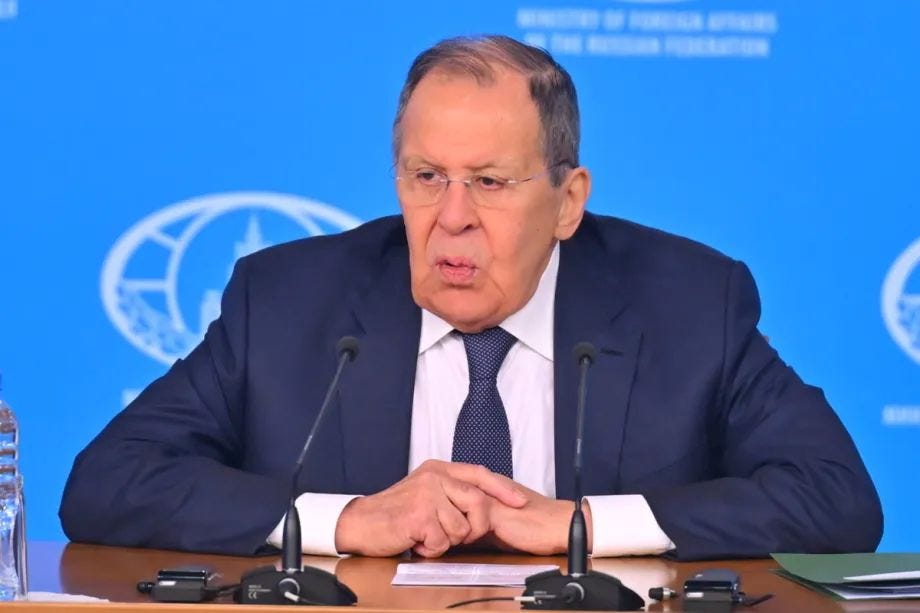 Sergey Lavrov. Credit: Middle East Monitor
The files connected to Jeffrey Epstein's investigation contain dozens of references to Sergey Lavrov, Russia's longtime foreign minister, revealing that convicted child sex trafficker and financier closely followed his activities and maintained contacts with people inside Lavrov's diplomatic circle.
The following is a factual account based on investigative revelations about the released documents, without additional commentary or interpretation.
According to photographs analyzed by independent Russian media, Lavrov's name appears at least 142 times in the documents — in correspondence, internal notes and summaries prepared by Epstein's team. The references range from diplomatic issues involving Russia's relations with the West to private communications involving people who had access to senior Russian officials.
But one exchange from October 2018 stands out.
It involves Epstein and Miroslav Lajčák, who at the time was Slovakia's foreign minister and had previously served as the country's ambassador to Russia. The conversation touches on young women from Moldova, Epstein's contacts with Russian diplomats, and an upcoming meeting between Lajčák and Lavrov.
According to the released correspondence, Epstein and Lajčák discussed "pretty girls" from Moldova and which of them "should go to Miro." During the same exchange, Epstein mentioned receiving a gift from Vitaly Churkin, Russia's former ambassador to the United Nations, and referred to a photograph of Churkin together with Lavrov.
Lajčák then wrote:
"Let's see what Lavrov gives me tomorrow."
The message was followed by a meeting between Lajčák and Lavrov the next day. In subsequent correspondence, Lajčák reportedly told Epstein that he had spent three and a half hours with the Russian foreign minister and that the meeting ended with cigars.
The released documents do not explain what Lajčák meant by the phrase about what Lavrov would "give" him. They do, however, place the remark directly within a conversation that had already included discussion of Moldovan women.
That combination of messages raises questions about the nature of the relationships Epstein cultivated among political elites and about the role of personal networks surrounding some of the world's most powerful officials.
Epstein's interest in Lavrov and Russian elites
The Moldova exchange is not the only place where Lavrov appears in Epstein-related documents.
The files reportedly show Epstein following Lavrov's diplomatic activities, including his negotiations with U.S. officials over Syria. One internal summary prepared by Epstein's team highlighted a meeting between Lavrov and then-U.S. Secretary of State John Kerry as a significant event.
Lavrov also appears in communications involving other senior figures connected to Russian diplomacy.
In 2016, Epstein exchanged messages with Vitaly Churkin, Russia's ambassador to the United Nations until his death in 2017. The correspondence concerned assistance for Churkin's son, Maxim, including help with adapting to life and finding employment in the United States.
Epstein emphasized that the assistance should remain confidential, while Churkin reportedly described him as an "excellent teacher" and invited him to his home.
A pattern of access to global elites
The Epstein files have revealed contacts with politicians, diplomats, businessmen and influential figures around the world. The documents do not establish that every person mentioned was involved in Epstein's criminal activities, nor do mentions alone prove wrongdoing.
But they provide insight into the extraordinary access Epstein sought — and sometimes obtained — among people at the highest levels of politics and international diplomacy.
The references to Lavrov are significant because they show Epstein's attention to one of Russia's most powerful officials and his connections with people operating close to the Russian foreign policy establishment.
The 2018 exchange involving Lajčák and the discussion about Moldovan women adds another troubling detail: a conversation where diplomatic contacts, Epstein's private world and references to young women appear in the same chain of communication.
Sergey Lavrov never explained why his name appear in the files and dismissed allegations of close relationships with Epstein.
British tabloid media alleged that the Epstein network had been used by Russian intelligence as “honey traps” in order to collect kompromat about politicians and influential persons around the world. While the sex trafficker indeed met FSB officials on several occasions, there is no evidence of his cooperation with the Kremlin.