

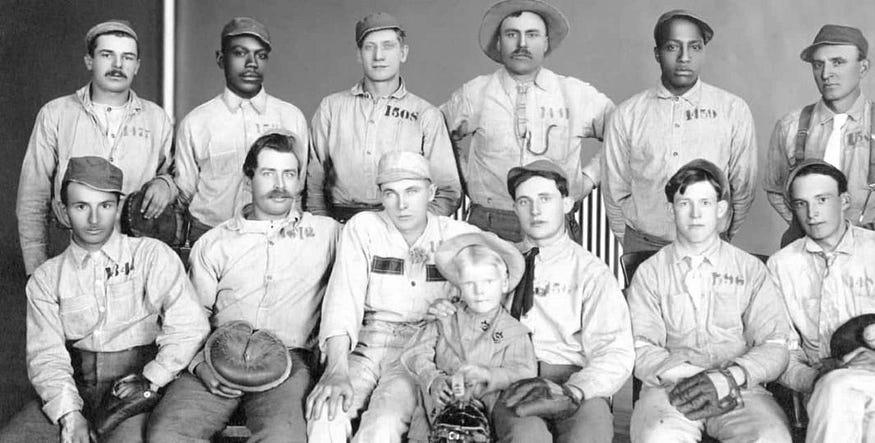
 Captain George Saban, standing the 4th from left; lead player Joseph Seng, sitting the 2nd from left. Credit: Wyoming State Penitentiary
Several months ago, I watched again the 2005 sports comedy The Longest Yard, where a disgraced former professional American football quarterback assembles a team of inmates in prison to play against a team of guards. This movie, starring Adam Sandler, Chris Rock and James Cromwell, intrigued me to the point of deciding to look for the true story behind the screenplay (by Tracy Keenan Wynn, based on a story by Albert S. Ruddy).
The plot, as I learned during my research quest, may have been based on a real-life association football game in 1942 between German soldiers and Ukrainian prisoners of war during World War II, known as the Death Match. The striking resemblance, however, wasn’t convincing enough and after additional digging, I stumbled upon a 2014 book titled “Death Row All Stars: A Story of Baseball, Corruption, and Murder”.
The book’s storyline is closer to The Longest Yard screenplay, though involved a different sport.
So, I hurried to grab the book’s digital version from Google Books.
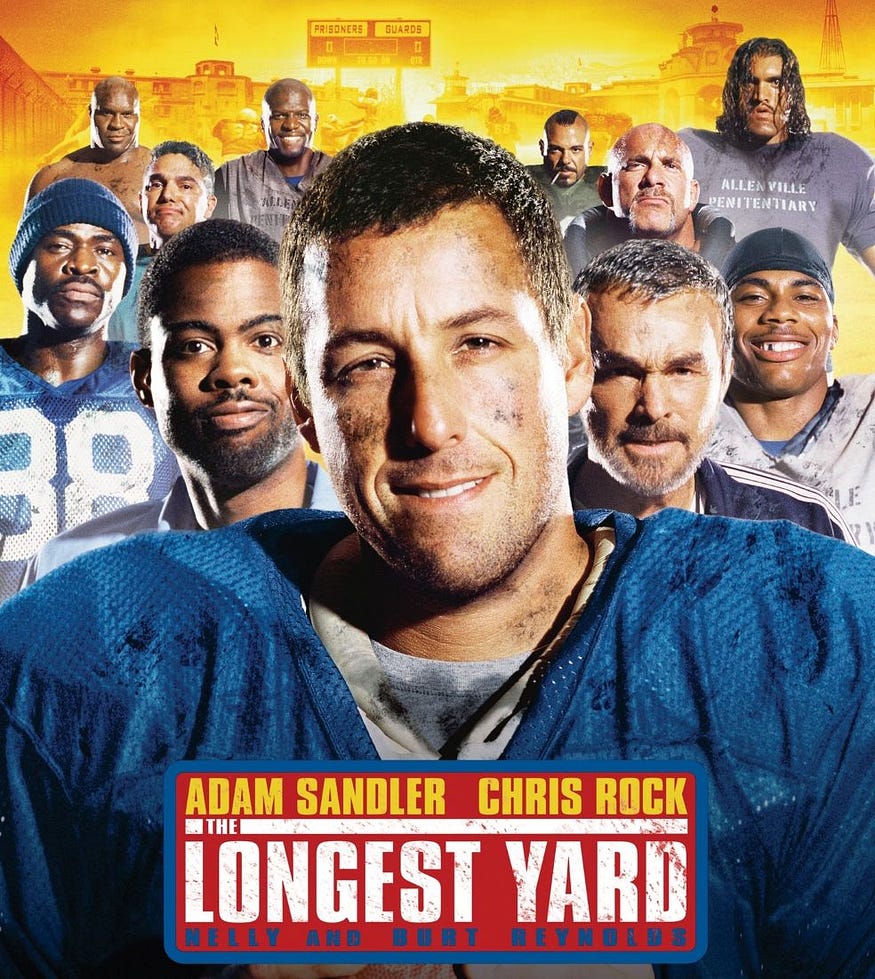 A fragment of the movie poster.
Death row players
The team immortalized in the book comprised death row inmates at the Wyoming State Penitentiary. It was called All Stars and was created by order of the prison’s warden, Felix Alston, a man known for his more lenient attitude toward inmates compared with his predecessor.
After taking office, Alston allowed prisoners to exercise outdoors and soon noticed that some of them had notable athletic talent. A devoted baseball fan, Alston persuaded Wyoming Governor Joseph Carey to authorize the creation of a baseball team inside the penitentiary. Carey — an enthusiast of gambling — quickly saw an opportunity to make money by betting on games involving inmate players.
The team played its first official game in the summer of 1911, according to Chris Enss and Howard Kazanjian, authors of Death Row All Stars: A Story of Baseball, Corruption, and Murder. The All Stars defeated the opponent team of a local supply company by a score of 11–1.
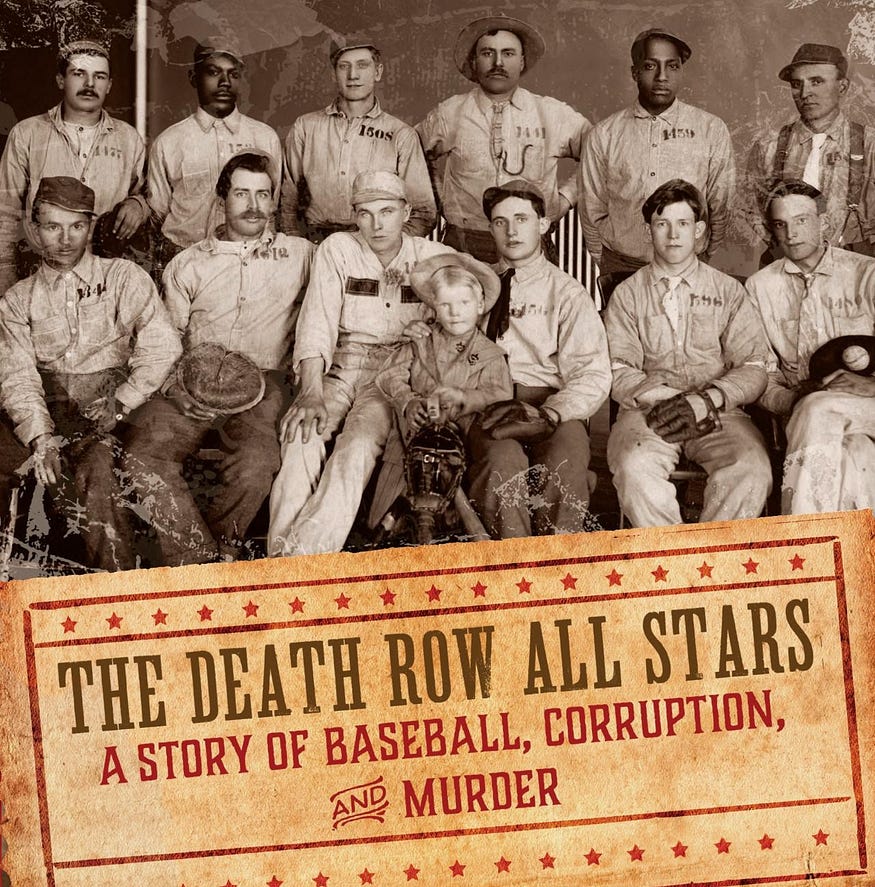 A fragment of the book’s cover. Google Books.
As games multiplied, so did the players’ fame.
Before long, the inmates’ names appeared in state newspapers and then in national ones. Each victory brought growing public sympathy and positive headlines in the press, even though most of the players had been convicted of murder, rape, robbery, assault, or aggravated theft.
The team captain, George Saban, and its star player, Joseph Seng, for example, had both been tried for murder. Saban received a 25-year prison sentence, while Seng was sentenced to death by hanging. Saban killed a man who had tried to seize his land; Seng, a former guard, murdered the husband of his lover, allegedly to be with her.
The two men were unofficially promised reduced sentences if they won as many competitions as possible and thus enriched both the governor and the prison warden. The captain was even allowed to leave the prison during the day, escorted by an armed guard, to promote the team in local bars, helping to drive up betting volumes.
The other players also enjoyed privileges unavailable to ordinary inmates: larger food portions, more time outdoors — mainly for training — and a level of respect from prison administrators and guards.
Envy and arrogance, the seeds of collapse
Nothing lasts forever, a saying goes. Toward the end of the year, the situation began to unravel. Players learned of the alleged promise made to the favoured inmate and turned against Seng. On the day his execution was scheduled — an execution that did not take place due to the team’s packed game calendar — some teammates attempted to kill him.
The assassination attempt jolted Warden Alston into action. He immediately ordered stricter security measures and restricted movement within the prison.
Meanwhile, Captain Saban proved unable to adapt his leadership style, relying instead on yelling at teammates during breaks for serious on-field mistakes — an approach that demoralized the players.
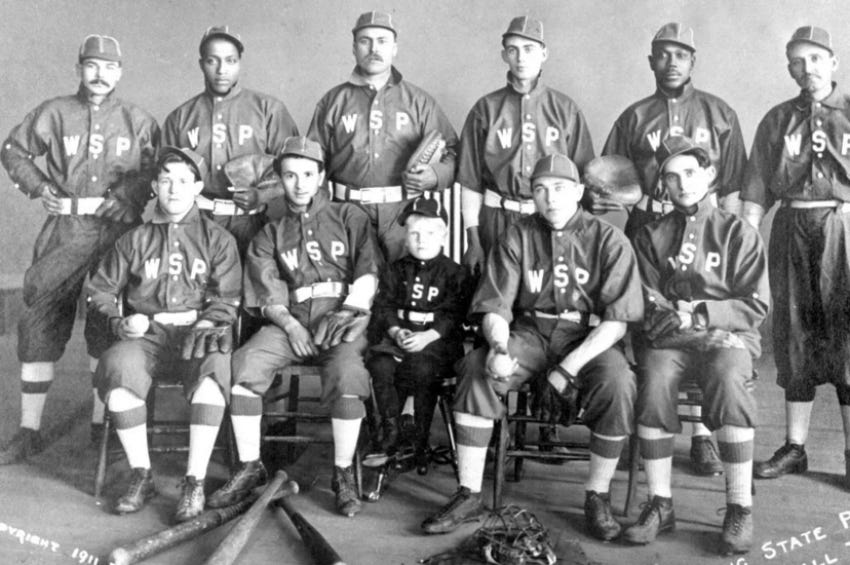 A group photo of All Stars players in 1911. Credit: Wyoming State Penitentiary
Rumours and negative reports about events inside the penitentiary spread rapidly across the state. Citizens began to suspect Governor Carey of corruption, accusing him of profiting from inmate gambling in exchange for lighter prison conditions — a clear violation of the law.
Under mounting pressure, Carey launched a public campaign against gambling, and Alston was forced to bring the prisoners’ athletic careers to an end. The Wyoming State Penitentiary club — the only one in the United States at the time to include black players — was dissolved by the end of 1911.
Joseph Seng was executed on 24 May 1912, at the age of 32, in front of a large crowd of reporters — exactly one year after the All Stars were formed. George Saban escaped from prison in 1913 and was never heard from again.
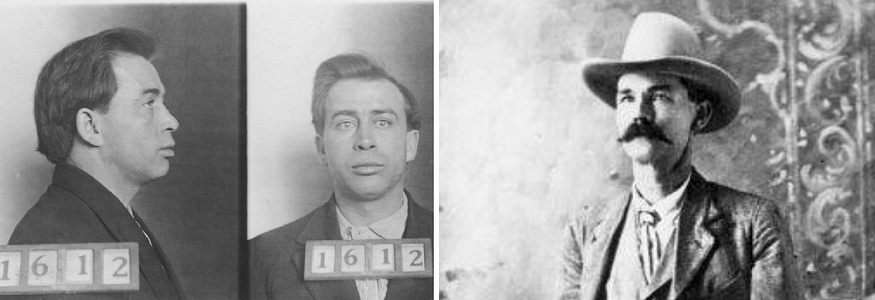 Seng, left, and Warden Alston. Credit: Wyoming State Penitentiary
Organized sports involving incarcerated people still exist in the United States today, but they are very different from the full-blown competitive teams vs. outside opponents like in the above-mentioned movie.
Many facilities offer informal team-based recreation as part of general inmate activities. These are typically internal programs where inmates play against each other, rather than against guards and definitely not in professional leagues. Formal competitive sports teams playing against outside opponents (for example, other prisons or civilian teams) — like in The Longest Yard — are extremely rare or nonexistent due to security, liability, and logistical challenges.
***
This story was originally published on Medium. You can also follow me there.
***