

Why did the Soviet Union conceal a nuclear disaster for decades — and why does Russia still prefer to forget it?
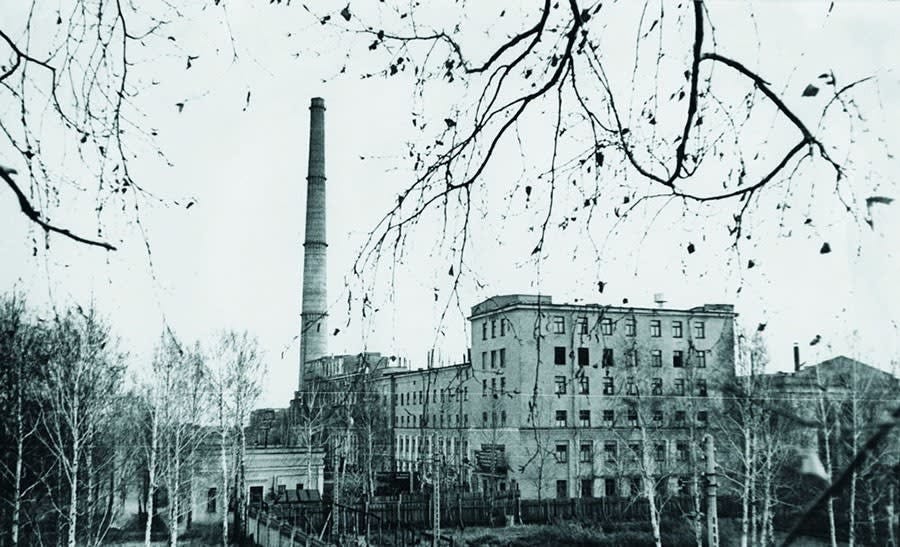 The Mayak nuclear complex (specifically Plant 20/chemical plant buildings).
On 26 April 1986, Reactor 4 of the Chernobyl Nuclear Power Plant near the town of Pripyat ran into a malfunction and exploded. One of the worst nuclear accidents in human history spread radioactive contamination across Ukraine, Belarus, Russia and large parts of eastern and central Europe.
A few station staff died during the explosion, several dozen workers and firefighters lost their lives to severe burns during relief operations within days and weeks, hundreds of military rescuers, volunteers and Pripyat residents died within a year from radiation sickness and overdose.
 CLICK ON IMAGE TO OPEN THIS STORY
At least 16,000 civilians across the continent died from cancer and other radiation-associated diseases in the following decades.
Thousands of infants and children included.
These are the figures Moscow has (unwillingly) accepted for official record, meaning that the true death toll caused by the Chernobyl disaster is probably higher.
Although the long-term consequences are difficult to assess, according to the International Agency for Research on Cancer, thousands more will die because of Chernobyl in the years to come.
The numbers could be lower, if the leadership of the former Soviet Union had been transparent from the beginning about the size of the problem, promptly deploying specialized units, evacuating all civilians from the area, and immediately warning the neighboring countries about the radiation risks.
And Chernobyl wasn’t the first nuclear accident in human history, as it is widely believed (spoiler: not even the second).
Before Chernobyl, there was Mayak.
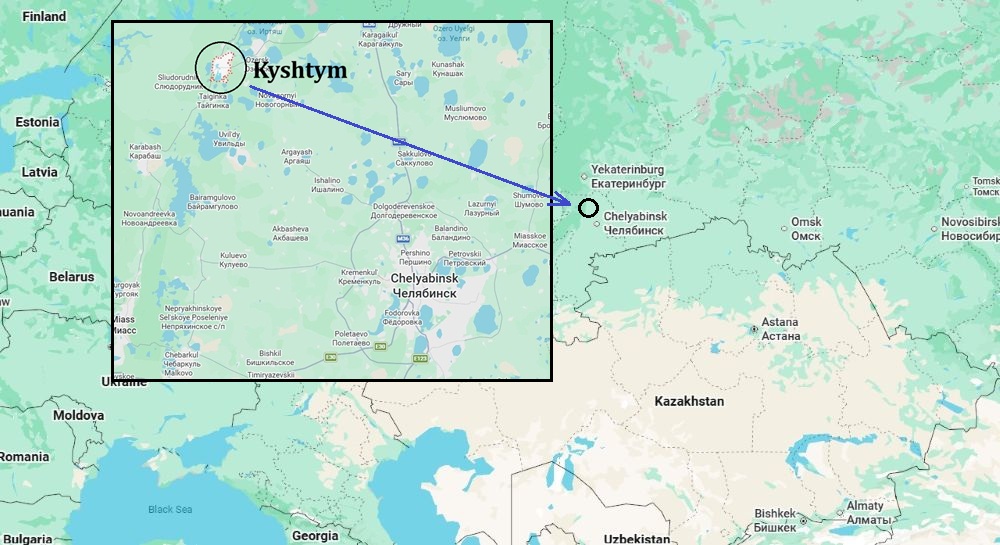 Location of Kyshtym on the Russia map.
What happened at Mayak
On 29 September 1957, a powerful explosion occurred at the Mayak Production Association near the town of Kyshtym in the Chelyabinsk region of the former Soviet Union. It was a dual-purpose facility experimenting the industrial use of nuclear energy for civilian projects and pursuing a military program.
More specifically, it operated a plutonium reprocessing production plant for nuclear weapons.
The explosion occurred in a storage tank of high-level radioactive waste. The cooling system for one of the underground tanks failed, causing the waste to heat up and explode. The explosion blew off the tank's concrete lid and released radioactive material into the atmosphere.
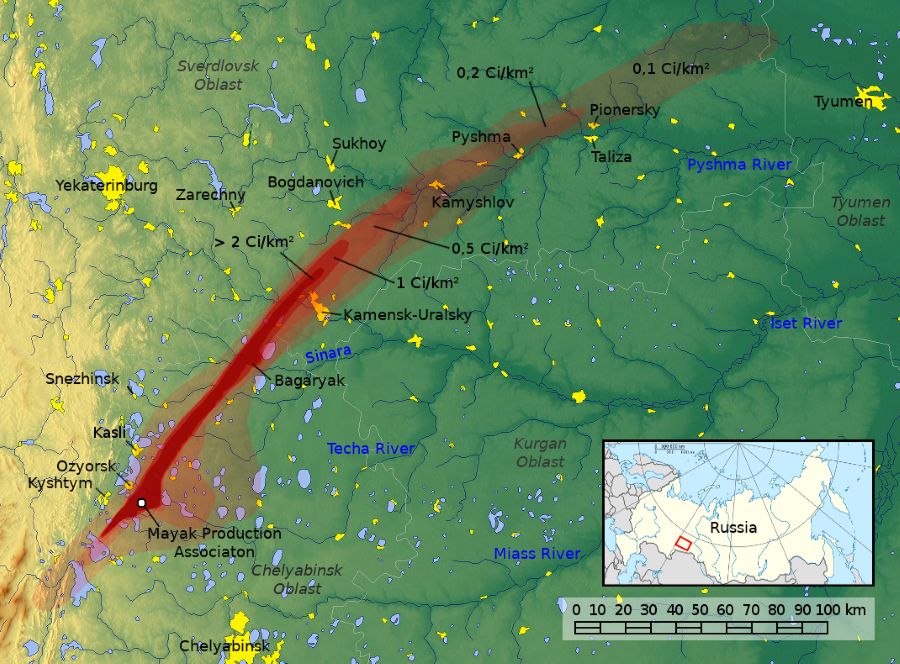 A map showing the East Urals Radioactive Trace (EURT), the radioactive plume from the Kyshtym disaster.
Kyshtym lies 90 kilometers north-west of Chelyabinsk, the seventh-largest city in Russia today, which itself is approximately 150 kilometers north of the Kazakhstan border.
A research paper published in the Journal of Radiological Protection in 2017 acknowledges that approximately 270,000 people across 217 settlements in the wider contaminated region were affected by the accident. Only 10,200 were evacuated, mainly those who lived close to the site and received the highest dozes.
The explosion released approximately 20 million curies (740 petabecquerels) of radioactive material. By comparison, Chernobyl released about 140 million curies of radioactive substances, or seven times more than Mayak.
About 90% of radioactive material settled near the facility, while the remaining 2 million curies spread beyond the site, contaminating a vast area of the southern Urals.
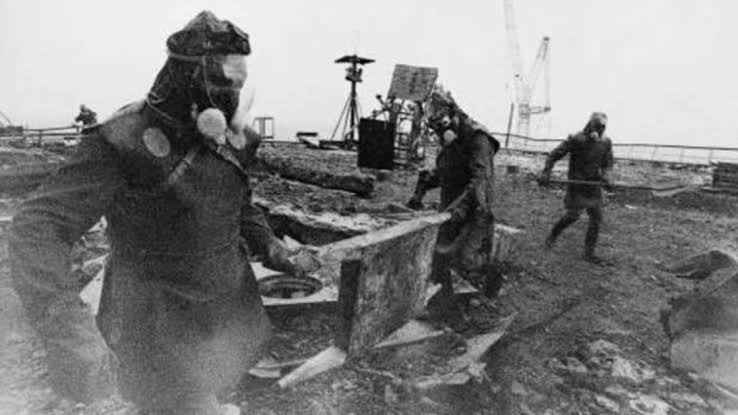 A Soviet archives photo depicting relief workers cleaning up the explosion area.
The 1957 Kyshtym disaster contaminated about 23,000 square kilometers (8,880 square miles) across the Chelyabinsk, Sverdlovsk and Tyumen regions in the Russian territory of the Soviet Union. The contaminated zone, known as the East Urals Radioactive Trace, stretched roughly 300 kilometers long and 30–50 kilometers wide.
The cleanup operation took at least two years, until 1959, with around 38,500 people being involved in the remediation efforts – many of whom received fatal or high doses of radiation. In addition, another 30,000 people living along the Techa River were also exposed to those releases.
Health consequences
The consequences lasted for decades. Sixty years after the disaster, the researchers found that cancer occurrence in the Chelyabinsk Region is among the highest in Russia. A cohort of about 21,400 people living in the contaminated area has been studied for decades.
The documented medical consequences included chronic radiation syndrome, blood disorders such as cytopenia, granulocytopenia, lymphocytopenia and thrombocytopenia, and neurological disorders including autonomic dysfunction, persistent fatigue and organic damage to the nervous system.
Locals and their offspring also showed increased risk of leukaemia and solid cancers, mainly due to the contamination of the Techa River.
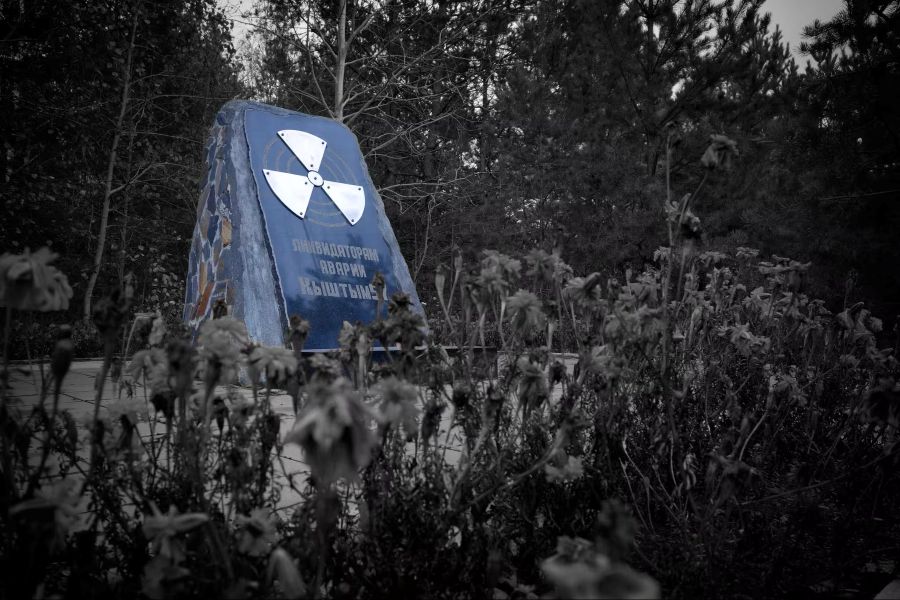 A memorial for the relief workers who died as a result of exposure to radiation in Kyshtym in 1957–59.
As if not enough, a severe drought in 1967 partially dried out Lake Karachay – where radioactive waste from Mayak had been stored – and strong winds carried radioactive dust from the exposed lakebed into surrounding areas, contaminating approximately 1,800–2,700 square kilometers of land and water reservoirs.
The dispersed radioactivity was estimated at around 595 curies or 22 terabecquerels, thankfully just a fraction of the 1957 release.
Acknowledgement
It is often called the "first" major nuclear catastrophe because it happened decades ahead of Chernobyl, but it was kept secret for 32 years. It remained classified – or at least unknown to the public – even after Mikhail Gorbachev’s Pekestroyka and Glasnost reforms started in 1985.
The Soviet government officially acknowledged the disaster in 1989, partly due to pressure from survivors following the Chernobyl nuclear accident and declassification of Soviet archives.
Moscow rarely felt the need to be transparent with its public. Responsibility and accountability were never among Russia’s virtues. In the Kremlin’s political tradition, state secrecy often seems to enjoy something close to sacred status, even when the information being concealed concerns the lives and health of ordinary citizens.
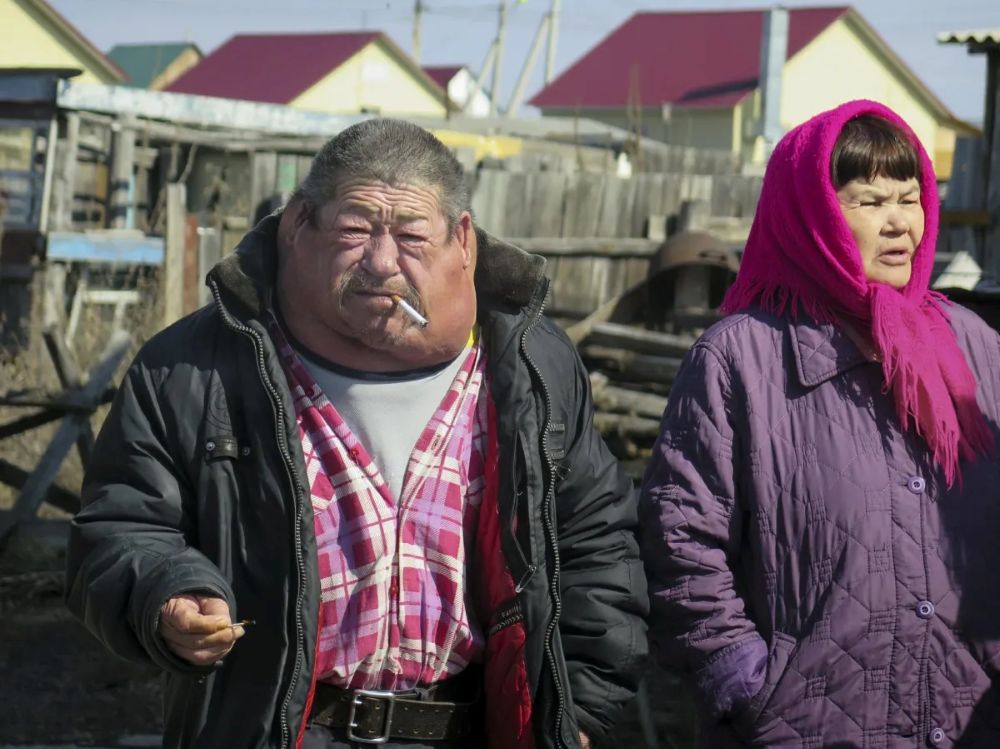 Vakil Batirshin and his wife Minfiza in the village of New Muslyumovo, Chelyabinsk Region, in April 2016. He had swollen lymph nodes from radiation-related illnesses. Image: AP
The true reason the Mayak accident was classified was not related to the human loss or environmental damage. It was about politics. The nuclear arming race against the United States was just beginning and a failure like Mayak profoundly embarrassed the ruling Communist Party, which portrayed Soviet science and engineering as unrivalled.
Mayak happened because of a design flaw in the cooling system.
Years later a design flaw in a nuclear reactor would trigger the Chernobyl disaster.
***
This story is free. Follow me for more. If you feel you can contribute to my efforts, consider becoming a supporter or a member.