

SpudCell is still primitive but it can feed, grow and reproduce like natural cells.
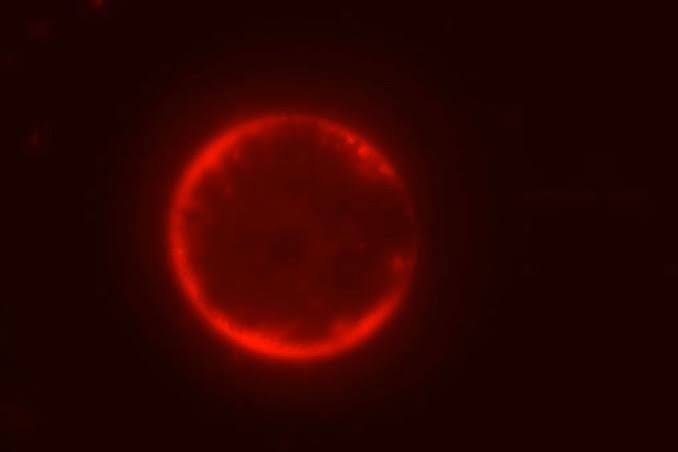 Courtesy to Biotic.org
Cells are the building blocks of life — we know it from the first biology lessons in school. A human body contains roughly 37 trillion cells, on average, which are organized into thousands of specialized types that work together to keep the organism alive.
Over the past 100 years, we learned how cells function, grow, repair and die. Yet despite decades of research, scientists still do not fully understand everything a cell contains or how all of its parts collaborate.
That gap was recently narrowed by a team of researchers from the University of Minnesota in the United States, who figured out how to build a cell from scratch and possibly to redesign it. Synthetic biologist Kate Adamala and her colleagues created the cell — which they named SpudCell — from nonliving chemical components that can feed, grow and reproduce.
In an official statement describing their work, Adamala said SpudCell qualifies as a form of life but is extremely primitive and fragile, and cannot exist independently. However, it is a scientific breakthrough because it demonstrates something that was previously possible only inside natural biology: chemistry can be assembled into a system that behaves, at least in some fundamental ways, like a living cell.
A cell assembled like a machine
Natural cells are very complicated. A typical mammalian cell has tens of thousands of different molecules. SpudCell, by contrast, contains only about 150 to 200 different molecules. Its genome has roughly 90,000 base pairs, compared, for example, with about 4.6 million in E. coli.
It is therefore less like a new organism and more like a minimal experimental machine, the researchers put it bluntly.
Adamala has described it as an “incredibly wimpy organism” that currently does little more than consume nutrients and occasionally produce a daughter cell. It needs to be fed from outside and kept at about 30 degrees Celsius. Under those conditions, it takes roughly 12 hours to reproduce. E. coli can do the same thing in about 30 minutes.
SpudCell cannot even manufacture proteins, relying instead on ribosomes taken from E. coli and supplied externally. In other words, it means it is not self-sufficient.
 CLICK ON IMAGE TO OPEN MORE STORIES
But that weakness is also the next station to continue the journey from. Now that they recorded what exactly is happening to the cell, the researchers can change individual components and observe how SpudCell reacts. By knowing the complete “ingredient list” a biological cell needs and the precise concentrations of the chemicals and molecules, the team can deliberately engineer rather than simply modify the cell as it happens during millions of years of natural evolution.
Adamala emphasizes SpudCell is only a beginning, providing a basic structure on which future researchers can build.
So, is SpudCell a form of life?
The lack of “independence” would make many scientists cautious about calling SpudCell a lifeform. They might be right: without receiving the essential components, including ribosomes, it cannot continue its existence, let alone reproduce. It also does not truly evolve on its own — the change is induced externally.
But nonetheless it is an important step toward answering the much bigger question of where life begins.
Yuval Elani of Imperial College London described it as a milestone on the road toward understanding whether chemistry can be organized convincingly enough for us to call the result life. Tom Ellis, also from Imperial College, said the work could help establish the minimum requirements for life and shed light on how life might originally have emerged from chemistry.
Why build an artificial cell anyway?
Besides experimental curiosity, there is a practical aspect. Scientists have been engineering natural cells for decades to crack the code of diseases. One famous example is the use of genetically modified E. coli to produce human insulin.
Synthetic cells could take that idea much further.
Instead of starting with an organism shaped by billions of years of evolution and trying to modify it, scientists could eventually start with a minimal cellular “chassis” and design it for a particular purpose. To fight cancer or capture carbon from the atmosphere, for instance.
And because the cell is built from the bottom up, scientists could potentially design safety mechanisms into it from the beginning.
There are risks, too. Synthetic biology could make it easier to create organisms with unpredictable consequences, including dangerous ones such as “mirror bacteria,” whose molecular structures would be reversed from those used by ordinary life. Such bacteria would be a perfect life annihilation weapon. There’s literally no protection against mirror life on Earth.
Humanity has spent thousands of years studying life that exists in nature. Modern biotechnology taught us how to modify it. Synthetic bioengineering is a whole new thing: it’s teaching us how to assemble life.
And that may be the most important achievement of all.
SpudCell is not the only synthetic lifeform born out of research. In fact, its existence is owned largely to a 2010 study exploring the theoretical steps for creation of synthetic cells.
 CLICK ON IMAGE TO OPEN MORE STORIES
Exactly one year ago, in August, scientists at the Medical Research Council’s Laboratory of Molecular Biology say they’ve engineered bacteria whose genetic code is more efficient than any other lifeform on Earth.
Syn57, a bioengineered strain of E. coli, uses seven less codons than all life on Earth. A codon is a three-letter sequence in DNA and RNA, which delivers instructions for amino acids, a fundamental building block of life. For the past billions years, every known lifeform on our planet has used 64 codons.
That strain is self-replicating.
One last observation. When artificial intelligence emerged, many imagined that our next great creation would be an artificial mind — something that could become our intellectual successor. We assumed that if humans were ever to create something resembling a new form of life, it would probably think.
Instead, we may accept something much stranger.
Life does not need to look like us, or think like us, or even be particularly as complex as us. It can take different forms — and some of them can be built from scratch.
***
References and sources:
https://biotic.org/research/spudcell/
https://biotic.org/research/spudcell/spudcell-manuscript.pdf
https://www.biorxiv.org/content/10.64898/2026.07.01.735724v1
https://www.genome.gov/25520300/online-education-kit-1966-genetic-code-cracked