
Spring has arrived in the Alpine region, and although there’s still a definite nip in the air, spring is making its presence known in other ways. My beloved daffodils are putting on their annual show, along with the delicate flowers of the Euphorbia (wood spurge), Japanese flowering quince and bright yellow forsythia. The trees are beginning to break into bud, and everywhere you look there are signs that the season is turning.
In the meantime, while the garden wakes up and the days slowly warm, I thought it was the perfect time to revisit something wonderfully simple: porridge.
This week's story is about oats, childhood memories, old-fashioned breakfasts, Scottish traditions, and a rather splendid wooden implement called a spurtle. And, as you'll discover, porridge has a much more interesting story than you might imagine.
So pour yourself a cuppa, settle in, and enjoy.
 In the Alpine region, cold weather brings many things. Wind that whistles around the corners of the house, rain that seems determined to find every gap in your coat, and, if we're lucky, a dusting of snow across the hills. It brings evenings by the fire, thick socks, steaming mugs of tea... and porridge.
Now, there will be some amongst you who recoil in horror at the mere mention of the word. Others, particularly some of the younger generation, may be wondering what on earth I'm talking about. Porridge? Isn't that something old people ate before breakfast came in brightly coloured cardboard boxes?
Well... yes. And no.
Real porridge is simply rolled oats, gently cooked with water or milk until they become a creamy, warming bowl of comfort. Nothing fancy. Nothing imported from the other side of the world. Just honest old fashioned fare..
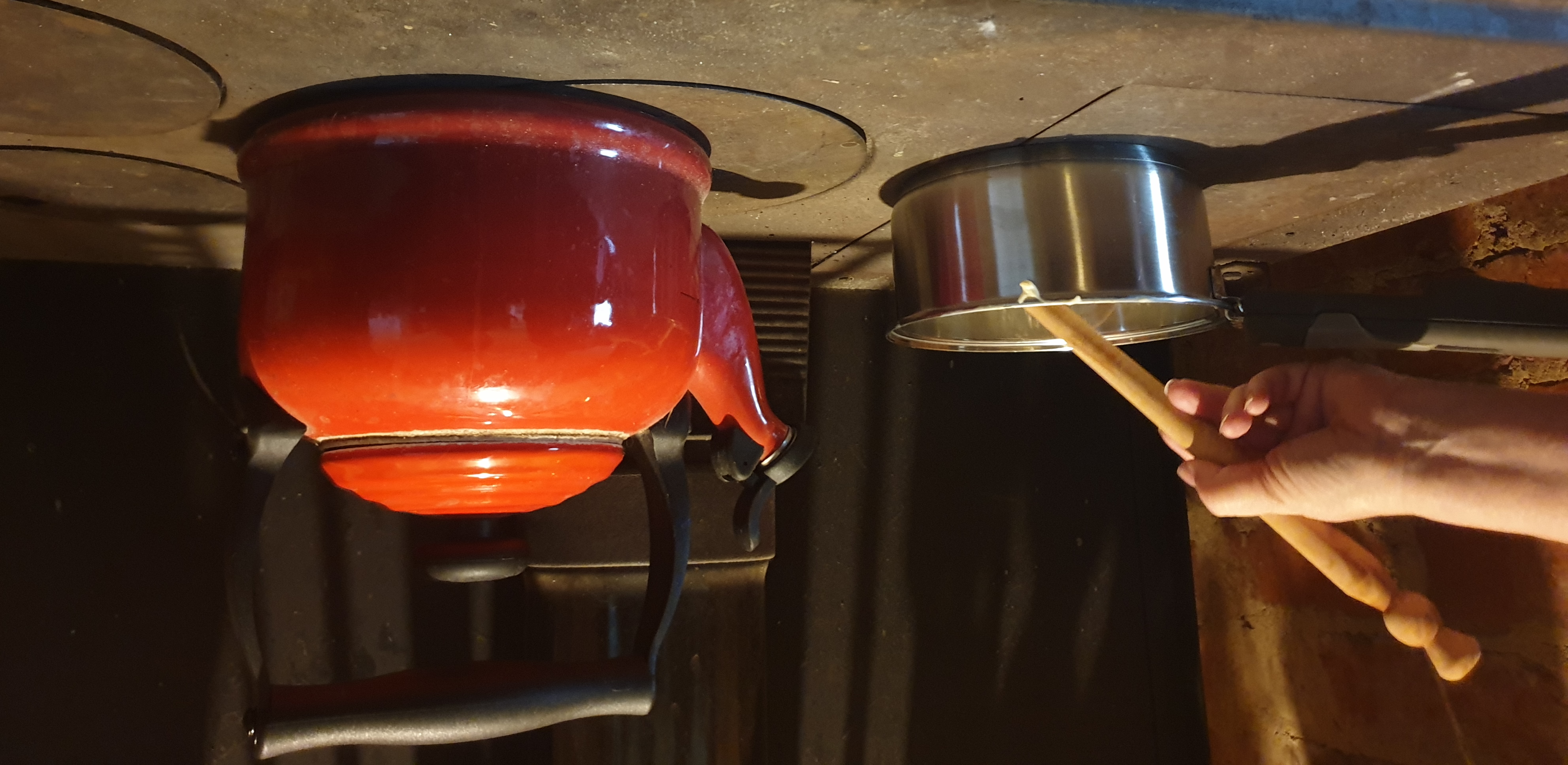
Growing up, porridge was part of our family's routine. Every evening, almost without fail, Mum would measure rolled oats into a saucepan, add water, and leave them quietly soaking on the stove overnight, ready for breakfast the next morning. It was just something she did. There was no recipe book, no television chef explaining the health benefits of soluble fibre, and certainly no social media influencers photographing their breakfast from three different angles. It was simply how winter mornings began.
By breakfast time the saucepan would be gently bubbling on the stove, filling the kitchen with that unmistakable warm, nutty aroma. Mum and Dad would ladle generous helpings into bowls before adding a good splash of milk and a respectable sprinkling of brown sugar.
As a child, however, I simply couldn't understand the attraction.
I belonged to the generation that grew up when breakfast cereals ruled the supermarket shelves. Every box seemed brighter than the last. They promised adventure, excitement and enough sugar to launch a small spacecraft. If you were especially fortunate, there might even be a toy, a plastic submarine, or a collectable card hidden inside the packet. Compared with that, porridge seemed terribly... sensible.
Why would anyone choose a bowl of oats when there were chocolate-flavoured cereal puffs smiling at you from the pantry?
Age, as it often does, has quietly changed my opinion.
These days I find myself appreciating exactly what my parents appreciated all along. A bowl of porridge doesn't pretend to be anything it isn't. It's warm, filling, inexpensive and surprisingly satisfying. On a frosty Alpine morning there's something rather comforting about wrapping your hands around a steaming bowl before facing the day.
It also turns out Mum knew what she was doing.
Modern nutrition has largely caught up with what generations of mothers and grandmothers already believed. Rolled oats are rich in soluble fibre, particularly beta-glucan, which has been shown to help lower cholesterol, keep you feeling full for longer and provide a slow, steady release of energy. While breakfast fashions have wandered from protein bowls to chia puddings, keto plans and whatever the latest miracle food happens to be, humble porridge has quietly sat in the corner waiting for people to rediscover it.
Then again, perhaps porridge has always had its devoted followers.
Only in Scotland could a bowl of oats become the subject of an international championship. Each October the tiny Highland village of Carrbridge hosts the World Porridge Making Championship, where competitors from around the globe compete for the coveted Golden Spurtle.
If you've never heard of a spurtle, don't worry, I hadn't either. It's a traditional Scottish wooden stirring stick that resembles something between a magic wand and a skinny rolling pin. Apparently, serious porridge deserves serious equipment.
The traditional competition is wonderfully strict. Contestants may use only oats, water and salt. No cream. No honey. No maple syrup. No blueberries artistically arranged on top. Just oats, stirred with skill and judged with remarkable seriousness. There is also a speciality section where creativity is allowed, but the traditional title remains the one every competitor dreams of winning.
Perhaps that's the charm of porridge. It's ordinary. Wonderfully, gloriously ordinary. In a world where breakfast often arrives wrapped in plastic or advertised as the latest superfood, a saucepan of rolled oats quietly reminds us that simple things often endure for good reason.
This winter, while the wind rattles the windows and the frost settles across the paddocks, perhaps it's worth dusting off a bag of rolled oats. You may even find yourself soaking them the night before, just as Mum did all those years ago.
Just don't expect a toy hidden in the packet.