

What if learning focused less on getting the right answers and more on asking the right questions? (And no, not "What is the meaning of life, the universe, and everything?"—we all know it’s 42.) A little more than three years ago, I met someone who completely changed the way I think about learning. His teaching style wasn’t about memorizing facts or following a set path—it was about pushing boundaries, asking deeper questions, and seeing possibilities where others might not.
I first encountered Zain Punjwani at a program called Synthesis a few years ago, after I began my homeschool journey. Since then, I’ve followed him from one innovative program to another, each new experience reshaping how I approach learning, problem-solving, and collaboration. These programs challenge students to think beyond the obvious, blending creativity, communication, and teamwork in ways that feel both practical and visionary. And let's be real, I have had so much more fun in these programs than I ever did during my public school experience.
In this interview, I’ll share stories from my time learning with Zain, insights into how he designs programs that spark curiosity, and what drives his unique approach to education. You’ll also learn about the huge impact he’s had on me and why I’ve followed him from program to program for over three years. If you’ve ever wondered how a great mentor can change the way you see the world, this is a story worth reading.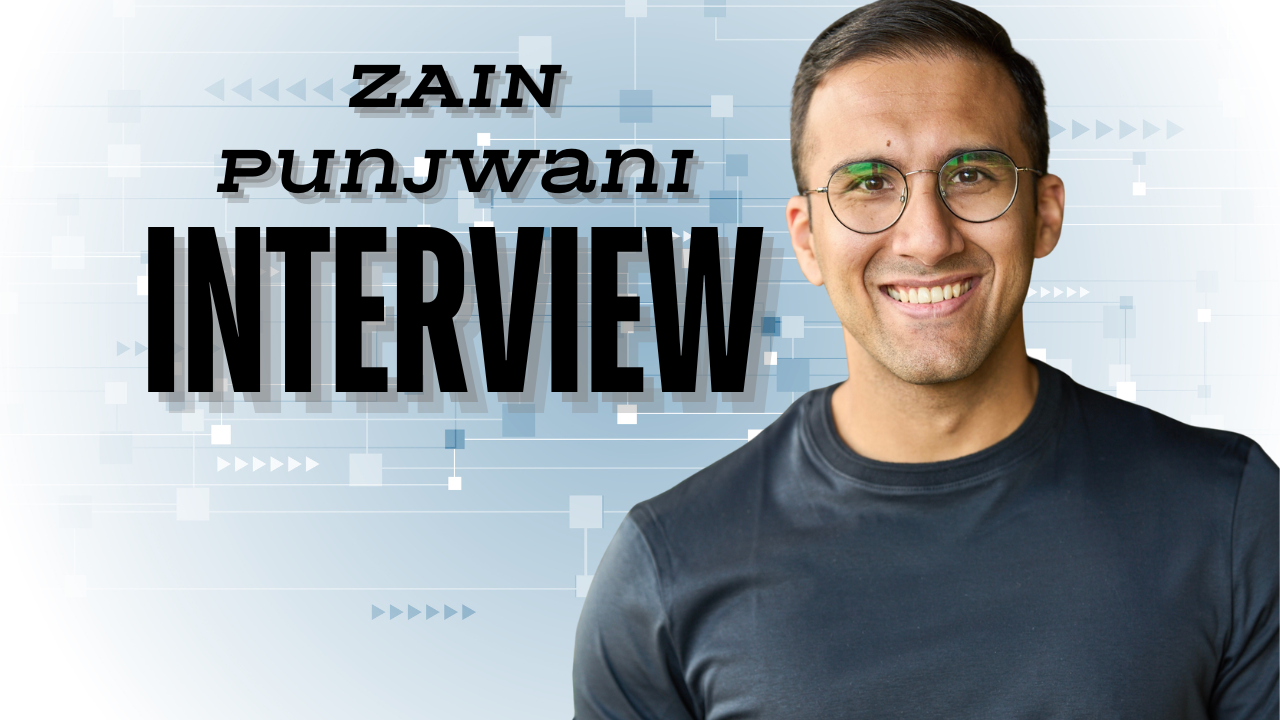
Zain’s Unconventional Journey
Writing this blog post was one of the hardest projects I’ve taken on. After publishing my 50th blog, I felt enormous pressure to create something even better—something meaningful that captured the heart of Zain’s journey. I kept getting stuck, focusing on accuracy in the details, feeling like nothing I wrote could do justice to the impact he’s had on my growth as a learner and a person. Capturing the depth of how his mentorship reshaped my thinking, boosted my confidence, and sparked new interests felt almost impossible to put into words. However, when I took a step back to reflect on his incredible experiences, I realized my approach was wrong. I needed to tell his story as it unfolded, starting from the beginning.
It's All About Reaching Out
Zain’s career path began in an unexpected place. He spent part of his childhood in India before moving to Canada, and as he began considering graduate school, he envisioned himself as a public servant, stepping into the realm of Canadian politics. While earning a Master’s in Global Affairs, he pursued internships with global organizations but applied last-minute to an entrepreneurship program at the University of Cape Town, mostly because it was free.
During the interview, the program director’s passion for transforming Cape Town’s underserved communities inspired him. She offered Zain autonomy to reshape the program in four months.
“I remember going back to my counselor the next day in school, and I said, 'I'm going to take the job at the University of Cape Town,' and my counselor responded, 'Zain, you haven't even received the job offer yet. They're interviewing other candidates.' And I was like, 'No, no, she's gonna send me an offer.' I was so confident.”
In Cape Town, Zain saw education spark possibilities. Young adults from townships launched businesses, including a spinach bread company and an Airbnb tour service. He reflected, “Our focus was replacing fear with hope.” The experience redefined his career path.
After returning to Toronto from Cape Town, Zain took a job with a finance company, but it wasn’t his passion. He quit his job to pursue something more meaningful but ended up unemployed for half a year during the peak of COVID with student loans to pay, wondering if he’d made a huge mistake. During this time, he immersed himself in learning about education. He started reading a lot about education systems and came across a tweet from Ben Sommers, head of product at Synthesis at the time. Inspired by Synthesis’ mission and eager to contribute, Zain reached out directly with ideas and enthusiasm, (Zain has often talked about the importance of cold emails, which I've put into practice multiple times to secure interviews for this blog). His initiative led to a role as a facilitator, eventually advancing to lead faculty, where he could merge his innovative thinking with educational practice. Zain was my primary guide at Synthesis, where we debated conundrums and spent sessions working through complex problem solving games. He built up his leadership experience there and on subsequent platforms: Apollo, Prequel, and finally, Inertia, which he founded in 2024. “My mission is every student should become the best version of themselves,” explains Zain.
What if Zain had become a politician instead of an educator? My path over the last three years would have looked very different. I might only know him as a political figure on TV or in the news—someone I’d probably ignore or be disinterested in. Instead, because he chose education, his teaching style and mentorship have reshaped how I learn, think, and approach challenges. His decision to pursue education instead of politics changed not only his life but mine as well.
Lessons in Positive-Sum Thinking
Realizing that education could have a broader, more constructive impact than politics, Zain shifted his focus. In politics, he often encountered “zero-sum thinking”—the idea that one side’s gain comes at the direct expense of another. Winning an election, passing a contentious bill, or outmaneuvering a rival campaign frequently meant that someone else had to lose. This mindset felt restrictive and at odds with Zain’s desire to create sustainable, shared progress.
Searching for a different approach, Zain turned to “positive-sum thinking.” In positive-sum scenarios, everyone can benefit simultaneously; growth or success for one group doesn’t have to limit what others can achieve. He sees education as the ultimate positive-sum arena. Instead of competing for a fixed pie of opportunity, students, teachers, and communities can all expand their knowledge and abilities together. Learning can multiply benefits rather than simply redistributing them.
I found myself drawing on this perspective while writing this blog post. Initially, I worried that if it wasn’t perfect, it would be worthless—an all-or-nothing view that echoed zero-sum thinking. But reflecting on Zain’s belief in positive-sum models helped me shift my mindset. My writing didn’t need to be flawless; it just needs to be honest and open to improvement. Each refinement I make—improving my clarity, adding more personal insight—doesn't come at the expense of something else. Instead, it enhances the entire piece. Recognizing that gains in one area of my writing could strengthen others turned the process into a positive-sum experience. Each draft taught me something new, making my overall skills richer and more versatile.
Zain’s dedication to positive-sum thinking reshaped how I view leadership as well. Within his educational programs, I learned that strong leaders don’t just achieve personal milestones; they enable others to advance, too. Whether we were discussing creative problem-solving at Synthesis or tackling environmental policy debates at Inertia, I saw how groups working collaboratively generate deeper insights and more innovative solutions than any single winner-take-all competition could produce.
Education—like true leadership—isn’t about outsmarting or outcompeting others. It’s about fostering an environment where everyone can grow and reach their potential. By embracing positive-sum thinking, we move beyond zero-sum struggles and toward a future where gains are shared, learning flourishes, and the outcomes are better for everyone involved.
A Vision for the Future
Zain doesn’t just teach; he redesigns the entire learning experience with a mindset that blends innovation and practicality. His approach to education is rooted in first principles thinking—a method of breaking down complex ideas into foundational truths. Instead of asking, “How have things always been done?”, he asks, “What do students truly need to learn, and how can we teach it in the most effective way?” Spoiler alert: The answer is never “memorize this textbook.”
At Inertia, Zain focuses on experiential learning, where students engage directly with real-world problems. Forget mindless worksheets—think stock market simulations, energy policy debates, app building and AI.
Zain also emphasizes learning how to learn—a skill far more valuable than memorizing facts. He incorporates concepts like ikigai, the Japanese term for finding one’s purpose. Personally, I find ikigai helpful because it pushes me to reflect on what I’m passionate about and why it matters. It keeps me from getting stuck in the weeds of minor details—a habit I’m still working on breaking.
Adaptability, emotional intelligence, and critical thinking are core skills students practice weekly. His goal is clear: equip learners for a rapidly changing world where knowing how to think is more important than knowing what to think.
Shaping My World
It’s hard to put into words just how much Zain’s mentorship has meant to me. His teaching has never been about passing tests or checking boxes—it’s about opening doors to new possibilities and showing what’s possible when you believe in your potential. He doesn’t just teach subjects; he transforms how his students see themselves and the world.
When asked what students should know above all else, Zain said, “Approach life with love in your heart.” To him, education is about building values, finding purpose, and contributing meaningfully to the world. This belief has become a guiding principle in my life. Education isn’t just about acquiring knowledge—it’s about how we use that knowledge to make a difference.
Over the past three years, Zain’s influence has reshaped how I approach learning. He’s encourages me to think critically, question assumptions, and embrace challenges as opportunities to grow. Because of his mentorship, I’ve developed the confidence to tackle complex problems, collaborate with others, and engage deeply with the world around me (and have fun in the process).
Zain’s mentorship has been a constant source of inspiration. He’s shown me that true learning happens when curiosity leads the way and when you allow yourself to believe that growth has no limits. His passion and belief in positive-sum thinking have left an imprint on my heart and mind, shaping some of the most meaningful moments of my life.
This blog means a lot to me because Zain’s given me so much that I want to give him something in return—something thoughtful, honest, and filled with hope. I hope that through these words, he sees the lasting impact he’s made.
Thank you for reading. I can’t wait to share the next story with you.