

Hi readers! It's been a while since my last blog, but I've been having many summer adventures that I'm excited to share with you in future blog posts. Thank you so much for your patience, let's jump into this blog!
Have you ever thought about a career and wondered what it’s like to work in that field? I have, and to satisfy my curiosity, I’m creating a new series of blogs about interviewing people with different expertise. In this series, I will talk about different jobs and the people whom I interview. The reason I’m starting this series is to be able to have a baseline knowledge of different jobs before I’m confident about exactly what job I want to have. This knowledge will help me choose a job that I’m passionate about and that I’ll enjoy. After you read this blog, I’d love to hear what you think in the comments below.
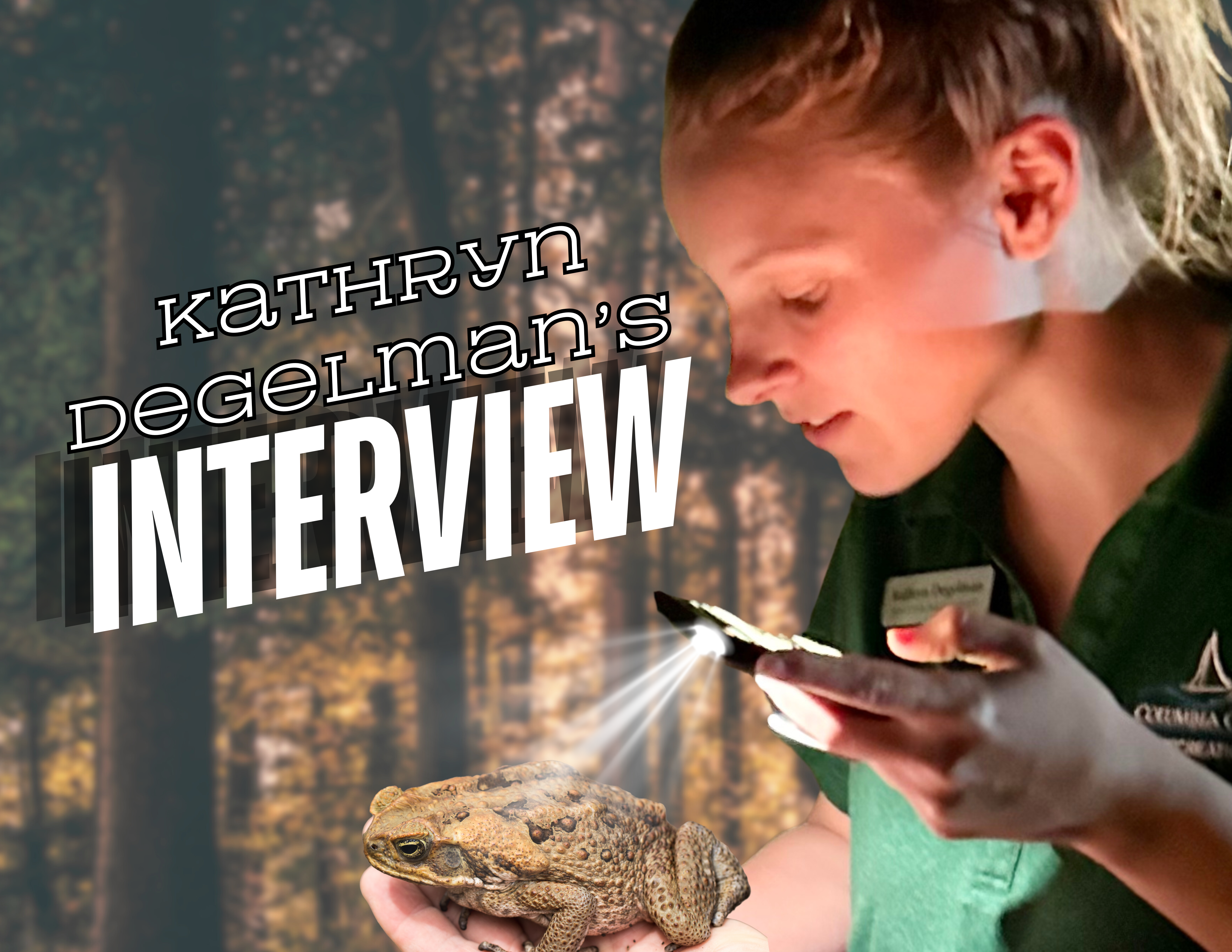
Today I’ll be interviewing an employee from Reed Creek (a local nature park, which I wrote about: Why Reed Creek Matters: Learning and Conservation in an Urban Environment). So, without further ado, let me introduce you to Kathryn Degelman: Kathryn is the program coordinator at Reed Creek, which puts her in charge of teaching classes and putting together educational resources for our local community. She focuses on environmental education and I’ve taken two of her classes, both on frog identification. I now know the difference between cricket frogs and greenhouse frogs (it’s a huge difference, I don’t know how I didn’t notice this before), and I can identify their calls.
I can’t wait to share what else I’ve learned from Kathryn below!
A Day in the Life of an Environmental Educator
One of the first questions I asked Kathryn when I got to interview her was, “What does a day in your life look like?” Here’s her reply:
No two days in Kathryn’s work-life are the same. For example, it’s different depending on the season, whether school is out, if it’s raining, etc. Sometimes she might be teaching back-to-back classes, and other times she’s filling out paperwork and answering phone calls.
She says the diversity in her schedule is part of why she loves her job.
I love the idea of having such a diverse day-to-day schedule, and it sounds like something that would get me out of bed and excited for the day! Having days of excitement outside in the swamp and days with a more relaxed indoor plan is important because it can help create a better work environment and I know that whenever I have an unbalanced schedule (as in being busy for long periods without relaxation or vice versa) I can start to become less productive and less motivated to work towards my goals. So, having a varied schedule is something I would love to have in a potential job.
Advice for Aspiring Environmental Educators
I next asked Kathryn about tips she might have for someone who wants to have a similar career field, and she gave some great tips that I can testify to. Here’s a list of the top points she covered and my thoughts on each:
“Keep your options open.” Your interests can always change. For example, Kathryn was first fascinated by whales, but her passions have shifted and now and she’s into reptiles and amphibians and works as an educator. Know that you don’t have to limit yourself to a single path.
I can testify to this advice because of my own experience. I used to be very focused on lemurs. However, I’ve recently fallen in love with herpetology. It’s really important to keep your options open. I’m writing this blog series because I want to know about some of the possible career options before I’m dead-set on a job. Also, knowing that I’ve explored other career options will make me feel a lot more confident about whatever job I choose.
A lot of biology-related jobs don’t pay well or include a lot of physical labor. Don’t let this discourage you and follow your passions!
I know that a lot of people get discouraged because of the low pay from some biology-related jobs, but I'm sure there’s a way to combine my passions with a job that also has a bit more pay. I just need to figure out what that is!
It isn’t always a “clear-cut path.” When Kathryn was younger, she saw her life as a straight path, going from middle school to high school, to college, and then to a job. However, her path wasn’t so straightforward. She took a gap year before getting her master's degree, to figure out exactly what she wanted to do, which is something she never thought she’d do. This just goes to show how you never know exactly where life will take you.
This comes back to the first point. Things can always change, and sometimes that change is good. Other times change can be a real struggle (like when you move across the country like I did!) What’s important is how you adapt and grow from that change.
Technology’s Impact
I have an obsession with new and developing tech and how it’s affecting different fields, so I just had to ask Kathryn how this stuff is impacting her work.
She said that personally, tech isn’t affecting her that much. However, there are a lot of technological advancements in biology like in Sonar (a way of using waves to detect and locate underwater objects). One of the points she made was that not all jobs in biology include going out and physically searching for animals, or doing fieldwork. Some jobs could mostly consist of coding at a computer and other non-traditional forms of biology.
I’d never thought about all the other forms of biology, but it makes sense! I’ll have to interview someone on the more tech-related side of biology.
Reflections and Next Steps
Interviewing Kathryn has been such an eye-opening experience for me. Learning about her diverse day-to-day schedule and how she blends her passion for environmental education with her career has given me a lot to think about. I love the idea of having a job that keeps me on my toes and allows me to be both outdoors and indoors.
Kathryn's journey has also reminded me of the importance of keeping my options open and being flexible with my career plans. It's reassuring to know that it's okay to have changing interests and that these shifts can lead to unexpected and fulfilling paths. Plus, her tips about the reality of biology-related jobs have made me appreciate the need to balance passion with practical considerations.
I hope you enjoyed this first blog in my new series as much as I did. Stay tuned for more interviews with professionals from different fields—I’ve already done my next interview, I just need to get caught up on my writing. In the meantime, I'd love to hear your thoughts. Would you be interested in a career like Kathryn's? Why or why not? Comment below and let's start a conversation!
Finally, I'd like to thank Kathryn. It was a really easy interview because she was so friendly and relaxed. I can't wait to take more classes from her!