
Your photographic progression is not just your understanding of exposure and composition.
Author: Natalie Rosella Boonzaier
Channel: https://www.youtube.com/@NatalieRosellaBoonzaier
Website: https://rosellaprojects.com/
Instagram: https://www.instagram.com/rosellaprojects/5-minute read
Various factors can have an effect on your photography and your progress as a photographer. These factors fall into categories. There are practical factors, or factors that revolve around photography theory. These include exposure theory and compositional theory, among others. And it is these factors that I realise are heavily emphasised on (for good reason, obviously).
Once we have a grasp on these factors, and once we understand why we adhere to them or break away from them intentionally, there is another broad category of factors that can have an effect on how we progress in our photography. These are factors that, when identified, can be analysed as more than just factors affecting our photography. They are factors that affect habits. And these behaviours can apply to many aspects of our activities, not just photography or art.
I have identified five things holding me back in my progression as a photographer and artist, and presenting them conceptually as things that might be holding you back in your journey as a photographer or an artist or whatever it is we all want to be.
Thing number one. Not understanding the difference between what you like or appreciate in someone else’s work and what reflects you and what you want to present as yours.
I am inspired by many forms of photography and paintings. I have been quite drawn to photographic work that treats shadows lightly and elevates them to create soft and nostalgic scenes that are gentle in colour and calming to take in. I love imagery of this nature and find it inspiring (figure, below).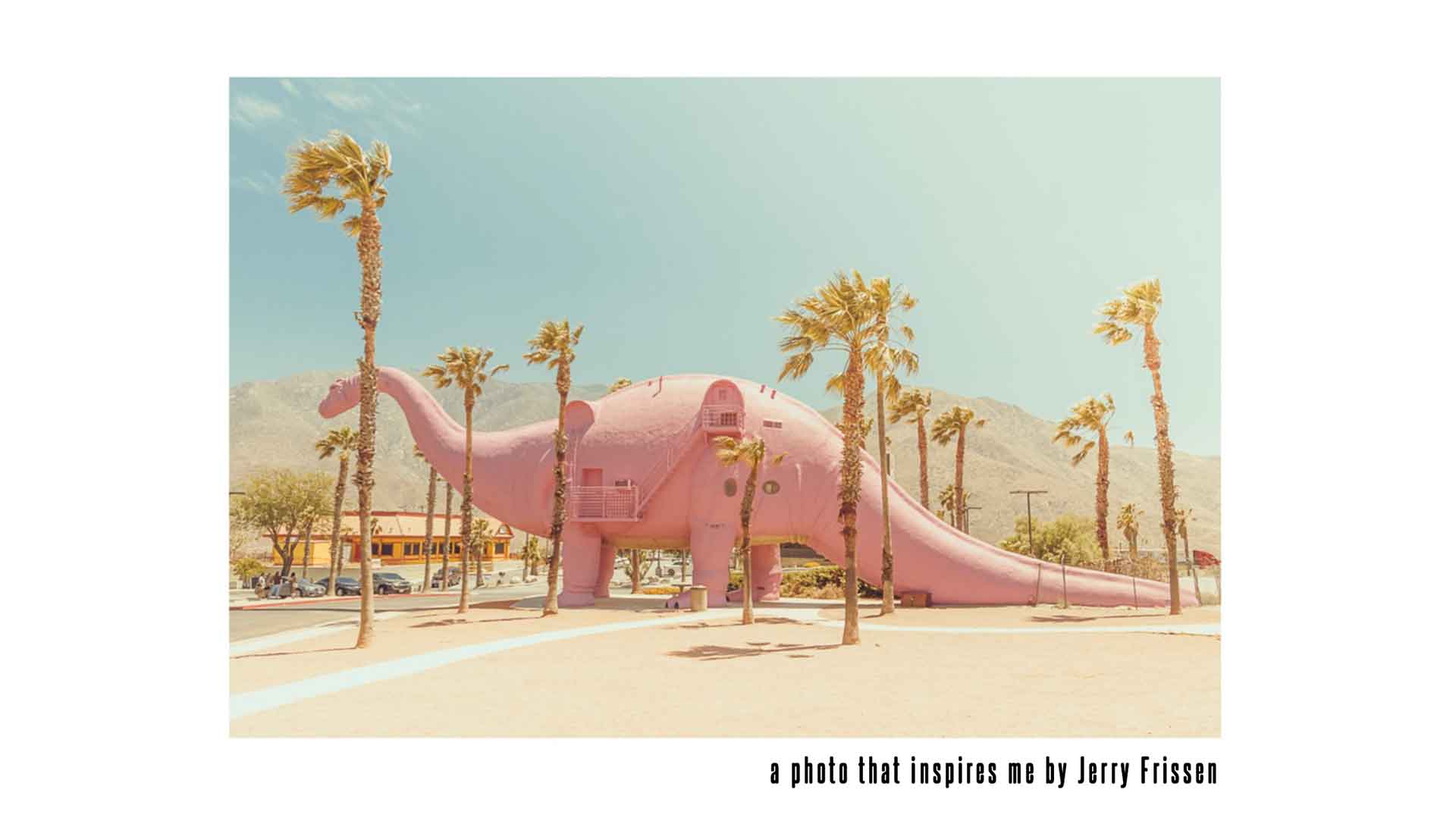 Would I hang his work up on my walls? Yes. An earlier and less experienced version of myself would have tried to replicate similar work in response to this inspiration. But, as my experience over time is helping me produce a general sense of direction in my work, I can identify that I would not feel fulfilled to create work of this nature - it simply does not suit the style that I have been working on over the years. Simply put, I wouldn’t want to produce work of this aesthetic. And knowing this, understanding this helps me maintain a sense of focus and direction in my work. NOW, if I felt the urge to make images like this, yes I would make a plan to go on a desert road trip with an intention of capturing images in this manner, in this style - but I have managed to identify that I don’t need to make images like this to love images like. And having this understanding, yourself, for your own work can help you distinguish between projects that will add to your development as an artist and projects that might be more of a distraction. And this could be useful in helping you as an artist to steer away from trends that add no value to your progress. Not that this work here is a trend, it’s a clear style. But my train of thinking on the matter of potential distractions applies to both inspirational work and trends.
I think identifying and understanding this will help keep you intentional in your photographic work.
Thing number 2. Not having a plan.
Not having a plan can contribute to not shooting with intention. Do you always need to shoot with intention? No. But we eventually get to a place in our photography where the broad experimentation is done. And the time comes to hone in and focus on what we are going to put out as our work.
Your plans change as you progress. Using myself as an example, my plans are directed by my goals, with my main goal starting as something in the lines of: “I am going become really good at photography and people will pay me to take their portraits because they appreciate the portrait work that I have produced”. That’s the long-term goal. But to get to your long term goal you want to establish short-term goals, and these short-term goals are accomplished via planning. Not having a plan, or ignoring a plan, or just forgetting a plan, allows one to become distracted.
For example, my short-term goals included: taking photos to learn so i can get good. The plan for that was to take photos everyday. As I examined my photos I started to understand what I was doing wrong and this lead to more specific short-term goals that were accomplished with more specific plans. And this was a dynamic and non-rigid progression, which is why the potential to get distracted was so strong. But understanding what my segments of short term goals were helped me keep in touch with my plans.
So I do think that not having some goals with accompanying plans has the potential to hold you back. Even if you don’t quite understand your goals, you can have plans for the day or for the next segment of your photography. And through planning, you can organically identify your goals.
I'm not saying you need to establish a style in your photography, but I do believe that establishing goals, based on where you want to be as a photographer, and generating plans on HOW you will improve your imagery, will help you identify the WHY of your photography, which has the potential to direct you towards what will eventually be your style (A combination of both "How" and "Why"). So, identify your goals, figure out your plans, and give yourself a sense of direction in your photography
Thing number 3. Leaving too many projects or ideas unexplored and undernourished.
This is a huge one for me. To the point that I can fall victim to my own self-induced mental fog. I’m not saying it’s bad to have a back log of ideas. If anything, I think it can be a positive thing, BUT I think problems arise when these ideas go ignored. Because, the idea of the idea will creep up on you and start to annoy and distract you. So, my suggestion for dealing with this is writing your ideas down and don’t neglect to work on these ideas. Keeping track of your latest ideas will help you feel in Control.
I often have friends asking me what I am currently working on, and I sometimes find myself unable to answer because I can’t remember. Why? Because there is so much clutter in my head due to the backlog of ideas that I have floating around in there - so many ideas that I don’t even remember what I am actively working on. Therefore, dedicating time to nourish and build on your ideas and having a clear idea of which projects are taking priority will help you keep on top of what is happening with your photography. And it will help you more confidently answer the question - What are you working on right now?

I used to get this thing where I'd wake up and pretty much forget what my direction was, I'd forget any sense of having had a plan, and that had me losing motivation. But what has been helping me keep the discipline factor up to override that need for motivation is to have a good idea of what my current focus is and what my plan is for the day. I recently allowed myself to have a backlog of unscanned negatives that I needed to tackle. Anything that I did related to photography was kind of fogged over by the knowledge that I had these negatives that needed to be scanned, post processed and catalogued. So, I wrote it on a post-it, put it on the wall and that became my focus for the next three photography days - no distractions allowed. It worked.
My general advice is to get the idea from in your head to either paper or to a digital space where you can outline your ideas and nourish them from there. I generally use my notebook. And once I have the scope understood, I get the idea to my digital board and start typing my plans out. Because, when you are working on it you are providing a sense of direction in your work and hopefully, to an extent, to your progress as a photographer. You don’t need to complete the project immediately - you just need to nourish the idea (and your other ideas). And you need to get it out of your head and onto paper or your computer. Once I’ve been photographing and getting the ball rolling and fleshing out the project, I can then move the idea from being an idea to an active project that I am working on. For me this is usually a YouTube video or a photography project. And once this idea becomes a project that I am working on, it becomes a post-it on my wall. In that way, once I am finished for the day I can leave the office and take a quick look at the post-its to visualise what I have going on. This provides clarity and a direction to focus on.
But, what if you don't have ideas to nourish or plans to fuel your goals?
Thing number 4. Not paying attention to the world around you.
And the world around you includes the simplest scenes and moments that might be overlooked by most. You need to understand, if you want to be a photographer, you will benefit from seeing the world and experiencing the world as a photographer. You need to learn to see that. The more you train yourself to observe your world, the more natural it will become to see the world photographically, and the easier it will become to take advantage of photographic opportunities that most people would otherwise miss. See the light and how it fizzles to a shadow. See that green thing and how it beautifully compliments that red thing next to it. You don’t always need to photograph it, but you can mentally capture it and save it as inspiration.
Conversely, this is where paying attention to what inspires you can have its most significant effect. A previous moment of inspiration (thing number 1) can be what triggers you to identify the beauty in an otherwise unremarkable thing. And all this can flourish into an idea that you can nurture - until it becomes a project.
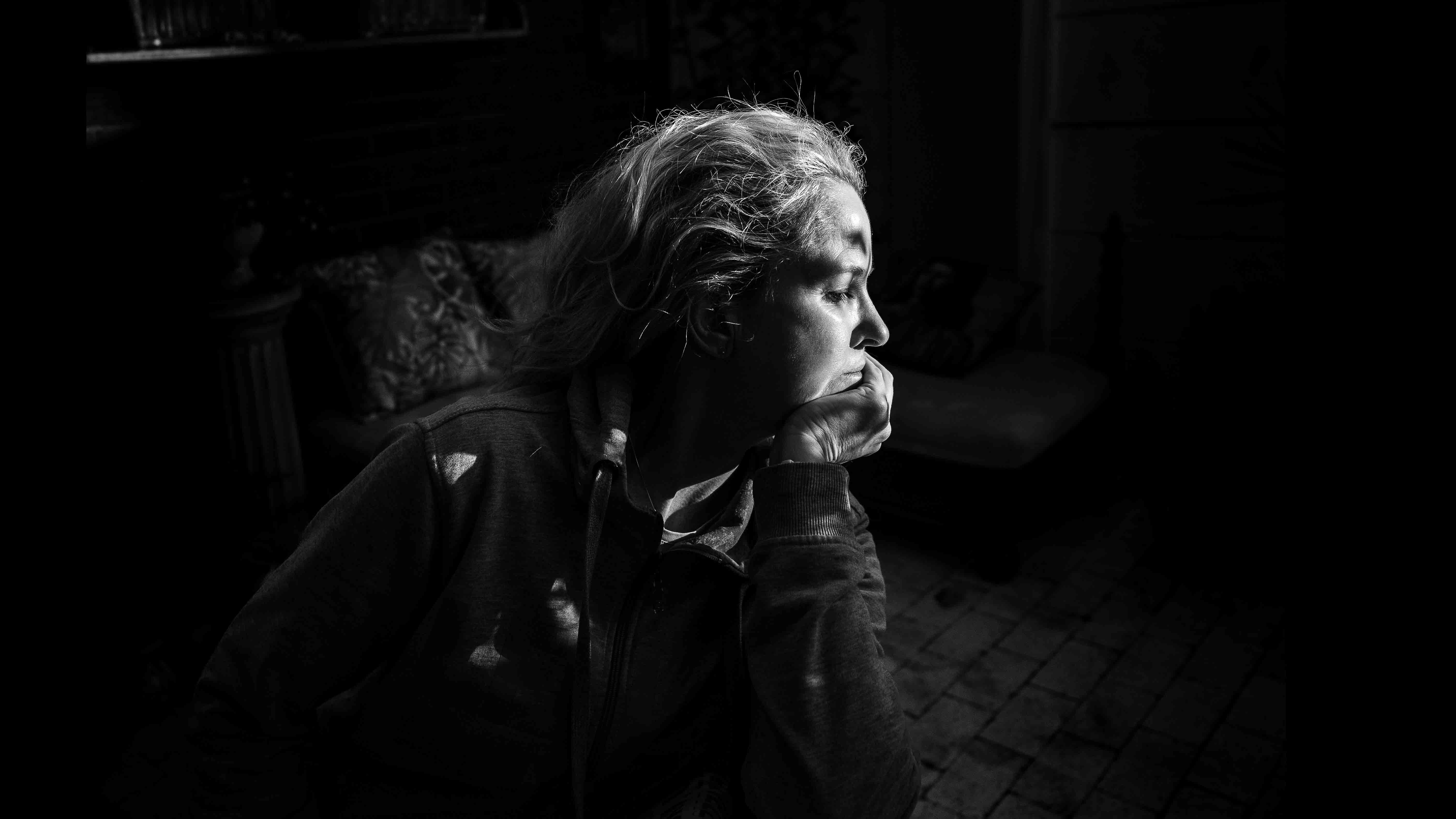
Thing number 5. Perfection.
Perfection point a - You don’t need to always produce a perfect photo. Some of my favourite photos are practically flawed and lack perfection in the purist sense or in the theoretical sense. This isn’t something I can school you on for your photography because only you have a feel for that. Key word being "Feel". If the photo feels right despite the compositional incorrectness or the missed focus or perhaps a clipped highlight. If it fits your artistic vision then roll with it and commit.
Perfection point b - Some styles of images need to be close to perfect. Sometimes the clipped highlights will distract from your image, regardless of how artistic you might deem it to be. If an error in composition means that your vision for the artistic feeling is compromised, you might want to throw in the towel, pick up your camera and try again. The more selective you are, the more strict you are while you are figuring things out, the more likely you will be to get your photos as close to your vision on the first go next time.
Perfection point c - Minor perfectionistic details have the potential to hold back your production. This is something that I struggled with a lot back in the day. Usually with shadow treatment. And my top advice for that is not allowing yourself to get sucked in to one minor thing. Know when to take a step back. Even if just for ten minutes. When you get back to it take a look at the work from a distance, then squint your eyes. You’ll find that you will know what to do from there to get the balance you require from your image. Don’t spend hours on one small aspect of your image. If it gets to that point, you need to step away.
Grain of salt.
We are all at different places in our photographic and artistic journeys. My thoughts on these topics might change over time and this whole thing of art and photography is not a one-size-fits-all. But with that said I do hope that some of these points were of value to you.
There is so much more to this topic and these were the points that stood out to me most. Let me know if there are some that I have forgotten or that you’d like me to discuss in an upcoming post or video.
An elaborate version of this piece is available on my Youtube channel with more photography and more words.
xx