

The kettlebell swing is one of the most iconic and effective kettlebell exercises. It’s a full-body movement that develops explosive power, strengthens the posterior chain (glutes, hamstrings, and lower back), and improves cardiovascular fitness. While it’s simple in concept, proper technique is crucial to maximise benefits and avoid injury.
This is an in-depth step-by-step guide to help you master the kettlebell swing.
WHAT IS A KETTLEBELL SWING?
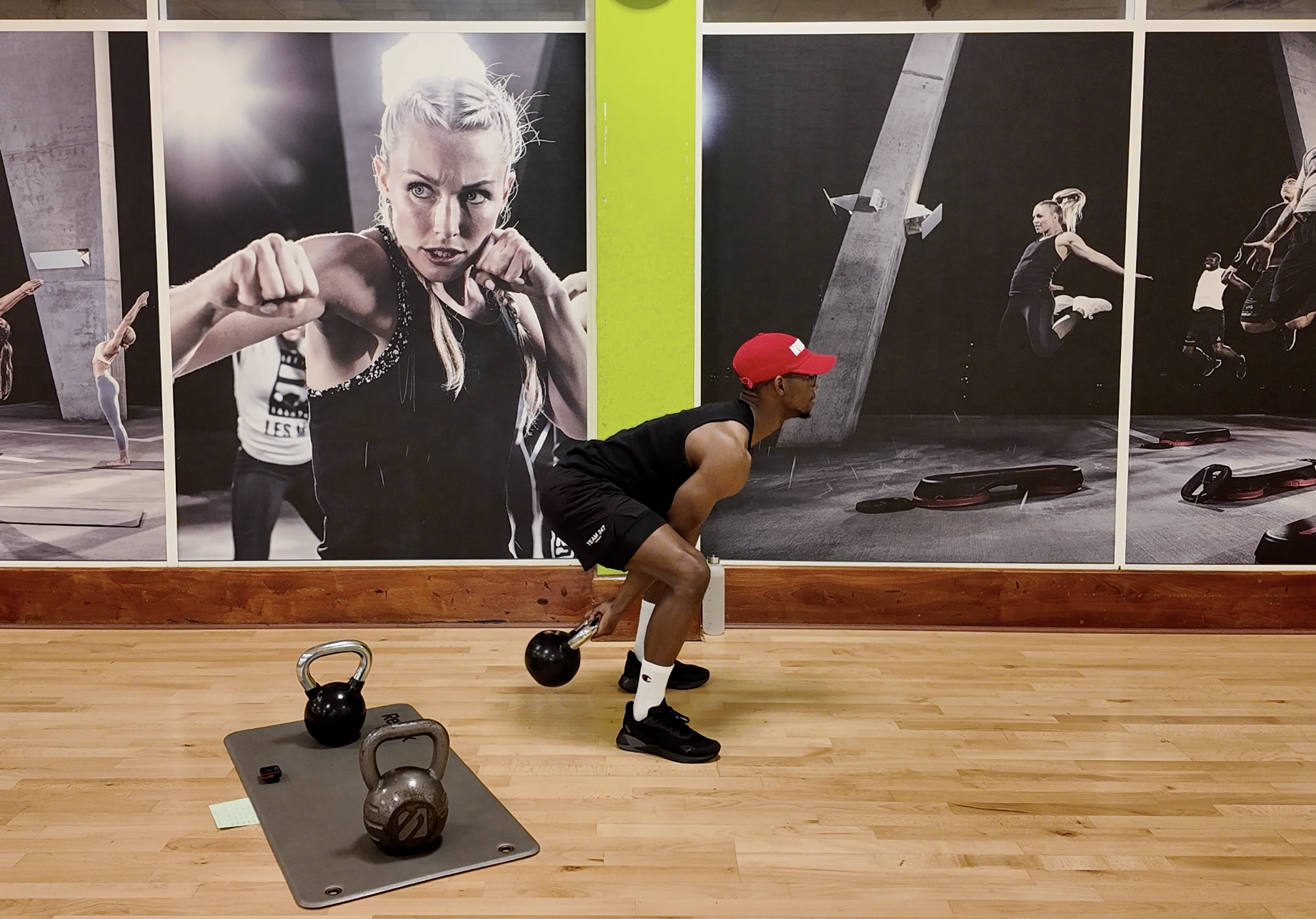
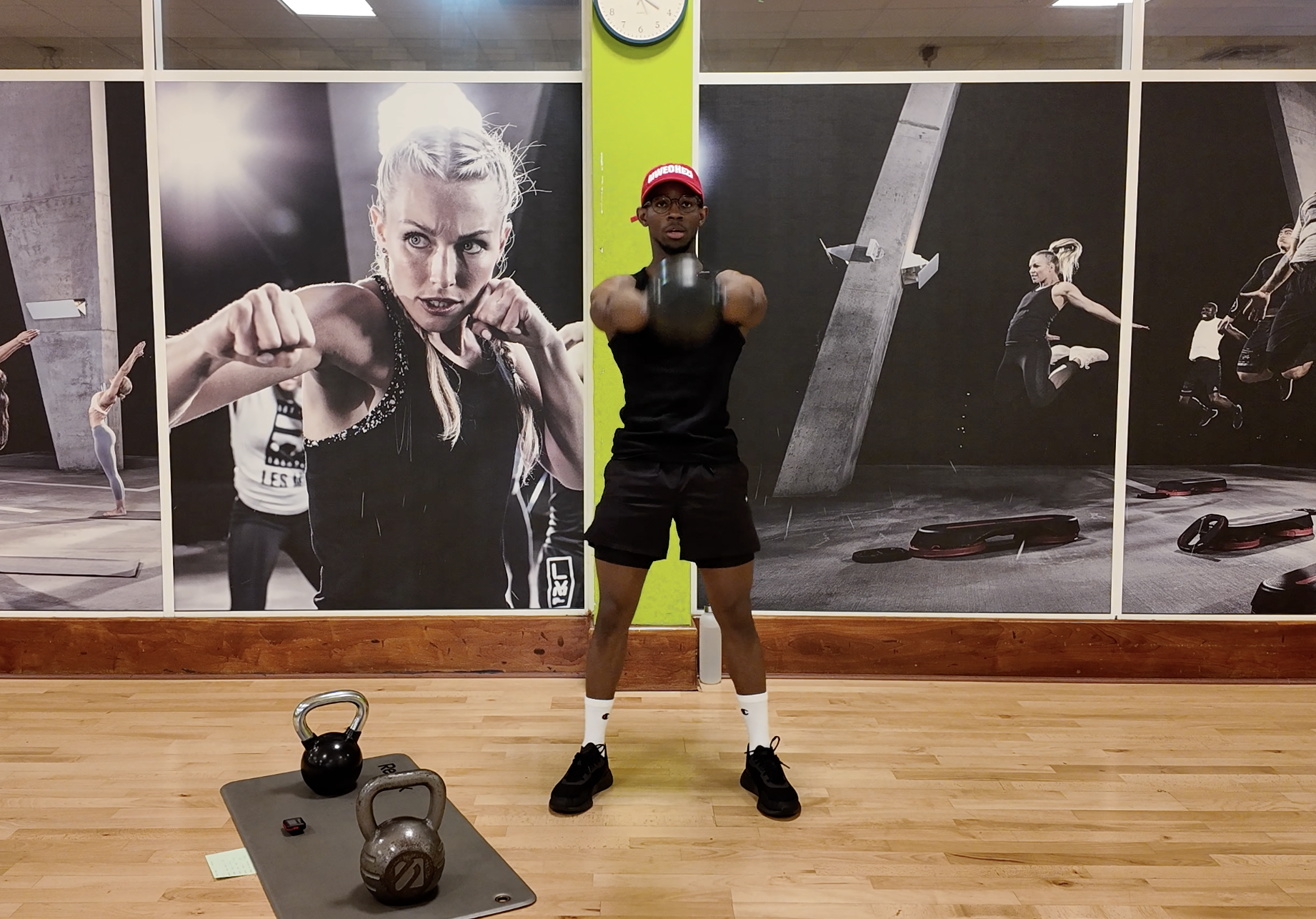
The kettlebell swing is a dynamic, hip-hinge-based movement where you use the power of your hips to swing the kettlebell in an arc, bringing it to chest height.
STEP-BY-STEP GUIDE TO THE KETTLEBELL SWING.
1. SETTING UP YOUR STANCE.
Position the Kettlebell: Place the kettlebell about a foot in front of you on the floor.
Foot Placement: Stand with your feet shoulder-width apart. Your toes should point slightly outward for balance and hip engagement.
Hinge at Your Hips: Bend at the hips and slightly at the knees to reach for the kettlebell, keeping your back straight and chest lifted.
2. GRIPPING THE KETTLEBELL.
Use Both Hands: Grab the kettlebell handle with both hands using an overhand grip.
Keep Your Arms Relaxed: Your arms act as levers in this movement; they should not do the work.
3. START WITH A HIKE.
Pull the Kettlebell Back: Engage your lats and pull the kettlebell back between your legs, as if you’re hiking a football. Keep your wrists high and avoid rounding your back.
Keep it Close: The kettlebell should stay close to your groin and upper thighs.
4. GENERATE POWER FROM THE HIPS.
Drive Through Your Hips: Explosively extend your hips by squeezing your glutes and pushing your hips forward. This hip drive is the source of power for the swing.
Let the Kettlebell Rise Naturally: The kettlebell should “float” to chest height (Russian swing) from the momentum generated by your hips. Do not lift it with your arms.
5. CONTROL THE DESCENT.
Let Gravity Do the Work: Allow the kettlebell to fall naturally as you hinge your hips backward to absorb the movement.
Maintain a Straight Back: Keep your chest lifted and avoid rounding your lower back as the kettlebell swings down between your legs.
Repeat the Cycle: Without pausing, use the momentum to transition into the next swing.
6. FINISHING THE SET
Stop Safely: After your final swing, guide the kettlebell back to the ground in front of you by hinging at the hips and bending your knees slightly.
KEY POINTS TO REMEMBER.
IT’S A HIP HINGE, NOT A SQUAT: The swing is powered by your hips, not by bending your knees deeply. Your knees should bend slightly, but most of the movement comes from the hip hinge.
DON’T OVEREXTEND: Avoid leaning too far back at the top of the swing. Your body should be in a straight line with your core engaged.
NEUTRAL SPINE: Maintain a straight back throughout the movement to avoid strain on your lower back.
RELAX YOUR ARMS: Your arms should act as hooks; the power comes from your hips, not your shoulders.
COMMON MISTAKES AND HOW TO AVOID THEM.
LIFTING WITH THE ARMS:
Mistake: Using your arms to lift the kettlebell instead of relying on hip power.
Fix: Focus on driving through your hips and letting the kettlebell “float” naturally.
ROUNDING THE BACK:
Mistake: Bending your back instead of hinging at your hips.
Fix: Keep your chest lifted, shoulders back, and engage your core to maintain a neutral spine.
SQUATTING INSTEAD OF HINGING:
Mistake: Bending your knees too much and turning the swing into a squat.
Fix: Practice the hip hinge by pushing your hips back while keeping your shins vertical.
OVEREXTENDING THE HIPS:
Mistake: Leaning too far back at the top of the swing.
Fix: Stop your hip thrust when your body is in a straight line.
PROGRESSION TIPS FOR BEGINNERS.
MASTER THE DEADLIFT FIRST: Practice the kettlebell deadlift to learn proper hip hinge mechanics and build confidence with the kettlebell.
START WITH A LIGHT KETTLEBELL: Choose a weight that allows you to perform the movement with good form, typically 12-16 kg (25-35 lbs) safe for most beginners.
USE SINGLE SWINGS: Perform one swing at a time, resetting between each repetition, until you’re comfortable with the movement.
WORK ON BREATHING: Inhale during the downswing and exhale forcefully at the top of the swing to engage your core and maintain rhythm.
BENEFITS OF THE KETTLEBELL SWING.
EXPLOSIVE POWER: Strengthens the posterior chain and improves athletic performance.
CARDIOVASCULAR FITNESS: Offers a high-intensity workout that boosts your heart rate and burns calories.
CORE STABILITY: Engages your core throughout the movement, improving overall stability and strength.
FUNCTIONAL STRENGTH: Mimics real-world lifting and movement patterns, making daily activities easier and safer.
SAMPLE BEGINNER SWING WORKOUT.
WARM-UP:
Bodyweight Squats: 10 reps
Hip Bridges: 10 reps
Kettlebell Deadlift: 10 reps
MAIN WORKOUT:
Kettlebell Swings: 3 sets of 10-15 reps
Rest: 30-60 seconds between sets
COOL-DOWN:
Stretch your hamstrings, glutes, and lower back.
By following these steps and focusing on proper form, you’ll unlock the full benefits of the kettlebell swing while minimising the risk of injury. Take your time and remember that quality is more important than quantity. Once you’ve mastered the basics, you can increase the weight or incorporate swings into more advanced workouts.
Thank you for reading.
My name is Mwechezi, and I’m here to help you make fitness simple, effective, and sustainable.
Drop your questions or goals in the comments, and let’s keep the conversation going.
See you in the next post.