

It’s not easy being a content creator these days.
Not because of the work — I love what I do — but because it’s difficult to decide how much of myself to share. In the age of the internet, information can and will be used against you. And unfortunately, some members of my audience — as loyal as they might be — are a little too prone to overanalysis, connecting dots that were never meant to be connected.
Still, sometimes life brings up issues too profound, too personal, to keep bottled up. Lately, I’ve been haunted by a feeling — one I suspect many of you can relate to. It’s the sense that history, somehow, is repeating itself. That the wheel, as the medievals used to call it — the Wheel of Fortune — is turning once again, and not in our favour.
When this feeling grips you, you start asking uncomfortable questions. “Why me?” “Why now?” “Why again?”
For those who don’t know me personally, I am the product of two deep and storied lineages — both marked by displacement, exile, and survival.
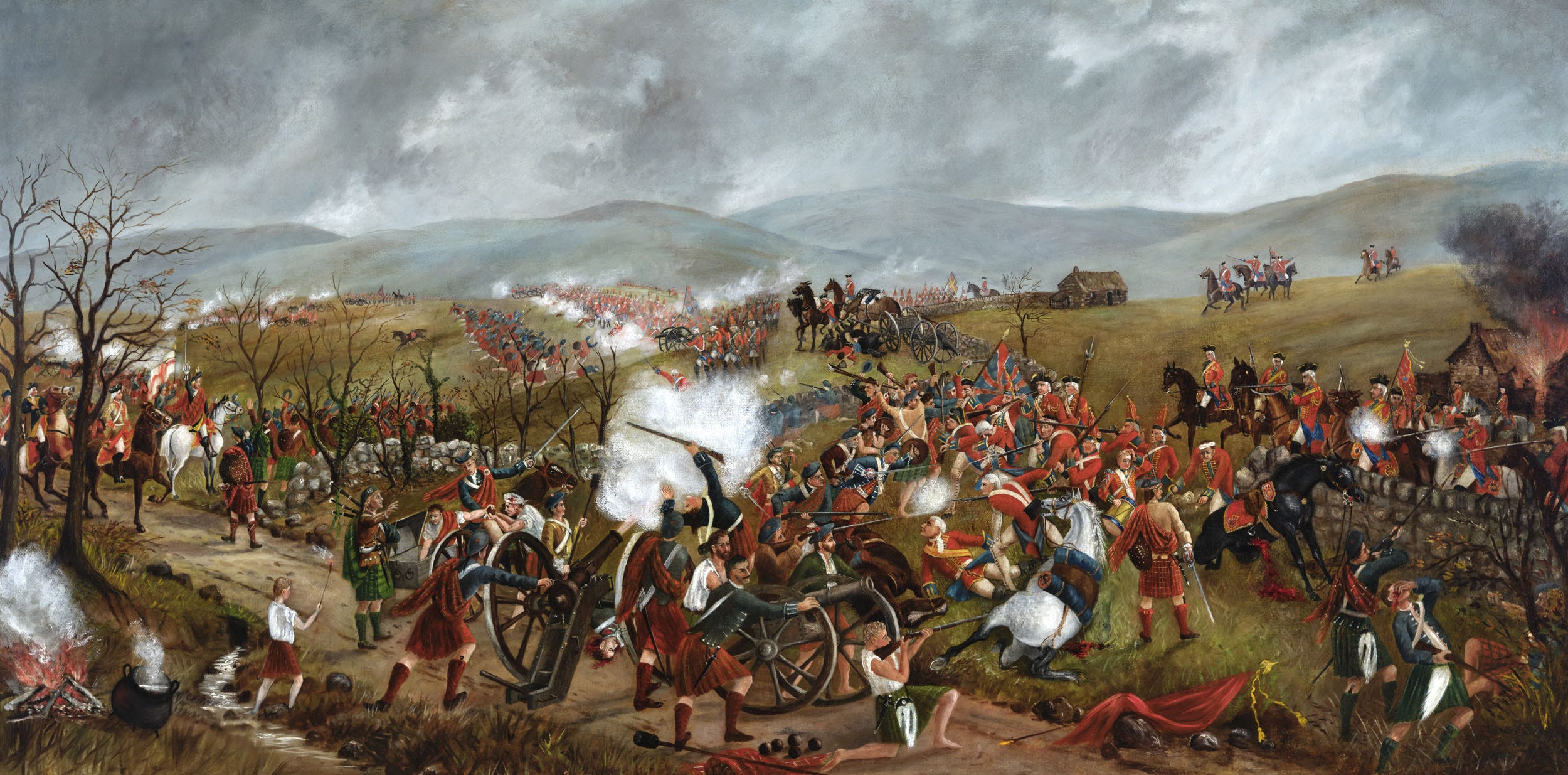
On my father’s side, I can trace our roots back to the Scottish Highlands, and to a lesser degree, Northern Ireland. For those unfamiliar, the Highlands were once home to proud clans who found themselves on the losing side of history. There was a time — during the Jacobite uprisings of the 18th century — when the dream of a restored monarchy met its bloody end at the Battle of Culloden. After that, Scotland was not just defeated — it was absorbed. Annexed. Crushed underfoot by a rising imperial power. The punishment? Land confiscation. Entire clans lost everything: homes, titles, dignity. Some fled to the Americas. Others, like my ancestors, found their way to South Africa — a colony then still new to the British.
The other side of my heritage is Ashkenazi Jewish — my maternal line. My grandmother’s family hailed from what was then Prussia — today, a strange historical ghost split between Germany and Poland. The story of the Ashkenazim is one of brilliance and tragedy. Confined to tight-knit communities for centuries, they preserved their traditions with admirable tenacity. But they were also denied land ownership, driven into professions that were often considered socially undesirable — like moneylending. Ironically, the very profession they were forced into later made them targets.
Time and again, Jewish communities across Europe were scapegoated, expelled, or worse. When rulers couldn’t repay their debts, they didn’t negotiate — they expelled the creditors. Problem solved. Property seized, debts erased, and history moved on. For the Ashkenaz, displacement was a way of life — a grim rhythm stretching across centuries. And so, many of them — too many — learned not to complain.
And within that long and tragic arc is my own grandmother’s story. As a baby, she was hidden in South Africa — a refuge from the Nazis. Many Jewish families from the Prussian territories smuggled their children out during World War II, knowing what awaited them if they stayed. South Africa, for all its own flaws, became a sanctuary. My grandmother survived — barely — because someone, somewhere, got her out just in time.
And now here I am. A descendant of Scots and Jews. Living in a country where once again, the idea of expropriation is on the table. South Africa’s debate around land is nothing new, nor is it unjustified in origin. Apartheid left a bloody, unequal legacy, and restitution is long overdue. But the question is: restitution from whom?
The targets today are not the old colonial elites — they’re long gone. The rhetorical crossfire now centers on ordinary, working-class white South Africans — many of whom never held land, never held power, and have worked hard to build a life here. And yet, the talk of expropriation without compensation persists. And many — quietly, reluctantly — are leaving. To Australia. To England. To wherever they feel they can live without fear, without being scapegoated.
Some say these emigrants are “leaving willingly.” But ask them, and they’ll tell you the truth: they’re being pushed.
And me? I refuse to go. I resist this creeping tide of displacement. But that doesn’t mean it doesn’t gnaw at me.
What haunts me most is how familiar it all feels.
Two hundred and fifty years later, the cycle returns. The rhetoric changes, but the scapegoats remain the same.
The dispossessed become the convenient villains. The sins of history are paid not by those who committed them, but by those unfortunate enough to resemble them.
And so I ask: How long must this wheel keep turning?
Let me know your thoughts in the comments.
— If this resonated with you, feel free to share. Just remember: history is complicated. People are complicated. And no narrative is ever complete.