
In most parts of England and Wales, it is illegal to pitch a tent at the end of a long day’s hiking without the landowner’s permission. For most long-distance backpackers, this means either using commercial campsites or finding a location as far out of sight as possible, pitching their tent and keeping their fingers crossed that they won’t be discovered. In Scotland, where attitudes towards outdoor recreation are considerably more progressive, wild camping is permitted on most unenclosed land, provided a few basic rules are observed. France also takes a more accommodating approach to bivouacking, and this is perhaps one of the main attractions for me personally when deciding where I want to hike.
One might reasonably ask why I don’t hike in Scotland more often. I have to put both hands up in admission and concede that I have no convincing counterargument, other than the fact that the weather in France is often more conducive to enjoying the great outdoors.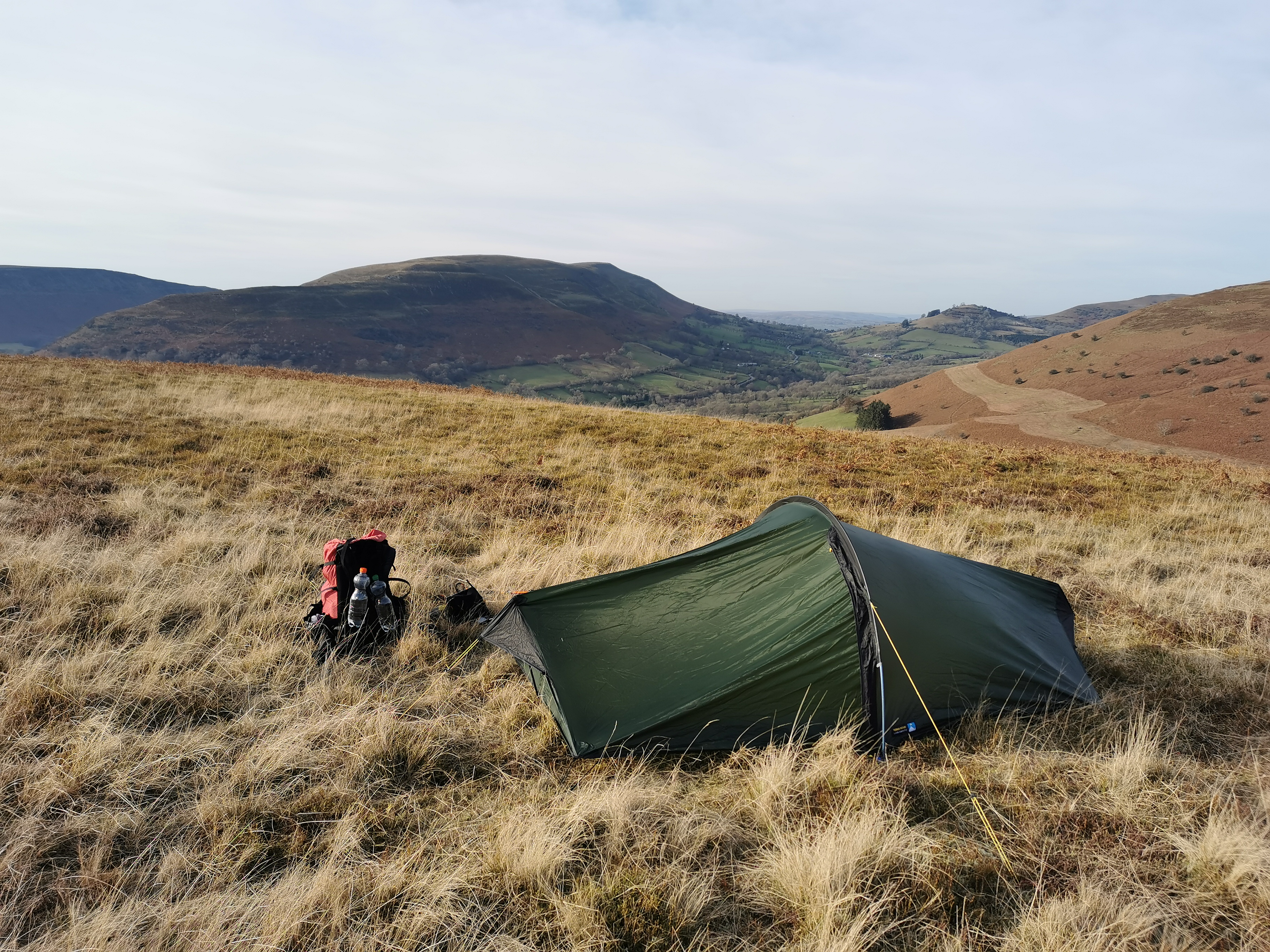 There is no doubt that hiking in Scotland is on a par with, and in some cases even superior to, hiking in France. However, when backpacking, the quality of the walking is not the only consideration. Alongside the views, there is something to be said for pitching a tent in temperatures that don’t have you rushing inside at the earliest opportunity, or eating dinner in your tent simply to escape the wildlife intent on biting every exposed patch of skin. There is a particular pleasure in sitting outside your tent, relaxing and simply enjoying the place in which you have chosen to spend the night.
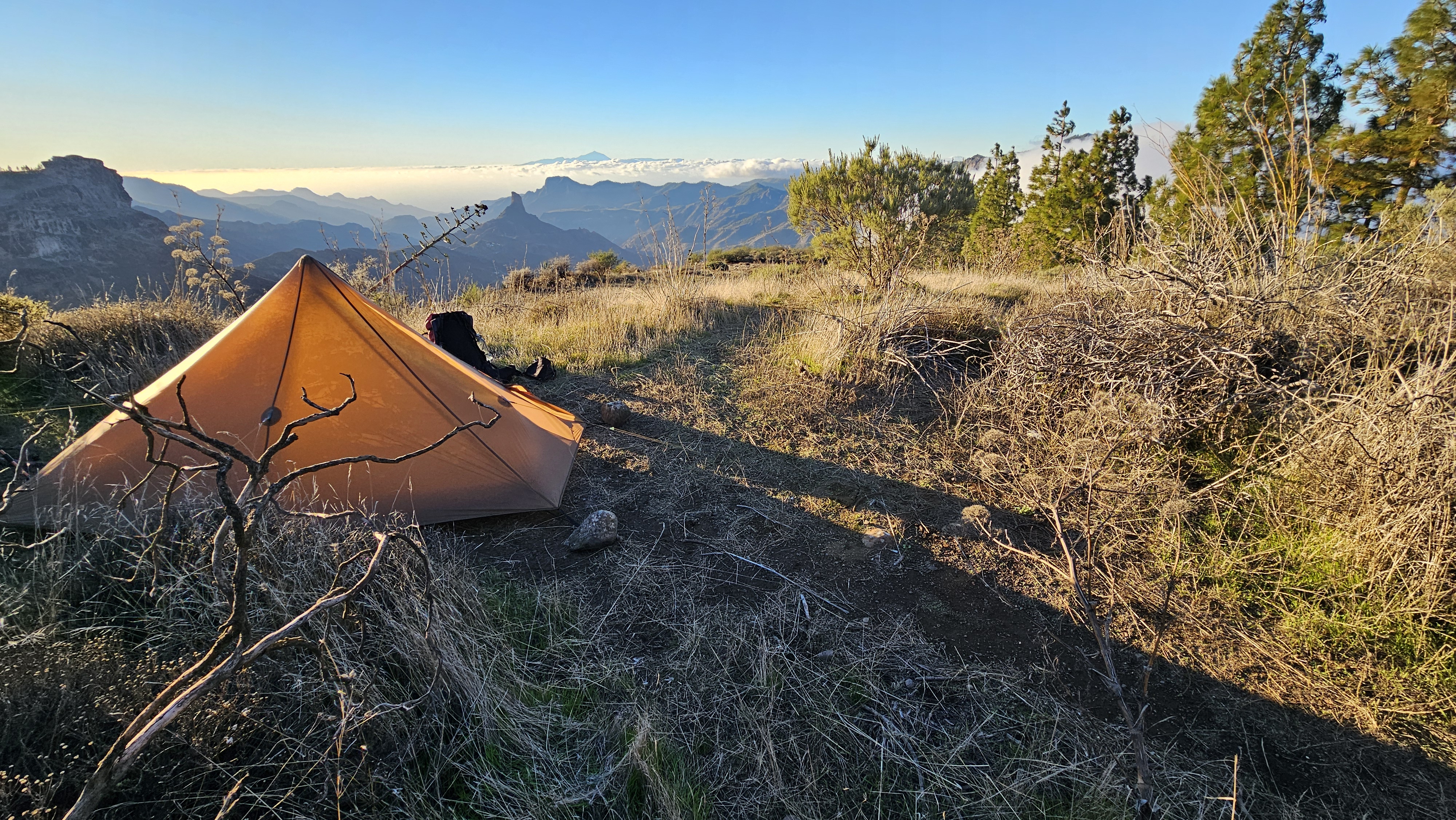
That enjoyment is enhanced by knowing that my tent is pitched lawfully and that I won’t have to endure the ire of a landowner who can legitimately ask me to leave simply because I am on their land without permission. This is the case even when a tent, pitched by a responsible backpacker, causes no discernible problem whatsoever. There is something fundamentally reassuring about being somewhere you are entitled to be, rather than spending the evening wondering whether someone is going to turn up and tell you to move on.
So, let’s look at the differences between the countries I have highlighted.
With the exception of certain areas of Dartmoor, where specific rules and arrangements apply, wild camping in England and Wales generally requires the landowner’s permission. It does appear that some landowners in mountainous areas turn a blind eye to people camping high above the ‘intake wall’, away from enclosed land. However, there is no general right to camp simply because land is designated as open access. This means that a backpacker who pitches a tent without express permission risks being required to pack up and leave if discovered. Even the most responsible camper has no automatic legal right to remain.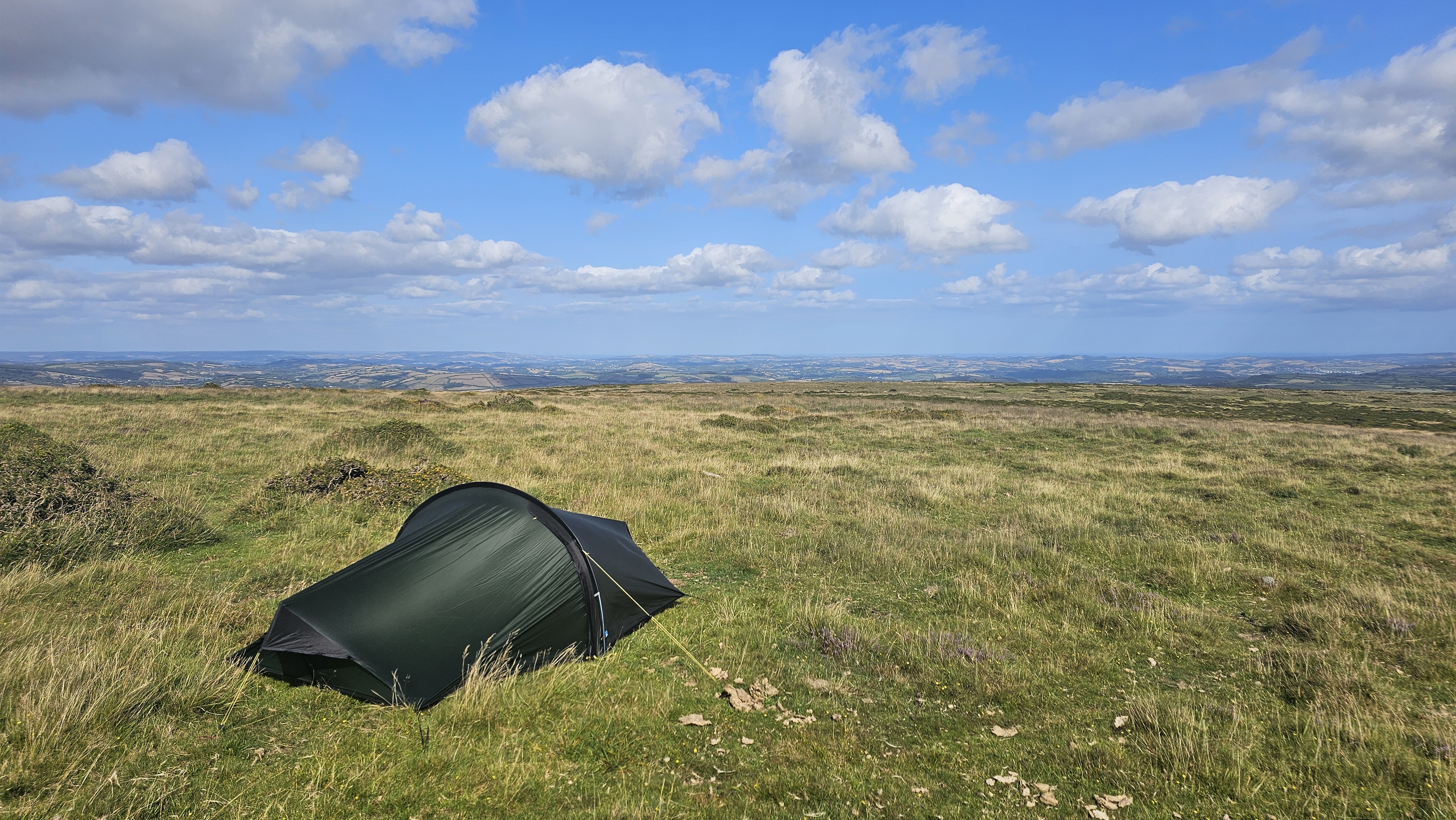 In Scotland, the Land Reform (Scotland) Act 2003 provides the legal framework for responsible access to much of the countryside, including the right to wild camp on most unenclosed land, hills, moors, coastline and woodland. Campers should avoid fields containing crops or livestock, private gardens and areas close to people’s homes. The Scottish Outdoor Access Code also recommends small groups, lightweight camping and moving on after two or three nights in the same place. I don’t know about you, but that sounds eminently sensible.
In France, camping and bivouacking are generally treated differently. Camping often means arriving by car, setting up a tent and remaining in one place for several days. Bivouacking, by contrast, is associated with people travelling on foot who pitch their tent for a single night before moving on the following morning. A commonly followed approach is to arrive on foot, choose a discreet location away from roads, cultivated land and livestock, pitch the tent in the evening and pack it away early the following morning. The familiar 7 pm to 8 am rule is a useful guideline in some areas, particularly in the mountains, but it is not a universal French law. Local regulations, protected-area restrictions and landowner rights still matter, so it is important to check the rules wherever you intend to spend the night.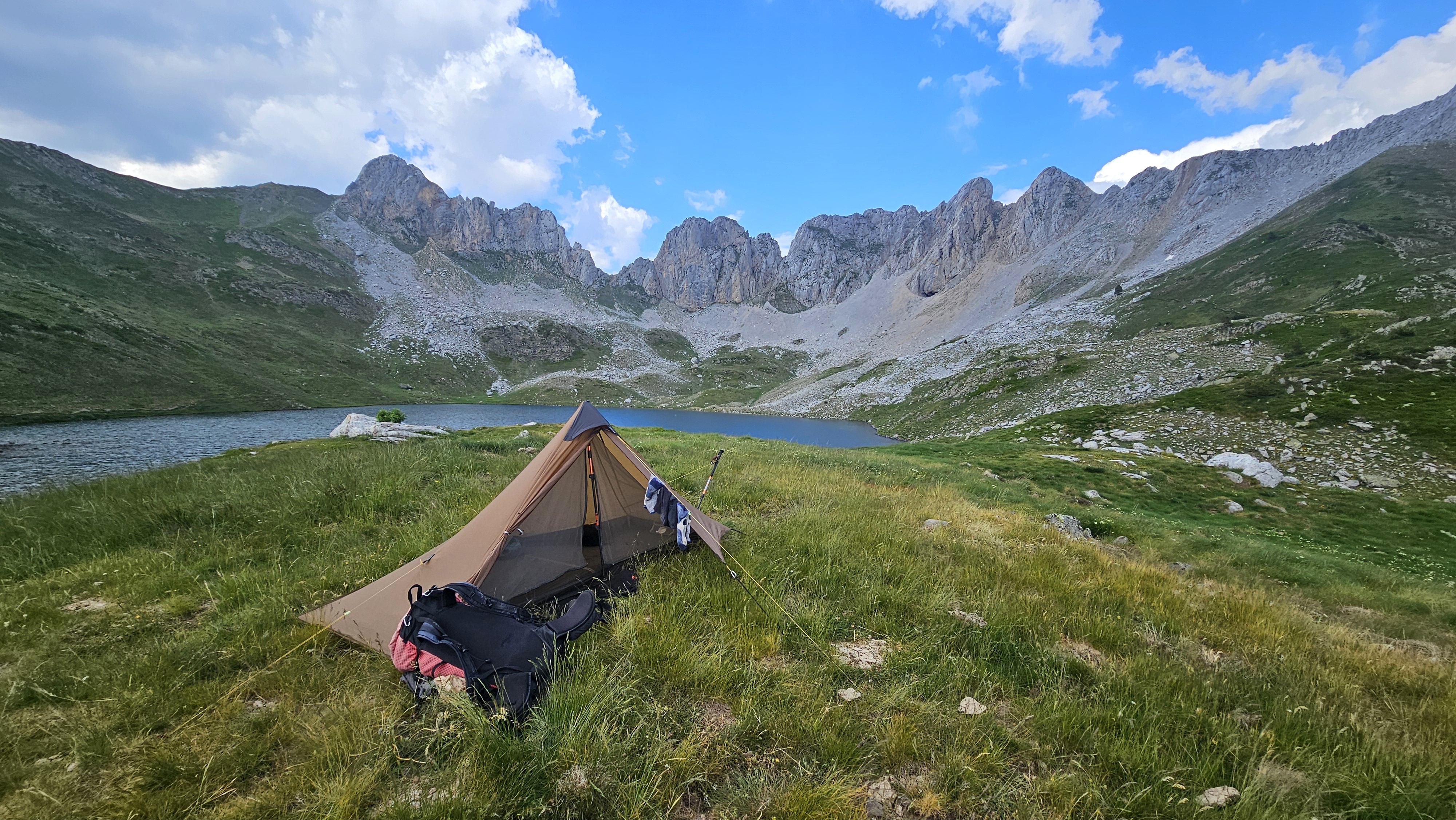 Now, the counterargument to wild camping, wherever it takes place, is that landowners and local communities can be left to deal with the consequences of irresponsible behaviour. Some campers leave rubbish behind, light fires where they shouldn’t, damage property or leave human waste and toilet paper exposed, sometimes close to water sources. We witnessed the consequences during the dark days of Covid, when people were finally allowed to return to the countryside. In some popular national parks, reports emerged of appalling behaviour that created problems costing landowners considerable time, effort and money to resolve.
It follows that, wherever we wild camp, whether legally or otherwise, Leave No Trace principles must be respected. What satisfaction can anyone possibly derive from leaving a beautiful location in a worse condition than they found it? Is it simply that some people have spent their lives expecting Mummy to clear up after them, and that the same attitude follows them into the countryside? What entitles anyone to believe they can leave their rubbish wherever they please? I suspect that is a philosophical debate for another day!
Leave No Trace is really very simple to understand. When you leave a place where you have enjoyed the privilege of spending the night, it should look as it did when you arrived. You pack out your rubbish and dispose of it at the first suitable bin you come across. If that means carrying it for three days, as was the case for me in the Pyrenees, then so be it. If I need to relieve myself, I move well away from water sources, following local guidance and established backcountry hygiene practices. Where digging is permitted and appropriate, I use a suitable cat-hole, away from water, trails and campsites, and ensure that human waste and toilet paper are dealt with properly. In sensitive environments, above the treeline or where digging is prohibited, packing out waste may be necessary. The objective is to protect water quality, minimise our impact and preserve the visual beauty of the landscape that attracted us in the first place. There is simply nothing more off-putting than encountering exposed human waste and sodden toilet paper in an otherwise beautiful place.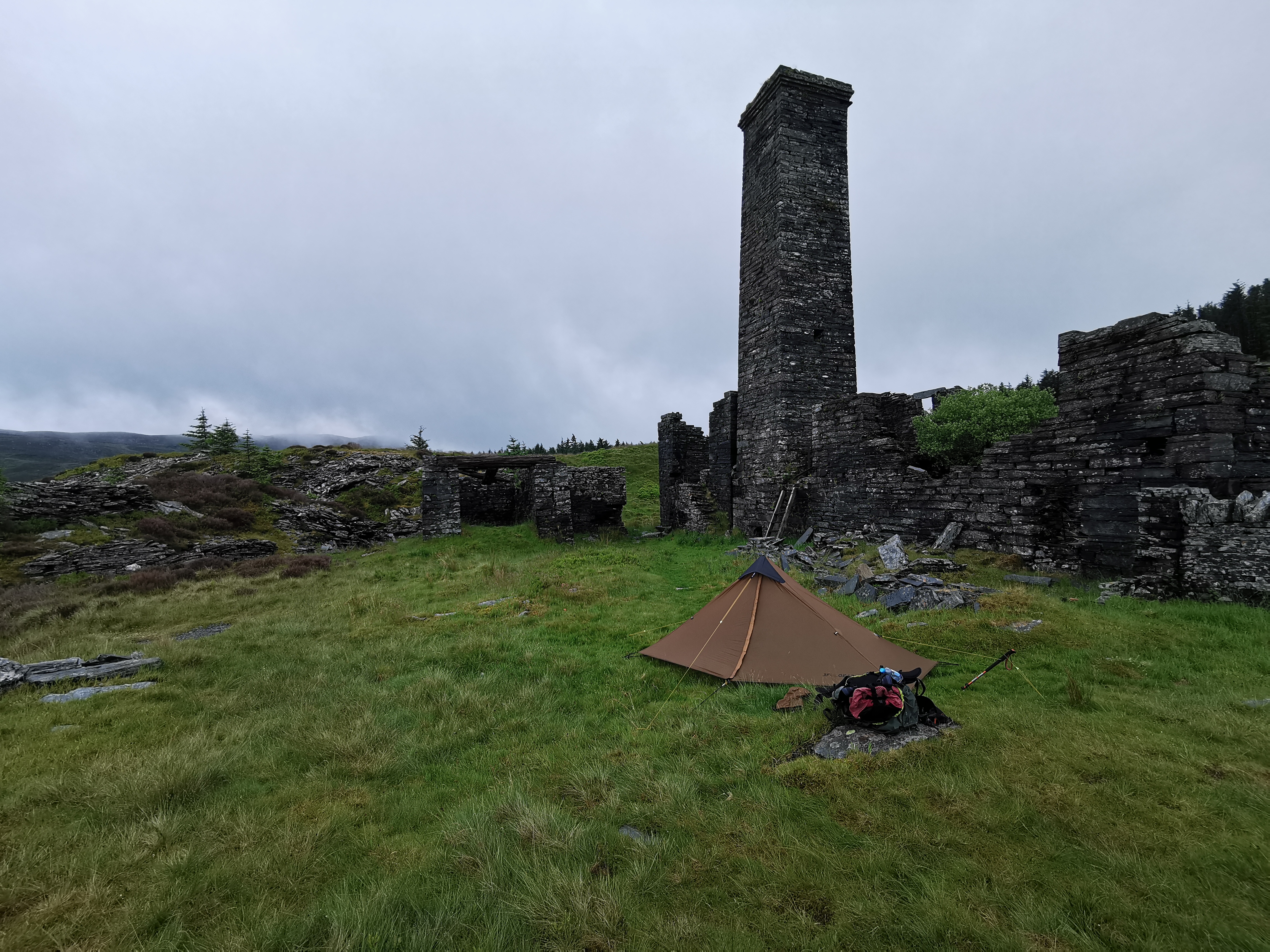 I am not averse to stealth camping in England and Wales. I have been caught on only one occasion and, following a clear and constructive conversation in which I acknowledged that I was in the wrong, I was allowed to remain at my chosen location. I will continue to enjoy the countryside in which I live, while keeping my fingers crossed that one day a suitably progressive government will change the law to bring England and Wales closer to the approach adopted in Scotland. I will continue to travel to France and explore the mountains of this amazing European country, enjoying the opportunities for bivouacking while respecting the rules and the environment. I will continue to consider hiking in Scotland, and one day I will embark on a multi-day adventure there. I know I will enjoy it. In time, I also hope to travel to Sweden, a country I haven’t even mentioned until now, where the principle of Allemansrätten — the right of public access to nature — provides opportunities for responsible outdoor recreation. Similar rights exist in Norway and Finland, although the rules differ between countries. There is a lifetime of hiking ahead of me in places where responsible backpackers are welcomed and where spending a night beneath the stars is seen as a natural part of enjoying the countryside. And while I remain on this mortal coil, I intend to do everything I can to make the most of those opportunities!