
Introduce yourself; who are you and what types of books do you write?
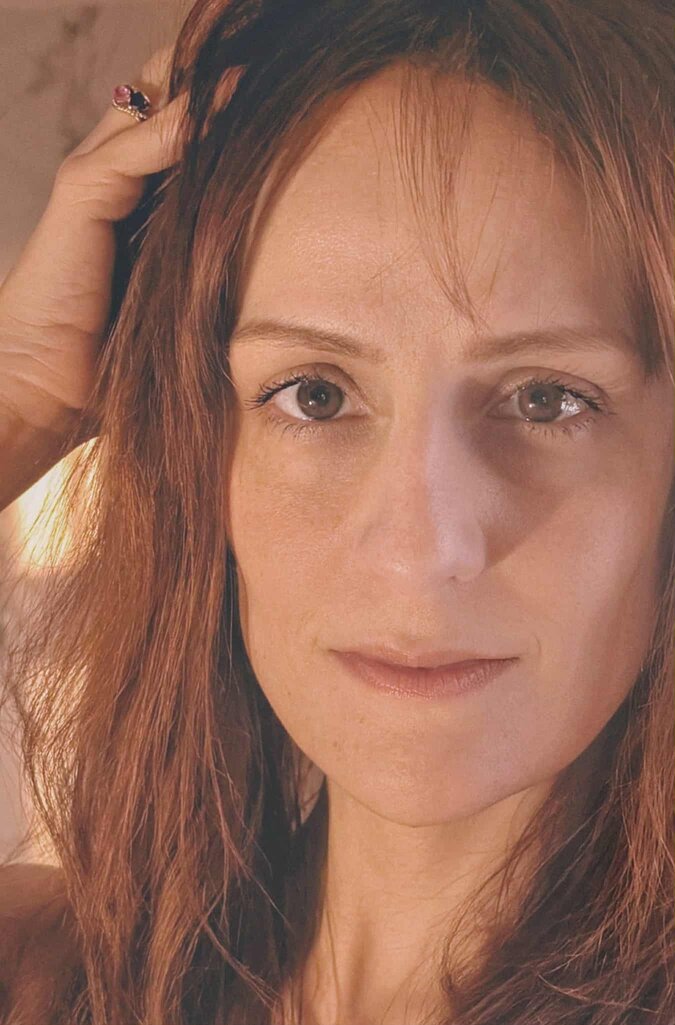
My name is Angel T. Dionne, and I’m a surrealist writer. I’m also an associate professor of English literature at the University of Moncton’s Edmundston campus. I often get asked what surrealism is. It’s a fever dream. It’s a discarded apple core that becomes a poem by day and a home for centipedes at night. It’s what happens when a cough births a universe. Surrealism was originally (and still is) a reaction against a rationalist and authoritarian society. With the current rise of generative AI, I believe experimental and surrealist work will only become more important.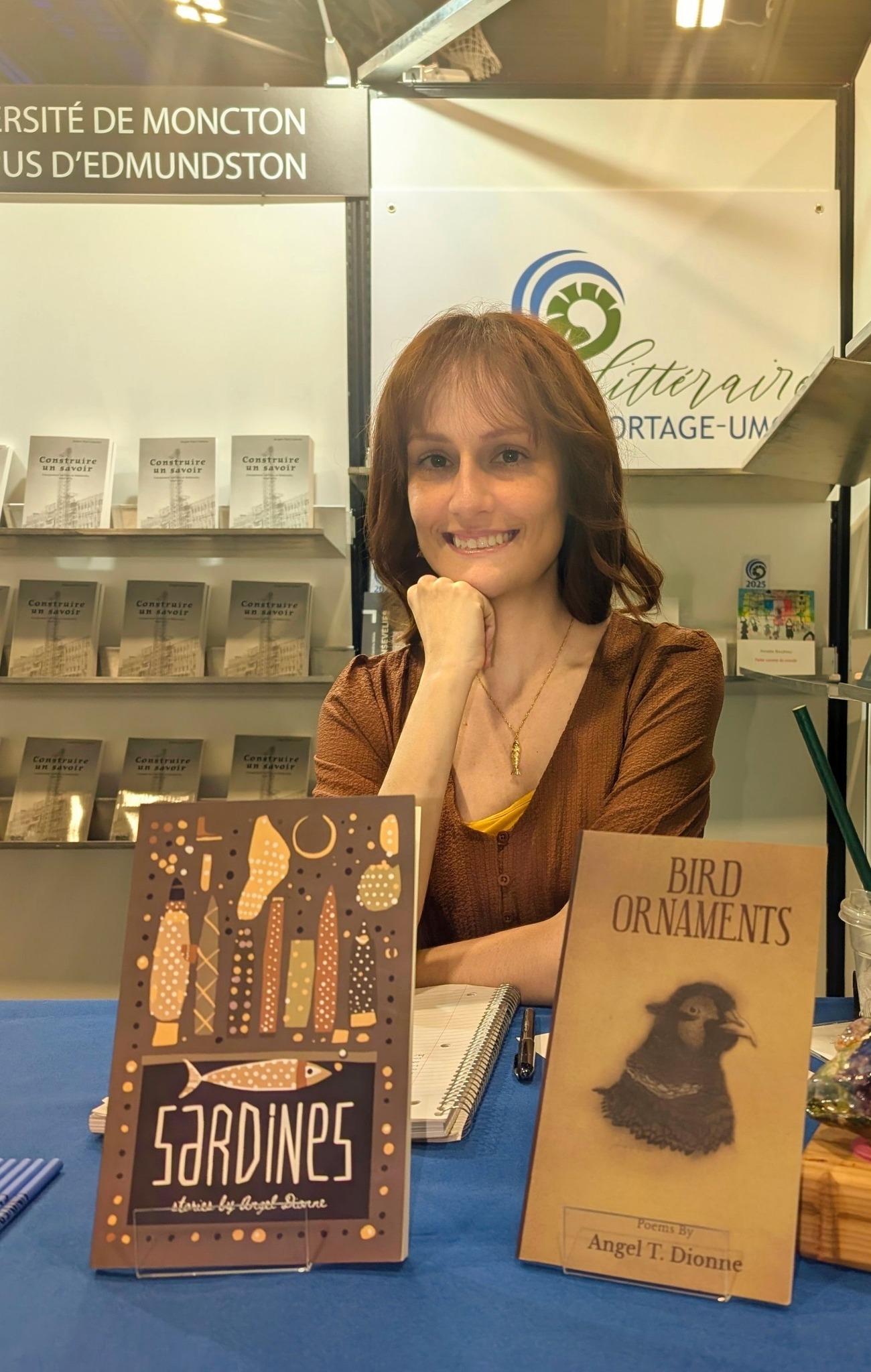 What are your books about?
My two most recent books are inspired by the French surrealist movement of the 1920s, and I would say that they are firmly situated in the contemporary surrealist movement. My first surrealist book, Bird Ornaments (2025), is a collection of surrealist poems created using automatist techniques and the juxtaposition of unrelated imagery. It’s sort of a return to childhood and a time before rationality and logic were imposed upon us by society. Surrealists believe that rationality stifles creativity and the true function of thought. The goal is to unearth the subconscious mind.
My newest book, Garden-Body., is forthcoming with Radiant Press in fall 2026. The poems are prose poems. Unlike Bird Ornaments the poems in this book tell the story of a boy named Lev, whose body grows tangled weeds. His mother is part flora and part feather; his father is a bowl of ash; his brother, eternally eight years old. It’s a collection of bizarre vignettes that take us through Lev’s life and the strange experience of otherness.
What was the inspiration behind writing your first book?
My first book, Sardines, was a collection of realist short stories. I’ve since moved away from realism and literary fiction. Surrealism has always been my true home. I remember being in the 6th grade and engaging in automatic writing although I didn’t have a name for it at the time. I just liked the way it made my brain feel.
But yeah, for my first book, I wanted to explore unresolved guilt. The initial version of the manuscript was completed in partial fulfillment of my PhD in creative writing at the University of Pretoria under the supervision of Dr. David Medalie, who is himself a brilliant writer. I was inspired by Martin Buber’s concept of unresolved guilt and the three spheres of guilt resolution outlined in his 1957 paper, “Guilt and Guilt Feeling,” which formed the foundation for my research dissertation. The collection focuses on protagonists who struggle with unresolved guilt. The prose is sparse and dry, and the environments the characters inhabit mostly claustrophobic tenement buildings.
I look back on the book now and think it’s not my best work. It’s very much “young writer figuring out her voice,” but it nonetheless makes up part of my journey, so I try not to overthink it.
What did you learn while writing your second book?
Bird Ornaments is where I finally leaned into my voice and figured out what my identity is as a writer. I returned to my early roots, so to speak. Back when I was doing my undergrad, I made the mistake of thinking that surrealism and experimental writing were too niche to find a home in the publishing world. It’s already difficult enough for authors of more mainstream work to get published. Who on earth would be willing to publish bizarre, often nonsensical poetry?
I was surprised when Bird Ornaments got accepted much quicker than my first manuscript. I learned to trust my own mind. I also learned that my work might reach a broader audience than I had previously anticipated.
Garden-Body. represents an even deeper embrace of the surrealist mindset. While writing it, surrealism became embedded deep in my bones. I found myself asking what it would be like to have a disembodied hand as a son or whether a donkey would pay respects during my funeral.
What is the most rewarding part of being an author?
Honestly, it’s as simple as hearing “I read your book” or “I loved your poem. It’s so weird!” I just want someone, anyone to read what my subconscious conjures. When someone tells me that my work makes them realize not everything needs to be analyzed, and that sometimes just experiencing is the whole point, I feel like I’ve succeeded as an author.
What elements do you think make for a good story?
When it comes to realism and literary fiction? Editing and attention to technique are important as is learning the difference between showing versus telling.
As for surrealism, the element of surprise is the biggest thing. The best surrealism is destabilizing and often leaves you unable to make sense of why you feel so destabilized and disturbed. André Breton, the father of the surrealist movement, is a great example of a writer who made good use of this element. His automatist poem “What Violins Sing in Their Bed of Lard” is a potpourri of unrelated imagery. A “snail dreams of the moon’s defeat” and “the butterfly buttered with straw becomes a butterfly in straw.” Reading the poem is a visceral and upsetting experience, yet there’s also an element of childlike playfulness. Don’t try to make sense of it.
What is the hardest part of being an author for you?
My own self-doubt. That’s probably what most authors would say, but I think that inner critic becomes even louder for those whose work is more experimental. We wonder whether people will read it and think we’re absolutely unhinged. We hear “This makes no sense. My five-year-old child could do this!” when it comes to experimental and abstract art. The same goes for surrealist writing.
But I’ve taught a fourth-year surrealist writing course, and in their final reflections, students mentioned how difficult surrealist writing was at first. They weren’t used to embracing the bizarre and had not accessed their unconscious minds in a long time. One student said she found it hard to sleep because she had taken to writing down whatever bizarre imagery appeared in her dreams multiple times per night. The human mind yearns for tidiness and easy answers. Is that a result of human instinct or societal conditioning or both? I lean towards the latter. Breaking away from this is a difficult task. I sometimes gave my students constraints such as having to write a surrealist piece using only words that start with the letter “f.” I told them that surrealism sometimes means placing yourself in a box and then figuring out how to punch through it and set yourself free.
I’m rambling, but all this to say that the hardest part of being an author is that little voice that worries some readers will assume the nonsensical nature of my work is just bad writing.
What is your current writing project?
I’ve recently written a handful of prose poems and stories. I’ve also completed two short surrealist films, one of which was screened at the Heron Bay Film Festival in late 2025. I’m not working on another book for the time being because I’m preparing for the release of Garden-Body. I’m doing a lot of pre-release social media promotion and looking forward to working with an editor to get the book polished.
What is the best writing advice you’ve ever received?
Find your voice. I only wish it hadn’t taken me so long to do so. Now it’s something I tell my students early and often.
If Garden-Body. had a taste, texture, and sound what would they be? What animal would Garden-Body. be if it could be any animal?
Garden-Body. smells like mulch and spring-thawed soil. Taste? Aunt Judy’s goose. It feels like your fingers when you’ve sat in the bath for too long—all pruned up and sensitive. Isn’t the book already an animal? I think it’s some sort of moth. Maybe an earwig.
Where can readers discover more about you and your books?
I have a website: www.angeldionne4.weebly.com
I’m also fairly active on Instagram, where I post a lot of my creative works and updates: https://www.instagram.com/angel.t.dio_/