

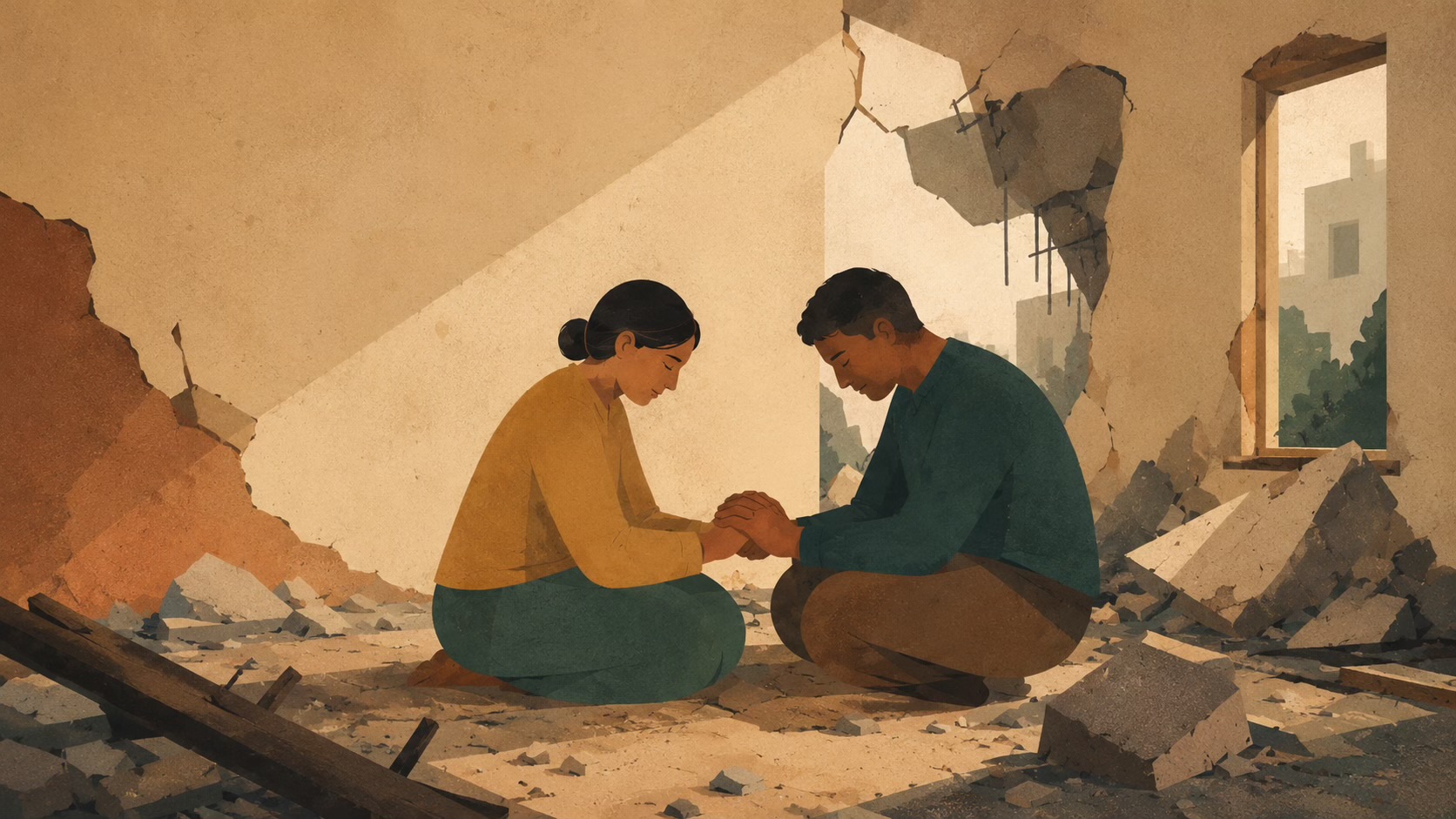
 There are few things that make us feel as powerless as an earthquake.
We build walls, lock doors and make plans because we like to feel that the things around us are dependable. Then the ground itself begins to move. For a few seconds, something we have trusted our entire lives suddenly feels uncertain.
Recent earthquakes have been a reminder of just how quickly an ordinary day can change.
Jesus said that earthquakes would be part of the conditions marking the conclusion of this system of things. (Matthew 24:7) Knowing that doesn’t make the experience less frightening. Nor does faith mean that Christians never feel fear.
But we have somewhere to take that fear.
When there isn’t time for many words
Philippians 4:6, 7 gives this beautiful invitation:
“Do not be anxious over anything, but in everything by prayer and supplication along with thanksgiving, let your petitions be made known to God; and the peace of God that surpasses all understanding will guard your hearts and your mental powers by means of Christ Jesus.”
Notice what Jehovah promises. The passage doesn’t say that the frightening situation will immediately disappear. It says that his peace can guard us while we are going through it.
Sometimes prayer may be long and specific. At other times, we may barely know what to say.
When intense emotions leave us unable to find the right words, Jehovah can respond even to a prayer as simple as: “Please help!”
That’s worth remembering when the windows are rattling, an alarm is sounding, or we are waiting to hear whether someone we love is safe.
A prayer during an earthquake
There is a striking experience involving the devastating 1976 earthquake in Friuli, Italy.
Twenty-four Witnesses were attending a congregation meeting when the earthquake struck. After an initial tremor, a much stronger one hit. The lights went out. The building shook violently. Those inside realized that it could collapse.
What did they do? They prayed.
One of the brothers later recalled that he closed his eyes and prayed to Jehovah, and the others did the same. A prayer was spoken aloud. He said that hearing it comforted them mutually. They didn’t know whether the building would remain standing. They found comfort, though, in Jehovah’s promises—including the hope of the resurrection.
The tremor eventually stopped, and they were all able to leave the building alive.
Their experience doesn’t teach us that prayer guarantees survival during a disaster. The Bible never makes that promise. “Time and unexpected events” can affect all of us.—Ecclesiastes 9:11.
It teaches us something perhaps even more useful:
Jehovah can give us peace when we don’t yet know how the story will end.
What should we pray for?
During a frightening situation, we naturally want to ask Jehovah for protection. There is nothing wrong with telling him exactly what we’re afraid of.
But our prayers can go further. We can ask for a clear mind so that we make good decisions. We can ask for courage. We can ask for strength to help someone else instead of becoming overwhelmed ourselves. We can ask Jehovah to help our brothers and sisters who may be in greater danger than we are.
Psalm 46:1 says:
“God is our refuge and strength, a help that is readily found in times of distress.”
A refuge doesn’t mean the storm isn’t happening. It means we aren’t facing it alone.
Perhaps that is one of the greatest gifts of prayer. When everything around us feels unstable, prayer reminds us that our relationship with Jehovah hasn’t moved at all.
The floor may shake. Our heart may race. We may not know what happens next. But Jehovah is still listening.
Join us this Sunday
This Sunday, Meek Travel invites you to join us for our virtual Bible tour, The Widow’s Gift.
We’ll spend time with another person whose circumstances could easily have overwhelmed her and consider what her quiet act of faith can teach us about our own relationship with Jehovah.
Visit MeekTravel.com for Sunday’s tour times and details.