

 Women grow up being told to be careful, to travel in pairs, to always let someone know where they are. Women are policed in public spaces, infantilized under the guise of protection and constantly reminded that danger is everywhere. Yet, despite these warnings and the fear that society passes around, women are now the largest group of solo travellers in the world. But make no mistake, this contradiction is no accident, it's a response.
Solo travel offers something that the world doesn't offer to women: autonomy. What appears reckless or rebellious to some is, for many women, the taste of unfiltered independence. And this desire is anything but rare. The numbers prove that it is growing. More women are booking solo trips, joining travel groups and crossing borders alone than ever before. This rise isn't some "quirky" fad, but rather a collective rebellion. Women are carving out space in a world that limits their movement. They're not leaving anything behind, but are running towards something.
Out of these solo travellers, women make up the majority of it, with statistics showing that they constitute about 65% to 84% of all solo travellers (source). Except…why? Why are so many women so focused on travelling by themselves in a world that’s designed to hate them? We hear news about gender-based violence everyday, yet somehow so many women brave the unknown alone.
Solo travel as resistance
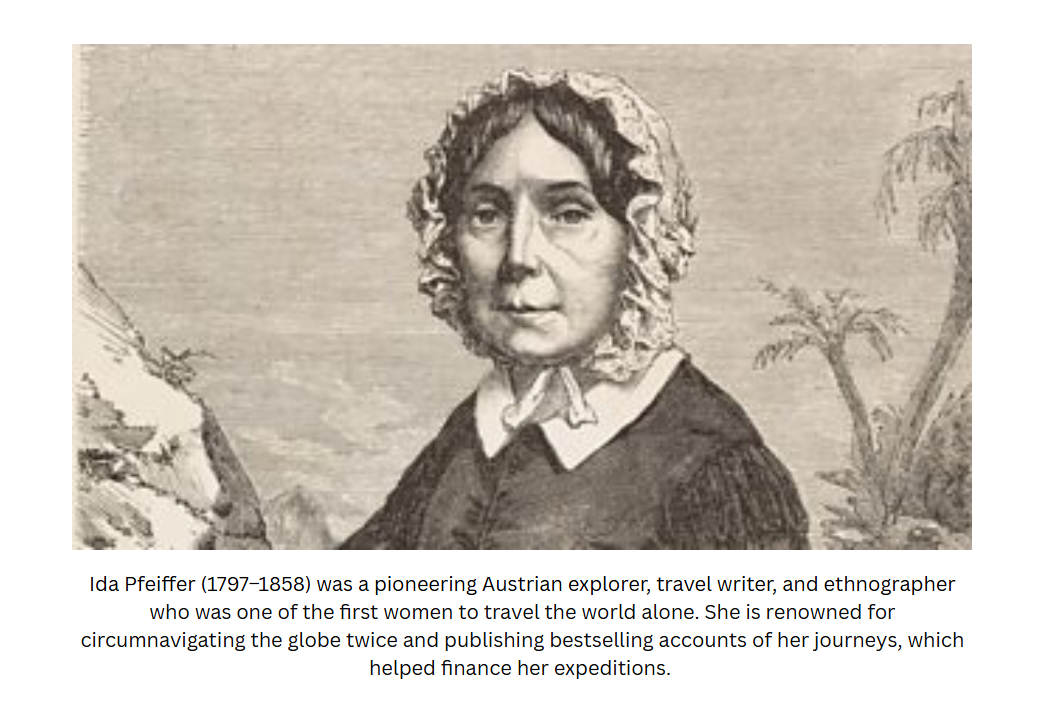 The female dominated rise of solo travel is more than just a statistic or a passing trend. It reflects a deeper ideological shift that is shaped by both women's growing desire for autonomy and by the patriarchal structures that have historically dictated how women should move through the world. Female solo travel is framed as rebellious not because women are setting out to make a political statement, but because the patriarchy reads any self-directed female movement as political by default. A woman travelling alone disrupts the long-standing expectation that she must be supervised, accompanied or granted permission to exist in a public space. Patriarchy protects itself by policing this disruption. When women move freely, they threaten a system built on control, and that system responds with restriction and hostility. The act of a woman moving freely becomes radical, not by its intention, but by its impact on a structure that was designed to not accommodate her freedom.
The motivations behind a woman travelling alone are often misread as escapism, as though she is running from something rather than moving towards her own autonomy. But solo travel is very rarely about escape. It's more often about seeking space, clarity and the chance to exist without carrying the weight of expectation, obligation and scrutiny. A woman travelling by herself isn't fleeing from life, but rather running towards it.
Every woman who chooses to move alone quietly disrupts the patriarchal script of what a "good woman" should be. Her presence in the world, unapologetic and unaccompanied, questions the boundaries she's told to obey. In choosing solitude, she asserts her autonomy as her right and not a privilege decided by someone else.
Cultural backlash and the male lens
Recent incidents highlight how deeply the global male gaze shapes women's experiences when they travel. In one viral video from Sri Lanka, a solo female traveller was openly harassed and later flashed by a local man. Such moments are not merely about cultural differences; they expose how a woman travelling alone is still read as sexually available, socially unclaimed, and therefore "approachable" in ways men would never dare with other men. Even with clear evidence of wrongdoing, the comment sections were quick to shift blame onto her. They criticised her clothes, her choices, and her supposed lack of "survival skills" (source). These kinds of responses reflect a wider narrative, that it is the woman's responsibility to prevent harassment rather than society's responsibility to stop producing men who behave this way. From South Asia to Europe, across cultures and continents, the pattern repeats. A woman simply existing alone becomes, in the eyes of some, an invitation rather than a boundary.
 The male gaze in tourism is well documented. Women are frequently positioned as objects within the travel landscape rather than participants. Tourism marketing often uses women as visual accessories; half-naked, conventionally attractive bodies placed beside beaches, pools or dramatic scenery to evoke desire. In these images, women become part of the backdrop, not travellers experiencing it. The result is a subtle but persistent message: women exist in tourism as decoration, while men are framed as the explorers, adventurers and decision-makers.
Patriarchy and the freedom of movement
The patriarchy is neither accidental nor naive; it is a deliberate and enduring system that restricts women's mobility, autonomy and access to experience. Control over where women go, what they see, and who they become has always been central to maintaining its power. When a woman travels alone, she experiences something the patriarchy tries to prevent: unmediated autonomy. She makes her own decisions, navigates unfamiliar environments and exists without being managed and defined by someone else. That freedom creates a shift that becomes incredibly difficult to reverse. Solo travel teaches her the difference between protection and control, and that is precisely where its power lies. This form of liberation is not loud or confrontational; it doesn't announce itself. It unfolds quietly, through confidence, competence and self-direction. Solo travel becomes transformational, not because a woman sees how others live, but because she finally experiences how she could live.
At the same time, the appeal of solo travel for women is not as simple as rebellion. For many, it is the only time they are allowed to stop being the “responsible one.” In most family structures, especially those shaped by patriarchal expectations, women are relied upon to organise and smooth every detail of travel; from what the children will wear to what the family will eat. The result is a holiday enjoyed by men and children, while for the woman it becomes just another extension of care work. Travelling alone offers a rare escape from these duties. It allows a woman to rediscover who she is when she is not a caretaker, supporter or peacekeeper. There are no mouths to feed, no bodies to clothe, no logistics to manage; only space to breathe, reflect and prioritise her own desires without apology or guilt.
The popularity of platforms dedicated to solo female travellers has arisen in recent years not because women suddenly decided they want to travel more, but because the information they needed was never centered or taken seriously in mainstream travel spaces. Current statistics makes this shift undeniable. Women dominate solo backpacking, with 75% of solo travellers being women (source). In the last four years, bookings made by solo female travellers increased by a “whopping 88%" with most of the travellers being between 20-25 years (source). But that doesn't mean older and younger women aren't travelling; the proportion of 30-something backpackers has doubled since the early 2000s.
The reality of lived experiences
It has always been understood that women experience daily life differently from men, and this difference naturally seeps into how women experience travel. The way a man travels, commutes and walks home at night is not the same as a woman. Men experience public spaces with a level of ease that women rarely know. When women travel alone, they have to think of a hundred things men have the luxury not to consider: safety routes, exit points, local gender norms, night transportation, etc.
This difference isn’t simply paranoia, but the lived reality for every woman. It’s no secret that women have to move through the world by being more calculative than men. When travelling, these calculations intensify. Acknowledging this isn’t to discourage women from travelling, but empowers them to do so. By understanding it publicly, we are able to validate the strength it takes for women to travel alone and the courage required to claim spaces that weren’t designed for them.
In fact, the tourism industry still relies on outdated assumptions about women. This framing results in a negative experience when it comes to a woman travelling. This explains why travelling isn’t simply a leisure activity for women, it’s a challenge to the system that was built without them in mind.
However, beyond the statistics and the politics, there's a deeply personal transformation that solo travelling gives women. Most women grow up in the shadow of self doubt and insecurities, to not walk alone, to not trust strangers, to not make decisions without asking and to not take risks. Fear becomes internalized long before danger even presents itself, and travelling disrupts that conditioning. A woman no longer internalizes the voice that says she can't do something, because her lived travel experience begins to prove that she can. This shift is subtle. A woman who travels solo returns home with boundaries she didn't have before. She becomes less willing to shrink herself for comfort or approval. Travel doesn't make her someone new, it uncovers the version of herself she may have never been allowed to meet.
A movement and not a trend
The rise of solo female travel is a reflection of broader social shifts. Compared to the past, women today are more educated, more financially independent, and are increasingly unwilling to accept the confined roles or narratives pushed onto them that limit their freedom. Solo travel becomes not just a personal experience of other cultures and countries, but a cultural reset for women everywhere. It becomes a quiet form of resistance that pushes against the boundaries that once felt immovable. A woman walking through a strange city may not feel like she’s part of a great cultural shift, but she is. Every step she takes expands the space that’s available for other women after her. Every story helps another woman imagine a life where she doesn’t need the permission of a man to exercise her mobility.
Perhaps that's the most compelling part of this reset. Women aren't travelling purely to prove anything to the patriarchy that doesn't allow them to travel. They're travelling because they want to see the world outside their homes, and the world just happens to still be adjusting to the idea that a woman can move freely within it.
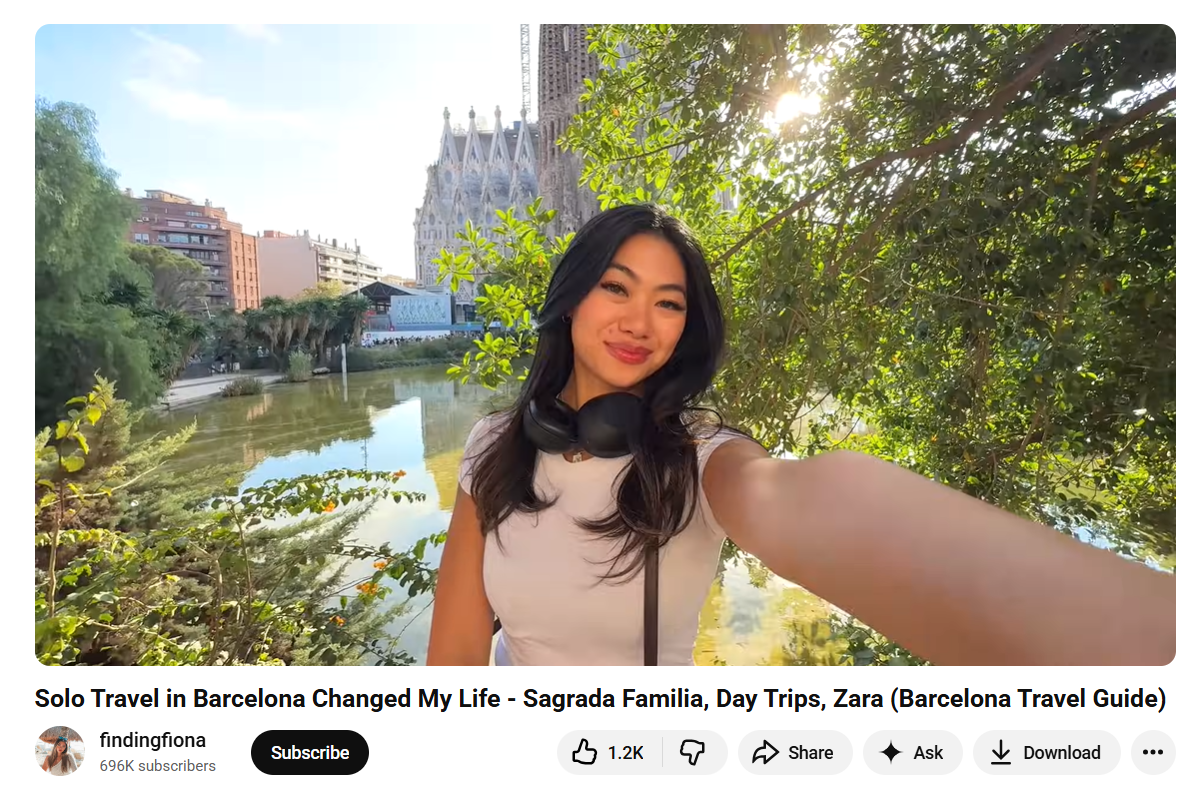 Solo travel by women challenges old assumptions while simultaneously creating new possibilities for other women. It slowly works towards creating a world in which female mobility is expected rather than questioned. This movement isn't simply a trend, but a transformation unfolding in real time. More and more women are travelling alone not because the world has finally become safe or fair, but because they are tired of waiting for it to be. They are moving anyway, they’re carving space for themselves and, in doing so, widening the path for anyone who follows. Every woman who chooses autonomy in motion becomes part of a larger narrative, one redefining what freedom looks like and who is allowed to claim it.
But this shift exists alongside another reality: for many women across the world, even the smallest acts of daily autonomy -walking to a shop alone, spending their own money, or eating before the rest of the family- still require permission. Autonomy is not evenly accessible. For some, solo travel is the final frontier; for others, it begins with something as small as taking a bus alone. This is why systems awareness matters. We cannot talk about travel without speaking about the structures that decide who gets to move freely and who does not. The world was designed with male mobility as default, and women were expected to adjust themselves around it.
As we have explored in previous pieces, reforming existing systems is not always enough; sometimes entirely new systems need to be created alongside them. Solo female travel reflects this truth. Women were never the intended users of global mobility structures. Changing one rule or adjusting one narrative will never be enough. Instead, women are building a parallel movement centred on autonomy, safety, access and self-determination.
Perhaps that is the quiet power of this moment: women are no longer waiting for permission to exist freely in the world. They’re rewriting the rules simply by walking forward.