

 Previously, we examined the idea that men’s preference for youth is not inherent but socially constructed. We identified how society has eroticized the physical and behavioral markers associated with girlhood, producing a continuum in which p*dophilia represents the extreme end of what men are conditioned to desire. Within this framework, the anti-aging industry functions to prevent women from aging out of traits that are culturally coded as youthful and therefore desirable to men.
The anti-aging industry is currently valued at 71 billion dollars and is projected to grow to 126 billion dollars by 2034. These numbers reflect both consumer demand and corporate investment into products and an industry that promises to pause aging in women by keeping their faces, hair (or rather, lack of), and skin looking younger. What is important to understand is that this isn't some niche elite market, but a normalized, mainstream ecosystem that ensures youth is the zenith of desirability and worth.
The rapid expansion of this industry depends solely on convincing people that aging is a problem that can be fixed and that that fix is products that will keep them looking youthful. Smooth skin, firm bodies, hairlessness and sharp, youthful features are linked to desirability and status, marking ageing as no longer a natural process, but a failure.
What often goes unnoticed is how early this conditioning begins. From teenage skincare routines focused on “preventing wrinkles” before wrinkles even exist, to influencers in their early twenties marketing anti-aging serums, the fear of ageing is instilled long before adulthood. Girls are taught to monitor their faces, bodies and skin as if time itself is the enemy. Age becomes something to outrun, not live through.
Unfortunately, this market doesn't affect only the cosmetic industry. The system is training men to desire childlike traits. This isn’t an accidental overlap– it’s deliberate cultural conditioning. This extends into how bodies are sexualized and how age differences in relationships are culturally framed. As we continue to eroticize and glorify forever-youth, we also create an environment where it’s normalized by culture to desire youth and have a preference for the young. This preference moves alongside the cosmetic need to look younger and younger, and as the social expectations to look "young" starts moving into the territory of looking "childlike", it equally becomes acceptable to be attracted to that childlike youth. Features associated with youth (juvenile facial structures, smooth skin, lack of wrinkles, hairlessness) are trained to become beauty ideals with erotic appeal, with media and aesthetic cultures emphasising youthful bodies in ways that shape preferences.
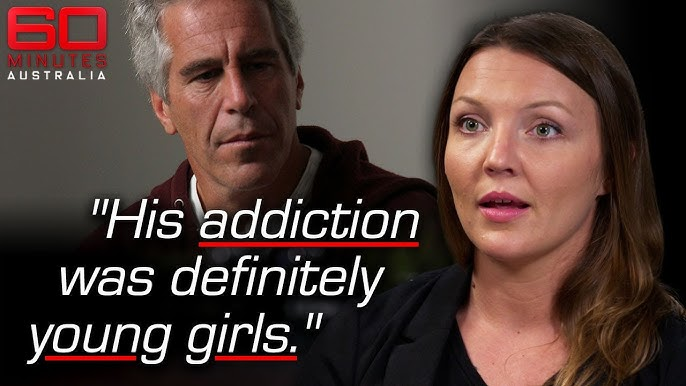 This is why the obsession with youth is not harmless vanity. It is cultural training. It is a constant rehearsal of desire aimed at bodies that appear pre-adult. Over time, what is framed as “preference” stops being about adult youthfulness and begins to slide into attraction toward literal childlike traits. When the system purposely blurs the line between ‘young woman’ and ‘girl’ through beauty culture, fashion, p*rn categories, and social media aesthetics, it becomes easier for desire to drift across that boundary without resistance.
Patriarchal standards don't simply favour the youth, they actively eroticize it. The merge of youth and sexual desirability forms a culture where sexual desire is synonymous with power imbalances. Age-gap relationships are romanticized, terms like "barely legal" are entrenched in p*rnography, school teacher-student dynamics are sexualized, and adult women are infantilized and infantilizing themselves in pop culture and social media. All these patterns aren't separate incidents that could be looked at individually. They're part of a greater culture change that is moving in the wrong direction.
How beauty standards manufacture abuse
However, the eroticization of youth doesn't remain confined to cosmetic aesthetics and fantasy. When society repeatedly presents smoothness, innocence, smallness and dependence as sexually desirable, it works on training attraction towards traits that belong naturally to children. And over time, the boundary between youth and childlikeness becomes blurred systematically, until childhood is no longer seen as a protected stage of life but as a set of eroticized qualities.
Once innocence is framed as attractive, it no longer requires protection. Instead, it signals availability. In this environment, exploiting the weak is not deviant, but an acceptable sexual norm, and if that happens to be a child, it gets marked off as acceptable.
This cultural logic shows up disturbingly in legal systems across the world. Judicial rulings often characterize children as "mature" in child abuse cases. In 2022, a Kenyan court overturned as child sexual abuse sentences for a man involved with a 16-year-old girl on the basis that the minor was "mature" and behaved like an adult, suggesting the act was consensual.
When society trains male desire around childlike traits, it legitimizes the movement of that desire into the real world. When youth is sexualized, children become vulnerable because the surrounding culture reframes innocence as sexual desirability to be consumed rather than protected. According to UNICEF, 650 million girls and women globally, approximately one in five, have experienced rape or sexual assault before the age of 18. Among boys and men, between 410 and 530 million, roughly one in seven, experienced sexual violence during childhood.
 When non-contact forms of sexual violence are included, this number rises further. The majority of these violations occur during adolescence, the stage at which children are in transition to adult bodily features and are subject to cultural narratives about desirability. These figures alone dismantle the myth that child sexual abuse is rare, exceptional, or committed only by “monsters,” when in reality, it is embedded within everyday social structures.
A persistent misconception in public commentary is that adults who abuse children are driven by an uncontrollable biological urge, often reduced to the language of clinical p*dophilia. This framing narrows the issue to pathology and obscures the broader social context in which abuse occurs.
In reality, many perpetrators are not motivated by biological attraction, but driven by power, control and the cultural preference for youth and submission. This framing protects the system. By calling it a disorder or biological aberration, we avoid examining how culture creates these desires through deliberate conditioning. Grooming behaviours identified among childhood sexual abuse survivors often include selecting compliant or low-esteem children, gaining access and isolation, and presenting oneself as charming or affectionate as part of a pattern of coercion, not uncontrollable instict.
Cultural structures reinforce these predatory dynamics. When society romanticizes age gaps, celebrates men for relationships with much younger partners, pushes women towards child-centric beauty standards and frames youth as the pinnacle of desirability, these narratives bleed into how some adults interpret and justify their desires. The beauty industry thrives on this positioning, offering endless products to enhance or mimic youth. Even children are targeted with age-related skincare marketing, raising ethical concerns about the impact of anti-aging rhetoric on young people's self-image and body conception.
Such cultural patterns don't just shape what product people are buying. They also signal what's desirable and what's normal. When someone says "men prefer younger women biologically" they often speak about evolutionary biology in order to justify a culturally learned attraction that's actually deeply entrenched by the media and social norms rather than actual innate drives. Historical evidence shows that standards of beauty have varied over time and between cultures, indicating that what is seen as attractive is shaped more by societal forces than by fixed biology.
The portrayal of beauty has evolved over time, with historical influences ranging from ancient sculptures to modern media representation, indicating that ideals of beauty can vary significantly across cultures and eras.
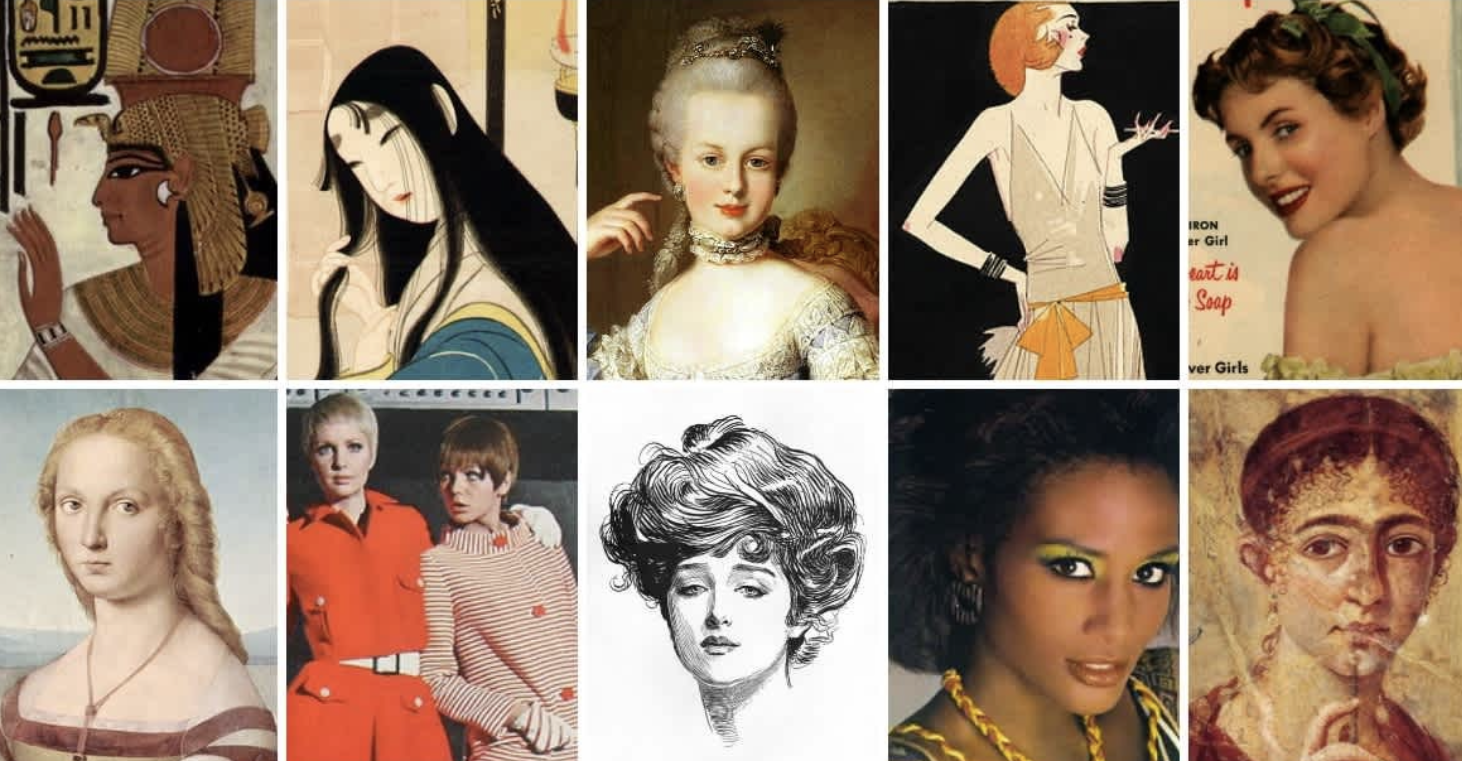 What is telling is how historical beauty standards primarily applied to women. This was to use it as a mechanism for social control and patriarchal reinforcement. While these standards are often presented as 'natural' and 'timeless', they are actually constructs that change over time, often used to limit a woman's freedom and place their worth solely on how attractive they are to the opposite sex.
Unfortunately, contemporary beauty standards amplify youthful traits far beyond reproductive signalling, turning them into markers of sexual worth. The same culture that once trained women to measure themselves through male approval now fuels the demand for anti-aging products and simultaneously shapes how adults perceive and pursue younger partners, revealing a system rather than a sudden modern phenomenon.
A world of powerful men
This dynamic is particularly dangerous when coupled with access and power. Powerful men, those with wealth and status, often have the means to act on these culturally shaped desires with minimal accountability. Power and wealth give men the infrastructure to act on desires culture has already validated– with almost no consequences. This is what individuals such as Jeffrey Epstein decide to capitalize on. Epstein didn’t create these monsters– culture did. He simply provided the infrastructure for wealthy men to act on what society had already taught them to want. The desires were already normalized; Epstein just provided the privacy. Epstein was arrested on federal sex trafficking charges in 2019, but 7 years and 3.5 million pages of his files later, there have still not yet been any substantial consequences to those who Epstein entertained with children on his island, proving that those in power will always remain above the law, as the law was made to protect them.
Media scandals focus narrowly on individual perpetrators and sensational details, obscuring the broader culture and structural context that enabled them to carry out the harm. This focus on isolated villains obscures the system that produces and sustains conditions that make such abuses predictable.
And this is where the harm does not stay confined to elite men and private islands. The same culture that eroticises youth for the powerful also trains the rest of society to value youth above all else. The same standards that fuel exploitation at the top travels downward into media, advertising, social platforms, and everyday social expectations and creates a society where what is protected and indulged among the powerful becomes internalised pressure among the young.
The consequences are both personal and societal. Adolescents exposed to intense beauty standards are more likely to experience bodily dissatisfaction and pressures to conform to idealized images of youth. These pressures are related to sexualization of the youth in the digital world, where young children with unrestricted internet access encounter sexualized content and harmful interactions at alarming rates. Research suggests that hundreds of millions of young people are subjected each year to online sexual exploitation and abuse, including solicitation and non-consensual exposure to sexual materials. These aren't just patterns of individual harm. These expand the parameters of a culture that says whose bodies are valued and desired the most.
Breaking this system means ripping apart the lie that ageing is a flaw. Ageing is a natural human phase, not a problem that needs to be fixed. Industries and media that commodify youth should be rejected and narratives that equate sexual worth with childlike bodies should be abolished. Beauty standards are not neutral or organic; they are engineered by economic and political forces that elevate certain desires and erase others..
Anti-aging beauty culture and sexual violence are not separate issues. The products that promise eternal youth and the social norms that fetishize youthfulness create the institutional structure that shields powerful abusers. Each layer reinforces the next, and together they form a system that produces victims and forever excuses perpetrators.
The system isn't broken - it's working exactly as designed. It must be confronted, dismantled, and destroyed.
Each individual incident must be recognized through the broader cultural processes that shape desires and protect those in power. Only by tearing down this machinery can we begin to build a society that protects children and refuses to eroticise vulnerability.
Until then, the horror unfolding before us will remain just another Tuesday, abuse will keep escalating, and what we now recoil from as scandal will soon be absorbed and renamed normal.