

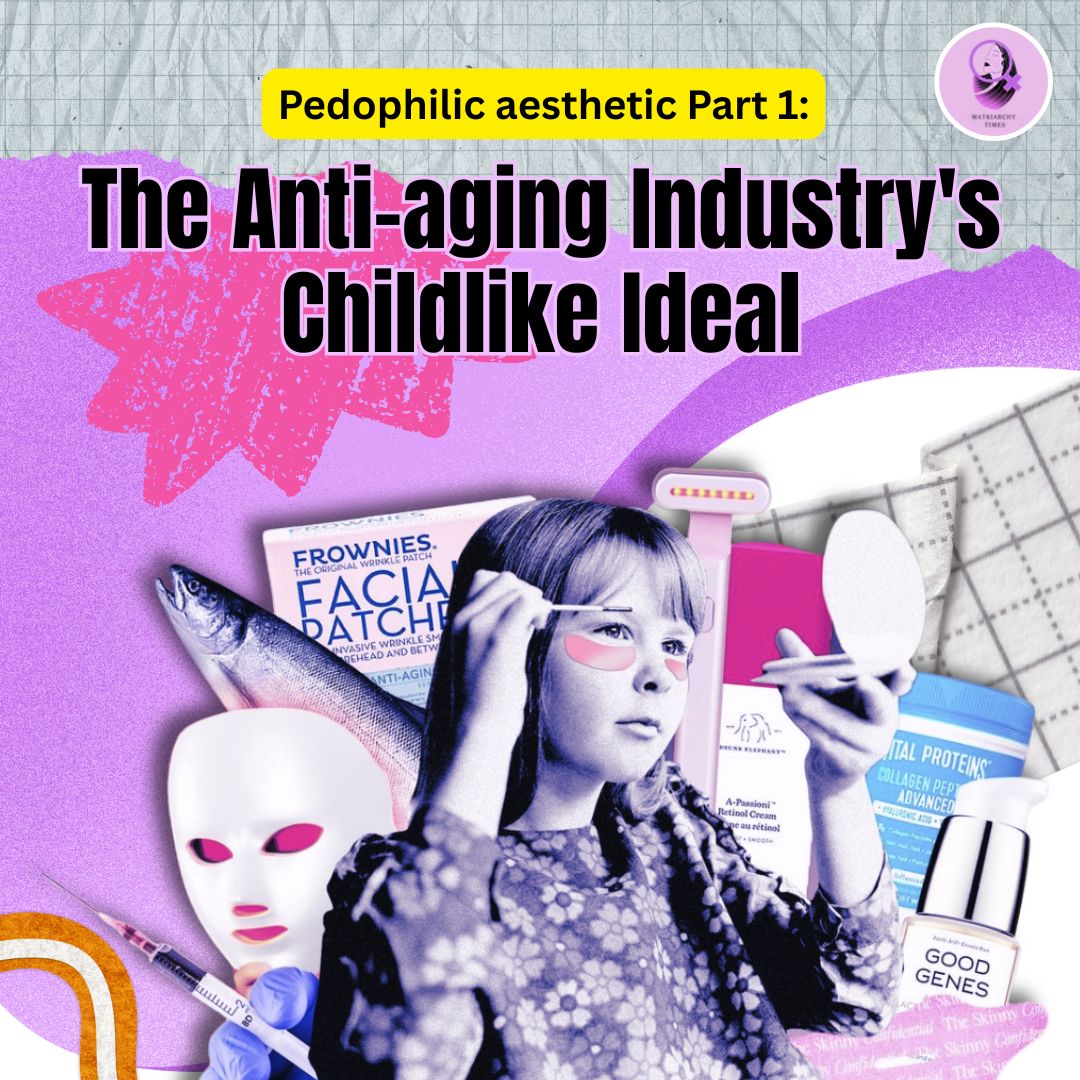
 The recent release of the Epstein files has flooded the public with names and testimonies of how deeply the monstrous sexual exploitation of women and children is entrenched in elite social circles. There’s over a million pages detailing abuse, trafficking, cannibalism and rape, yet the only outcome has been outrage. No accountability. No demand for structural change. Just a million pages of the suffering of children and women with no change whatsoever. As we continue to treat these events as isolated incidents, we punish individuals for their actions instead of interrogating the systems that enabled their violence, and in doing so, we continue to protect the conditions that make abuse inevitable.
The Epstein files aren’t shocking because they revealed something that has never before taken place in the history of mankind. They’re shocking simply because of the sheer volume of it. Yet, we continue to treat it as a one-time incident. When it, inevitably, happens again, we treat that too as a one-time incident. Instead of focusing on a society that eroticized youth, we choose to focus on individual events that take place purely because that society allows them to.
To understand why these abuses keep surfacing time and time again, we have to reject the individualization of the crime and look into desire and culture itself. We have to question what society deems acceptable for men to desire, and what it expects women to perform to ensure they continue to cater into that desire.
With a topic so sensitive and so relevant, Matriarchy Times decided it was best that we do not simply present you with facts, but instead break down those facts. In this article, we aim to break down the existence of the anti-aging industry and following this, we will investigate why powerful men’s abuse of children is the logical extreme of eroticized power imbalances that culture has normalized.
Attraction and age
P*dophilia is often framed as a mental disorder, but this narrative conveniently removes culture from having any responsibility. From childhood, patriarchal systems train people to eroticize youth by portraying innocence and powerlessness as attractive. When abuse occurs, it is not an inexplicable pathology but the predictable outcome of a culture that has consistently taught that youth is the highest form of desirability.
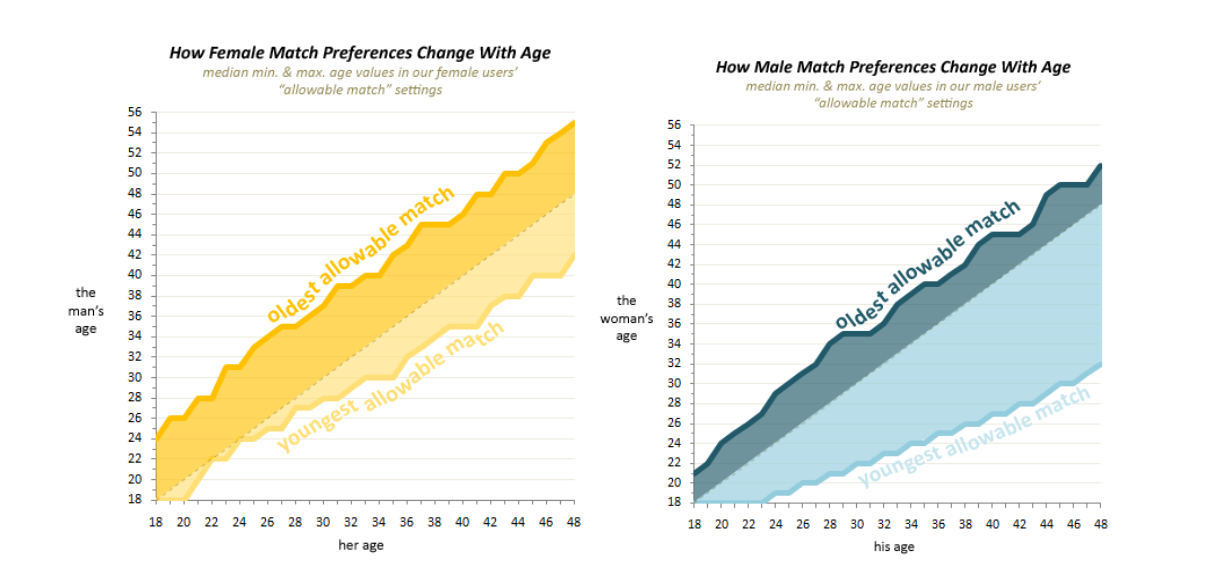
When we talk about attraction, we treat them as natural preferences that are inherent and cannot be changed. What we don’t do is stop to consider the cultural effect of these preferences. “Youth” has been framed as the preference for most men. The older a man gets, the more he widens the age range on the younger side, evidencing the male preference for youth. However, no matter how old women get, the older option stays the same, and though they very slowly increase the younger option, it's not enough to be significant nor is it large enough to be alarming.
 However, the biggest lie we’re told is that these are natural preferences, when in reality they were constructed and normalized by society over generations. Over and over again, society has taught both men and women that it is normal for men to desire the physical and behaviour markers of childhood itself, while ensuring that women spend the whole latter part of their lives fighting any signs of mental or physical aging.
The cultural appreciation and validation of youth and purity in women exists on two ends of a spectrum. On one end sits the beauty industry selling anti-aging as a necessity. On the other sits the eroticization and fetishization of youth and childlikeness as the ultimate paragon of desirability. And between these two ends of the spectrum sits a system that ensures youth continues to be a “natural” preference.
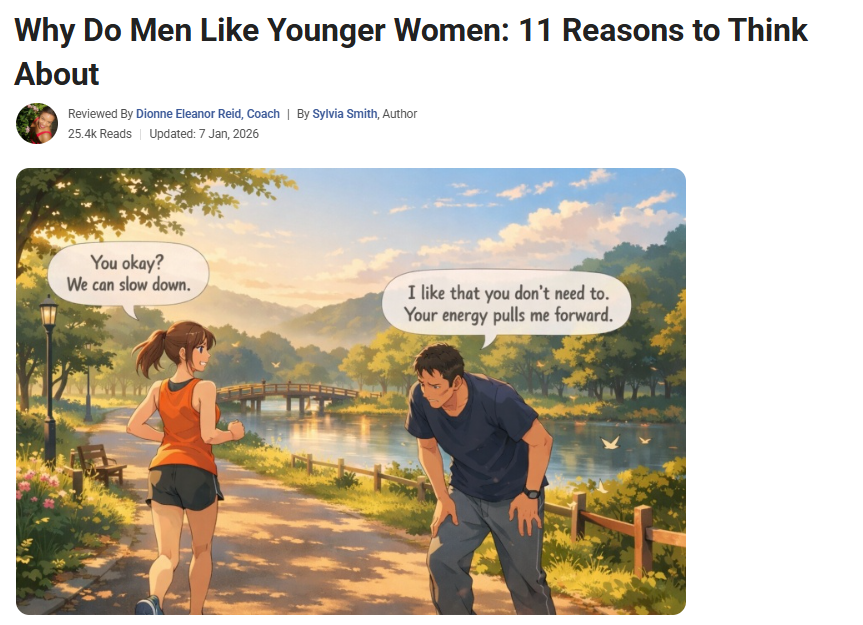 Patriarchal standards don’t just favor smooth skin, hairlessness and innocence. It ensures that these prepubescent traits (hairlessness, small bodies, submissiveness, emotional dependance, smoothness) are eroticised, creating a system where women are only favourable if they resemble childhood and not adulthood.
This logic even seeps into intimate language and relationship dynamics. The cultural normalization of calling partners 'daddy' connects childlike positioning to sexuality by recontextualizing a familial role of authority into a submissive role-play. This phenomenon merges the need for safety and care –traditionally provided by a father– with erotic desire.
The anti-aging industry
The anti-aging industry exists solely because adulthood, and the maturity and wrinkles that come with it, conflict with the beauty standard that hasn't been built on just youthfulness, but childish youthfulness. Women are punished for naturally aging out of this ideal nature and are constantly pressured to chase an impossible, increasingly childlike appearance forever, while their male counterparts are never required to do the same.
Societal and marketing driven beauty standards that equate youth with attractiveness rejects natural aging. As skin ages, the reduction of collagen causes natural sagging, and yes, while this does cause the faces youthful features to start changing, this is also a privilege most people forget they have. Aging itself is a privilege and wrinkles are accomplishments of that journey. In many historical and cultural contexts, wrinkles were viewed as honored badges of wisdom and a life fully lived. However, over time, wrinkles have begun to become a sign of “letting go”, as they no longer adhere to the beauty standards of a smooth and youthful face.
Hairlessness is the clearest example. Women’s razors became mainstream through a deliberate, early 20th-century marketing campaign by companies like Gillette (MIlady Décolleté), which transformed underarm and leg hair from a natural, non-issue to an unsightly social taboo that required a specific, branded solution. Following the invention of the safety razor for men, they promoted the idea that body hair was unhygienic and unfeminine for women. What started as a marketing tactic evolved into a system where childlike smooth skin became the only desirable option on women.
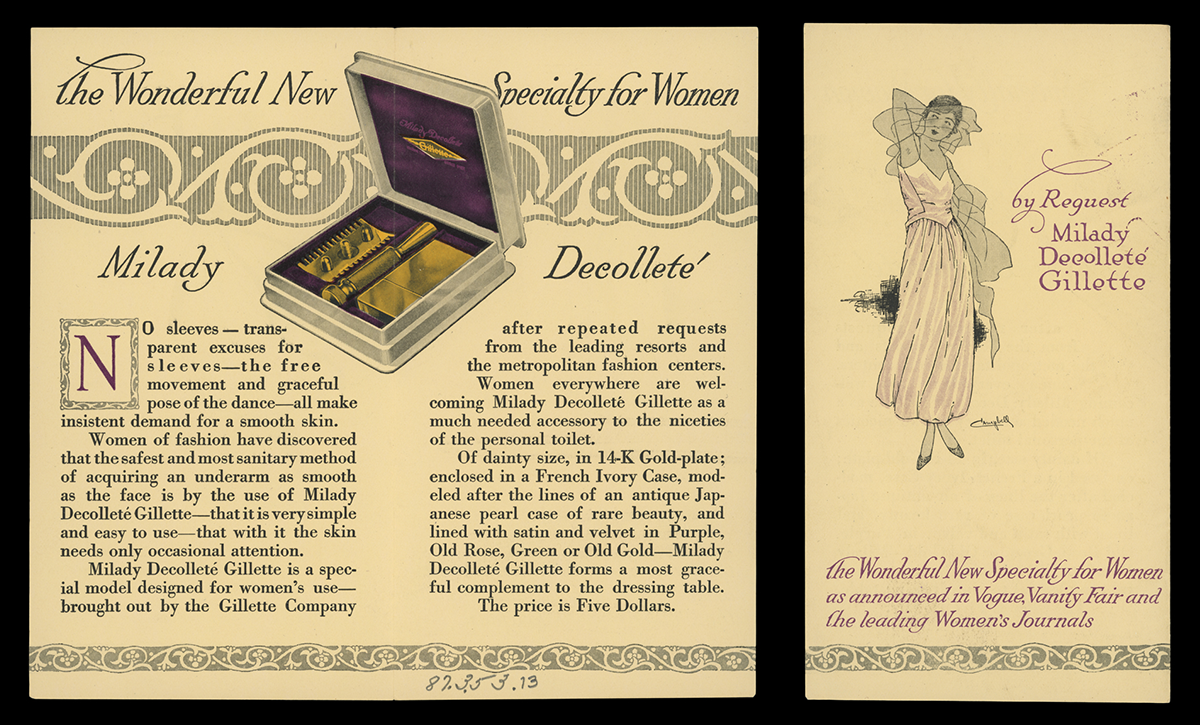 Gillette Milady Décolleté Advertisement, 1915
The message is clear: adulthood makes a woman less valuable.
Entire billion-dollar industries exist around removing body hair entirely. Not just trimming or grooming, but erasing the natural marker of sexual maturity. Whether it be for wanting their partner to find them attractive or whether they have been conditioned to believe that hairlessness equals beauty, many women believe shaving their underarms, their legs and their pubic hair is ideal. Smoothness somehow became equal to femininity, despite it being biologically associated with childhood. The more a woman’s body resembles that of a child, the more attractive she is.
Alongside physical traits, behavioural traits associated with girlhood are eroticized. Innocence is framed as “sexy” and ingénue characters, such as Belle in Beauty and the Beast and Maria in The Sound of Music, are depicted as the ideal woman in the media.
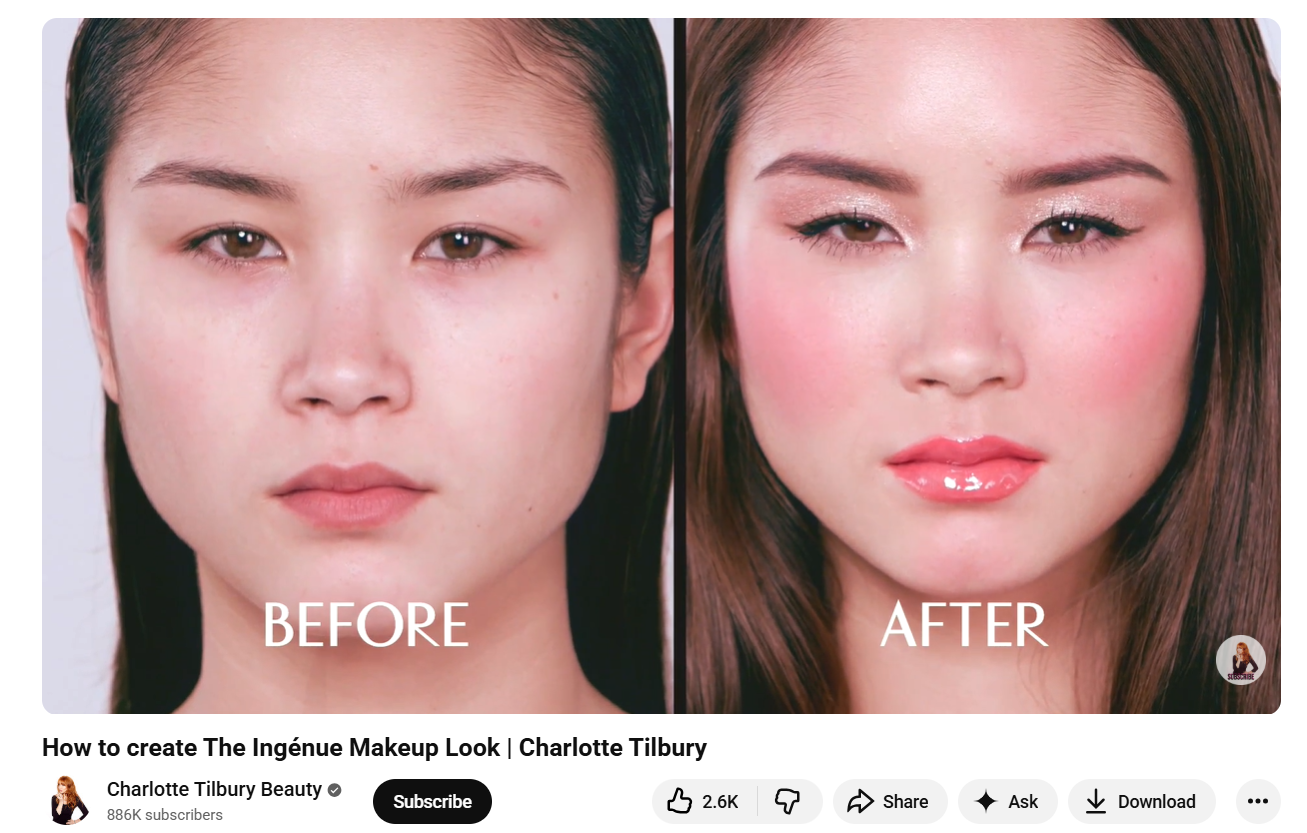 Women are praised when they’re “sweet”, “pure”, “soft” and “submissive”. When they’re assertive, they’re considered aggressive. When they’re confident, they’re full of themselves. When they’re well read and intelligent, they’re unattractive. The ideal woman is soft natured, quietly present and dependent.
From a very young age, girls are forced to absorb these expectations. Before being praised for their intelligence, girls are praised for being pretty. Their bodies become public property for commentary as soon as they exist. And through this, an artificially constructed preference is produced.
Children’s clothes or miniature adult clothes?
Clothing plays a massive role in blurring the boundaries between childhood and adult sexuality. Clothing marketed to children alarmingly mirrors adult fashion and the media fails to present girlhood as childlike innocence, and instead presents it as something that is both innocent and alluring.
The boundaries between childhood and sexual desirability are constantly blurred. Tight clothes, cropped tops, adult-like makeup styles for pre-teens and vilely worded t-shirts reinforce the message that children are already "mature" enough to understand the sexual undertones of their clothes. This constant conditioning teaches society to associate youth with desirability and creates a contradiction where little girls are sexualized and then blamed for attracting attention. The beauty industry feeds this contradiction to ensure its longevity. Skincare marketed to twelve-year olds focuses on preventing aging that hasn’t even begun. Makeup tutorials teach children how to sculpt their faces into adult sexual ideals before they even have the features for it. The initial goal of makeup was self-expression, but that is no longer the case. Now, the goal is to train girls early into chasing the standard built around perpetual youth.
Meanwhile, women are punished socially for aging out of this ideal. Moving beyond their twenties is treated as decline. Women disappear from leading romantic roles in the media long before men do. Their desirability is framed as time-limited, while men’s is framed as expanding with age.
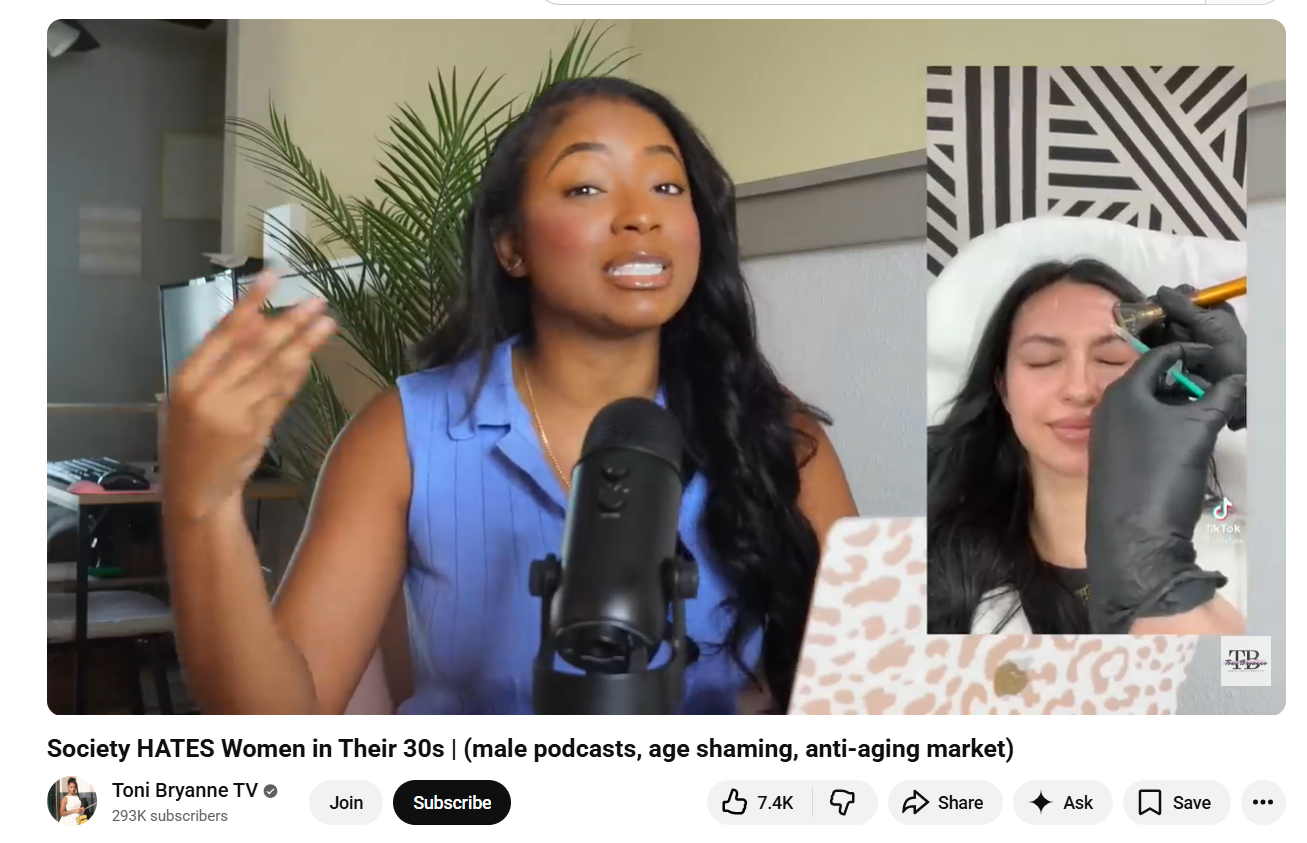 While men are considered to get more attractive as they get older, with terms and phrases such as “silver fox” and “aging like fine wine”, the focus on women is not their attractiveness, but rather how they’re dealing with their so-called "unattractiveness" that comes with natural age.
P*rnography
This conditioning can be seen clearly in p*rnography. The most commonly looked up category of p*rn by men is "teen". Instead of saying someone is a child, the term "barely legal" comes into play, making it seem like they aren't children, but instead almost-adults. Language is used strategically to make exploitation feel acceptable. “Barely legal” does not celebrate adulthood; it celebrates proximity to childhood. It markets the thrill of crossing a boundary without technically breaking the law. The fantasy is youth, vulnerability and imbalance of power. School uniforms, pigtails and babytalks dominate these portrayals. Even though the actors are adults, the appeal is explicitly adolescents.
The Reinforcement Loop
We’ve explored the two ends of the spectrum; men are taught to desire youth, and women are taught to preserve it at all costs. One teaches men what to want. The other teaches women what to become, and together they create a loop where youth is eroticized and female maturity has no value. By training society to associate femininity with helplessness and masculinity to leadership, the imbalance begins to feel natural and the dependence begins to feel romantic.
What society calls “preference” is a result of decades of conditioning and negative reinforcements. Women are constantly scrutinized and forced to partake in anti-aging procedures, resulting in dissatisfaction and anxiety around aging and natural bodily functions. Meanwhile, men are rarely required to do the same emotional labour. Grey hair is distinguished and aging becomes authority and wisdom.
The obsession with youth keeps women fixing themselves instead of focusing on fixing society. At the same time, it normalizes the fetishization and eroticization of traits associated with childhood. Society continues to pretend that these standards are harmless preferences, but in reality, they create a world where maturity is punished and girlhood aesthetics dominate adult sexuality. We’re not talking about a couple trends and a handful of products. We’re talking about a multi-billion dollar industry that continues to pour funding into researching more insecurities it can prey on (in 2024, the anti-aging market size was valued at 71 billion dollars and is projected to grow to 126 billion dollars by 2034). It’s part of a market that profits from the insecurity of youth obsession.
As long as society eroticizes youth and punishes maturity, women will continue to be reduced to an aesthetic and measured by how closely they resemble a child. This has nothing to do with individual attraction. Until this blueprint is torn apart, the obsession with youth will continue to shape bodies, relationships, industries and self-worth for generations to come.
As we continue to explore this topic, we turn to where this desire system leads in real life: the tolerance of sexual abuse by powerful men. The same beauty standards that eroticize the increasingly young and childlike traits in women don't merely shape attraction, but also cultivates the conditions that make the exploitation feel natural.
In our next piece, we trace this culture to its logical conclusion. We examine how and why men with wealth and influence abuse children. The anti-aging industry and Epstein's island are not separate incidents, they were built on the same cultural foundation. The same culture that teaches men to desire hairless, submissive, childlike children is the same culture that protects men who rape actual children. This is not an isolated scandal but the inevitable outcome of everything we've explored here.