

 As we come to the end of another year, it feels fitting to pause and look back at the moments that reshaped feminism and redirected its course. Feminist history is marked not only by long struggles but by pivotal events that shifted conversations and redefined what resistance could look like. In this article, we revisit five core moments that changed the trajectory of the movement in lasting ways in 2025, beginning with none other than the very recent My Voice, My Choice movement.
The My Voice, My Choice movement
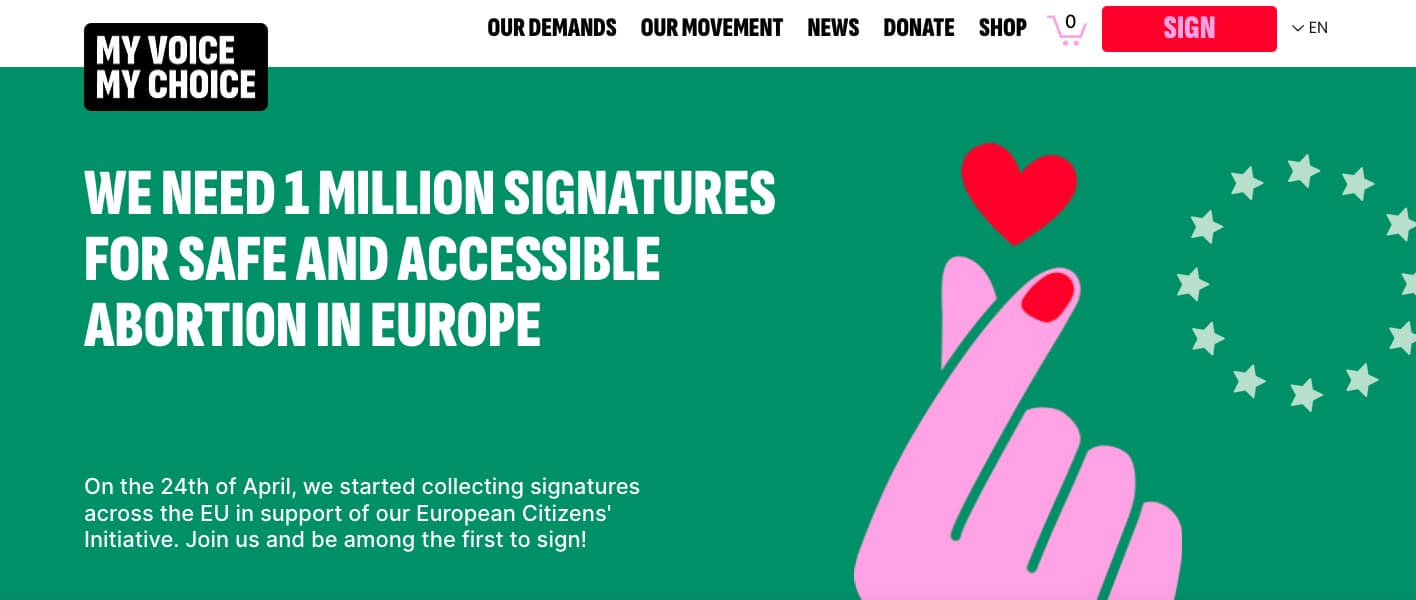 On December 17, 2025, Members of the European Parliament endorsed a citizen-led initiative calling for the establishment of a financial solidarity mechanism that would allow European Union member states to provide access to the safe termination of pregnancies. The 'My Voice, My Choice' movement seeks to create a financial framework allowing willing EU states to support abortion access, particularly in contexts where national laws or lack of resources restrict medical care. The proposal passed with 358 votes in favor but with 202 against, a narrow but decisive margin that reveals progress, but unfortunately also reveals resistance within European institutions.
The Parliament's endorsement was a political expression of support rather than a binding legislation, but it called on the European Commission to explore the proposed mechanism and to consider additional measures to strengthen reproductive health and rights across the EU. "This vote is a huge win for every woman in Europe.” Abir Al-Sahani, the Swedish rapporteur on the initiative stated, “ The EU has finally shown that sexual and reproductive healthcare is a basic human right."
This moment is important, because access to safe abortions isn't simply a healthcare issue, it's a question of autonomy and a question of whose voices are allowed to shape the law. Control over reproduction has always been a central tool of patriarchal systems, and when governments hesitate and compromise on women's reproductive rights, they reinforce the idea that a woman's bodily autonomy is negotiable. Further, the close vote count is a stark reminder that this belief remains deeply entrenched, even within a space that claims to uphold women’s rights and basic human dignity.
This endorsement matters because it challenges the fragmentation of women's rights across Europe. A woman's access to safe abortion shouldn't depend on geography or her economic status. By framing safe abortions as a shared European responsibility, the initiative shifts the conversation from national morals to collective accountability. It recognizes that rights shouldn't be denied in one state and provided in another, but provided across the region.
While the Parliament's resolution is non-binding, the European Commission now has until March 2026 to formally respond and outline what action it intends to take. Whether this moment becomes symbolic or transformative depends entirely on what follows. However, even if the Commission's response does not reflect favorably on the Parliament's decision, the Parliament is what controls the institutional balance within the EU governance system. It is up to the European Parliament to ensure that the European Commission, while exercising its executive mandate, remains accountable to elected representatives and, through them, to citizens.
However, the takeaway is clear. The My Voice, My Choice vote exposes both the possibility of feminist progress and the limits of institutional feminism when it stops short of enforcement. This moment mustn't be treated as an end, but rather the start of a pressure that should work towards feminist gain.
France’s redefinition of rape to center consent
 The case of Gisèle Pelicot, whose husband drugged her for years and allowed several men to rape her while unconscious, shocked not only France, but the entire world. The trial and convictions of 51 men enraged the public, as it exposed the inadequacies of the existing legal safeguards. Pelicot's courage in making her trial public sparked nationwide debate about rape culture and the need for laws that recognize the centrality of consent.
On the October 29, 2025, France took a historic step in the fight against sexual violence by adopting a landmark change to its rape laws by finally recognizing that non-consensual sex is, in fact, rape. Before its recent overhaul, French law, like most other country's laws, defined rape as the sexual penetration or oral sex committed through violence, coercion or threat, focusing on the perpetrator's actions rather than the victim's consent, meaning the victims often have to prove they resisted strongly, leading to challenges in prosecuting cases where someone was drugged or too paralyzed to fight back.
The reform culminates a long struggle to bring French law into alignment with international human rights standards and , redefining rape to center on consent and consent alone. The new law redefines rape and sexual assault as any non-consensual sexual act, with consent understood to be freely given. Consent can no longer be assumed from silence or a lack of resistance.
This legal update goes beyond procedural tweaks and directly answers the question of who holds power over women's bodies. For too long, the burden of proof in rape cases has relied on proving violence and coercion, forcing survivors to meet an unattainable standard before justice can even be considered. By placing consent at the core of the legal definition, France's legislature acknowledges as feminist activists have long insisted, that autonomy over one's body cannot be negotiated.
Yet, even with this ambitious reform, the struggle is far from over. While legal recognition of consent is a big deal by itself, it isn't enough to uproot deep-seated misogyny and systemic bias within the system. Conviction rates for rape worldwide are historically low, and many survivors often don't report the abuse because they fear the authorities, thus systems must focus on broader cultural shifts as well.
The redefinition of rape to center consent is a win to survivors and victims, but it exposes how much work remains to be done. The French reform is a model for other nations, a clear statement that autonomy and dignity must be protected in law. However, it is also a grim reminder that laws only matter when they are enforced and when society refuses to excuse violence.
Mexico’s first female president
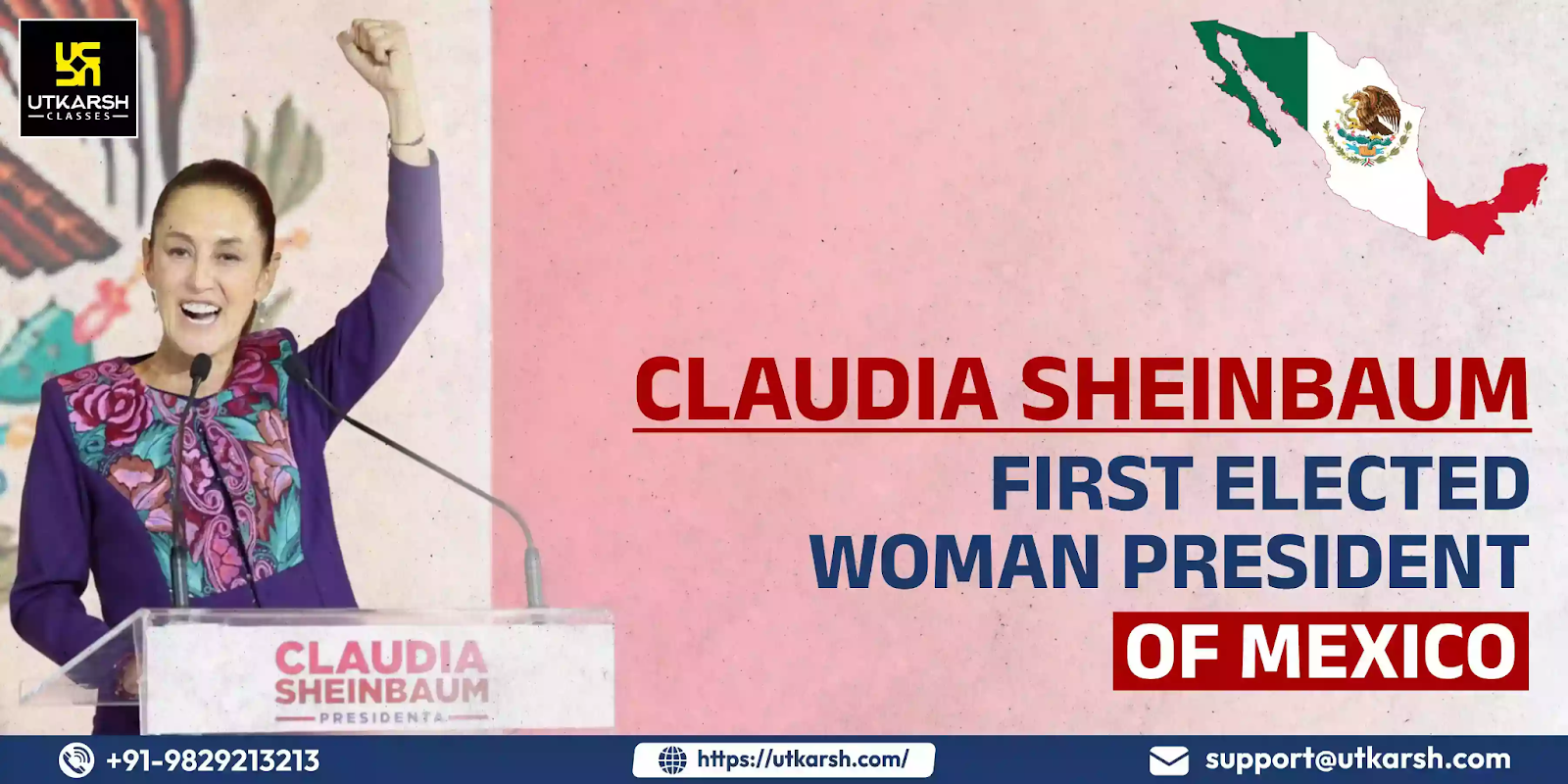 Mexico stepped into a new era in 2025 when Claudia Sheinbaum was sworn in as the country's first female president, setting a historic breakthrough in a nation where leadership had been exclusively male for over 200 years. Sheinbaum's success was no accident, it was the culmination of decades of women’s struggle for power in Mexican politics where women fought not just for representation, but for real authority in shaping the nation's future.
Sheinbaum's rise to presidency is significant in the context of Mexico's political and social history. It was as recently as 1953 when Mexican women were given the right to vote, but the progress since then has been tremendous. Women's participation in politics has steadily increased, eventually creating a condition where a woman was able to attain the highest office. As a trained scientist with a Ph.D. in energy engineering, Sheinbaum brings both her educational expertise and political experience to her presidential campaign, appealing to voters with promises of social reform, economic stability, and continued focus on public welfare.
Sheinbaum's presidency represents a direct challenge to systemic barriers that have long kept women out of positions of real power. A woman at the helm of one of Latin America's most populous and geopolitically influential countries disrupts entrenched macho culture and signals that leadership isn't a birthright for men. Women's confidence over their lives and careers is reinforced when they see someone who looks like them occupying a role traditionally reserved for men. This profound shift reshapes societal expectations and opens pathways for future generations of girls and women to envision themselves in positions of genuine authority.
Feminism isn't about elevating women above men, but about dismantling hierarchies so that policies and resources are fair and inclusive to the realities of all people. Since taking office, Sheinbaum's government increased funding for conditional cash transfer schemes, which provide regular financial assistance to households on the condition that children attend school and receive basic healthcare, helping to break cycles of intergenerational poverty. Although deep-rooted inequality remains a persistent challenge, Sheinbaum's measures reflect a strategic focus on lifting millions out of poverty and narrowing the gap between the rich and poor, demonstrating her commitment to economic justice alongside her broader vision.
Despite her historic position, systemic issues such as gender-based violence remain pervasive. In late 2025, Sheinbaum herself was sexually assaulted in public. "If this happens to the president, where does that leave all the young women in our country," said Sheinbaum, "No man has the right to abuse women's personal space" (source). The assault highlighted just how ingrained harassment against women is, even at the very highest levels of public life. The episode sparked debate on the need for stronger protections and legal reforms to safeguard women's bodily autonomy and safety.
While Claudia Sheinbaum's presidency is a groundbreaking feminist milestone, it doesn't mark the end of the struggle. Her election matters not because it fulfils a quota, but because it challenges power hierarchies and insists that women's voices are central to systemic change, not peripheral to it.
Record women governors in the United States
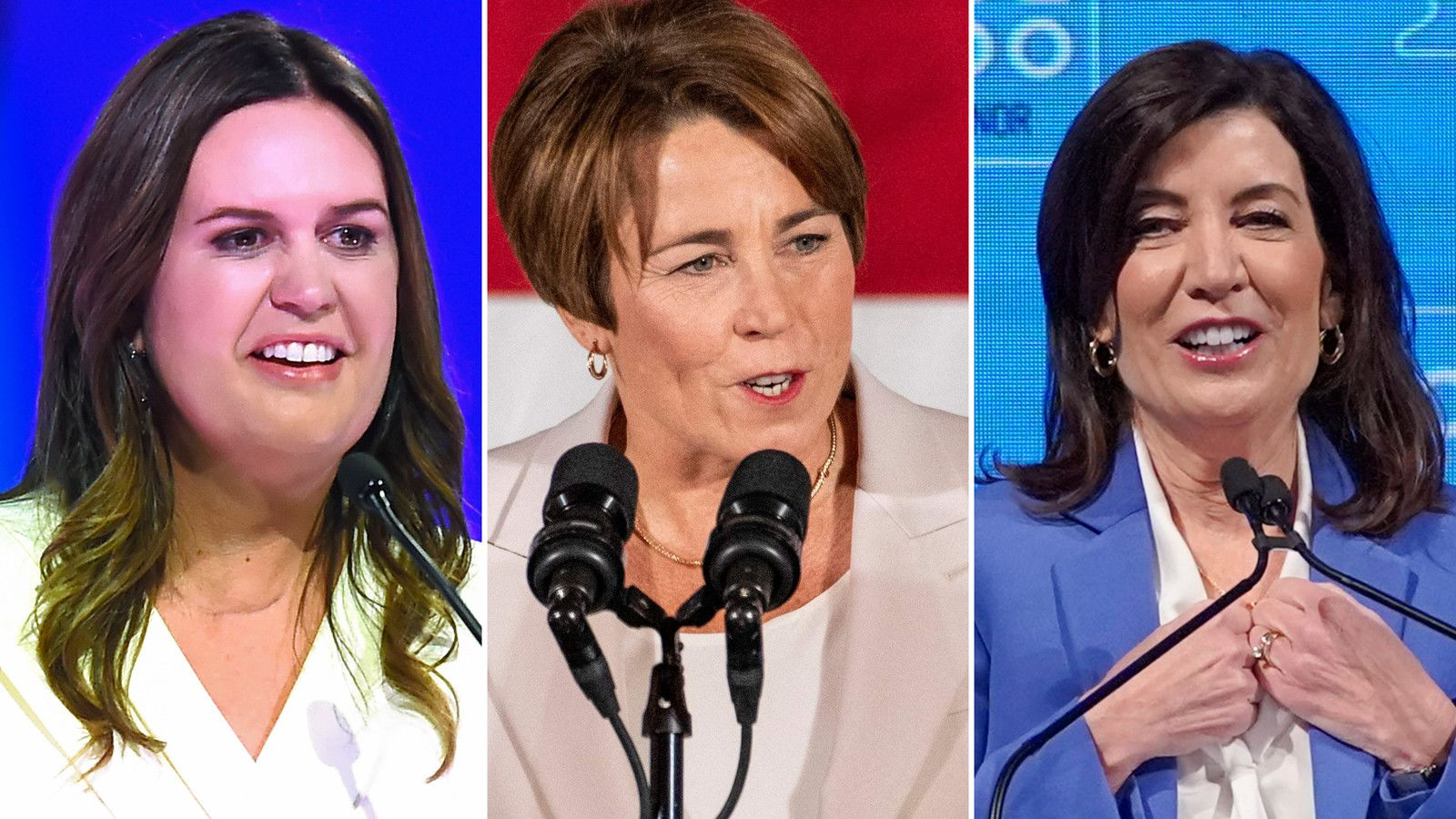 Despite the real and damaging impact of Trump's anti-feminist policies, not all is lost in America. Resistance has continued to grow at state, local and grassroot level. January 2025 marked a historic milestone in the political sphere of the United States, with fourteen states, including Alabama, Arizona, Connecticut, and New Jersey, electing women as state governors, the highest number ever recorded.
For the first time, women held more than a quarter of all governerships, exercising executive authority over millions of people. This was the result of decades of feminist organizing, electoral reform and challenges to the idea that governance is an inherent male trait.
Historically, the role of governors has been dominated by men, and the presence of fourteen women in these executive roles simultaneously is not just a symbolic victory, the redistribution of power within a political system that has long excluded women from decision-making spaces.
Representation at the executive level changes how politics functions, not just how it looks. When women govern, policy priorities expand. Research and lived experience consistently show that women leaders are more likely to prioritize healthcare access, education, social welfare, reproductive rights, climate resilience and protection for marginalized communities. This isn't because women are naturally more moral and compassionate but because feminist politics interrogates whose lives are affected by policy and refuses to treat inequality as collateral damage.
For generations, women in power were treated as anomalies, scrutinized more harshly, and expected to represent all women while simultaneously proving they weren't "too feminist". The reality of fourteen women governing at once disrupts that narrative. It signals that women's leadership is no longer exceptional or a novelty, but structurally embedded. Girls growing up in these states are not seeing a singular role model, but a pattern.
The African Union Convention on Ending Violence Against Women and Girls (AUCEVAWG)
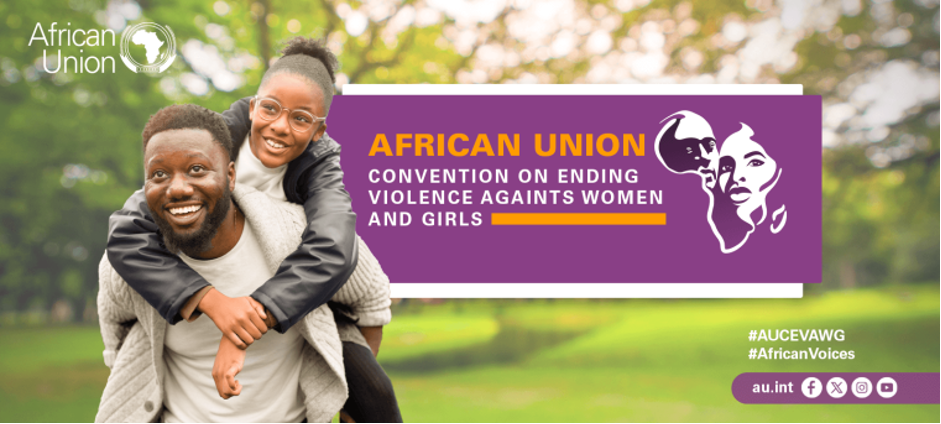 The African Union Convention on Ending Violence Against Women and Girls (AUCEVAWG) was adopted in February 2025 by the African Union, taking a groundbreaking step in the global fight for gender justice. The AUCEVAWG is the first continent-wide legal framework exclusively dedicated to eradicating violence against women and girls and lays the foundation for a legally binding commitment to prevent and eliminate gender-based violence across member states. The move is a collective effort to tackle the deeply rooted inequality and abuse that leaves millions of women and girls across Africa affected.
While the treaty emphasizes that every woman and girl has the right to live free from violence, it also includes concepts such as positive masculinity, which encourages transformed attitudes and behaviors among men and boys that promote respect and non-violence. The treaty goes beyond just legal frameworks to include cultural and social norms.
This signals a structural and collective commitment by 55 nations to confront violence against women and girls not as isolated incidents but as repeated human rights violations rooted in patriarchal norms. African women and girls face high rates of sexual assault and harmful practices like child marriage. The adoption of a unified continental treaty capable of influencing national laws recognizes that these aren't inevitable patterns of violence and that it requires enforceable legal action.
The conventions focus on emerging forms of violence shows its transformative aspect. Many regional frameworks usually overlook cyber abuse, but the AUCEVAWG included definitions and protections of violence that happen online, thus acknowledging technological threats as harassment. This addressing of cyber violence sets a global precedent for the fight against cyber bullying by itself.
However, the success of this convention depends on political will and ratification at the national level. While some countries have already begun signing the treaty, domestication into national law is important to ensure it has a real impact on the ground. But that doesn't make the treaty any less important. By explicitly addressing both traditional and digital forms of violence and prioritising prevention, this treaty sets a global standard for how regions can protect its women and children. It is a decisive step towards ending violence and a powerful reminder that the feminist struggle must result in structural and legal change.
What these moments tell us
Taken together, the events of this year makes clear that although progress is uneven and resisted, it is far from stagnant. From shifts in leadership to collective action, these moments show feminism operating where it matters most. They remind us that feminist change isn't a straight line, but a continuous struggle that reshapes the world every time a woman refuses to be sidelined. Moments as such, celebratory-worthy as they are, are only a reminder of what lies ahead. It's the reminder to move forward with bigger demands and a collective commitment to do better than what history has allowed so far.