

 There's something we've all accepted without questioning for some reason. We've accepted the idea that men are just naturally more sexually driven than women. We see it on social media, in movies, in schools, we hear it in songs and we even see it in real life. Girls around the world grow up hearing that boys have “needs” and that women shouldn't feel pressured or intimidated by it because it's simply just how men are.
But what about a woman's needs?
Does it even exist?
Or have we been conditioned to ignore it?
When a man forces himself onto a woman (and this does not only refer to rape. This also includes sexual coercion, pressure for intimacy, and the expectation that women should accommodate male arousal) the behaviour is excused through the belief that men inherently have a less controllable sex drive. The male libido is reframed as biologically normal, which would be harmless if it weren’t at the expense of denormalizing the female libido.
This sort of unfortunate conditioning has ruined social expectations. Men are portrayed as easily sexually aroused and directed by instinct, while women are portrayed as having only one role: to either allow or deny access. A woman who feels pressured is often told that “men are just built like that” as though biology removes responsibility.
Research on rapists' language, particularly among incarcerated and self-reported sexually aggressive men, has identified several recurring excuses that are used to deny responsibility when it comes to sexual assault. To nobody's surprise, one of the most commonly heard excuses was that they couldn't 'help themselves'. The implication couldn’t be more clear. Male sexual behaviour is treated as uncontrollable, while female discomfort is expected to adapt around it.
But modern research identifies sex drive as a much more complicated picture than what history has accepted. Testosterone does influence sexual motivation, but it doesn't create uncontrollable behaviour. Studies increasingly show that sexual behavior is not solely determined by hormones, but also shaped by emotional context, social conditioning, power structures, stress, cultural expectations and learned behavior.
In this article, we’re debunking the myth of men having inherently higher sexual drives in three parts: by understanding the biological and hormonal factors regarding the male and female sex drive; by analyzing societal norms and historical context; and by examining patriarchal evolutionary strategies.
Biological and hormonal interpretation of male and female desire
Desire is not solely determined by biology. It includes psychological, relational and sociocultural determinants. Testosterone is misunderstood as the primary biological cause of male sex drive, while research actually shows the relationship is much more complex. A study in 2024 that tracked daily testosterone levels and self-reported sexual desire in 41 men over 31 days found no evidence that men experienced stronger desire on days when their testosterone was higher. Instead, the study found a preliminary positive relationship between testosterone and courtship effort, specifically on days when single participants interacted with potential romantic partners. The authors concluded that the evolved functions of testosterone in human males may be more closely tied to courtship behaviours than to sexual desire itself.
American sex educator Emily Nagoski, in her book Come As You Are, drew a distinction that reframed how we understand female desire entirely. Spontaneous desire arrives unprompted, a thought, a glance, a passing mood that tips into want. Responsive desire, by contrast, surfaces only once something has already begun: a touch, emotional closeness, the slow build of the right context. Men tend toward the first pattern; women more commonly toward the second. A woman who rarely feels desire out of nowhere is not suffering from low libido. She simply needs a different kind of beginning.
Much of what science thought it knew about libido was built on a single template: the male body. Early sexual research (much like every medical research) treated male sexuality as the biological norm and simply assumed that women just function in essentially the same way. The Masters and Johnson linear model, which mapped sexual response as a sequence of excitement, plateau, orgasm and resolution, was drawn primarily from male physiology. When female sexuality was held up against it, it appeared lacking. But the model was never designed to describe women in the first place. So what happens when researchers actually study female desire on its own terms?
 Masters and Johnson’s Linear Model
The gap became impossible to ignore once researchers began studying the female desire on its own terms rather than measuring it against male patterns. Rosemary Basson's circular model of desire was one of the first serious attempts to answer that question. She found that for many women, desire does not arrive unprompted. It surfaces in response to intimacy, touch and emotional closeness. This was not a sign of dysfunction. It was simply a different architecture, one the Masters and Johnson model had no framework to account for. And once researchers acknowledged that desire itself worked differently, the next question becomes: what gets in its way?
That question leads us into the work of Bancroft and Janssen, whose Dual Control Model offers a mechanism for understanding why desire can disappear under certain conditions. They proposed that sexual arousal is governed by two competing systems: one that accelerates toward desire and one that brakes against it. What suppresses the brake matters just as much as what presses the accelerator. Shame, fear, social scrutiny and emotional insecurity are physiological brakes and not just social problems. What gets read as low libido is often inhibition doing exactly what it was built to do in a threatening environment. But even this still left another question unresolved: if women's desire is being suppressed, what does their actual physical response look like underneath it?
The distinction became clear through Meredith Chivers' research on genital versus subjective arousal. Men tend to show a close correspondence between physical arousal and conscious desire. Women process desire through additional cognitive and contextual layers. Their bodies are not less responsive. Their conscious desire is simply more heavily filtered by the conditions around them. The finding directly challenges the simplistic narrative that men want sex more. Female sexual response is far broader and more flexible than science had traditionally assumed.
But even biological explanations like testosterone became far less straightforward when viewed through this broader framework. Testosterone contributes to libido in both men and women. Studies involving testosterone therapy in women have shown increases in sexual thoughts, confirming that the hormone does influence desire. But this relationship has a ceiling. Once healthy levels are reached, additional testosterone does not produce stronger desire. As discussed in a previous Matriarchy Times article, elevated testosterone also does not explain aggression or uncontrollable sexual behaviour. Biology has a role to play, but its role isn’t big enough to override social and psychological conditions in the simplistic way popular narratives often suggest.
What all of this adds up to is a fairly damning indictment of how female sexuality has been studied and understood. Male sexuality was treated as the scientific default, and women were measured against it and found deficient. What researchers actually found, once they looked properly, is that female desire is not weaker. It is more context-dependent, and the contexts most women inhabit have rarely been designed to support it. Social structures that produce fear and shame do not just make women uncomfortable. They actively suppress female sexual expression, which is precisely why female desire can appear so much lower than it actually is.
Societal norms and historical context
The language society uses around sexuality already reveals the major double standard in how male and female desire is perceived. Women are associated with terms like “virgin”, “purity”, ”slut”, “expired” and “easy”, while men are given terms of praise such as “player” and “stud”. Even female sexuality is discussed around the ideas of her being “loose or tight” with more modern slang including “cracked” and "ruined”, while male sexuality is framed through conquest and performance.
The words themselves reveal the imbalance that women are somehow damaged after having sex, while men simply gain another badge on their collar.
 Thus, we create a sexual double standard where men gain social status from sexual activity, but women lose it. A study examining gendered attitudes and sexuality among university students found that differences in sexual behaviour were not simply a product of being male or female. Instead, they were a result of how strongly individuals endorsed the double sexual standard itself. The more a person believed men deserved more sexual freedom than women, the more their behaviour conformed to that belief. This eliminates the idea that such differences are natural and biological. What appears to be a “biological” difference between men and women is in reality, a learned social script and most people follow it closely when they have deeply internalized it.
Socially constructed gender norms heavily influence sexual behaviour, both consciously and subconsciously. Boys are often encouraged to pursue sex and treat sexual success as proof of masculinity. Girls, on the other hand, are encouraged to suppress their desire in order to avoid appearing “promiscuous” and to prioritise their reputation over pleasure. This endorsement of a sexual double standard allows men greater sexual freedom while placing women under greater sexual scrutiny.
Many cultures historically and presently place greater value on masculine behaviour than feminine behaviour, and this also includes sexual behaviour. This creates power imbalances in relationships, and although it varies between couples, men often hold more relational and sexual power than women. The idea that men inherently possess dramatically higher sex drives is therefore oversimplified, if not completely wrong. Structural forces such as religion, the media, social expectations and the law shape perceptions of what sexual behaviour is considered appropriate for men and women.
Female sexuality has not always been treated as taboo. The Kama Sutra (circa 300AD) openly acknowledged female pleasure and treated women as active sexual participants rather than passive objects. Erotic sculptures found in ancient civilizations portrayed sexuality as part of a balanced human life and didn't frame female desire as a shameful or immoral act. Which only brings about the question: when did societies begin treating female desire as dangerous?
 Carvings on the walls of the Khajuraho Group of Monuments in India (built between 885 CE and 1000 CE)
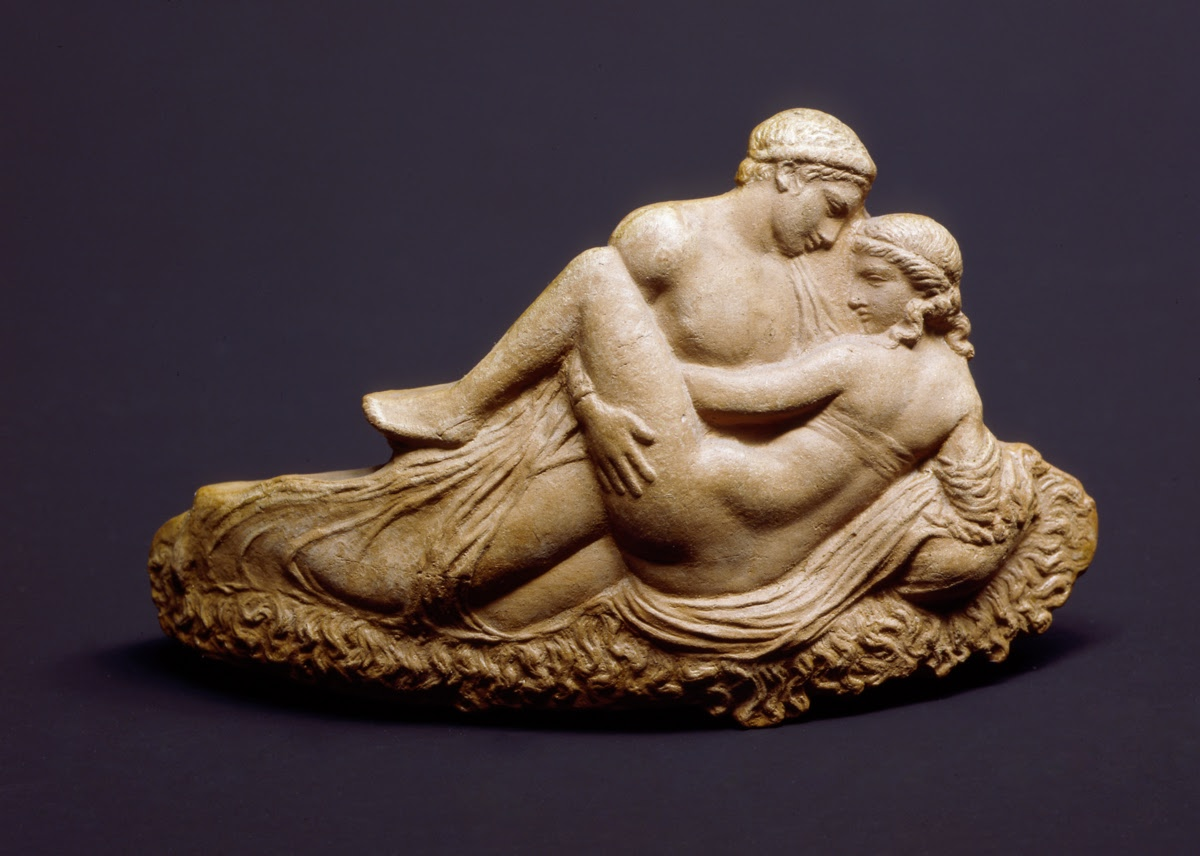 Hellenistic or Roman art, dating roughly from the 2nd–3rd century CE
Over time, women increasingly became trapped within two extreme archetypes: the prude and the slut, also known as the Madonna-Whore complex. Women were expected to remain sexually reserved, while at the same time being attractive and desirable to men. Any deviation from this balance carried consequences. According to Sigmund Freud (who originally coined the psychological phenomenon), Madonnas were highly respected but cannot be sexually desired, while whores are promiscuous women that cannot be respected. This complex stems from a man's inability to merge romantic affection with physical lust. The binary was, and is, impossible to satisfy because it wasn’t originally designed to grant women genuine sexual autonomy. Instead, it positioned female sexuality as something that had to be carefully managed and judged according to male expectations.
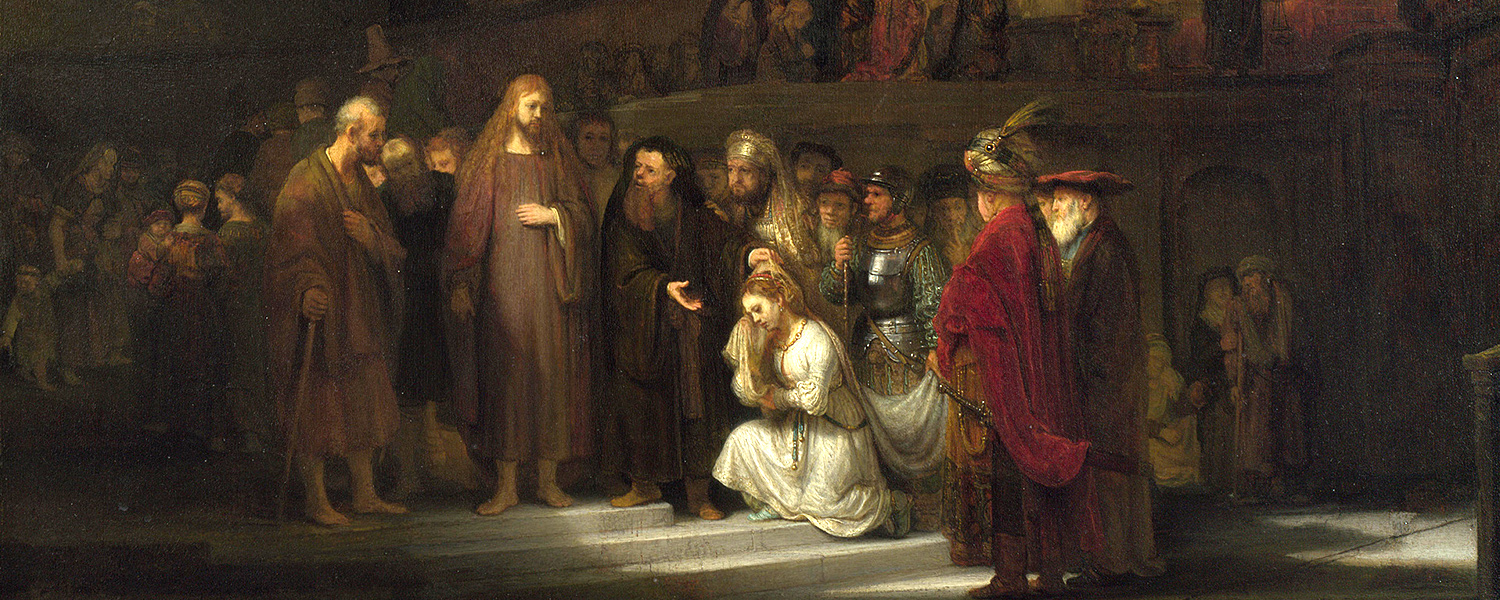 Woman Caught in Adultery (John 7:53–8:11)
Religion played a major role in reinforcing this binary across society. Female sexuality is frequently associated with temptation in religion, and women were taught from childhood that their bodies could “lead men astray”. The responsibility for regulating male desire was smoothly and subtly transferred onto women through expectations surrounding sexual restraint. Religious symbolism strengthened this idea further. Figures such as Virgin Mary hold profound theological significance in Catholic and Orthodox Christian spaces, yet the continued emphasis on the title “Virgin” reflects how female holiness is culturally associated with sexual untouchedness. The implication? That a woman’s holy and moral worth is closely tied to her sexual behaviour. By contrast, we rarely ever see male holiness being defined through sexual purity in the same way.
Patriarchal evolutionary strategies
The suppression of female sexuality is widespread across societies and has harmed women's wellbeing and sexual freedom. However, there are multiple features which force women to suppress their sexuality and these include social structures, family dynamics, cultural norms, mating systems and reproductive strategies. The Male Control Theory argues that men suppress female sexuality to control reproduction and paternity, while at the same time, the Female Control Theory argues that women also police other women's sexuality to maintain the standards set by the patriarchal society. Ultimately, both men and women have an active role in a patriarchal society in suppressing female sexuality.
From a patriarchal evolutionary perspective, patriarchal systems benefit from controlling women's reproductive rights as it allows men to be more confident that the offspring are biologically theirs, thus allowing them to pass down property and resources to their biological descendants. This explains why the patriarchy emphasizes female virginity and modesty. Thus, suppression isn't simply about sex, it's about social hierarchy. Women were never naturally less sexual than men, their sexuality is just more regulated and punished.
The evidence for this is visible in real time. According to a 2026 UN Women report, no country in the world has yet achieved full legal equality for women and girls, with women globally holding just 64 per cent of the legal rights of men. In the most patriarchal societies, the control of female sexuality remains tightest. In societies where that power structure is being contested, it loosens. Patriarchal sexual norms are adaptive social systems, not biological inevitabilities
Economics also plays a central role in this system. Historically, women in many societies were denied access to property ownership, inheritance, education, political participation and financial autonomy. Marriage, therefore, wasn’t romantic or personal, but often a woman’s primary means of survival and social security once she leaves her parental home. This dependency indirectly regulated female sexuality by making women’s reputations economically important. A woman labelled "promiscuous" risked social exclusion and reduced marriage prospects, which affected a woman’s financial stability. By tying women’s survival to her sexual activity, patriarchal systems reinforced obedience without requiring constant direct force. This helped maintain male authority within family structures, as controlling women’s sexuality became connected not only to reproduction and inheritance, but also to preserving broader social and economic hierarchies.
The prude, the slut and the manwhore
The belief that men are naturally more sexual than women has been treated as unquestionable truth for centuries, but modern research increasingly suggests the reality is far more complicated. Human sexuality isn’t shaped purely by biology, but also by safety, emotional context, culture, power structures and social conditioning. What societies have historically interpreted as “low female libido” actually reflects suppression and punishment and not the actual absence of desire.
While sexually active women are treated as socially lesser, sexually active men are treated with admiration and status. Terms used for promiscuous men carry a tone of celebration, whereas equivalent labels for women are designed to shame. Even when men are criticized for sexual behaviour, the criticism doesn’t attack their moral worth the same way it does for women. A manwhore may be immature and arrogant, but he will never be considered “ruined”.
Modern sex research increasingly dismantles the simplistic idea that men are biologically destined to pursue sex while women merely respond to it. Female desire isn’t inherently weaker, it’s more context-sensitive and heavily socially regulated. Understanding this matters because the myths societies tell about sexuality shape real behaviour. When men are taught that they “cannot help themselves”, accountability weakens, which is why it is important to understand biology and understand where norms arise from without accepting it blindly. Women are capable of feeling pleasure just as intensely as men, and continuing to suppress that reality only reinforces systems that police female sexuality while excusing male behaviour. It only forces women into positions where they cannot remain comfortable. As long as desire remains something judged differently by gender, the labels will keep doing their work: rewarding male expression while restricting female sexual autonomy. Women are not less sexual. They have simply existed within social structures that made expressing desire far more costly, and that distinction changes how sexuality itself is understood.