
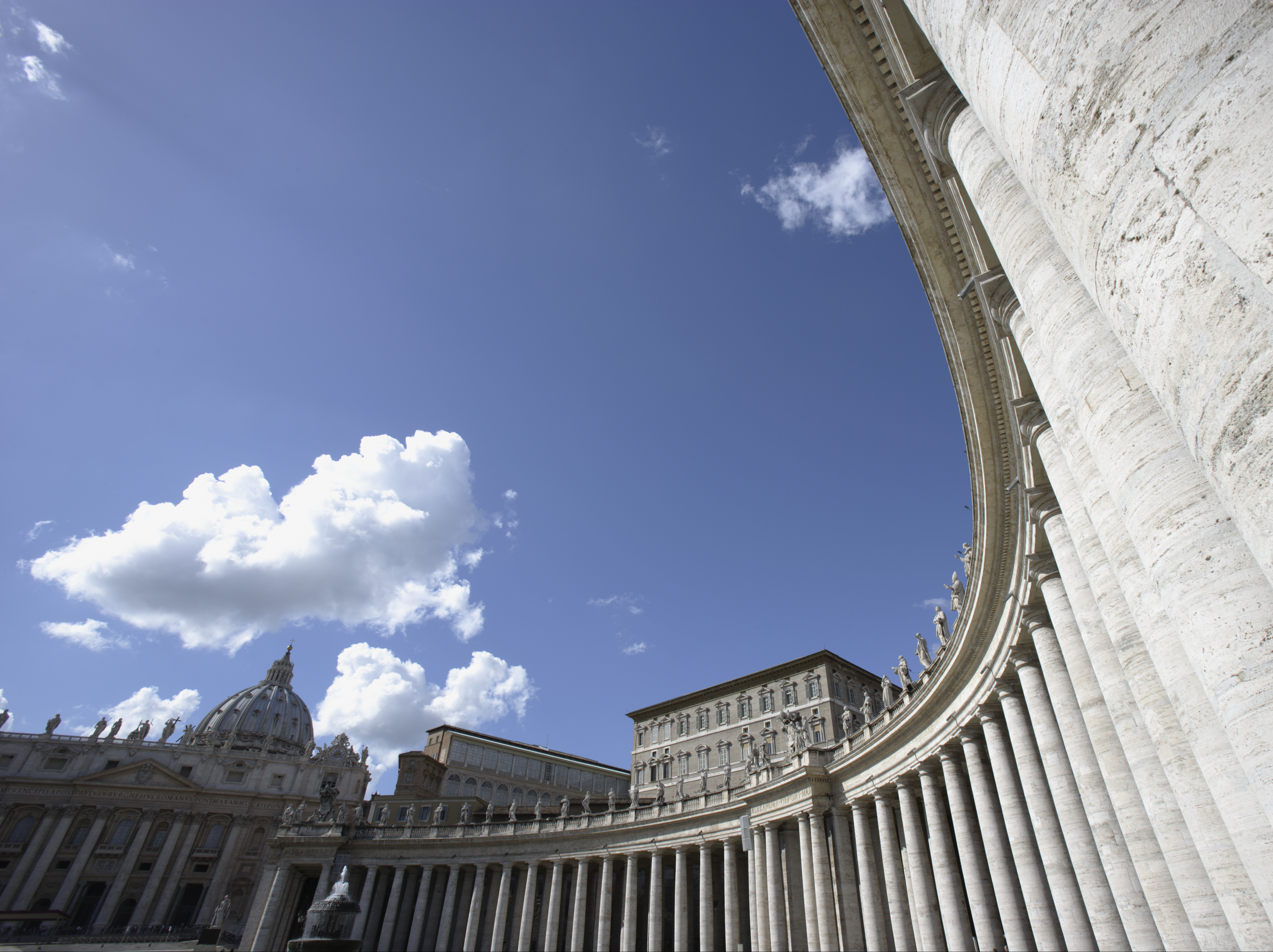
The other day I was back at the Vatican.
No, I don’t have any official reason to be there, I have been able to travel to Italy about six times in my life. I was even able to meet the late Pope Francis with my wife Annie and daughter Aine back in 2016. This time, I was bringing a private tour group to explore Tuscany and Rome. A day tour of the Vatican was in order.
In one of my tour groups was a wonderful man, a Methodist minister who I have had the pleasure of getting to know over the years. An elderly man, he has a bit of trouble walking and so, we decided that the best way for him to visit the Vatican was to have a wheelchair. His wife took the first stint of bringing him to the Sistine Chapel and then I took over when they reached the Basilica of St. Peter.
It’s not every day that you get to wheel a Methodist minister around St. Peter’s, but there we were, going first past Michelangelo’s Pieta and then past the wonderfully simple statue of St. Peter.
As a Midwesterner, I have always been a bit conflicted over the grandeur of the Vatican. As Michael Stipes of the band RME lyric, “here’s a truck stop instead of St. Peter’s” resonated with me. Because most of the parishes and Protestant churches I have visited, in the farmland especially, have always been to some degree simple in design and accoutrement, with a few outstanding exceptions here and there.
With my minister, we both experienced some awe. It is impossible to visit St. Peter’s and not feel that feeling of insignificance in the face of majesty. Add in the Vatican museum, the Sistine Chapel and all the marble, gold and tapestries that are pretty much everywhere, and one can be blinded to the opulence that is meant to express the grandeur of the Church. As my minister friend blurted out, “hard to believe this all came from a Jewish carpenter.” He wasn’t being snide, because I also felt that feeling. It is like when one orders a brownie for dessert and out comes the erupting lava cake with whipped cream, chocolate chips and a sparkler. We in the Midwest are not used to such things and so much all at once.
However, a quote came to my mind from my mother to describe the Roman Catholic Church, “a human institution, divinely guided.” Indeed, seeing a marble inscription with all the Popes from Peter to Leo, 266 men who have held the office, it is indeed a church of humanity.
And the humanity part of the Church, the historical part, was indeed complicated. The Church basically took over for the collapsed Roman Empire and expanded in territory and majesty. It wouldn’t be until the founding of Italy that the whole “earthly kingdom” part of the Church was relegated to the small state of the Vatican. Unlike the Roman Empire, the buildings, statuary and regal administration of the historical church was not destroyed or dispersed. The Church where the Pope was not only bishop of Rome, but King of the Papal States, was left intact. It was left with a great collection of a time when all of this meant something more than it does today.
One can guild their way to earthly glory, but in the end, it is the question: to what purpose? Here, the second part of my mother’s saying resonated with me. Perhaps in the long lines of Indian nuns, visiting the Vatican, just like me. They reminded me of that amazing part of faith, where we eschew the worldly and focus on the spiritual. Here and there, the simple clergy of the faith, walking around in the same awe as me, made me think. And my minister, he too, represented that link to the divinely guided church. A church that in all of Christianity, is still as complicated as the personalities of those first disciples that said yes to Christ.
In my odd American way, I could see some similarity in what Dr. Seuss did with The Grinch that Stole Christmas. All the Who’s in Who-ville could be stripped of whatever this world has and yet, if they could retain that connection, that yearning to be one with the Divine they would be OK. It is the humanity seeking the Divine that I admire. And in spite of mistakes, suffering and even dying, there is that belief in the search of such Divine that rises above all human frailty. My minister friend and I were able to understand that in many ways, this beautiful, opulent representation of grandeur was a mirror that reflected the simple wonder of us being us. St. Peter Basilica is there to remind “that it is bigger than all of us” and yet will never, can never, capture the true majesty of our quest for the Divine. It will, despite all the genius of Michelangelo and other great artists, fall short. That effort requires the guidance of the Divine in our own personal lives. The finding of the glory and goodness that created saints, martyrs, priests, nuns, ministers, minister’s partners and laity. Yes, the Truck Stop instead of St. Peter’s, but only if one believes that we are all guided by the Divine to reach the Divine.
READ MARTIN'S OTHER BLOG HERE.